



The Jevons Paradox, a 19th-century economic theory, has re-emerged as a pivotal framework for understanding the complex interplay between efficiency gains and resource consumption, particularly in the context of rapidly advancing technologies like artificial intelligence (AI). Named after the neoclassical economist William Stanley Jevons, the paradox posits that increasing the efficiency with which a resource is used does not necessarily lead to a reduction in its consumption; instead, it can often lead to a greater overall increase in demand and usage. While often invoked to predict a more optimistic outlook for labor markets amidst AI integration, a deeper examination reveals a "dark side"—a history of unanticipated and often detrimental consequences stemming from the very efficiency it describes.
The Genesis of the Paradox: William Stanley Jevons and "The Coal Question"
William Stanley Jevons first articulated this counterintuitive concept in his seminal 1865 work, The Coal Question: An Inquiry Concerning the Progress of the Nation, and the Probable Exhaustion of Our Coal-Mines. Born in Liverpool in 1835, Jevons was a prominent figure in the Marginal Revolution, a movement that profoundly reshaped economic thought. His work often combined rigorous statistical analysis with insightful theoretical deductions, making him a prescient observer of the industrial age.
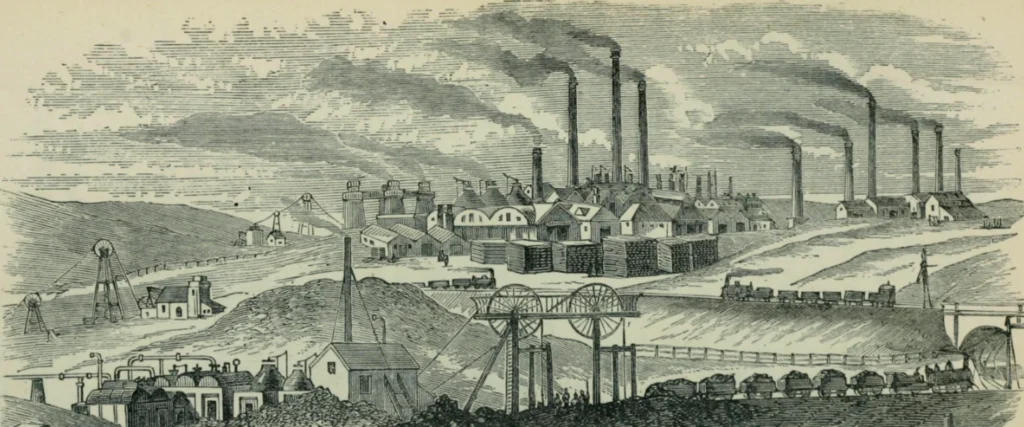
During the mid-19th century, Great Britain stood at the zenith of the Industrial Revolution, powered predominantly by coal. Concerns were mounting regarding the finite nature of the nation’s coal reserves, a resource deemed indispensable for maintaining its industrial supremacy and burgeoning global empire. Many believed that technological advancements, specifically the development of more fuel-efficient steam engines, would naturally alleviate the pressure on coal supplies.
Jevons, however, challenged this optimistic view. He meticulously argued that improvements in steam engine efficiency—meaning engines could generate the same power with less coal—would not lead to a decrease in overall coal consumption. Instead, he predicted that these more efficient engines would make steam power cheaper and more accessible, thereby encouraging its application across a broader spectrum of industries and facilitating new innovations that relied on this readily available power. The net effect, Jevons contended, would be an increase in total coal burned.
Historical data largely validated Jevons’s prediction regarding consumption. Following the widespread adoption of more efficient steam engines, coal consumption in Britain soared rather than diminished. From 1860 to 1900, annual British coal output more than doubled, from approximately 80 million tons to over 225 million tons. While new mining techniques and discoveries did ultimately avert the immediate "exhaustion" Jevons feared, the overall trajectory of consumption was unequivocally upward, driven by the expanded utility and affordability of coal-powered technologies. This era cemented the Jevons Paradox as a fundamental principle in resource economics, illustrating the powerful rebound effect where efficiency gains are offset by increased demand.
The Paradox in the Digital Age: AI and the Labor Market
Fast-forward to the 21st century, and the Jevons Paradox finds renewed relevance in the discourse surrounding artificial intelligence. The rapid advancements in AI, particularly in generative AI and automation, have sparked widespread debate about its potential impact on employment. A common apprehension, often dubbed the "AI job apocalypse," suggests that AI’s ability to make workers incredibly efficient will lead to massive labor market contraction. The logic follows: if a single AI-powered programmer can now accomplish the work of five human programmers, companies will inevitably reduce their workforce by 80%.
However, the Jevons Paradox offers an alternative, potentially more optimistic, perspective. It implies that if AI makes certain types of work, such as software development, significantly more efficient, the effective cost of that work will decrease. This reduction in cost could, in turn, unlock vast new demand for these services. For instance, if developing bespoke software applications becomes dramatically cheaper due to AI-assisted coding, many more individuals and organizations, previously unable to afford such development, might now invest in creating their own specialized tools and applications. This expansion of demand could potentially offset, or even reverse, initial job displacements, leading to an overall increase in labor required to meet the newly stimulated market.
Economists and technology analysts are closely monitoring this phenomenon. Some labor economists, drawing parallels to past technological revolutions like the advent of personal computers or the internet, argue that while specific tasks may be automated, new roles and industries often emerge to complement or manage the new technologies. For example, while spreadsheets made accounting tasks more efficient, they didn’t eliminate accountants; instead, they transformed the profession, allowing accountants to focus on higher-level analysis and strategic planning. Similarly, ATMs made banking transactions more efficient, yet the number of bank tellers initially increased due to the expansion of banking services made possible by this efficiency.
Industry leaders, such as those at OpenAI and Google DeepMind, frequently highlight the "augmentative" nature of AI, suggesting it will empower workers rather than replace them entirely. They envision a future where AI acts as a co-pilot, enhancing human capabilities and allowing for the pursuit of more ambitious projects. Venture capital funding for AI startups has surged, reaching over $100 billion globally in 2023, reflecting investor confidence in the technology’s potential to create new markets and expand existing ones. While specific projections vary, a 2023 report by Goldman Sachs estimated that generative AI could add $7 trillion to global GDP over the next decade, indicating a massive expansion of economic activity that would likely necessitate new forms of labor.
Unveiling the "Dark Side": Unintended Consequences of Efficiency
While the Jevons Paradox offers a compelling counter-narrative to fears of widespread job losses from AI, its historical application also reveals a crucial, often overlooked, "dark side": the propensity for increased demand to generate significant, unforeseen negative externalities. The pursuit of efficiency, while seemingly benign or even beneficial, can unleash a cascade of problems if not managed with foresight and regulation.
Environmental Toll of the Industrial Revolution:
The most stark historical example of the Jevons Paradox’s darker implications is the environmental legacy of the Industrial Revolution. As more efficient steam engines made coal power cheaper and more ubiquitous, the resultant surge in consumption led to unprecedented levels of industrial pollution. Urban centers across Britain and later the world became synonymous with "pea-souper" fogs—dense, noxious smogs caused by the burning of vast quantities of coal. Buildings were permanently stained with soot, public health suffered from respiratory illnesses, and entire ecosystems were degraded by industrial waste.
Crucially, this expanded coal consumption marked the smoky dawn of human-driven climate change. The sustained and accelerating release of carbon dioxide and other greenhouse gases into the atmosphere, directly linked to the widespread adoption of coal-fired technologies, laid the foundation for the global warming crisis we face today. Scientific consensus confirms that the atmospheric concentration of CO2 began its steep ascent around the mid-19th century, precisely when the Jevons Paradox was playing out with coal. This historical episode serves as a powerful reminder that technological efficiency, without concomitant environmental awareness and regulation, can lead to devastating long-term consequences. Environmental historians frequently cite the Industrial Revolution as the pivotal moment when human activity began to significantly alter planetary systems, a direct outcome of the magnified resource use enabled by efficiency gains.
The Communication Conundrum: Email, Slack, and the "Infinite Workday":
A more contemporary illustration of the "dark side" manifests in the realm of knowledge work and digital communication. The advent of digital communication tools—from email in the 1990s to instant messaging platforms like Slack and Microsoft Teams in the 2010s—promised to revolutionize workplace productivity by making communication incredibly efficient. Sending a message across the globe became instantaneous and virtually free, replacing slower and more costly methods like physical mail or long-distance phone calls.
The Jevons Paradox again played out: the dramatic increase in communication efficiency led to an explosion in the demand for communication. Instead of simply making existing communication faster, these tools fostered an expectation of constant, immediate interaction. The result for the average knowledge worker has been a descent into a state of perpetual connectivity, characterized by an overwhelming deluge of messages, notifications, and interruptions. Studies from Microsoft’s Work Trend Index indicate that knowledge workers are now interrupted, on average, once every two minutes. This constant context-switching is a significant drain on cognitive resources, making deep, focused work increasingly difficult.
The implications are far-reaching:
- Reduced Deep Work: The ability to engage in sustained, high-concentration tasks is eroded, impacting creativity, problem-solving, and strategic thinking.
- Increased Stress and Burnout: The relentless pace of digital communication contributes to feelings of overwhelm, anxiety, and burnout, leading to decreased job satisfaction and higher turnover rates.
- "Attention Economy" Exhaustion: Employees are forced to constantly manage their attention, becoming reactive rather than proactive.
- "Infinite Workday": The blurring lines between work and personal life, enabled by constant digital access, extends the workday beyond traditional hours, impacting well-being and work-life balance.
This communication overload, a direct rebound effect of highly efficient tools, has become a major challenge for organizations seeking to optimize productivity and employee well-being. Experts like Cal Newport, author of A World Without Email, have extensively documented how this "communication madness" undermines the very productivity it was intended to enhance, advocating for more structured and asynchronous communication protocols.
Forecasting AI’s Rebound Effects: A Call for Vigilance
As AI continues its trajectory of making various tasks and workers more efficient, it is imperative to remain vigilant about potential "dark side" implications, even as we hope for positive labor market outcomes. The historical precedents of coal and digital communication offer crucial lessons.
Energy Consumption and Environmental Footprint:
One of the most pressing concerns surrounding AI’s expansion is its prodigious energy consumption. Training large AI models, such as advanced language models, requires immense computational power, which translates into significant electricity usage. For example, training a single large language model can consume energy equivalent to dozens of average European homes for a year, emitting hundreds of tons of CO2. If AI becomes more efficient at performing tasks, and this efficiency dramatically lowers the cost of using AI, the Jevons Paradox suggests an exponential increase in AI deployment across all sectors. This expanded usage could lead to a massive surge in global energy demand, potentially exacerbating climate change if that energy is not sourced from renewables. The sustainability of AI is a growing field of research, with calls for more energy-efficient algorithms and hardware, as well as a rapid transition to green energy grids.
Data Proliferation and Privacy Concerns:
AI thrives on data. The more efficient AI becomes at processing, analyzing, and generating insights from data, the greater the demand for data will likely become. This could lead to an insatiable appetite for personal and public data, raising profound ethical questions about privacy, surveillance, and data governance. If data processing becomes incredibly cheap, there might be fewer economic disincentives to collect and store vast quantities of information, potentially leading to unprecedented levels of intrusion and misuse. Regulatory frameworks like GDPR and CCPA are attempts to address this, but the scale of AI’s data demands presents an ongoing challenge.
Cognitive Overload and Decision Fatigue for Humans:
Just as digital communication led to information overload, AI’s efficiency in generating insights, recommendations, and automated decisions could overwhelm human operators. If AI can process and present vast amounts of data and potential solutions instantly, human decision-makers might face new forms of cognitive load and decision fatigue. The challenge will be to design AI systems that augment human intelligence without inundating it, ensuring that efficiency does not come at the cost of human autonomy or mental well-being.
Resource Depletion (Minerals) and Supply Chain Strain:
The hardware underpinning AI—advanced semiconductors, GPUs, and specialized processors—relies on a complex global supply chain and critical raw materials, including rare earth elements and precious metals. A dramatic increase in AI deployment, driven by efficiency, could place immense strain on these supply chains, potentially leading to increased mining activity with associated environmental damage, geopolitical tensions over resource access, and ethical concerns regarding labor practices in mining operations.
Ethical and Societal Risks:
Beyond resource and human-centric issues, the "dark side" of AI efficiency extends to profound ethical and societal risks. If AI becomes incredibly efficient at generating propaganda, manipulating public opinion, or enabling sophisticated surveillance, the societal consequences could be severe. The ease and low cost of deploying such powerful tools, a direct outcome of their efficiency, could erode democratic processes, exacerbate societal divisions, and infringe upon fundamental human rights. Autonomous weaponry, made more efficient by AI, also presents a terrifying rebound effect where the lowered cost and increased capability of such systems could escalate conflicts.
Navigating the Paradox: Strategies and Safeguards
Effectively navigating the dual nature of the Jevons Paradox requires a multi-faceted approach involving policymakers, industry leaders, researchers, and individuals. It demands a shift from simply celebrating efficiency to critically evaluating its holistic impact.
-
Policy and Regulation: Governments must develop proactive regulatory frameworks that address the negative externalities of AI. This includes:
- Carbon Pricing and Energy Standards: Implementing carbon taxes or strict energy efficiency standards for AI development and deployment to mitigate increased energy consumption.
- Data Governance and Privacy Laws: Strengthening data protection regulations to prevent unchecked data proliferation driven by AI’s efficiency.
- Ethical AI Guidelines: Establishing clear ethical guidelines and accountability mechanisms for AI development and deployment, particularly in sensitive areas like surveillance, content generation, and autonomous systems.
- Investment in Sustainable Infrastructure: Prioritizing investments in renewable energy sources and sustainable computing infrastructure to power AI.
-
Corporate Responsibility: Technology companies and AI developers bear a significant responsibility to integrate ethical considerations and sustainability into their design and deployment processes. This involves:
- "Green AI" Initiatives: Researching and implementing more energy-efficient algorithms and hardware architectures.
- Privacy-by-Design: Building AI systems with privacy and data minimization as core principles from the outset.
- Transparency and Explainability: Developing AI systems that are transparent in their operations and explainable in their decision-making processes to build trust and accountability.
- Employee Well-being Programs: Implementing strategies to mitigate communication overload and cognitive fatigue caused by new digital tools and AI assistants.
-
Research and Interdisciplinary Collaboration: A deeper understanding of the Jevons Paradox in the context of AI requires robust interdisciplinary research. Economists, computer scientists, environmental scientists, sociologists, and ethicists must collaborate to model potential rebound effects, assess long-term impacts, and devise mitigation strategies.
-
Individual Awareness and Digital Literacy: Educating the public about the Jevons Paradox and the potential "dark side" of technological efficiency is crucial. Fostering digital literacy, critical thinking about technology’s role, and promoting practices like "digital minimalism" can empower individuals to manage their interaction with efficient but demanding tools.
The Jevons Paradox serves as a potent reminder that technological progress, while often driven by the pursuit of efficiency, is rarely a simple, unadulterated good. From the soot-stained cities of the Industrial Revolution to the omnipresent digital demands of the modern knowledge worker, history repeatedly demonstrates that increased efficiency can unlock new levels of consumption, bringing with it both unforeseen benefits and profound, often detrimental, side effects. As AI continues to reshape our world, understanding and actively managing these rebound effects will be paramount to ensuring that our innovations truly serve human well-being and planetary health, rather than inadvertently creating new and complex challenges. The choice is not whether to embrace efficiency, but how to do so with the wisdom and foresight to anticipate and mitigate its inherent "dark side."