


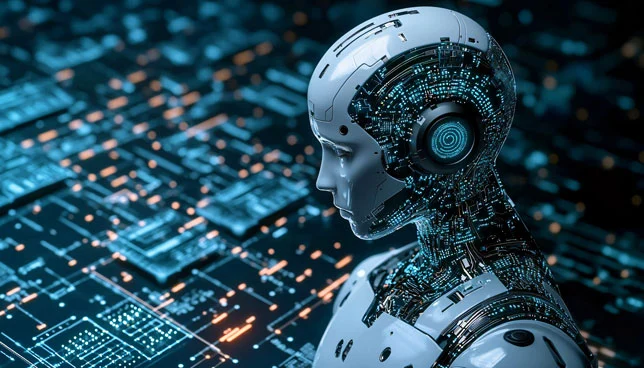
Meta Platforms has officially confirmed its acquisition of Assured Robot Intelligence (ARI), a nascent yet influential robotics artificial intelligence startup specializing in humanoid systems. This strategic move signals Meta’s determined expansion of its AI endeavors beyond purely software-based applications, venturing into the realm of models designed to empower robots to operate effectively within dynamic physical environments. While the financial specifics of the transaction remain undisclosed, the acquisition represents a significant commitment by the tech giant to the burgeoning field of "embodied AI."
Strategic Rationale: Bridging the Digital and Physical AI Divide
Meta’s confirmation to The Wall Street Journal highlighted ARI’s core focus: developing robotic intelligence aimed at enabling robots to comprehend, anticipate, and adapt seamlessly to human behavior in intricate, real-world settings. This capability is crucial for the development of robots that can safely and effectively coexist and collaborate with humans, whether in domestic, industrial, or service environments. The acquisition is less about integrating a finished robot product into Meta’s immediate portfolio and more about integrating critical robotics AI talent and technical expertise. ARI has been at the forefront of developing foundational models specifically tailored for humanoid robots, including sophisticated systems capable of executing complex physical tasks such as household chores and other forms of human assistance.
The impetus behind this acquisition was articulated by ARI co-founder Xiaolong Wang in a public post on X (formerly Twitter), where he announced the deal. Wang stated, "When we started ARI one year ago, our mission was clear: achieve physical AGI. Through deep customer engagements and real-world deployments, it became clear to us that serving the massive opportunity ahead requires training a truly general-purpose physical agent." He further elaborated on their vision, affirming, "We believe this agent will be humanoid – and that scaling will come from learning directly from human experience, not teleoperation alone. Meta’s ecosystem brings together the key components needed to make this vision possible. We will be joining Meta Superintelligence Labs (MSL) to help bring personal superintelligence into the physical world."
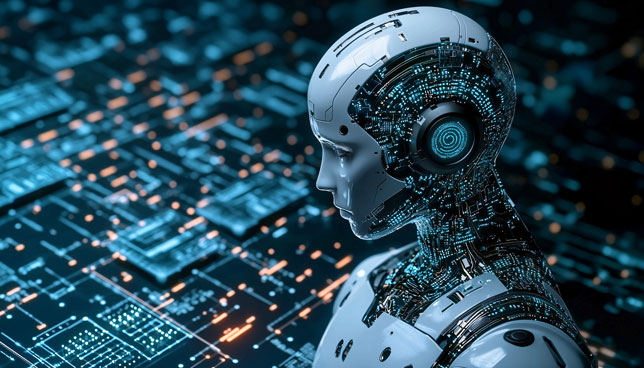
This statement from Wang underscores a profound alignment between ARI’s foundational philosophy and Meta’s broader, long-term ambitions for artificial general intelligence (AGI), particularly in its physical manifestation. The concept of "learning directly from human experience" rather than sole reliance on teleoperation (remote control) is a critical paradigm shift, suggesting a focus on autonomous learning and adaptability that mirrors biological intelligence.
Integration into Meta Superintelligence Labs (MSL)
Following the acquisition, ARI’s entire team, including its co-founders Xiaolong Wang and Lerrel Pinto, will be integrated into Meta Superintelligence Labs (MSL). MSL is Meta’s dedicated and highly ambitious AI research organization, established with the explicit goal of advancing the frontiers of AI, including the pursuit of AGI. Within MSL, the ARI team is slated to concentrate on developing advanced model capabilities for robust robot control, fostering self-learning mechanisms in robotic systems, and achieving holistic, whole-body humanoid control. This integration is designed to accelerate Meta’s research into AI systems that can not only understand and generate information but also interact physically with the world, a capability often referred to as "embodied intelligence."
The founders of ARI bring a formidable blend of academic rigor and industry experience in both robotics and machine learning. Dr. Wang’s impressive background includes prior research roles at Nvidia and his tenure as an associate professor at the University of California, San Diego. Dr. Pinto, similarly, has held teaching positions at New York University and notably co-founded Fauna Robotics, another specialized humanoid robotics startup that was subsequently acquired by Amazon earlier this year. Their combined expertise provides Meta with a significant boost in a highly competitive and specialized field.
Meta’s Expanding AI Investments and Strategic Shift

The acquisition of ARI arrives at a juncture when Meta continues to substantially escalate its investments in AI infrastructure and associated research and development. Recent financial disclosures reported by The Wall Street Journal indicate that Meta has recently increased its projected capital expenditures for 2026 by a considerable $10 billion, raising the range to between $125 billion and $145 billion. This increase is attributed to higher component costs, primarily driven by the intense demand for advanced semiconductors, and additional spending earmarked for the construction and expansion of AI data centers. These colossal investments underscore Meta’s conviction that AI, particularly advanced forms of it, will be the foundational technology driving future innovation and growth across its diverse portfolio.
This pronounced pivot towards AI also represents a significant strategic reallocation of resources for Meta, following several years of substantial, often controversial, investment in augmented reality (AR) and virtual reality (VR) technologies under its "metaverse" vision. While the metaverse remains a long-term aspiration, the immediate and tangible progress in AI, coupled with its pervasive applicability, appears to have shifted Meta’s nearer-term strategic focus. The ARI acquisition strongly suggests that Meta views robotics as a logical and potentially transformative extension of its overarching AI strategy. It is important to note, however, that Meta has not yet announced any specific consumer-oriented humanoid robot product or provided a definitive timeline for such a release, indicating that the current focus remains on foundational research and capability development.
The Rise of Embodied AI: An Industry-Wide Trend
Meta’s foray into physical AI through the ARI acquisition is highly congruent with a broader, accelerating industry trend often referred to as "embodied AI" or "physical AI." Across the technology landscape, from established giants to nimble startups, there is an increasing concentration on developing AI models that possess the capacity to interact directly with the physical world through robotic agents, as opposed to models that solely generate digital outputs such such as text, images, code, or video.
This paradigm shift acknowledges that true general intelligence, as observed in humans, is inherently embodied. It develops through interaction with a physical environment, requiring the processing of sensory input and the execution of physical actions. In the context of embodied AI, some of the most formidable and complex problems include robust perception (interpreting sensory data), fine dexterity (manipulating objects with precision), safe navigation in unstructured spaces, and crucially, adapting to the unpredictable and dynamic nature of human environments. Solutions to these challenges are not only critical for robotics but also feed back into the development of more robust and generally intelligent AI systems.

The deal also reflects a growing appreciation for the critical importance of the software layer in modern robotics. Traditionally, robotics research and development often centered on the mechanical design and engineering of robot bodies. However, the current trend emphasizes the development of sophisticated "brains" – the AI and machine learning systems that enable robots to learn new tasks, adeptly manipulate a wide array of objects, and operate across potentially diverse hardware platforms. This focus on generalizable AI for robotics suggests a future where a common intelligent "brain" could power various robotic "bodies," much like operating systems power different computer hardware. While this market is still in its nascent stages, its potential to revolutionize industries from logistics and manufacturing to healthcare and home assistance is immense.
Competitive Landscape and Market Dynamics
The acquisition of ARI strategically positions Meta within a rapidly intensifying competitive landscape for embodied AI. Many of Meta’s rivals are also making significant investments in physical AI systems. As noted, Amazon previously acquired Fauna Robotics, a company co-founded by ARI’s Lerrel Pinto, earlier this year, signaling its intent in the humanoid robotics space, particularly given Amazon’s extensive operations in logistics and warehousing. Other prominent technology companies and numerous startups are actively raising substantial capital to develop advanced robot learning systems and deploy sophisticated humanoid platforms.
Google, through its DeepMind division, has been a long-standing pioneer in robot learning, often demonstrating impressive capabilities in areas like manipulation and locomotion. OpenAI, a leading force in large language models, recently partnered with Figure AI, a prominent humanoid robotics startup, to develop next-generation AI models for Figure’s humanoids. Tesla’s "Optimus" robot project, though still in early development, also underscores the high-profile interest in general-purpose humanoid robots. Furthermore, established robotics firms like Boston Dynamics continue to push the boundaries of robotic mobility and dexterity. For Meta, ARI provides a small, highly specialized robotics team and critical intellectual property at a pivotal moment, allowing it to accelerate its own efforts and compete more effectively.
Commercial Viability and Hurdles Ahead

Despite the fervent industry interest and significant investment, the commercial case for general-purpose humanoid robots, particularly for widespread deployment in homes, warehouses, factories, or healthcare settings, remains largely unproven and fraught with challenges. Humanoid robots currently face several substantial hurdles. These include prohibitively high manufacturing and operational costs, persistent reliability problems, stringent safety requirements for operating alongside humans, complex regulatory questions (especially concerning autonomy and liability), significant battery life constraints, and the inherent difficulty of consistently performing ordinary physical tasks in unpredictable real-world environments.
Even the most advanced AI models, which demonstrate impressive capabilities in simulated or controlled digital benchmarks, frequently struggle when translated into the chaotic and nuanced reality of homes, offices, or industrial sites. The gap between simulated success and real-world robustness remains a significant chasm that current research is striving to bridge. Factors such as variations in lighting, unexpected obstacles, changes in surface texture, and the sheer variability of human interaction pose immense challenges for current robotic systems.
Ultimately, Meta’s acquisition of Assured Robot Intelligence is a clear signal of its long-term strategic commitment to developing advanced AI capabilities that can interact with and influence the physical world. While the immediate future may involve foundational research and incremental progress, the ultimate vision, as articulated by ARI’s founders, is to achieve "physical AGI" – a powerful and adaptable form of intelligence that could one day bring "personal superintelligence into the physical world," potentially reshaping industries and human-robot interaction in profound ways. The journey, however, will be long, capital-intensive, and filled with complex technical and commercial challenges that will test the limits of current AI and robotics engineering.