


Microsoft has officially unveiled a comprehensive suite of initiatives and technological tools designed to integrate generative artificial intelligence into the global education sector. The centerpiece of this announcement is the Microsoft Elevate for Educators program, a strategic initiative aimed at bridging the gap between emerging AI capabilities and practical classroom application. By providing educators with a combination of community support, professional development, and purpose-built AI tools, the company intends to streamline administrative burdens and enhance personalized learning for students across the K-12 and higher education spectrum.
This rollout comes at a critical juncture for global education systems, which are currently navigating the complexities of digital transformation and the rapid rise of large language models. Microsoft’s strategy focuses on three core pillars: empowering education leaders with strategic frameworks, providing educators with time-saving instructional assistants, and equipping students with adaptive learning companions and career-readiness resources.
The Strategic Framework of Microsoft Elevate for Educators
The Microsoft Elevate for Educators program serves as a dedicated branch of the company’s broader "Microsoft Elevate" commitment. This global mission is aimed at addressing the digital divide and the burgeoning "AI skills gap." According to corporate projections, Microsoft intends to help more than 20 million people worldwide obtain in-demand AI skilling credentials within the next two years.
For the education sector, this program offers more than just software. It provides access to one of the largest peer-to-peer educator networks in the world, facilitating a collaborative environment where teachers can share best practices for AI implementation. The program includes free professional development resources and pathways to formal credentials, ensuring that school leaders and faculty can remain current with technological shifts.
Industry analysts note that such initiatives are essential as schools face increasing pressure to modernize. By focusing on "Trustworthy AI," Microsoft is attempting to reassure institutions that these tools are built with privacy, security, and pedagogical integrity at the forefront. The initiative aims to shift the role of the educator from administrative overseer to a high-touch mentor, using AI to handle repetitive tasks such as grading rubrics and lesson formatting.

Advanced Instructional Tools: Teach and the Microsoft Learning Zone
To provide immediate utility in the classroom, Microsoft has introduced "Teach," an AI-powered assistant integrated directly into the Microsoft 365 Copilot app. Designed specifically for instructional workflows, Teach allows educators to generate lesson plans aligned with specific academic standards, create quizzes, and develop comprehensive rubrics in a fraction of the time previously required.
One of the most significant features of Teach is its ability to adapt materials for diverse learners. Educators can use simple prompts to adjust the reading level of a text or modify content to meet the needs of students with different learning styles. This functionality addresses a long-standing challenge in education: the difficulty of providing truly individualized instruction within a crowded classroom. By offering this tool at no additional cost to existing Microsoft 365 Education customers, the company is lowering the barrier to entry for high-level AI assistance.
Complementing this software-based approach is the Microsoft Learning Zone, an application designed to leverage the hardware capabilities of Copilot+ PCs. These devices, which feature on-device neural processing units (NPUs), allow for more responsive and interactive AI experiences. The Learning Zone app has already earned the International Society for Technology in Education (ISTE) Seal of Alignment, recognizing its adherence to research-backed teaching practices.
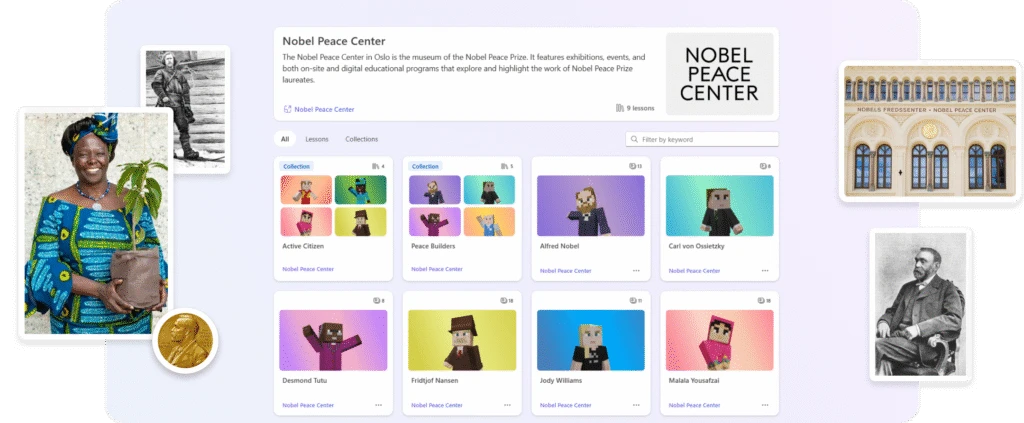
The Learning Zone incorporates content from prestigious global partners, including NASA, OpenStax, PBS NewsHour, the Nobel Peace Center, and the World Wildlife Fund. For example, a new collection of lessons from the Nobel Peace Center allows students to explore human rights and peace-building through the stories of laureates like Malala Yousafzai. These lessons are further enhanced through integration with Minecraft Education, providing a gamified and immersive learning environment.
Empowering Students through Adaptive Learning and Career Readiness
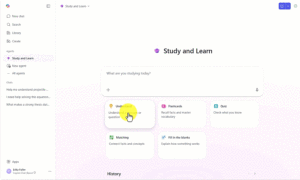
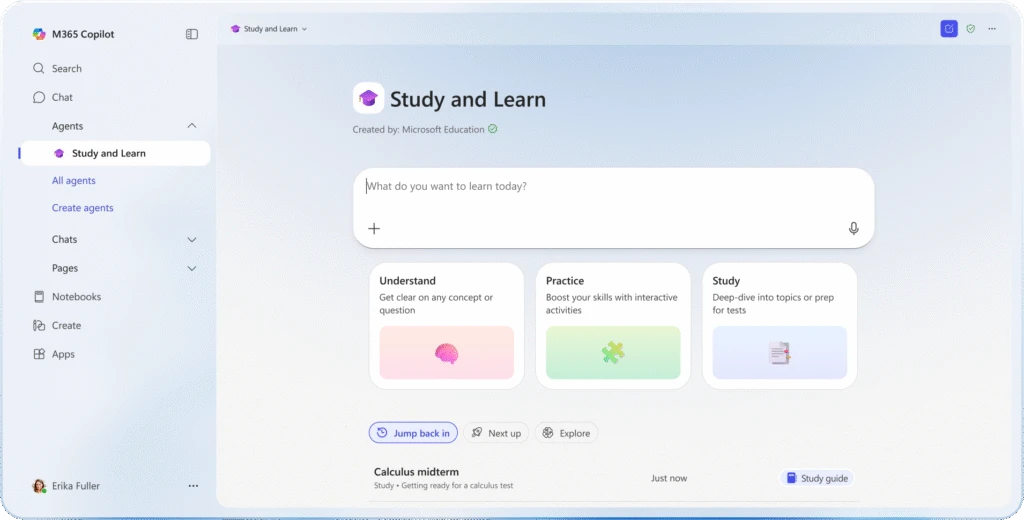
The announcement also prioritizes the student experience through the introduction of the Study and Learn Agent. Built on established learning science principles, this AI-powered companion is designed for students aged 13 and older. Rather than simply providing answers, the agent focuses on developing critical and reflective thinking skills. It offers adaptive exercises, flashcards, and guided study sessions that help students master complex concepts at their own pace.
For higher education, Microsoft is addressing the transition from the classroom to the workforce. In a time-limited offer, eligible university students can access 12 months of Microsoft 365 Premium and LinkedIn Premium Career at no extra cost. This dual-subscription model is intended to support academic excellence—through advanced writing and organization tools—while simultaneously providing a competitive edge in the job market. LinkedIn Premium Career features such as interview preparation, networking insights, and featured applicant status are positioned as vital resources for students entering an increasingly automated economy.
Institutional Guidance and the IDC White Paper Findings
To support the administrative side of AI adoption, Microsoft has released a new IDC White Paper titled "A Blueprint for AI-Ready Schools: Strategies from the Front Lines of K-12 Education." This research, sponsored by Microsoft, highlights the strategies employed by early adopters such as Brisbane Catholic Education in Australia, Broward County Schools in the United States, and the Coquitlam School District in Canada.
The white paper identifies several key themes for successful AI integration:
- Strategic Planning: Moving beyond ad-hoc tool usage toward a district-wide policy.
- Capacity Building: Investing in teacher training to prevent "AI fatigue."
- Safety and Compliance: Ensuring that AI tools meet stringent data privacy standards.
In tandem with this research, Microsoft has launched the Education Security Toolkit. This resource provides a comprehensive roadmap for schools to strengthen their cybersecurity posture, offering guidance on everything from compliance to real-world implementation scenarios. As educational institutions remain prime targets for cyberattacks, this focus on security is a critical component of the company’s broader value proposition.
Chronology of Development and Global Rollout
Microsoft’s involvement in education spans over five decades, but the current trajectory began in earnest with the integration of OpenAI’s GPT models into its ecosystem. The following timeline outlines the recent evolution leading to today’s announcement:
- Mid-2023: Microsoft begins testing Copilot features in specialized preview groups within higher education.
- Early 2024: The launch of Copilot+ PCs introduces on-device AI capabilities, setting the stage for more powerful classroom hardware.
- July 2025: The broader "Microsoft Elevate" commitment is announced, establishing the goal of skilling 20 million people.
- January 2026: The official launch of Microsoft Elevate for Educators and the suite of tools including Teach and the Study and Learn Agent.
- Late 2026: Expected integration of Learning Zone with major Learning Management Systems (LMS) and expanded language support for Portuguese, French, and German.
The company has confirmed that it will showcase these innovations at Bett UK 2026, the world’s leading education technology show, held from January 21–23 in London. This event will serve as a platform for global educators to experience the tools firsthand at the Microsoft exhibit.
Broader Implications for the Future of Education
The implications of Microsoft’s latest move extend beyond simple software updates. By embedding AI into the very fabric of the educational experience, the company is participating in a fundamental shift in how knowledge is acquired and assessed.
The emphasis on "AI-Ready Schools" suggests that the traditional model of education is evolving toward a hybrid system where human expertise is augmented by machine intelligence. For teachers, the primary benefit is the reclamation of time. If AI can handle 30% of administrative and preparatory tasks, that time can be redirected toward social-emotional learning and direct student engagement.
However, the rollout also raises questions about the digital divide. While Microsoft is offering many of these tools at no additional cost to existing customers, the most advanced features—such as those found in the Learning Zone—require Copilot+ PC hardware. Ensuring that students in underfunded districts have access to these hardware-dependent innovations remains a significant challenge for the industry at large.
Furthermore, the introduction of AI agents for study and learning marks a shift toward "agentic" education, where students interact with personalized tutors that never tire. This could lead to a more equitable distribution of tutoring resources, which were previously accessible only to those who could afford private instruction.
As Microsoft moves forward with its 20-million-person skilling goal, the success of the Elevate for Educators program will likely be measured by how effectively it moves AI from a novelty into a foundational tool for global literacy and career readiness. With the Education Security Toolkit and the IDC White Paper, Microsoft is positioning itself not just as a vendor, but as a strategic partner for governments and school boards worldwide.