




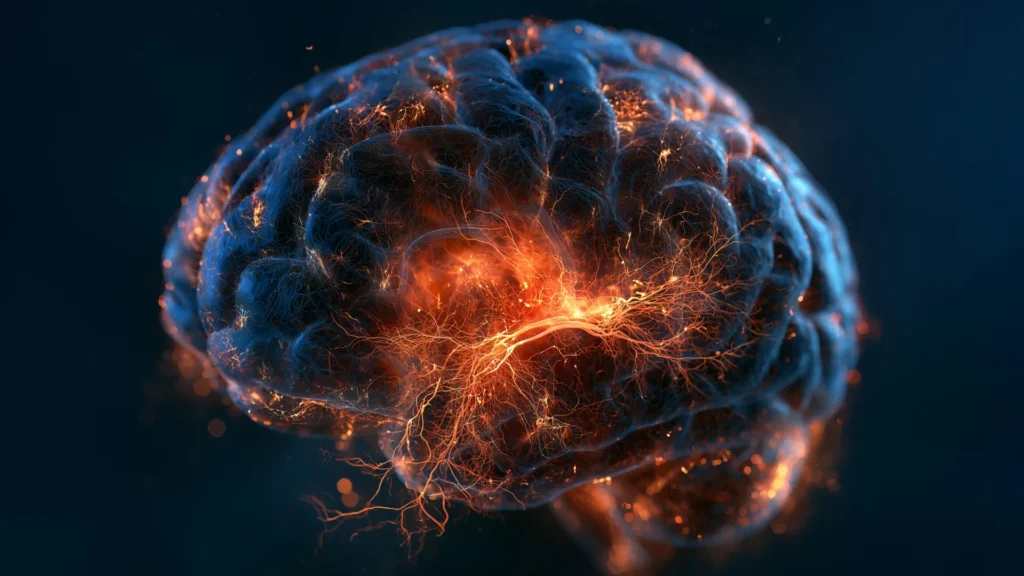
For decades, the prevailing psychiatric consensus characterized major depressive disorder (MDD) primarily as a chemical imbalance, specifically a deficiency in neurotransmitters like serotonin. However, a landmark study published August 21, 2026, in the journal Nature Medicine challenges this long-standing paradigm, suggesting that depression is fundamentally a disease of cellular resilience and structural adaptation. Researchers at Columbia University Vagelos College of Physicians and Surgeons have provided the first definitive evidence that neurogenesis—the process of creating new neurons—significantly stalls in the hippocampus of adults suffering from major depression. This finding offers a new biological framework for understanding why individuals with the condition often struggle to adapt to emotional stressors and environmental changes.
While the human brain contains approximately 100 billion neurons, the vast majority are established during prenatal development. The hippocampus, a region critical for memory formation and emotional regulation, remains a rare exception, serving as a site for ongoing neurogenesis throughout adulthood. The Columbia team’s research suggests that when this renewal process is disrupted, the brain loses a vital mechanism for maintaining psychological health.
The Mechanism of Memory and Emotional Resilience
The hippocampus is responsible for more than just the storage of episodic memories; it plays a pivotal role in "pattern separation," the cognitive process that allows the brain to distinguish between similar experiences. When an individual encounters a new event, the hippocampus effectively labels it, keeping it distinct from past memories.
According to Dr. Maura Dupont, lead author of the study and a professor of psychiatry, the absence of new neurons impairs this mechanism. "You may be out with a friend for lunch, but she’s tired and doesn’t talk much," Dupont explains. "With intact pattern separation, you remember this as a unique event. With impaired pattern separation, it becomes mixed with previous memories of feeling rejected, leading you to think, ‘They’re upset with me.’" This cognitive blurring often forces patients to rely on historical negative experiences to interpret current reality, creating a feedback loop of pessimism that is a hallmark of clinical depression.
Newborn neurons are uniquely suited to integrate into existing memory circuits because of their high plasticity and sensitivity to new experiences. By "turning neurogenesis back on," researchers believe it may be possible to rewire the hippocampal circuit, providing a biological pathway to alleviate symptoms for patients who do not respond to traditional antidepressant medications.
Methodology and Data Depth
The investigation, which spanned several years of rigorous laboratory analysis, involved the examination of nearly 500,000 brain cells donated by both depressed individuals and non-depressed control subjects post-mortem. The research team utilized a suite of advanced molecular techniques to map the activity of every gene within individual cells, alongside proteomic analyses to identify changes in cellular protein structures.
This granular approach allowed researchers to localize disruptions within the "trisynaptic circuit," the hippocampus’s primary pathway for establishing emotional memories. Beyond the suppression of neurogenesis, the data revealed systemic molecular failures. The affected genes were involved in critical cellular functions, including the synthesis of new synaptic connections, cellular communication, metabolic energy production, and intracellular material transport. The findings confirm that the biological footprint of depression is far broader than previously understood, encompassing widespread inflammation and chronic cellular stress across the hippocampal architecture.
Chronology of Discovery and Scientific Context
The path to this discovery has been marked by a transition from broad pharmacological observations to specific molecular insights.
- 1950s–1990s: The "Monoamine Hypothesis" dominates, focusing on serotonin and norepinephrine deficiency.
- 1998: Seminal research establishes that adult neurogenesis occurs in the human hippocampus, sparking interest in its role in mood regulation.
- 2010s: Studies on radiation-treated patients with brain tumors provide a natural experiment, suggesting that the elimination of hippocampal neurogenesis correlates with increased emotional distress.
- 2023–2025: The Columbia University team conducts high-resolution single-cell sequencing on post-mortem hippocampal samples.
- August 21, 2026: The study is published, formally linking stalled neurogenesis to the molecular pathways of major depressive disorder.
This chronology highlights a steady shift in the scientific community toward viewing depression as a multifaceted disorder influenced by both genetic predisposition and environmental "dimmer switches"—epigenetic mechanisms that dictate gene expression based on life experience, aging, and chemical exposure.
Implications for Future Clinical Practice
The implications of this research are profound for the future of psychiatric medicine. Currently, depression is diagnosed and treated based on clinical symptoms and self-reporting. However, the diversity of molecular changes identified by the Columbia team suggests that "depression" may not be a single disease, but a collection of distinct pathologies with different underlying mechanisms.
Dr. Dupont and her colleagues are advocating for a paradigm shift similar to that seen in oncology. "We want to reclassify depression based on its molecular features, similar to what has been done in cancer," says Dupont. "Classifying cancers based on their cellular characteristics, not their locations, has led to new and improved treatments. We hope the same will be true for depression."
By categorizing depression into molecular subtypes, clinicians could eventually move away from the "trial-and-error" method of prescribing antidepressants. Instead, patients might receive targeted therapies designed to address the specific molecular pathway—whether it be inflammation, synaptic deficit, or neurogenic inhibition—that is driving their condition.
Broadening the Scope of Mental Health Treatment
The study has garnered attention from the broader medical community as a critical advancement in understanding the biology of the brain. While the study provides a roadmap, experts emphasize that there is still much to learn regarding the complete mechanism, particularly regarding how these findings translate from post-mortem analysis to live, therapeutic intervention.
Furthermore, the research underscores the necessity of interdisciplinary collaboration. The project integrated data from the JP Sulzberger Columbia Genome Center, the Center for Computational Biology and Bioinformatics, and the Department of Biology’s Quantitative Proteomics and Metabolomics Center. This synergy allowed for a comprehensive view of the brain that would have been impossible with traditional methodologies.
As researchers continue to decode the molecular signatures of depression, the focus is shifting toward neuro-restorative strategies. If neurogenesis can be pharmacologically or behaviorally stimulated, it could represent a revolutionary shift in treating not only depression but also other cognitive and emotional disorders linked to hippocampal degradation.
The research team, which included an extensive group of scientists from the Columbia University Irving Medical Center and the New York State Psychiatric Institute, has laid a foundation that invites future exploration into how lifestyle factors—such as exercise, sleep, and cognitive behavioral therapy—might influence these specific molecular "dimmer switches." For millions of patients worldwide, the promise of a personalized, biologically informed treatment plan offers a significant glimmer of hope in the ongoing effort to demystify and effectively treat major depressive disorder.







