



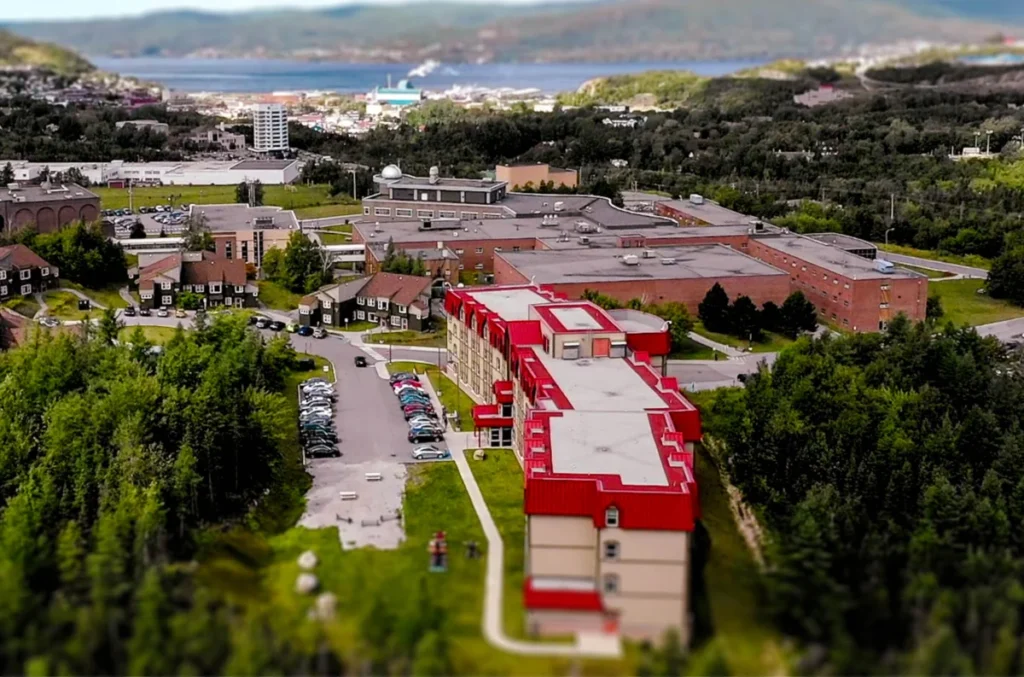
The provincial government of Newfoundland and Labrador has announced its 2026 fiscal budget, marking a significant financial blueprint for the province’s future, particularly in the realm of post-secondary education. Unveiled this Wednesday, the budget represents the first major fiscal policy statement from the governing party since their election last year. A substantial allocation of $446 million has been designated for post-secondary education, a notable increase from the $432 million allocated for the 2025-26 academic year. This funding package is anchored by a previously announced tuition fee freeze, a measure set to take effect this fall across both Memorial University of Newfoundland (MUN) and the College of the North Atlantic.
Tuition Freeze: A Welcome Relief with Lingering Questions
The decision to freeze tuition fees for the upcoming academic year has been met with a mixture of relief and caution by student advocates and institutional leaders. Minister of Finance Craig Pardy articulated the government’s rationale, stating that the freeze is intended to ensure "students have access to a high-quality post-secondary education in Newfoundland and Labrador." He further emphasized that this measure "will only be lifted when we have confidence from all leaders across the sector that the system is back on track." This statement suggests a long-term vision for financial stability within the post-secondary sector, contingent on broader systemic improvements.
Nicolas Keough, chairperson of the Canadian Federation of Students – Newfoundland and Labrador (CFS-NL), expressed strong approval of the tuition freeze. "We’re extremely happy about the tuition freeze being announced," Keough stated. "It’s a big moment for students and it’s directly as a result of the student unions." This highlights the significant advocacy efforts by student organizations in achieving this outcome, underscoring the collective power of student representation in influencing government policy.
However, Keough also voiced concerns regarding the operational funding for post-secondary institutions. "But, he added, CFS-NL is concerned about the operating funding for post-secondary institutions," he noted, adding, "We don’t know how much money needs to go towards the tuition freeze and how much is to go to operations." This distinction is critical, as a tuition freeze, while beneficial for students’ immediate financial burden, requires compensatory funding to prevent institutions from experiencing significant revenue shortfalls that could impact academic quality and operational capacity. The precise allocation of the increased funding between tuition offset and core operational support remains a key area of scrutiny.
Uncertainty Persists Despite Funding Increase for Memorial University
Memorial University of Newfoundland (MUN), the province’s largest post-secondary institution, is slated to receive $328.7 million for operations. This represents a 5.5% increase, or $17 million, compared to the previous year. However, this increase is explicitly tied to offsetting the costs associated with the tuition fee freeze. This detail has led to apprehension among faculty representatives, who argue that the net financial gain for the university’s core operations may be minimal.
Lisa Moores, president of the Memorial University of Newfoundland Faculty Association, offered a critical perspective. "Our understanding at this point is that, really, all the gains to Memorial were related to relief to offset that tuition freeze, and that otherwise previously planned cuts have gone ahead," Moores explained. "So, the end result of that is a net gain overall of a relatively small amount." This suggests that while the tuition freeze is funded, other planned budgetary adjustments or reductions may still be in effect, potentially impacting the university’s long-term strategic goals and academic offerings.
Moores further elaborated on the historical context of university funding, stating, "We wanted to really see this new PC government kind of strike out in a new direction and make a firm commitment to begin the process of rebuilding Memorial University. We’ve had over a decade of pretty steady cuts." She drew a stark comparison, noting, "Right now, we’re still looking at a budget to run the university in 2026 that’s really a 2013 or 2012 budget." This perspective underscores a deep-seated concern about the university’s financial trajectory over the past decade, arguing that current funding levels, even with the increase, may not be sufficient to reverse a trend of declining resources. The tangible consequences of this, according to Moores, include anticipated "program cuts, job losses, decrease of the capacity of teaching at the university and also a continuing move towards a smaller university."
A spokesperson for MUN acknowledged the increase in operating funding but stated that the university does not yet have a precise estimate of how much of this increase is designated to offset the tuition fee freeze. The university is currently undertaking a comprehensive analysis of the provincial grant allocation, alongside other revenue streams such as tuition fees, to formulate its operational budget. This process is crucial for understanding the true financial impact of the budget on MUN’s day-to-day operations and its ability to pursue strategic initiatives.
The university has been actively addressing a significant financial shortfall, estimated at approximately $25 million. Earlier this year, MUN implemented measures such as reducing its executive leadership team and divesting property in an effort to streamline its finances. In a statement released on the MUN website, University President Janet Morrison indicated that the budget "provides the stability needed to implement structural change deliberately and navigate our changing circumstances head-on." However, she also cautioned that "this year’s funding doesn’t eliminate hard decisions," signaling that the university may still need to make difficult choices to balance its budget and ensure its long-term sustainability.
Targeted Funding for Critical Disciplines: Medicine and Nursing
Beyond the general operating funds, the 2026 budget includes targeted investments in critical academic areas, notably MUN’s faculty of medicine and the nursing programs. The faculty of medicine at MUN will see an increase of $4.7 million to its operating budget, an allocation that is separate from the overall funding provided to the university. A significant portion of this funding is earmarked for general operating costs and the fulfillment of previous commitments, including a strategic initiative to increase the annual intake of MD students at the St. John’s campus from 80 to 90. This expansion aims to address the province’s ongoing need for physicians, particularly in rural and underserved areas.
In parallel, the province has announced an investment of nearly $8 million dedicated to expanding the number of graduating nurses. This initiative aims to increase the total number of annually graduating nurses from 48 to 72. The funding allocated to the faculty of nursing is incorporated within MUN’s overall operating funding envelope. This investment is a direct response to the persistent demand for healthcare professionals across Newfoundland and Labrador, a challenge exacerbated by an aging population and the emigration of skilled workers.
Incentivizing Graduates to Remain: A New Tuition Refund Program
A significant new initiative unveiled in the budget is a graduate tuition refund program, designed to encourage graduates to remain and contribute to the provincial economy. Over the next five years, more than $40 million has been earmarked for this program, which is set to commence in the next fiscal year. This program, a key component of the Progressive Conservatives’ election platform, will offer a tuition refund to graduates who commit to living and working in Newfoundland and Labrador after completing their studies. The rationale behind this program is to stem the tide of out-migration of skilled individuals, thereby strengthening the provincial workforce and fostering economic growth. By reducing the financial burden of post-secondary education for those who choose to stay, the government aims to create a more attractive environment for young professionals and retain valuable talent within the province.
Addressing Healthcare Workforce Shortages: Paid Work Terms and Apprenticeships
In addition to the graduate refund program, the budget also allocates $5 million for paid work terms specifically for students pursuing healthcare careers in areas identified as hard-to-fill. This program aims to provide practical, hands-on experience for students in critical healthcare fields, potentially incentivizing them to pursue careers within the province’s healthcare system. By offering paid internships, the government seeks to make these vital roles more accessible and appealing.
Furthermore, the budget signals support for an apprenticeship training program, to be developed in collaboration with industry partners. While specific details regarding this initiative were not immediately available, its inclusion suggests a broader strategy to bolster skilled trades and professions within Newfoundland and Labrador. This collaborative approach is intended to ensure that training programs align with the current and future needs of the provincial economy.
Looking Ahead: Operational Budgets and Ongoing Challenges
The release of the provincial budget sets the stage for the individual operating budgets of post-secondary institutions, which are expected to follow. Memorial University’s operating budget for the 2026-2027 academic year is anticipated to be released in May. This upcoming release will provide further clarity on how the provincial allocation will be utilized and how it aligns with the university’s strategic priorities and its ongoing efforts to address financial challenges.
The coming months will be crucial for assessing the true impact of the 2026 budget on post-secondary education in Newfoundland and Labrador. While the tuition freeze offers immediate relief to students, the long-term implications for institutional sustainability, program delivery, and research capacity will depend on the adequacy of operational funding and the government’s commitment to addressing systemic issues within the sector. The success of initiatives like the graduate tuition refund program and targeted investments in healthcare education will also be key indicators of the budget’s effectiveness in fostering a thriving and resilient provincial economy. The ongoing dialogue between the government, educational institutions, and student representatives will be vital in navigating the complexities of post-secondary education funding and ensuring a bright future for students and the province alike.