


Ontario’s post-secondary institutions are cautiously navigating the 2026-27 fiscal year, having narrowly averted a predicted financial crisis thanks to a significant injection of provincial funding announced in February. However, despite this substantial aid, many universities are still grappling with the necessity of implementing budget cuts to achieve fiscal balance, highlighting the complex financial landscape they continue to face.
The Ontario government’s comprehensive announcement in February, committing an additional $6.4 billion over four years to the province’s colleges and universities, coupled with the end of a seven-year tuition freeze, has been hailed as a historic step in addressing a widening funding gap. Steve Orsini, president and CEO of the Council of Ontario Universities (COU), which had actively lobbied the provincial government for enhanced grant funding due to years of stagnant base funding and frozen tuition, described the announcement as "going a long way to closing a growing funding gap by a historic degree." Yet, Orsini cautioned that "there’s still some heavy lifting that universities will have to do to continue the drive for long-term financial sustainability." This sentiment underscores the ongoing challenges, even with the improved financial outlook.
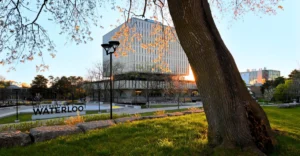
The University of Waterloo, for instance, is planning to implement $20 million in budget reductions. This measure is intended to address a structural deficit of $33.7 million, even as the university anticipates receiving nearly $36 million more in provincial operating grants for the upcoming academic year compared to the previous one. Jacinda Reitsma, Waterloo’s vice-president of administration and finance, emphasized the critical role of the new provincial funding, stating, "Without that additional funding, we would have been in a position for significantly more budget reduction requirements." She also noted the positive impact of the clarity the funding provides for long-term planning, adding, "The financial relief is welcome but also the clarity on what we may expect in future years as we work through long-term planning."
Universities Await Funding Allocation Details and Finalize Budgets
Across the province, other universities echo Waterloo’s sentiment, expressing gratitude for the increased provincial support while simultaneously awaiting crucial details regarding the specific allocation of these funds. The preparation of 2026-27 budgets has largely been based on preliminary estimates provided by the provincial government. The delay in receiving confirmed figures and further confirmations from the province has led some institutions to postpone their budget approvals. The provincial government has also urged universities to adopt more robust, longer-term budget planning processes, requiring updated and comprehensive plans that reflect the recent funding changes.
"We are taking the time to get this right," stated Lisa Philipps, interim president and vice-chancellor of York University in Toronto, in a published statement on April 22nd. York University’s multi-year budget plan, approved in the previous year, had projected a substantial deficit of $67.4 million for the 2026-27 fiscal year. An updated budget, which is expected to reflect the impact of the new provincial funding, is slated for finalization in June. Philipps articulated the university’s commitment to fiscal health, saying, "Our efforts right now to keep York on track to eliminate its structural deficit are critical to ensure the University can advance its distinctive mission and create positive impact for students and society over the long term."
Trent University in Peterborough, which had reported facing nearly $12 million in cuts for the upcoming academic year, is also awaiting detailed provincial allocations before releasing its budget specifics. Similarly, the University of Windsor has indicated that its budget will not be made public until its internal approval processes are fully completed.
Lingering Effects of Federal Visa Restrictions and Past Tuition Policies
The financial strain on Ontario universities has been compounded by the federal government’s decision in 2024 to reduce the number of international student permits. This policy change has disproportionately affected institutions that had become heavily reliant on international student tuition revenue. While the provincial government’s recent funding announcement includes $750 million allocated in April 2025 for additional student spaces in STEM programs, this funding is not permanent, leaving a degree of uncertainty for future financial planning.
A summary of Carleton University’s board of governors meeting on April 28th highlighted that the provincial government’s recent funding improvements "do not fully offset the cumulative impact of years of earlier tuition reductions, inflation and enrollment disruptions." The board passed an operating and ancillary budget with a $32 million deficit, with the summary further noting, "Tuition revenues continue to lag behind cost growth, particularly as inflation-adjusted domestic tuition remains significantly below pre-2019 levels." This indicates that the cost of delivering education has outpaced the revenue generated from domestic student fees, a trend exacerbated by years of tuition freezes and modest increases.
Algoma University, located in Northern Ontario, faces a projected deficit of $16.45 million for the upcoming year. In 2022, the Auditor General of Ontario found that Algoma University drew 76% of its tuition revenue from international students at its Brampton campus. The university’s own figures reveal a dramatic decline in enrollment, from 13,600 students in the 2023-24 academic year to an anticipated 3,292 students for the next year.
Consequently, job cuts are anticipated at Algoma University. Part-time instructors, who primarily teach at the Brampton campus, have already experienced a reduction of nearly 50% in the number of courses they teach between the winter 2025 and winter 2026 terms. The university’s original campus is situated in Sault Ste. Marie, with additional operations in Timmins.
Vinay Yarlagadda, vice-president of the Ontario Public Service Employees Union Local 685, representing approximately 150 part-time instructors at Algoma University, described the situation as "very clear." He stated that his members have been informed by the administration that they are likely to bear the brunt of academic job cuts. Despite the challenging circumstances, Yarlagadda expressed cautious optimism, hoping that the volatility in international student enrollment will stabilize. "We’re close to being back at the 2019 levels with the student body here in Brampton," he commented. "Hopefully, our levels won’t fall any further and they’ll start to rise again. I’m optimistic."
Some Institutions Project Balanced Budgets
In contrast to the widespread challenges, some universities are projecting balanced budgets for the 2026-27 academic year. Lakehead University in Thunder Bay is expected to present its budget to its board in early June, with projections from late April indicating a proposed balanced budget. Gillian Siddall, Lakehead’s president and vice-chancellor, described the province’s additional funding as "welcome news and provides a timely and sustainable funding framework for the sector."
Laurentian University in Sudbury, which is still operating under a provincial exit loan agreement following its insolvency proceedings five years ago, has projected a $1.4 million surplus for the coming academic year. The university anticipates receiving $6.8 million in operating grants as a result of the February provincial announcement.
The University of Toronto, a large institution with a history of financial stability and a substantial endowment, has announced plans for a balanced budget in 2026-27. However, the university intends to achieve this through $20 million in cost reductions, primarily through attrition, the elimination of unfilled positions, and a decrease in discretionary spending. This approach aims to manage expenses without resorting to widespread layoffs.
Towards Long-Term Financial Sustainability: Shared Responsibilities
Steve Orsini of the COU reiterated the importance of a shared responsibility model for post-secondary financial stability, emphasizing the roles of government, universities, and students. He acknowledged that the province has "really stepped up to the plate" with its February funding announcement. Students will face a two-percent tuition increase in September, a measure intended to contribute to university revenues. Orsini stressed that universities must "continue to work with our administration, faculty and staff to continue to find additional savings to help ensure long-term financial sustainability. That was always our commitment."
However, students relying on financial aid are concerned about the future of the Ontario Student Assistance Program (OSAP). The provincial government’s February announcement indicated a shift in OSAP, making it primarily loan-based, with non-repayable grants comprising no more than 25% of a student’s financial package. Cyrielle Ngeleka, chairperson of the Canadian Federation of Students-Ontario, stated in a written release, "OSAP is no longer functioning in the way hundreds of thousands of students were originally promised." Furthermore, students express apprehension that ongoing cost pressures at universities will translate into larger class sizes and a reduction in course offerings, particularly if government funding remains insufficient to meet current needs.
Future Directions and Unresolved Details
Several critical details remain to be finalized, including the specific allocation of 70,000 additional student seats announced by the Ontario government. Approximately 30,000 of these seats are designated for domestic students already enrolled in colleges and universities who were not previously supported by provincial grants. The remaining 40,000 seats will be available through an application process for institutions, with a focus on priority areas such as STEM, healthcare, and education, as outlined by Orsini. Annual allocations for capital investments and equipment upgrades are also pending finalization.
Strategic mandate agreements, which universities negotiate with the province every five years to define institutional priorities, performance targets, and funding parameters, are currently being revised to incorporate the new funding policy. Orsini anticipates that by the fall, Ontario university students will observe program realignments aimed at enhancing financial sustainability. He added, "But they’ll have more supports in those programs. Whether it’s equipment, whether it’s quality, teaching – all those things will give students a better experience." This suggests a strategic recalibration of academic offerings to align with both financial realities and student needs, aiming for a more resilient and supportive educational environment.