


The landscape of American education is undergoing a profound structural transformation as 31 states—and counting—formally commit to participating in the controversial Education Freedom Tax Credit plan. The initiative, enacted as part of the federal legislative package colloquially known as the "One Big Beautiful Bill" passed by the Republican-led Congress in 2025, marks the first time the federal government has established a nationwide school choice tax incentive framework.
As state capitals race to evaluate the financial implications, regulatory hurdles, and long-term educational consequences, the program has ignited fierce national debate. While school choice advocates celebrate the framework as a historic expansion of educational access and funding, public education defenders warn of systemic resource diversion and the subsidization of private and religious institutions using taxpayer dollars. With critical implementation deadlines looming at the start of 2027, the rollout of the Education Freedom Tax Credit is poised to reshape the boundary lines between public, private, and home-based education across the United States.
Program Mechanics and Legislative Origins
At its core, the Education Freedom Tax Credit program leverages private philanthropy to fund educational opportunities. Under the federal framework, individuals and corporations that make cash contributions to approved scholarship-granting organizations receive a corresponding tax credit. These organizations then distribute the funds as scholarships to eligible students.
The mechanism was heavily championed by the Trump administration and secured through the sweeping tax and budget reconciliation package enacted in 2025. Proponents argued that creating a federal tax incentive would democratize school choice, allowing families trapped in underperforming zip codes to access alternative learning environments.
Following the legislative enactment, the U.S. Treasury Department and the Internal Revenue Service (IRS) released long-awaited proposed rules on October 1, 2026, to govern the administration of the program. These comprehensive guidelines clarified that taxpayer-supported scholarships could be utilized for a broad array of educational expenses. Beyond traditional private school tuition, the funds can be applied toward public school-related costs, including specialized tutoring, services for students with disabilities, textbooks, computers, and other auxiliary learning tools. Furthermore, the rules establish that students attending private and religious schools, as well as families opting for homeschooling, are eligible beneficiaries.

A Rapidly Expanding Footprint: The Chronology of State Adoption
The path from federal legislation to state-level adoption has moved at a breakneck pace, driven by advocacy campaigns, political alignments, and calculations over federal funding streams.
The legislative journey began in 2025 with the passage of the federal tax package. For months, state leaders found themselves in a holding pattern, waiting for federal regulatory agencies to clarify how the tax credits would interact with state constitutions, local funding formulas, and existing accountability standards.
When the Treasury Department and the IRS published their proposed rules on October 1, 2026, it acted as a catalyst for hesitant governors and state legislatures. Many officials who had adopted a wait-and-see approach quickly reevaluated their positions, balancing ideological opposition with a reluctance to leave federal education dollars on the table.
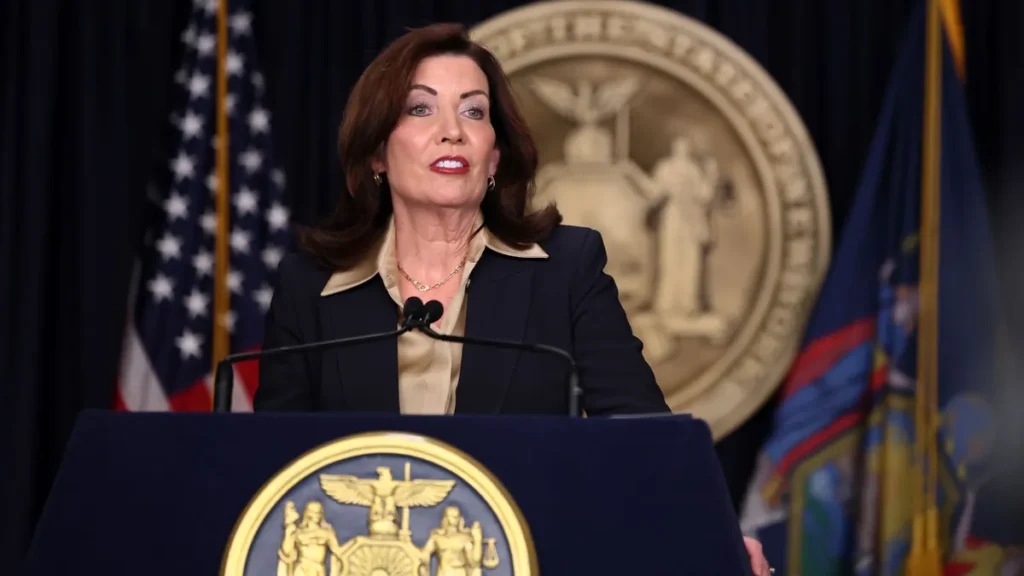
A pivotal moment occurred on October 9, 2026, when New York Governor Kathy Hochul announced that her state would opt into the federal program. New York’s participation carried significant symbolic and practical weight, signaling that even traditionally blue states with robust public school advocacy networks were willing to engage with the framework under specific conditions.
With New York and numerous other jurisdictions joining the fold, the tally of participating states surpassed 31 by mid-October 2026. The overarching timeline requires all interested states to officially opt into the program by January 1, 2027. Following that milestone, participating states face a secondary deadline of February 15, 2027, to submit their official lists of qualifying scholarship-granting organizations to federal authorities.
Demographic Reach and Supporting Data
The potential scope of the Education Freedom Tax Credit program is immense. According to a comprehensive demographic report published in July 2026 by the American Federation for Children, approximately 9 in 10 students nationwide will be eligible to participate. In concrete numbers, this translates to roughly 51.7 million out of the nation’s 56.4 million total public and private school students.

When the report was released, approximately 30.9 million eligible students—representing nearly 60% of the entire eligible student population nationwide—already resided in states that had signaled their intent to participate. With the recent wave of state opt-ins, including the addition of populous states like New York, that percentage has climbed significantly, bringing tens of millions of additional families into the potential orbit of the program.
Proponents point to these figures as evidence of overwhelming demand for educational flexibility. They argue that families across diverse socioeconomic backgrounds desire options outside of their assigned neighborhood schools and that the tax credit framework provides a viable economic bridge to those alternatives.
Official Responses and Ideological Divides
The national rollout of the tax credit has exposed deep ideological fractures regarding the purpose and funding of American education.
Private school choice advocates have vocally celebrated the release of the federal guidelines and the rapid expansion of state participation. Organizations and lobbyists backing the initiative argue that the framework will unlock billions of dollars in voluntary contributions, injecting vital resources into the educational marketplace and fostering innovation through competition. In their view, empowering parents to direct educational funds is a fundamental civil rights issue.
Conversely, public education advocates, teacher unions, and progressive policymakers have launched sharp criticisms against the program. Opponents contend that the federal rules effectively create a backdoor voucher system that drains financial support and political capital from public school districts, which educate the vast majority of American children. Critics argue that subsidizing private and religious education undermines the constitutional separation of church and state and leaves vulnerable populations—particularly students with severe disabilities or those in rural areas with few private alternatives—worse off.
State leaders have had to navigate these conflicting pressures carefully. Governor Hochul’s announcement regarding New York’s participation underscored the delicate political calculus involved.

"I’ve been clear from the start that New York would participate in the federal scholarship tax credit program if, and only if, all schools and students, including those in our public schools, could benefit," Hochul stated during her October 9 announcement. "After a careful review of the federal regulations, we believe this program has the potential to bring millions of additional dollars to New York students and families without taking a single dollar from public schools or our state or local budgets."
Other governors who initially expressed skepticism echoed similar sentiments, emphasizing that their decision to participate was predicated on protecting baseline public school funding while maximizing federal investment in student achievement.
Broader Impact and Long-Term Implications
As the January 1, 2027, opt-in deadline approaches, education policy analysts are assessing the long-term ramifications of the Education Freedom Tax Credit program.
One major area of analysis is the potential strain on state administrative agencies. States that choose to participate must establish rigorous oversight mechanisms to ensure that scholarship-granting organizations comply with federal guidelines, properly vet participating educational providers, and maintain transparency in fund distribution. The February 15, 2027, deadline for submitting qualifying organization lists leaves state departments of education with a compressed window to establish these regulatory pipelines.
Furthermore, legal challenges are widely anticipated. Civil liberties organizations and public school advocacy groups have signaled readiness to challenge the constitutionality of federal tax credits that indirectly subsidize religious education, setting the stage for potential landmark battles in the federal court system.
Ultimately, the Education Freedom Tax Credit represents a watershed moment in federal education policy. By intertwining the federal tax code with private educational scholarships on a national scale, the program has fundamentally altered the debate over how educational opportunity is defined, funded, and delivered in the United States. Whether the initiative proves to be a catalyst for inclusive educational improvement or a divisive force that fractures the public school system will depend heavily on the execution of state-level oversight and the outcomes experienced by millions of participating students in the years to come.