



In the persistent efforts to enhance schooling, particularly within the United States, the crucial element of student voice has regrettably diminished. Contemporary educational paradigms frequently prioritize standardized test scores, top-down curriculum directives, and narrow metrics of success that often fail to acknowledge the inherent humanity and diverse experiences of students. This prescriptive approach has not only fallen short in its primary objective of elevating academic performance, as evidenced by recent data indicating declines in reading scores to new lows on the National Assessment of Educational Progress (NAEP), exacerbated by significant setbacks for struggling learners (Schwartz, 2025), but it has also contributed to a palpable dissatisfaction across the educational landscape. A recent survey underscored this growing malaise, revealing that nearly half of all educators perceive student behavior as worse than pre-pandemic levels, a statistic that had intensified in the mere two years preceding the survey (Stephens, 2025).
While pockets of innovation and excellence undoubtedly exist within individual schools, a systemic disconnect persists. A significant number of educational institutions continue to grapple with these multifaceted challenges without genuinely engaging with the very individuals most profoundly affected: the students themselves. This oversight represents a critical flaw in reform efforts, neglecting the lived experiences and insights that could unlock more effective and humane solutions.
However, a transformative alternative has been gaining traction, offering a profound reorientation of educational priorities. Approximately four years ago, a groundbreaking methodology detailed in the book Street Data: A Pathway Toward Equitable, Anti-Racist Schools began to reshape conversations around school improvement. Co-authored by Shane Safir and Jamila Dugan, Street Data introduced an approach markedly different from conventional reform models. It advocated for slow, deliberate listening sessions with students positioned at the margins of the educational system—those whose voices are seldom heard and whose needs are consistently overlooked. The premise was simple yet revolutionary: by deeply understanding the experiences of these students, educators could collaboratively develop novel solutions, pilot them, and then iteratively refine them, with subsequent listening sessions continuously guiding further change.
Unlike numerous other programs and initiatives aimed at school betterment—many of which entail substantial financial investment—the Street Data model presented a refreshingly practical and potentially more effective pathway. Its emphasis on authentic engagement and responsive adaptation resonated deeply with educators seeking meaningful, sustainable change. Recognizing its potential, the Cult of Pedagogy platform embarked on a concerted effort to disseminate this methodology. The journey began with an interview featuring authors Shane Safir and Jamila Dugan on episode 178 of the podcast, introducing a wider audience to their foundational ideas.
The commitment to illustrating the practical application of Street Data extended further with the production of a mini-documentary. This visual resource offered an intimate glimpse into Safir and Dugan guiding two schools through the comprehensive Street Data process, providing educators with an up-close, tangible understanding of its mechanics. Building on this momentum, a year later, an eight-episode video series was launched, further detailing the methodology. This series was accompanied by a follow-up podcast conversation (episode 203), where participants from the documented schools shared their experiences and insights, solidifying the real-world impact of the approach.
As the Street Data methodology permeated more educational settings, a recurring and critical question emerged: What does it concretely look like when teachers intentionally center student voice and student agency within their daily pedagogical practices? If a school commits to the Street Data process and is dedicated to evolving its practices, what specific classroom strategies might educators employ to achieve this profound shift?
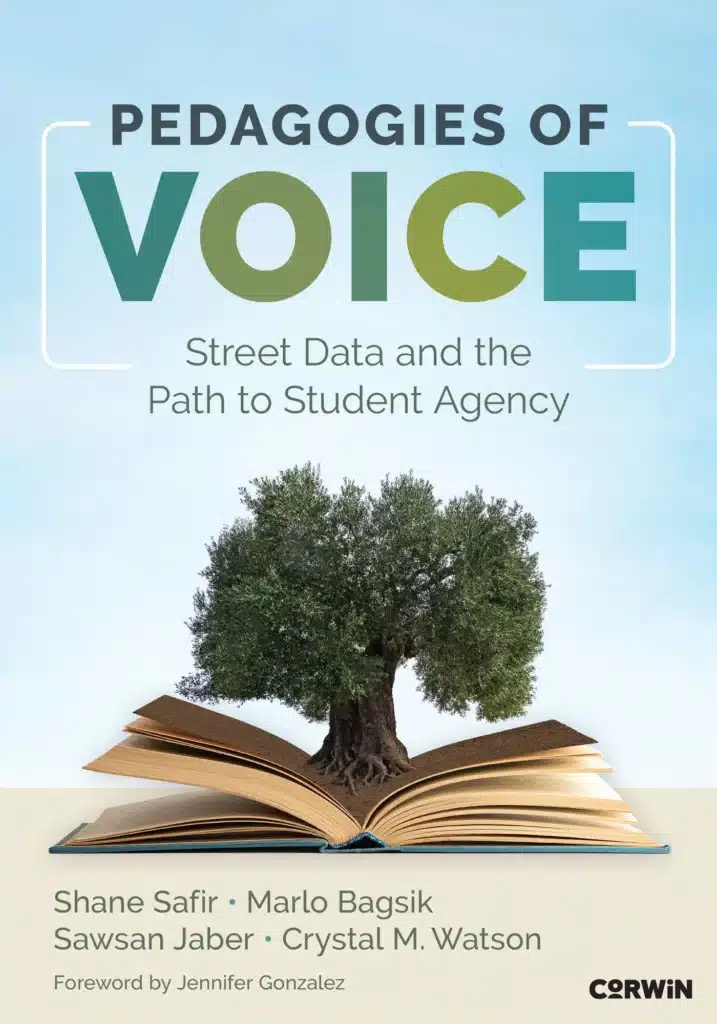
To address this vital question, Shane Safir collaborated with three distinguished educators: Marlo Bagsik, Sawsan Jaber, and Crystal Watson. Their collective expertise and classroom experience culminated in the new publication, Pedagogies of Voice: Street Data and the Path to Student Agency. This book serves not as a rigid instructional manual, but rather as a "seed store" of adaptable practices. It offers a rich compendium of small, actionable strategies that educators can readily implement to foreground student voice, cultivate genuine agency, and foster environments conducive to profound and meaningful learning experiences.

The timely release of Pedagogies of Voice is particularly significant given the current turbulent landscape of education. In an era where marginalized voices, having just begun to receive long-overdue acknowledgment, are facing aggressive efforts to push them back into the shadows—manifesting in widespread book bans, heightened teacher censorship, and daily threats to democratic principles—this book offers a potent and principled response. For educators navigating these frustrating and often frightening times, Pedagogies of Voice provides a clear directive: channel energy into teaching methodologies that actively amplify student voice. It advocates for the creation of classroom spaces where students are empowered to reflect critically, articulate their perspectives, and engage in meaningful action, thereby allowing democratic practices such as active listening, respectful challenging of diverse opinions, and collaborative problem-solving to flourish. Ultimately, the book aims to equip students with the skills and confidence to become the informed, engaged, and empathetic individuals who will be instrumental in shaping a more just and equitable future.
The insights gleaned from Pedagogies of Voice were further explored in a recent podcast interview featuring all four authors. During this discussion, each author shared one or two of their most impactful classroom practices derived from the book—specific, actionable strategies designed for immediate implementation. This interview, available for listening or via a full transcript, offers a valuable overview of the practical applications of the Pedagogies of Voice framework.
The Agency Framework: Identity, Belonging, Inquiry, and Efficacy
The book systematically organizes its classroom practices within a comprehensive Agency framework, structured around four interconnected domains: Identity, Belonging, Inquiry, and Efficacy. Each domain represents a crucial dimension of student empowerment, and the practices detailed within Pedagogies of Voice are designed to cultivate growth in these areas.
Practices that Awaken Identity
The practices within this domain are fundamentally geared towards constructing learning environments where every student can unequivocally affirm, "My unique ways of being, knowing, and learning are truly valued here." This foundational sense of validation is critical for fostering psychological safety and encouraging authentic engagement. Sawsan Jaber, a co-author, highlights two strategies rooted in storientation, a pedagogical approach that leverages personal and collective narratives as a powerful springboard for both learning and the nuanced development of individual and cultural identity.
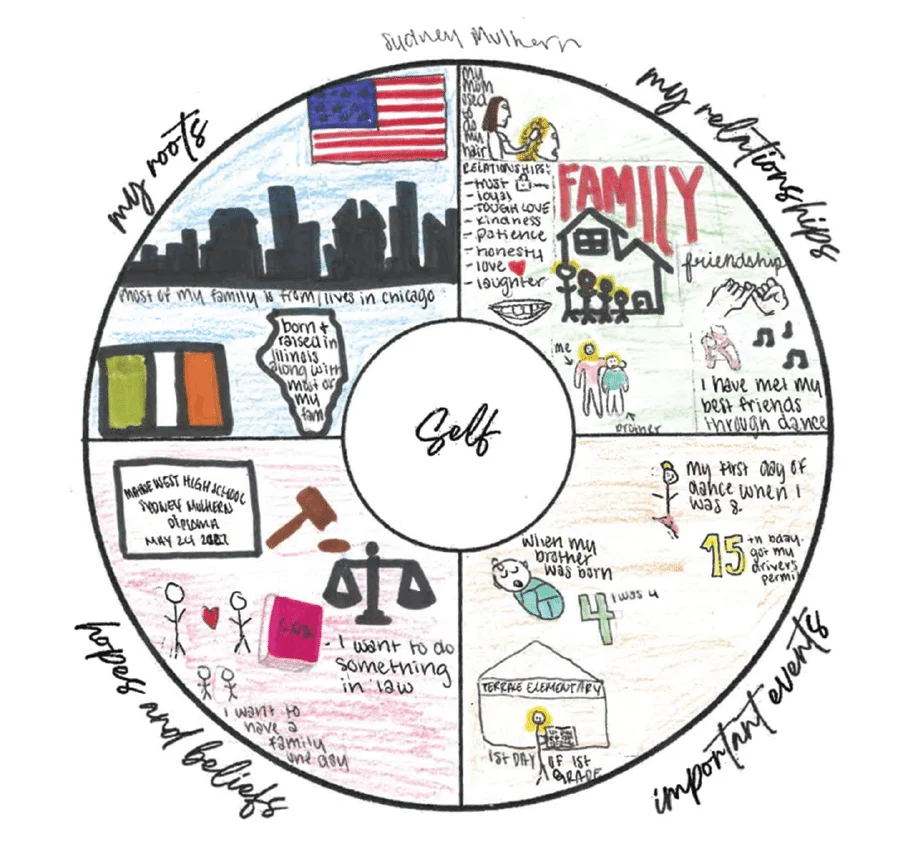
Storientation moves beyond simply recounting events; it involves a deliberate process of self-discovery and connection through storytelling. One compelling example from Jaber’s classroom is the Identity Mandala. This visual representation allows students to artistically and reflectively map out the various facets of their identity—cultural heritage, personal interests, family values, aspirations, and significant experiences. By externalizing these internal dimensions, students not only gain a deeper understanding of themselves but also share these insights with their peers, fostering empathy and appreciation for diversity within the classroom community. This practice directly counters the homogenizing tendencies of standardized curricula, affirming that each student’s unique background is a rich asset to the learning environment.
Practices that Awaken Belonging
This domain centers on cultivating practices that ensure every student feels profoundly seen, acknowledged, and cherished within the classroom ecosystem. Crystal Watson, another co-author, emphasizes a singular yet profoundly impactful practice: circling up. As its name suggests, this involves arranging classroom seating in a circular formation for a diverse range of activities. While seemingly simple, the act of circling up dramatically enhances students’ sense of belonging and equity.
Watson eloquently explains the core principle: "I just love the fact that when you circle up, you’re all equidistant from the center. At any given time, an identity, an idea, a person can be centered. We’re not centering one or two identities or thoughts or ideals. We can center them all at any given time in our time together." This spatial arrangement inherently democratizes participation, dismantling the traditional hierarchies often reinforced by front-facing desk arrangements. In a circle, every voice is visually and physically positioned to be heard, fostering a more equitable distribution of attention and influence.
Watson further highlights the particular power of circling up in math education, a subject often perceived as rigid and individualistic. She observes that many individuals who express a dislike for mathematics often lament, "You just sit there and do problems." This isolation, she argues, is precisely "the problem." Circling up transforms math into a conversational and collaborative endeavor, inviting argumentation, discussion, and shared problem-solving. It cultivates a classroom culture where intellectual wrestling and diverse approaches to mathematical concepts are not only permitted but actively encouraged, challenging the notion of a single "right" way to arrive at an answer and thereby making the subject more accessible and engaging for a broader range of learners.
Practices that Awaken Inquiry
The practices within this domain are dedicated to empowering students to pose critical questions, explore complex ideas, and construct knowledge through increasingly sophisticated investigative processes. Shane Safir laments the systemic erosion of inquiry from many learning environments, noting, "Inquiry has been stripped from the learning environments, so many places. The ability for young people to wrestle with big questions about the world, to be curious, to stay curious, to develop not just literacy, but critical literacy about text, about media, about the world."
This domain seeks to reignite students’ innate curiosity and equip them with the tools to become discerning consumers and producers of information. Practices here might include student-led research projects, Socratic seminars where students critically analyze texts and ideas, or problem-based learning scenarios that require students to investigate real-world issues. The emphasis is on moving beyond rote memorization to fostering a deep, conceptual understanding and the capacity to question assumptions, evaluate sources, and formulate informed opinions. In an age of information overload and pervasive misinformation, cultivating critical literacy through robust inquiry-based practices is not merely an academic pursuit but a civic imperative, preparing students to navigate and contribute meaningfully to a complex global society.
Practices that Awaken Efficacy
The final domain focuses on creating learning spaces where every student develops a profound belief in their capacity to effect positive change regarding issues that hold personal significance for them. This is about nurturing a sense of agency—the power to act and make a difference. Marlo Bagsik, drawing from her extensive classroom experience, shared two complementary practices in this domain that effectively "bookend" a week of learning, fostering ongoing student reflection and empowerment.
While specific details of these practices from the original snippet are brief, the implication is clear: students are engaged in setting their own learning intentions or identifying areas of focus at the beginning of the week, and then reflecting on their progress, challenges, and next steps at the week’s end. This cyclical process could involve structured journaling, peer feedback sessions, or brief individual conferences with the teacher. By regularly engaging in self-assessment and goal-setting, students cultivate meta-cognitive skills, understand their own learning processes, and experience the tangible impact of their efforts. This consistent practice reinforces the idea that their contributions matter, their voices are heard in shaping their learning journey, and they possess the capability to drive their own growth and influence their environment. It transforms students from passive recipients of knowledge into active agents of their own education and, by extension, their world.
Implications and Broader Impact in a Challenging Educational Climate
The principles and practices articulated in Pedagogies of Voice arrive at a critical juncture in American education. The current climate, marked by legislative efforts to restrict curricula, censor materials, and control narratives, poses a direct threat to the development of critical thinking, civic engagement, and individual expression. In this context, actively cultivating student voice and agency becomes not just a pedagogical best practice, but an act of profound educational resistance and democratic preservation.
By creating classrooms where identity is affirmed, belonging is fostered, inquiry is celebrated, and efficacy is nurtured, educators are doing more than simply teaching academic content. They are cultivating resilient, self-aware, and civically minded individuals capable of navigating complex challenges, challenging injustice, and contributing constructively to society. These practices prepare students not only for tests but for life in a democratic society, where diverse perspectives, critical dialogue, and collective action are paramount. The movement spearheaded by Street Data and now deepened by Pedagogies of Voice represents a growing recognition among forward-thinking educators and some school leaders that genuine educational improvement must emanate from the ground up, placing the student—their experiences, their insights, and their potential—at the absolute center.
In conclusion, Pedagogies of Voice: Street Data and the Path to Student Agency offers a compelling and practical antidote to the pervasive challenges facing education today. By shifting the focus from narrow metrics to the holistic development of student identity, belonging, inquiry, and efficacy, the book provides educators with the tools to cultivate classrooms that are not only academically rigorous but also deeply humane, equitable, and empowering. It stands as a powerful testament to the belief that by truly listening to students and empowering their voices, we can collectively reshape the educational landscape for the better, preparing a generation ready to confront the complexities of their world with confidence and purpose. This vital work is supported by organizations like Listenwise and Solution Tree, underscoring a shared commitment to innovative and impactful educational practices.