

The Turkish language, a member of the Turkic language family spoken by approximately 80 million people globally, is renowned for its logical structure and mathematical consistency. For expatriates, tourists, and business professionals operating within the Republic of Turkey, the mastery of Turkish numerals is more than a linguistic exercise; it is a fundamental requirement for navigating the nation’s socio-economic landscape. From the initial stages of a commercial transaction in the historical markets of Istanbul to the formal exchange of contact information in a corporate setting in Ankara, numbers serve as the primary bridge for clear communication.
The Linguistic Framework: A System of Mathematical Precision
Unlike many Indo-European languages that feature irregular numerical forms—such as the English "eleven" or "twelve," which deviate from the "teen" pattern—Turkish employs a strictly additive and logical system. This structural regularity is a hallmark of the 1928 Language Reform, led by Mustafa Kemal Atatürk, which transitioned the language from the Ottoman Turkish script to a Latin-based alphabet and emphasized phonetic clarity.
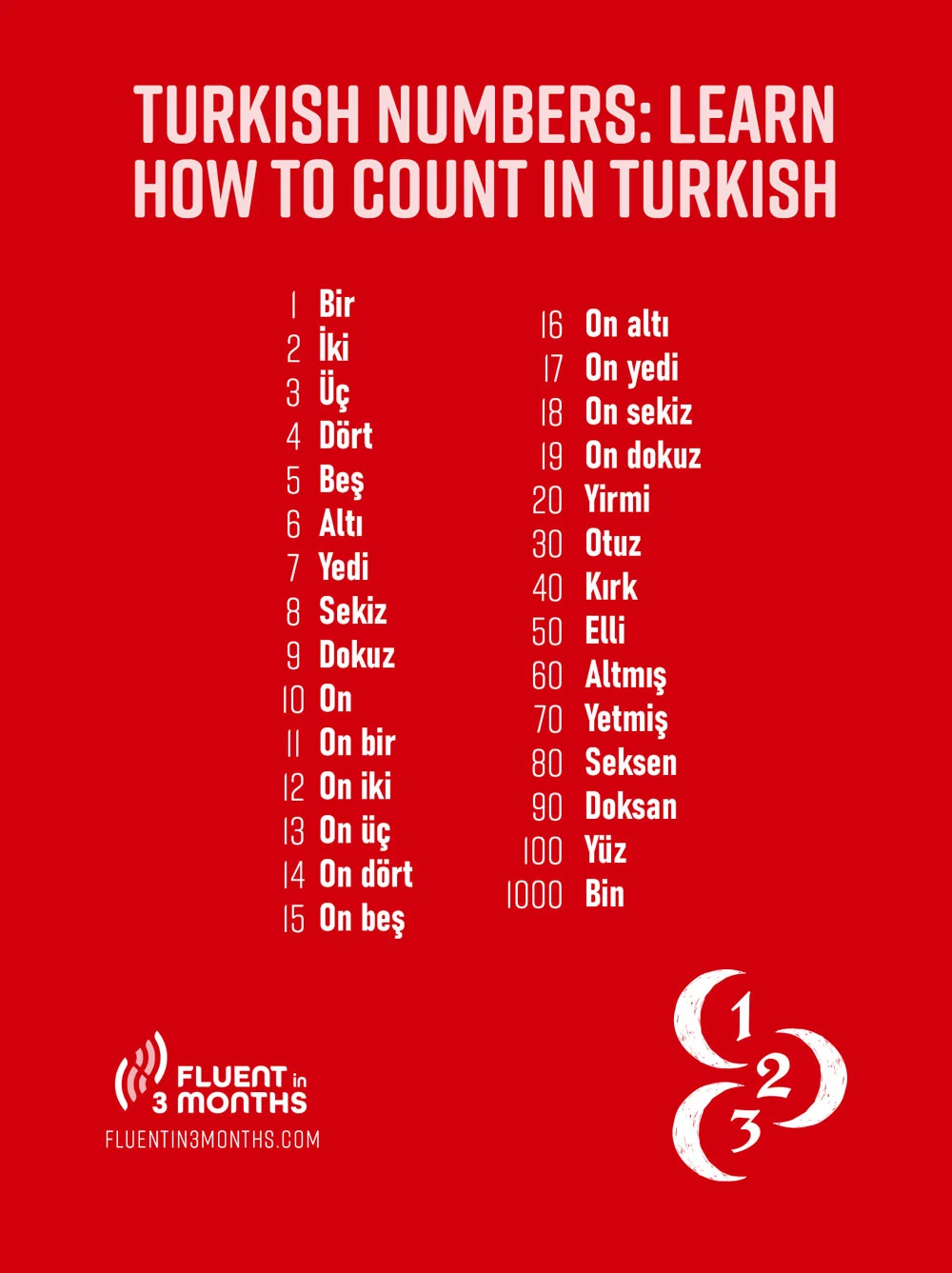
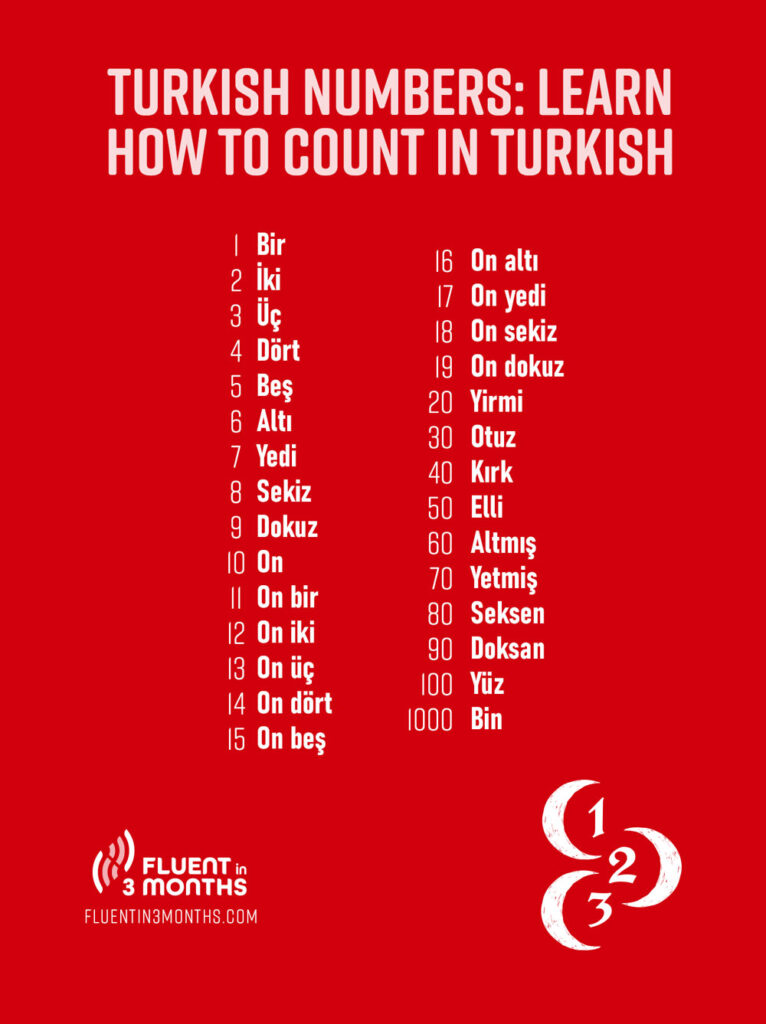
The foundation of the system rests upon the cardinal numbers from one to ten. These are: bir (1), iki (2), üç (3), dört (4), beş (5), altı (6), yedi (7), sekiz (8), dokuz (9), and on (10). Linguistic experts note that these monosyllabic and disyllabic roots are highly stable, allowing learners to build complex figures with minimal cognitive load.
Expanding the Horizon: From Eleven to One Hundred
Once the base-ten foundation is established, the construction of numbers from 11 to 19 follows a transparent "ten plus digit" formula. For example, eleven is expressed as on bir (ten-one), and nineteen as on dokuz (ten-nine). This pattern remains unbroken, facilitating rapid acquisition for non-native speakers.
As the speaker moves into higher denominations, they must memorize the unique terms for each multiple of ten:
- 20: yirmi
- 30: otuz
- 40: kırk
- 50: elli
- 60: altmış
- 70: yetmiş
- 80: seksen
- 90: doksan
- 100: yüz
The assembly of intermediate numbers, such as 45 or 82, follows the same additive logic used in the teens: kırk beş (forty-five) and seksen iki (eighty-two). In a retail or banking context, this clarity reduces the margin for error in verbal communication.
Large-Scale Denominations and the Chronology of the Lira
Navigating numbers above 100 requires an understanding of the multiplier effect. To say 200, one simply places the digit before the word for hundred: iki yüz. This continues through 900 (dokuz yüz). The term for one thousand is bin.
Historically, the use of large numbers in Turkey has been influenced by the nation’s economic timeline. In the late 20th century, Turkey experienced periods of high inflation, leading to the use of millions and billions in daily transactions. On January 1, 2005, the Turkish government implemented a redenomination, removing six zeros from the currency and introducing the New Turkish Lira (YTL). While the "New" prefix was dropped in 2009, the linguistic legacy remains; older generations may occasionally refer to "one million" when meaning "one lira," though this is increasingly rare in formal sectors.
For contemporary users, the following milestones are essential:
- 1,000: bin
- 10,000: on bin
- 100,000: yüz bin
- 1,000,000: bir milyon
- 1,000,000,000: bir milyar
Ordinal Numbers and the Impact of Vowel Harmony
A distinctive feature of Turkish grammar is "vowel harmony," a phonetic rule where suffixes must align with the vowels of the root word. This is most evident in the creation of ordinal numbers (first, second, third). To transform a cardinal number into an ordinal one, the suffix -ıncı, -inci, -uncu, or -üncü is added.
- 1st: birinci (aligns with ‘i’)
- 2nd: ikinci
- 3rd: üçüncü (aligns with ‘ü’)
- 4th: dördüncü (note: the ‘t’ in dört changes to ‘d’ for phonetic ease)
- 10th: onuncu (aligns with ‘o’)
In real estate and urban planning, these ordinals are critical. Turkish addresses frequently use ordinal numbers to denote floor levels (birinci kat – first floor) or the sequence of streets within a district.
Practical Applications: Time, Commerce, and Communication
1. The Temporal System
Turkey officially utilizes the 24-hour clock for formal schedules, transportation, and broadcasting. A flight departing at 10:30 PM is listed as yirmi iki otuz (22:30). However, in daily conversation, a 12-hour system is preferred, often supplemented by qualifiers such as sabah (morning) or akşam (evening).
The terms buçuk (half past) and çeyrek (quarter) are indispensable. For instance, 4:30 is dört buçuk, while 5:15 is beşi çeyrek geçiyor (literally: "it is passing five by a quarter").
2. Commercial Transactions and Currency
The Turkish Lira (TL) is subdivided into 100 kuruş. In written form, Turkey follows the European convention of using a comma as a decimal separator and a period as a thousands separator. Thus, a price of 1,250.50 TL is written as 1.250,50 TL.
When shopping, the question Fiyat ne kadar? (What is the price?) will yield responses that require quick numerical processing. In traditional markets, price negotiation remains a cultural staple, and the ability to articulate numbers accurately is often viewed as a sign of respect and integration, potentially leading to more favorable outcomes for the buyer.
3. Telecommunications and Identity
Turkish mobile numbers consist of a three-digit area code (beginning with 5) followed by seven digits. The cultural norm for reciting these numbers is a specific 3-3-2-2 grouping. For a hypothetical number 0532 123 45 67, a Turk would say: sıfır beş yüz otuz iki, yüz yirmi üç, kırk beş, altmış yedi. Deviating from this rhythm can often cause confusion for the listener.
Statistical Context: Language Learning Trends
According to data from the Yunus Emre Institute, the global body responsible for promoting Turkish culture and language, there has been a 30% increase in Turkish language enrollment over the last decade. This surge is attributed to Turkey’s rising influence as a regional hub for education, healthcare, and tourism. Numerical literacy is cited by educators as the "entry point" for functional fluency, as it allows students to engage in the economy almost immediately.
Analysis of Implications for Foreign Nationals
For the growing population of "digital nomads" and foreign investors in Turkey—particularly in cities like Istanbul, Antalya, and Izmir—the mastery of numbers has significant legal and financial implications. Notarized documents, property deeds (tapu), and residency applications (ikamet) require the precise verification of dates and figures.
From a sociological perspective, the effort to learn Turkish numbers is a gesture of cultural immersion. While many Turks in urban centers speak English, the use of Turkish for numbers in a local bakkal (grocery store) or taksi (taxi) fosters rapport. It signals that the speaker is not merely a transient visitor but an engaged participant in the local community.
Conclusion: The Path to Fluency
The transition from basic counting to complex numerical application is a journey of understanding Turkish logic. By internalizing the 1-10 base, respecting the rules of vowel harmony in ordinals, and practicing the specific rhythms of phone numbers and time-telling, learners can achieve a high degree of functional independence. As Turkey continues to expand its global footprint, the ability to speak its "language of math" remains a vital asset for anyone looking to succeed within its borders. Supporting this learning through consistent practice, exposure to local media, and the use of linguistic resources is recommended for all who seek to master the vibrant and systematic Turkish language.