


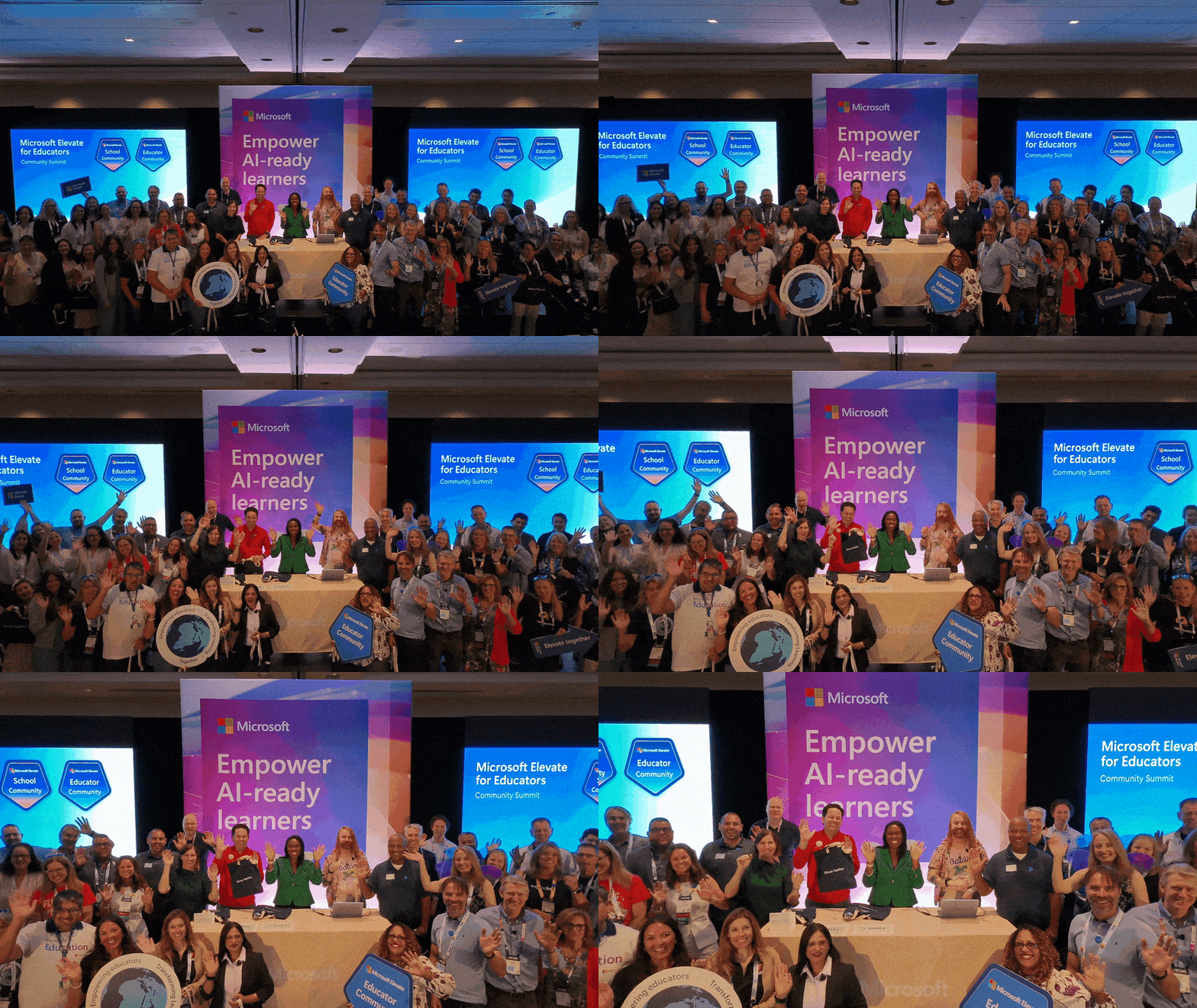
The Orange County Convention Center in Orlando, Florida, served as the epicenter of global educational technology discussions as thousands of K-12 educators, librarians, school leaders, instructional coaches, and edtech innovators converged for ISTELive 2026. Against a backdrop of rapid technological advancement and shifting pedagogical demands, this year’s conference marked a critical turning point for the education sector. Rather than focusing solely on early-stage experimentation with artificial intelligence, participants, institutional leaders, and major technology providers turned their attention toward practical, scalable, and research-backed implementation.
The multi-day event featured hundreds of interactive sessions, hands-on laboratories, keynote addresses, and exhibition spaces designed to address the most pressing challenges facing modern classrooms. Throughout the conference, a singular narrative dominated the discourse: artificial intelligence has matured past its initial novelty phase. Educational institutions are now tasked with integrating these digital tools into institutional frameworks in ways that drive measurable learning outcomes, respect student data privacy, and elevate the daily practice of teaching professionals.

Main Facts and Event Background
ISTELive 2026 underscored the urgent need to bridge the gap between technological capability and classroom reality. As school districts worldwide grapple with budget constraints, teacher shortages, and the imperative to prepare students for an increasingly automated workforce, events like ISTE provide a vital roadmap. Organized by the International Society for Technology in Education, the conference attracted attendees from dozens of countries, representing a broad cross-section of the global educational ecosystem.
A dominant catalyst for discussion at the 2026 conference was the introduction of new institutional frameworks and software updates aimed at streamlining administrative burdens while deepening student engagement. Major technology corporations utilized the global stage to unveil purpose-built educational platforms designed around learning science rather than mere speed or automation. Industry leaders emphasized that the true measure of educational technology is not how fast a student can complete a task, but how deeply they comprehend complex concepts. Consequently, sessions frequently explored how to pair secure, powerful software systems with comprehensive educator training, institutional governance models, and peer-to-peer collaboration networks.
Chronology and Evolution of EdTech Adoption
To understand the significance of the announcements made at ISTELive 2026, it is necessary to examine the rapid evolution of educational technology over the past several years. The timeline of digital integration in K-12 education has undergone three distinct phases since the turn of the decade:

- The Emergency Transition (2020–2022): Driven by global health crises, schools rushed to deploy remote learning hardware, basic video conferencing tools, and ad-hoc digital platforms to maintain instructional continuity.
- The Experimentation Era (2023–2025): Following the mainstream commercialization of generative artificial intelligence, individual teachers began experimenting with autonomous text generators, automated grading assistants, and unvetted chatbot tools. This period was characterized by bottom-up adoption, widespread enthusiasm, and growing concerns regarding data privacy, plagiarism, and academic integrity.
- The Institutional Consolidation Phase (2026 and Beyond): Marked by ISTELive 2026, this current era reflects a strategic pivot from fragmented, individual usage to coordinated, district-wide policy frameworks. Institutions are moving away from isolated tools and toward integrated, secure ecosystems backed by empirical learning science.
This historical trajectory framed the panels and workshops in Orlando, where leaders acknowledged the mistakes of the past—such as rapid deployment without adequate professional development—and outlined deliberate strategies for sustainable technology integration.
Supporting Data and Institutional Insights
Data released concurrently with the conference highlighted both the opportunities and anxieties currently defining the education sector. According to metrics shared during institutional briefings, a vast majority of teachers recognize the potential of AI to personalize instruction and reduce administrative workloads, yet more than half report a lack of formal institutional guidance on how to use these tools responsibly.
To address this gap, research initiatives such as the newly published Microsoft AI in Education Report and the foundational white paper Learning by Design offered empirical perspectives on classroom adoption. These documents synthesized feedback from thousands of educators worldwide, revealing that successful AI integration relies on three core pillars: transparent governance, intuitive user interfaces designed specifically for pedagogical contexts, and robust professional learning communities.
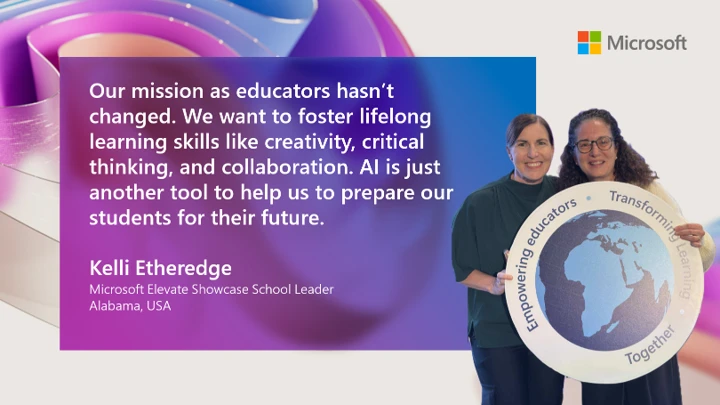
Additional data presented at the conference emphasized the economic and cognitive necessity of digital literacy. Workforce studies cited during keynote sessions project that foundational computational thinking and AI literacy will be prerequisite skills for over 70 percent of entry-level positions within the next decade. Consequently, educational leaders are under mounting pressure to modernize curricula without sacrificing core academic foundations.
Official Responses and Stakeholder Reactions
Throughout the conference, reactions from educators, policymakers, and industry representatives reflected a cautious optimism tempered by a pragmatic desire for concrete resources.
Pat Yongpradit, General Manager of Global Education and Workforce Policy, captured the sentiment of many keynote speakers during an evening reception honoring the Microsoft Elevate Educator community. Addressing a gathering of over 43,000 global teachers and school leaders, Yongpradit emphasized the indispensable value of the teaching profession, stating that the contemporary world relies heavily on exceptional educators to guide the ethical integration of new tools.

Educators attending the Instructional Leadership Exchange (ILX) echoed these sentiments, noting that their primary objective is no longer asking whether technology should enter the classroom, but rather how to manage its presence effectively. Administrators expressed a strong demand for standardized evaluation metrics to assess edtech products before procurement, noting that district budgets cannot support software that fails to demonstrate clear alignment with curriculum standards.
Meanwhile, student-focused initiatives drew significant praise from attendees. The announcement of the Velocity Prize—a global computational thinking and AI-assisted skills challenge for students aged 13 to 16 developed by Minecraft Education—exemplified the industry’s shift toward active creation rather than passive consumption. Scheduled to open in October 2026, the challenge encourages young learners to apply coding and problem-solving strategies within familiar digital environments, demonstrating that complex technical concepts can be made approachable through gamified learning structures.
Broader Impact and Implications for the Future of Schooling
The long-term implications of ISTELive 2026 extend far beyond the exhibition halls of the Orange County Convention Center. As school districts across the globe begin translating the conference’s insights into actionable local policies, several transformative trends are poised to reshape the educational landscape.

First, the ongoing conversation surrounding screen time is undergoing a fundamental semantic and structural revision. Educators are successfully pivoting the dialogue from a restrictive focus on aggregate device hours to a qualitative evaluation of learning time. By prioritizing tools that foster critical thinking, collaborative problem-solving, and personalized feedback, schools are redefining digital devices as cognitive multipliers rather than mere distractions.
Second, the transition from fragmented experimentation to centralized governance will likely reduce equity gaps across school districts. Well-resourced suburban schools and underfunded rural or urban districts have historically experienced a digital divide rooted in software access and teacher training. By emphasizing institutional-level planning, shared practices, and scalable professional development networks like the Microsoft Elevate community, educational leaders are working to ensure that technological advancements benefit all student demographics equally.
Finally, the integration of learning science into software design marks a maturation of the edtech sector. As tools incorporate pedagogical frameworks directly into their code—such as structured scaffolding, guided practice modules, and diagnostic assessment tracking—technology is transforming from an external add-on into an intrinsic component of instructional design.

As educators return to their respective schools to implement the strategies, frameworks, and digital resources acquired in Orlando, the momentum generated at ISTELive 2026 will continue to influence classrooms worldwide. The journey toward fully realized, ethically sound, and pedagogically effective artificial intelligence integration remains ongoing, but the roadmap established at this year’s conference provides a clear and purposeful direction for the future of education.