



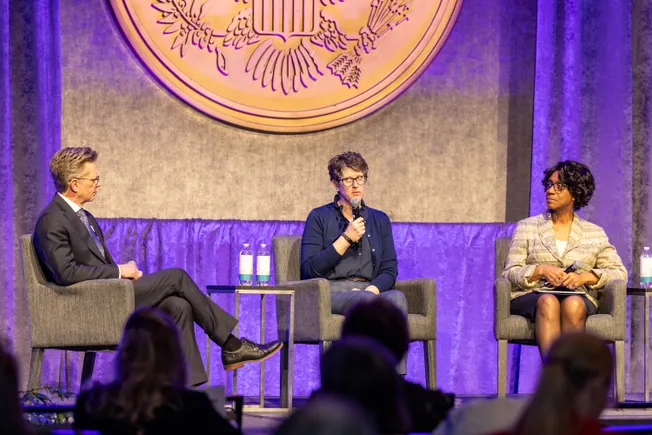
State education agencies across the nation are embarking on a transformative journey to elevate student outcomes, driven by a multi-pronged strategy that encompasses the revision of academic standards, the implementation of high-quality instructional materials, and the broadening of postsecondary educational and career opportunities. This concerted effort was a central theme at the Council of Chief State School Officers’ (CCSSO) legislative conference on March 24, where three prominent state education chiefs – Eric Mackey of Alabama, Jill Underly of Wisconsin, and Charlene Russell-Tucker of Connecticut – shared insights into the complex, collaborative process of driving systemic and impactful educational change. Their discussions underscored the critical involvement of a diverse coalition of stakeholders, including local educators, parents, families, legislative bodies, and higher education institutions, in realizing these ambitious goals.
The CCSSO legislative conference, a pivotal annual gathering, convenes state education leaders to discuss pressing issues, share best practices, and strategize on policy initiatives that shape the future of K-12 education. This year’s session, held against a backdrop of ongoing efforts to address learning recovery post-pandemic and to prepare students for an ever-evolving global landscape, provided a vital platform for these state chiefs to articulate their visions and the tangible steps they are taking to achieve them.
Wisconsin’s Vision: Cultivating a "Portrait of a Graduate"
In Wisconsin, the quest to enhance student achievement gained significant momentum in 2021, a period marked by widespread attention to pandemic-induced learning disruptions. State Superintendent Jill Underly initiated a series of statewide listening sessions, engaging directly with communities to understand their aspirations for the future of education. These sessions revealed a nascent but powerful trend: numerous school districts had already begun implementing "Portrait of a Graduate" programs. These initiatives, rooted in a profound understanding of student needs, emphasized the cultivation of essential life skills beyond traditional academic subjects. Skills such as critical thinking, effective communication, collaborative problem-solving, and a commitment to lifelong learning were identified as crucial for preparing students not only for academic and professional success but also for fulfilling and engaged lives.
Inspired by these grassroots innovations, Wisconsin embarked on developing a comprehensive statewide initiative to support and expand these real-world learning opportunities. The "Portrait of a Graduate" framework, at its core, represents a community’s collective vision of the competencies and characteristics that students should possess upon completing their K-12 education. This vision extends to their preparedness for college, their readiness for diverse career paths, and their capacity to thrive as active and contributing members of society.
"Parents wanted more innovation in education," Superintendent Underly articulated during the conference, highlighting a key driver behind the state’s renewed focus. "We needed to be more innovative." This sentiment echoed a broader national call for educational systems to adapt and evolve, moving beyond rote memorization towards a more dynamic and student-centered approach.
To translate this vision into action, Wisconsin undertook a significant internal reorganization of its Department of Public Instruction. This restructuring was designed to better align agency priorities with the newly defined educational goals, fostering a more cohesive and responsive operational framework. Furthermore, the state actively worked to strengthen the critical connections between K-12 education, early childhood programs, and postsecondary institutions. This integrated approach aims to create seamless transitions for students, ensuring that their learning journey is coherent and supportive from their earliest years through to higher education and beyond.
When asked about the most rewarding aspect of this transformative work, Underly’s response was immediate and heartfelt: "that the kids are excited, that the students want to learn." This observation underscores the profound impact of engaging curricula and relevant learning experiences on student motivation and academic engagement, a critical factor in achieving sustainable educational improvement.
Connecticut’s Strategic Approach: Diversifying Career Pathways
In Connecticut, the State Board of Education and the Department of Education have strategically prioritized the expansion of "multiple career pathway options" for students as a cornerstone of their comprehensive plan for 2023-2028. This initiative is intricately woven into the state’s overarching theme for the current academic year, "Unlocking Lifelong Potential." The approach is multifaceted, encompassing not only the diversification of learning opportunities but also critical investments in expanding the educator workforce and fostering safe and supportive learning environments. These efforts are collectively designed to empower students to achieve success both within the school walls and in their lives beyond graduation.
A central tenet of Connecticut’s strategy is the imperative for coordination. Superintendent Charlene Russell-Tucker emphasized that these initiatives cannot exist in isolation; they must be strategically aligned with other state-level endeavors to maximize their impact. "It’s not just a list of things you’re doing," she stated, underscoring the need for a holistic and integrated approach. "They’ve got to be aligned."
This commitment to alignment extends beyond programmatic initiatives to encompass the very structure and functioning of the educational system. "It’s not a one and done," Russell-Tucker elaborated. "Systems must be aligned, then the agency staff must be aligned, and our partners must be aligned around getting the work done as well." This recognition of the interconnectedness of all educational stakeholders – from state agencies and their personnel to external partners and the broader community – is crucial for sustained progress and effective implementation. The state’s strategic plan, publicly available, outlines a detailed roadmap for achieving these ambitious goals, with a clear emphasis on fostering adaptability and responsiveness within the educational landscape.
Alabama’s Focus: Elevating Math Achievement Through Sustained Reform
Alabama, under the leadership of State Superintendent Eric Mackey, is actively pursuing initiatives aimed at significantly improving math achievement. This ambitious undertaking involves a rigorous review and rewriting of academic standards, the development of innovative formative assessments designed to provide timely and actionable feedback, and a suite of other targeted interventions. However, Superintendent Mackey candidly addressed one of the most persistent challenges in educational reform: the difficulty of sustaining these crucial efforts over extended periods, often spanning multiple political administrations and legislative cycles.
"I frankly think that’s one of our problems in education: We’re all trying to see the long goal, and we’re working with bodies that see short-term wins," Mackey observed, pointing to a common disconnect between the long-term vision of educational transformation and the political realities of immediate results. He acknowledged that demonstrating tangible, short-term successes can be instrumental in building and maintaining momentum for deeper, more systemic change.
Mackey also highlighted the critical importance of fostering a sense of shared ownership and collective responsibility among all involved parties. "Getting everybody to believe that they are a part of the solution" is a key strategy for ensuring that efforts toward significant educational improvements endure and thrive. This inclusive approach, he suggested, is essential for building the broad-based support necessary to navigate the complexities and potential setbacks inherent in long-term reform. Alabama’s approach, as detailed in resources like the Alabama Numeracy Act evaluation, reflects a data-driven commitment to identifying areas for improvement and implementing evidence-based strategies.
Data and Implications: A National Trend Toward Holistic Education
The discussions in Washington reflect a broader national trend. Data from the National Center for Education Statistics (NCES) consistently shows persistent achievement gaps in mathematics and reading across various demographic groups. For instance, the NAEP (National Assessment of Educational Progress) results, often referred to as the "Nation’s Report Card," have indicated stagnant or declining performance in mathematics for many student cohorts over the past decade. This underscores the urgency and necessity of the reforms being championed by states like Wisconsin, Connecticut, and Alabama.
The emphasis on "Portrait of a Graduate" programs, as seen in Wisconsin, aligns with research highlighting the importance of 21st-century skills for future success. Studies by organizations like the World Economic Forum consistently rank critical thinking, problem-solving, and creativity as essential competencies for the modern workforce. By explicitly integrating these skills into the K-12 curriculum, states are attempting to bridge the gap between academic learning and the demands of college and career.
Connecticut’s focus on multiple career pathways is also gaining traction nationwide. As the landscape of work evolves rapidly due to technological advancements and globalization, offering students diverse routes to postsecondary success becomes increasingly vital. Data from the Bureau of Labor Statistics projects significant growth in fields requiring specialized training and technical skills, further validating the need for robust career and technical education (CTE) programs and flexible postsecondary options.
The challenge of sustaining reform, as articulated by Superintendent Mackey, is a well-documented phenomenon in public policy. Educational initiatives often face hurdles related to funding cycles, political transitions, and the inherent inertia of large bureaucratic systems. The success of these state-level efforts will likely depend on their ability to build enduring coalitions, demonstrate measurable progress, and adapt to changing circumstances.
The Path Forward: Collaboration and Innovation
The insights shared by the three state education chiefs offer a compelling glimpse into the strategic evolution of American education. By moving beyond a singular focus on standardized test scores, these states are embracing a more holistic vision of student success that values critical thinking, adaptability, and real-world application. The emphasis on stakeholder engagement – from parents and educators to lawmakers and higher education institutions – is not merely a procedural step but a fundamental requirement for building the consensus and collaborative spirit necessary to achieve meaningful and lasting change.
The success of these initiatives will be closely watched by other states and the federal government. The findings from Wisconsin’s "Portrait of a Graduate" framework, Connecticut’s diversified career pathways, and Alabama’s sustained efforts in math achievement could serve as models for national educational policy. The ability of these states to effectively coordinate their efforts, secure long-term commitment, and demonstrate tangible improvements in student outcomes will be critical indicators of their progress. As the educational landscape continues to shift, the proactive and collaborative approaches being adopted by these state leaders offer a promising pathway toward preparing all students for a dynamic and demanding future.