


States that joined the concerted national push to curb chronic student absenteeism are seeing measurable dividends, significantly outperforming their non-participating counterparts in bringing students back to the classroom. According to new comparative findings released by Attendance Works, states that formally committed to the "50% Challenge" reduced their chronic absenteeism rates by an average of 5.7% from baseline measurements between the 2023-24 and 2024-25 academic years. In contrast, 29 states that have not signed onto the pledge logged a much lower average reduction of just 3.2% over the exact same timeframe.
The data, highlighted during a recent educational policy webinar, provides early empirical encouragement for school administrators and policymakers grappling with the historic spike in school absences left in the wake of the COVID-19 pandemic. While educational experts warn that the national recovery remains uneven and long-term vigilance is required, the participating states serve as practical blueprints demonstrating that aggressive, coordinated intervention can reverse entrenched attendance declines.
Understanding the 50% Challenge and the Post-Pandemic Attendance Crisis
To understand the scale of the challenge facing American public education, it is necessary to examine how chronic absenteeism is defined and how radically student attendance norms shifted following nationwide school disruptions. Nationally, chronic absenteeism is broadly defined as missing 10% or more of the academic year—roughly 18 days of school—for any reason whatsoever. This includes not only unexcused truancy, but also excused illnesses, family emergencies, and suspensions.
Before the pandemic, chronic absenteeism was already a persistent challenge in specific urban and under-resourced districts, but it generally hovered at manageable levels. When schools reopened for in-person learning, however, absenteeism skyrocketed across nearly every demographic, geographic region, and school tier. Millions of students grew accustomed to remote learning, families faced lingering health and economic anxieties, and the traditional cultural expectation of daily school attendance was severely disrupted.
Recognizing the profound academic, social, and developmental consequences of missing extended periods of instruction, a coalition of organizations launched the 50% Challenge. Spearheaded collaboratively by Attendance Works, EdTrust, and Nat Malkus, a resident scholar and deputy director of education policy studies at the American Enterprise Institute (AEI), the initiative challenges states, districts, and communities to cut their chronic absenteeism rates in half within a designated timeframe.
When the initiative was first announced, many veteran educators and policymakers privately—and sometimes publicly—doubted its feasibility. The sheer inertia of post-pandemic disengagement led many to believe that absenteeism was a structural crisis beyond the immediate control of standard school interventions.
"A lot of people, when they hear about the 50% challenge, they say, ‘Wow, that’s a little ambitious,’" Nat Malkus noted during the recent briefing. "And I think that what we’re seeing is some proof points that substantive progress can be made."
State-Level Success Stories: Iowa and Rhode Island Lead the Way
Despite the broader national headwinds slowing down attendance recovery in many parts of the country, a handful of pioneering states have broken the mold. Both Iowa and Rhode Island opted into the 50% Challenge early, and both have utilized rigorous data tracking, policy mandates, and community-wide partnerships to drive down their chronic absenteeism figures at rates that far exceed the national average.
Iowa’s dramatic turnaround serves as one of the most striking examples of state-led educational intervention. McKenzie Snow, director of the Iowa Department of Education, detailed the state’s trajectory during the webinar, noting that Iowa successfully slashed its chronic absenteeism rate by nearly six full percentage points, dropping from 21.6% in the 2023-24 school year down to 15.8% in the 2024-25 term. According to AEI’s analysis, this represents one of the single largest absolute declines in chronic absenteeism recorded by any single state in recent years.
Rhode Island has similarly established itself as a national leader in attendance recovery. The state has posted consistent, year-over-year declines in chronic absenteeism and is currently sitting less than half a percentage point away from its pre-pandemic baseline rates. According to Malkus, Rhode Island’s recovery trajectory shows "no signs of slowing," positioning the state to potentially become one of the first in the nation to completely erase the pandemic’s attendance deficit.
The Mechanics of Improvement: Holistic Approaches and State Policy Frameworks
The success observed in states like Iowa and Rhode Island did not happen by accident; rather, it is the result of deliberate, multifaceted policy frameworks that shift the paradigm away from punitive disciplinary measures and toward proactive family engagement and systemic support.
Both state leaders emphasized that solving the absenteeism crisis requires recognizing that missing school is rarely just a student choice; it is usually the symptom of broader family, health, or economic barriers. Consequently, improving attendance requires what Snow termed a "holistic approach"—a framework that demands an entire community come to the table to build collaborative solutions.
In Iowa, this philosophy has been codified into state-level policy through the implementation of the state’s comprehensive absenteeism prevention plan. Under this framework, schools are legally and operationally required to trigger structured student-engagement meetings involving educators, school counselors, and families as soon as a student’s non-exempt absences surpass 15% of the total school days or instructional hours within a specific grading period.
Rather than issuing immediate reprimands, truancy tickets, or academic penalties, these meetings are intentionally designed to be diagnostic. Schools and families work together to identify the underlying barriers keeping the child out of the classroom—whether those barriers are related to chronic health conditions, housing instability, unreliable transportation, or mental health struggles—and immediately connect the family with targeted interventions and community resources.
Rhode Island’s Strategy: Real-Time Data and Statewide Gamification
Meanwhile, Rhode Island’s strategy has relied heavily on a potent combination of robust administrative policy, statewide collaboration, and unprecedented transparency in data collection and analysis. Angélica Infante-Green, Rhode Island’s commissioner of elementary and secondary education, pointed out that the state’s remarkable progress stems directly from treating attendance tracking as an urgent, operational priority rather than a bureaucratic afterthought.
A cornerstone of Rhode Island’s approach is the implementation of a sophisticated student attendance data dashboard, which includes a transparent public leaderboard for schools and districts. By making attendance metrics visible and accessible, the state fosters a culture of healthy accountability and peer competition among educational administrators. Furthermore, the state actively honors and celebrates districts that make notable strides in bringing students back to class. Infante-Green noted that high-performing districts even receive personal congratulatory phone calls from the governor, a gesture that elevates the issue of school attendance to the highest levels of state government.
Crucially, Rhode Island stands out as one of the very few states in the nation capable of tracking and analyzing real-time daily attendance data. In an era where educational data is frequently delayed by months or even entire academic years—rendering it virtually useless for timely intervention—Infante-Green emphasized that having immediate access to day-to-day attendance figures "has made all the difference for us." When a dip in attendance is detected on a Tuesday morning, schools can respond by Tuesday afternoon, preventing a few missed days from snowballing into chronic absenteeism.
Implications for the Future of American Education
The empirical success of the 50% Challenge participants carries profound implications for the broader landscape of American public education. For years, educational researchers feared that post-pandemic learning loss and student disengagement were permanent structural features of the post-2020 educational ecosystem. The data from Iowa, Rhode Island, and other participating states decisively challenges that fatalistic assumption.
By demonstrating that focused state policies, real-time data systems, and supportive family engagement can reduce chronic absenteeism by more than 5% in a single academic year, these states have provided a viable playbook for the rest of the country. As federal pandemic relief funds continue to sunset and school districts face tightening budgetary constraints, educational leaders are under mounting pressure to adopt cost-effective, high-impact strategies that directly target the foundational prerequisites of learning.
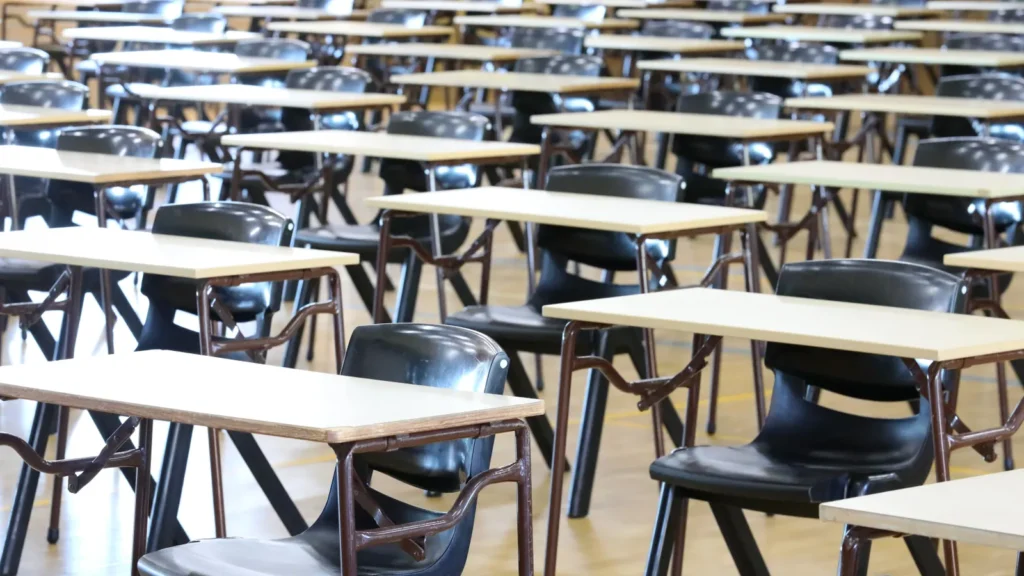
Chief among those prerequisites is physical presence in the classroom. After all, academic remediation programs, tutoring grants, and curriculum upgrades are entirely ineffective if students are not physically sitting at their desks to receive them. The ongoing success of the 50% Challenge suggests that while the road to recovery is long, the destination is entirely achievable for states willing to treat student attendance as an urgent, measurable, and collective responsibility.








