



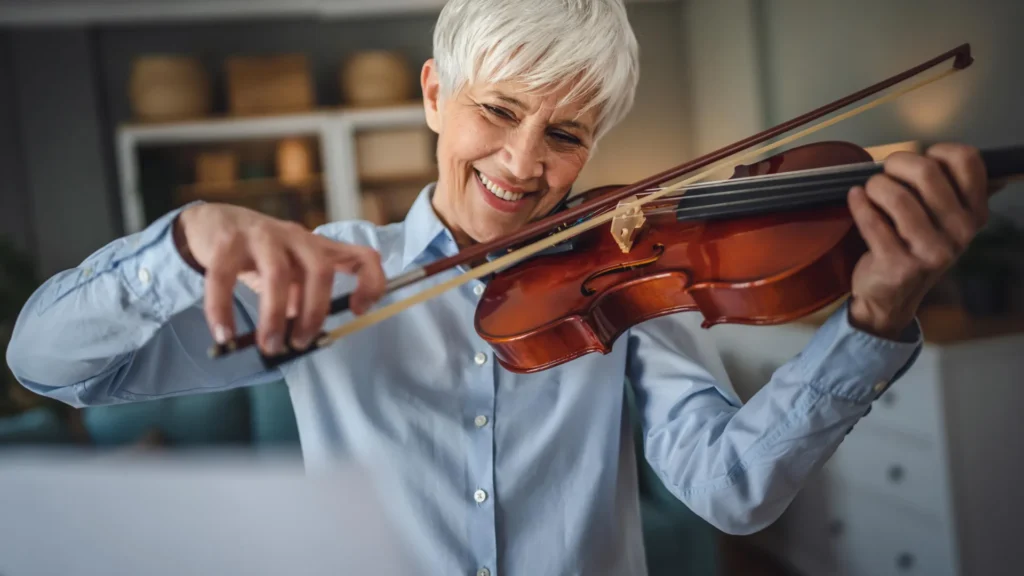
Living longer often comes with changes in cognitive abilities, and working memory is among the mental skills most vulnerable to age-related decline. Researchers have long believed that both physical exercise and mentally stimulating activities can help support brain health as people grow older. A groundbreaking long-term study by researchers at Kyoto University has provided compelling evidence that learning and consistently practicing a musical instrument later in life can significantly mitigate age-related cognitive decline and preserve crucial brain structures, offering a promising avenue for healthy aging strategies. This research builds upon a growing body of neuroscience studies highlighting the profound impact of musical engagement on brain plasticity, extending these benefits specifically to the elderly population.
The Landscape of Cognitive Aging and Vulnerable Brain Regions
As the global population ages, the challenges associated with maintaining cognitive health become increasingly pronounced. Cognitive decline, ranging from subtle memory lapses to more significant impairments, impacts millions worldwide, affecting quality of life and placing considerable strain on healthcare systems. Working memory, the system responsible for temporarily holding and manipulating information crucial for tasks like problem-solving, decision-making, and language comprehension, is particularly susceptible to the effects of aging. Its decline can manifest in difficulties following conversations, remembering instructions, or performing complex mental calculations. Understanding and developing effective interventions to support working memory and other cognitive functions in older adults is therefore a critical area of scientific inquiry.
Neuroscientific investigations have consistently identified two specific brain regions, the putamen and the cerebellum, as highly vulnerable to age-related atrophy and reduced activity. The putamen, a key component of the basal ganglia, plays a vital role in motor control, procedural learning, and various cognitive processes, including working memory and reward-based learning. Its shrinkage and decreased activity are frequently observed in the aging brain and are correlated with declines in motor speed and cognitive flexibility. The cerebellum, traditionally known for its role in coordinating voluntary movements, balance, and motor learning, has more recently been recognized for its significant contributions to higher cognitive functions, including language, attention, and working memory. Like the putamen, the cerebellum also undergoes structural and functional changes with age, contributing to a broader spectrum of cognitive challenges.
Intriguingly, these same two brain regions—the putamen and the cerebellum—have also been identified as remarkably responsive to musical instrument training. Previous studies, predominantly involving younger individuals or those with extensive musical experience from childhood, have shown that musical engagement can lead to increased gray matter volume, enhanced functional connectivity, and improved cognitive performance in these areas. The intricate motor demands of playing an instrument, combined with the auditory processing, memory recall, and emotional engagement involved, create a rich, multi-sensory cognitive workout that appears to stimulate neuroplasticity. However, a significant gap in the literature persisted: whether these profound benefits could be reaped by individuals who begin their musical journey later in life, and crucially, whether such benefits could be sustained over the long term.
Pioneering Research at Kyoto University: A Timeline of Discovery
The Kyoto University research team embarked on a mission to address this critical gap, focusing on the potential for older adults to gain similar cognitive advantages from musical instrument training. Their journey began with an initial exploratory study in 2020, which served as the foundational phase for the subsequent long-term investigation.
The Initial 2020 Pilot Study:
In their preliminary findings, the Kyoto University researchers reported that older adults (average age 73 at the study’s inception) who engaged in musical instrument practice for the first time over a four-month period exhibited significant improvements. Specifically, this initial cohort demonstrated measurable enhancements in memory performance. Furthermore, functional MRI scans revealed increased activity and improved function within the putamen, directly linking the novel musical training to positive neuroplastic changes in a brain region known to be susceptible to age-related decline. These encouraging short-term results provided a strong impetus for the team to investigate the persistence of these benefits over an extended duration.
Transition to a Long-Term Longitudinal Study:
Driven by the promising outcomes of their pilot project, the researchers recognized the necessity of a longitudinal study to ascertain whether these benefits were merely transient or if they could be sustained and even prevent further age-related decline. The new study, the results of which have recently been reported, meticulously followed the same participants from the original 2020 project, transforming a short-term intervention into a comprehensive four-year follow-up. This extended timeline allowed the researchers to observe the divergent trajectories of cognitive health and brain structure in participants based on their continued engagement with musical practice.
At the commencement of the original study, all participants were carefully screened to ensure they had no prior musical instrument training, thereby isolating the effects of late-life learning. The initial cohort, with an average age of 73 years, was divided into two distinct groups after the initial four-month training period. Approximately half of the participants, motivated by their initial progress and enjoyment, voluntarily chose to continue practicing their musical instrument for more than three subsequent years. The other half, for various reasons, discontinued their musical practice after the initial four months and instead pursued different hobbies or activities. This natural bifurcation into a "continued practice" group and a "stopped practice" group provided an invaluable experimental design for comparing long-term outcomes.
Methodology of the Four-Year Follow-up: Tracking Brain and Cognition
Four years after the conclusion of the initial training phase, the Kyoto University researchers invited all original participants back for a comprehensive follow-up assessment. This phase was meticulously designed to capture both structural and functional changes in the brain, alongside detailed cognitive performance evaluations.
Advanced Neuroimaging:
A critical component of the follow-up was the administration of high-resolution Magnetic Resonance Imaging (MRI) scans. These scans were specifically focused on assessing the structural integrity of the putamen and the cerebellum, the two brain regions identified as particularly relevant to musical training and age-related changes. The MRI data allowed the researchers to quantitatively measure gray matter volume, a key indicator of neuronal density and brain health, within these regions. Reductions in gray matter volume are commonly associated with aging and cognitive decline.
Comprehensive Cognitive Assessments:
In conjunction with the neuroimaging, participants underwent a battery of cognitive assessments. A central focus was a verbal working memory test, designed to evaluate the participants’ ability to temporarily hold and manipulate verbal information. This test provided a direct measure of a cognitive skill known to be vulnerable to aging and was directly relevant to the potential benefits of musical training. Other cognitive domains were also assessed to provide a holistic view of cognitive function.
Baseline Equivalence and Emergent Differences:
A crucial aspect of the study’s rigor was the confirmation that, at the very beginning of the original 2020 study, there were no significant statistical differences between the two groups (those who would later continue practicing versus those who would stop) in terms of either their baseline brain structure (e.g., gray matter volume in the putamen and cerebellum) or their initial cognitive performance. This established a level playing field, ensuring that any observed differences after four years could be robustly attributed to the sustained musical engagement rather than pre-existing variations.
Key Findings: Sustained Benefits and Prevented Decline
The results of the four-year follow-up were striking, providing compelling evidence for the long-term benefits of continued musical instrument practice in older adults. Clear and significant differences had emerged between the two groups, underscoring the protective effects of sustained mental engagement through music.
Divergent Trajectories in Verbal Working Memory:
Participants who had stopped practicing music after the initial four months showed noticeable declines in verbal working memory performance over the four-year period. This decline aligns with typical age-related cognitive changes observed in the general population. In stark contrast, those who continued playing their musical instruments did not exhibit the same drop in memory performance. Their verbal working memory capabilities remained largely stable, suggesting that sustained musical engagement acted as a powerful buffer against age-related cognitive erosion.
Preservation of Putamen Gray Matter:
The MRI scans revealed equally significant structural differences. The group that ceased musical practice experienced a reduction in gray matter volume within the right putamen. This shrinkage is a common hallmark of brain aging and is often associated with functional decline. Conversely, the participants who continued their musical journey did not show the same degree of putamen shrinkage. Their right putamen maintained its gray matter volume more effectively, indicating a protective effect of continuous musical engagement on brain structure. This finding is particularly significant given the putamen’s critical role in both motor and cognitive functions.
Enhanced Cerebellar Activity:
Beyond structural preservation, the researchers also observed functional differences, particularly in the cerebellum. Participants who continued practicing their instruments displayed greater activity across broader areas of both cerebellums compared with those who stopped. This enhanced and more widespread cerebellar activity suggests improved functional engagement and neural efficiency in a region vital for coordination, motor learning, and increasingly recognized for its role in higher-order cognition. The observed differences in cerebellar activity point towards a more robust and adaptable neural network in those who maintained their musical practice.
Expert Commentary and Interpretation: A Surprising and Hopeful Discovery
Corresponding author Kaoru Sekiyama, a leading researcher in the field, expressed both surprise and profound satisfaction with the findings. "We were surprised to find that the effects on the brains of elderly people who start and continue practicing an instrument were also concentrated in these two areas of the brain [putamen and cerebellum], and that this was an effective way to prevent age-related decline," Sekiyama stated. This surprise stems from the fact that while these regions are known to be responsive to music in younger individuals, demonstrating such clear, long-term, and preventive effects in a late-life learning cohort is a novel and highly significant discovery. It underscores the remarkable plasticity of the aging brain and its capacity to respond positively to novel, complex stimuli.
The implications of these findings are substantial for public health and individual well-being. The study strongly suggests that learning and continuing to play a musical instrument may serve as a potent, non-pharmacological intervention to help delay or reduce some of the cognitive changes typically associated with normal aging. Crucially, the results unequivocally indicate that the benefits are accessible even when individuals begin their musical learning journey later in life, dispelling the long-held notion that brain plasticity diminishes irrevocably with age or that musical benefits are exclusive to early childhood exposure.
"It’s never too late to start playing an instrument, and starting in old age may have major benefits," Sekiyama emphasized, offering a powerful message of hope and empowerment to older adults worldwide. This sentiment challenges conventional wisdom and encourages a proactive approach to cognitive health, highlighting music as an accessible and engaging tool.
Broader Implications for Healthy Aging and Inclusive Interventions
The Kyoto University study’s findings resonate deeply with the growing global emphasis on healthy aging, which advocates for interventions that promote physical, mental, and social well-being throughout the lifespan. As societies grapple with the increasing prevalence of age-related cognitive impairments, identifying effective and enjoyable interventions becomes paramount.
Music as a Versatile and Accessible Intervention:
Unlike some physical activities that may require specific environments or physical capabilities, musical instrument training offers a versatile and often highly engaging option. It provides a unique blend of motor skill development, auditory processing, memory training, emotional expression, and often social interaction (if practiced in groups or with teachers). This multifaceted engagement is likely what contributes to its broad neurological benefits. The study’s results position musical instrument learning not just as a hobby, but as a legitimate and evidence-based strategy for cognitive maintenance in later life.
An Inclusive Alternative for Physical Limitations:
A particularly salient point raised by Sekiyama is the potential of music for individuals facing physical challenges. "For those who struggle to engage in physical activity due to body pain or other problems, playing musical instruments can be a great alternative," Sekiyama noted. This insight is crucial for promoting inclusive healthy aging strategies. Many older adults experience chronic pain, mobility issues, or other physical ailments that limit their participation in traditional forms of exercise, which are also known to support brain health. For these individuals, musical instrument practice provides an equally valuable, yet physically less demanding, pathway to cognitive preservation. The sheer joy and intrinsic motivation often associated with making music can also enhance adherence to the activity, making it a sustainable intervention. "How fortunate that practicing music has such a positive impact on the brain and cognitive function!" Sekiyama concluded, encapsulating the profound positive impact of this accessible art form.
Future Directions and Policy Considerations
While the Kyoto University study provides compelling long-term evidence, further research will undoubtedly expand upon these findings. Future studies could explore:
- Specific Instrument Modalities: Investigating if certain types of instruments (e.g., piano, guitar, strings, wind instruments) offer differential benefits.
- Intensity and Duration of Practice: Determining optimal practice durations and intensities required to maximize and sustain benefits.
- Underlying Neural Mechanisms: Deeper dives into the precise neurochemical and network-level changes induced by musical training in older adults.
- Broader Cognitive Domains: Assessing the impact on other cognitive functions beyond working memory, such as executive functions, processing speed, and creativity.
- Population Diversity: Replicating these findings across diverse demographic groups and cultural contexts to ensure generalizability.
From a policy perspective, these findings could inform public health initiatives aimed at promoting cognitive wellness in older populations. Encouraging access to affordable music education programs, community-based musical groups, or even digital learning platforms for seniors could become a valuable component of comprehensive healthy aging strategies. Investment in such programs could yield significant returns in terms of improved quality of life, reduced healthcare burdens associated with cognitive decline, and fostered community engagement among older adults.
The Kyoto University research stands as a powerful testament to the brain’s enduring capacity for plasticity and learning, even in advanced age. It offers a hopeful and actionable message: engaging with music is not merely an aesthetic pursuit, but a profound and effective means to preserve cognitive vitality and structural integrity, enriching the journey of aging for millions.