



The widespread integration of artificial intelligence across industries has transitioned from a nascent experimental phase to an undeniable expectation. Organizations are dedicating substantial budgets, deploying sophisticated tools, and meticulously drafting strategic roadmaps, painting a picture of robust progress on paper. However, a deeper examination of the underlying data reveals a far more complex and concerning reality: a significant gap between AI adoption intent and its effective, strategic application. This disconnect, termed the "AI competency gap," is increasingly being traced back to a critical leadership bottleneck that few anticipated.
Recent surveys indicate a strong organizational push towards AI, with over 500 senior leaders reporting that a staggering 93 percent actively encourage their teams to utilize AI technologies, and 82 percent confirm regular AI usage within their departments. This widespread engagement, however, masks a critical underutilization of AI for more transformative purposes. alarmingly, only about 27 to 28 percent of these organizations are leveraging AI for high-level strategic functions such as scenario planning, intricate organizational design, or complex financial modeling. This disparity highlights a widening chasm between the stated ambition and the actual execution of AI initiatives, with profound implications for organizational agility and competitive advantage.
For Chief Learning Officers (CLOs) and other learning leaders, this competency gap manifests as stalled projects, inconsistent adoption rates, and teams operating without clear strategic direction. The root cause, a growing body of evidence suggests, lies not with the technology itself, but with the preparedness of the leadership layers tasked with its implementation and strategic deployment.
The Unforeseen Leadership Bottleneck in AI Integration
A consistent pattern emerging from recent data analyses points to a specific breakdown in capability: the vice presidential level. This crucial stratum of leadership, responsible for translating executive vision into actionable operational strategies, appears to be lagging significantly in AI preparedness.
While 88 percent of directors report having completed AI training, only 73 percent of vice presidents can say the same. This deficit becomes even more pronounced when considering leadership-specific AI training. In the past year, a mere 55 percent of VPs have participated in such programs, starkly contrasting with the 80 percent of directors who have. This disparity in formal training directly correlates with a tangible difference in perceived competencies and confidence levels.
When it comes to understanding the secure and ethical application of AI, only 58 percent of VPs express confidence in using AI tools without compromising company data, compared to a more robust 68 percent of leaders overall. This cautionary pattern extends to other critical areas, including informed vendor selection, strategic workflow redesign, and effective team enablement through AI.
The consequence is the creation of a structural weakness within organizations. While overarching AI strategies may be formulated at the executive level and day-to-day execution falls to individual teams, the vital intermediary layer, responsible for bridging strategy and execution, is often the least equipped to navigate the complexities of AI integration.
Daniele Grassi, CEO of General Assembly, articulated this challenge, stating, "Organizations don’t struggle with AI because they lack tools. They struggle because leadership capability hasn’t caught up to the pace of investment." This misalignment breeds inefficiency, leading to initiatives that begin with great promise but fail to scale, pilot programs that never transition to widespread practice, and teams that revert to familiar, albeit less efficient, legacy workflows despite the availability of advanced technology.
The Stalling of Transformation When AI Remains Tactical
Even within organizations that report high levels of AI adoption, the nature of its usage reveals another significant constraint. The majority of leaders are engaging with AI, but primarily at a superficial level. Data indicates that 69 percent of leaders utilize AI for basic search functions, 68 percent for summarization tasks, and 58 percent for drafting routine communications. While these applications offer incremental productivity gains, they fall short of driving the fundamental, transformative changes that AI promises.
Strategic applications, such as advanced scenario planning, complex organizational design, and sophisticated resource allocation, remain significantly less prevalent, with adoption rates hovering between 27 and 32 percent. This distinction is critical because true enterprise-wide adoption hinges not merely on the presence of AI tools, but on how leaders choose to deploy them.
If leaders perceive and utilize AI primarily as a basic productivity enhancement tool, their teams will inevitably mirror this approach. Conversely, if leaders embrace AI to fundamentally rethink decision-making processes, redesign core workflows, and challenge existing organizational assumptions, the entire enterprise begins to shift. Currently, many organizations are stuck at this surface-level engagement. While seemingly subtle, the cumulative impact is substantial. Teams may experiment without clear strategic guidance, use cases can remain isolated and fail to integrate, organizational momentum can wane, and in some instances, AI initiatives are even rolled back. This is underscored by the fact that a quarter of leaders reported scaling back AI efforts in the past year, citing challenges ranging from insufficient data readiness to a pervasive lack of essential skills.
Nick Goldberg, CEO of EZRA, emphasized this point: "AI fluency isn’t about knowing the tools, it’s about knowing where and how to apply them to real business problems. That’s a leadership capability, not just a technical one." Until this fundamental leadership capability is systematically cultivated, the potential for AI-driven transformation will remain elusive.
Capability as the Decisive Differentiator in the AI Era
Fortunately, the data also offers a clear indicator of what constitutes success. Leaders who have participated in structured, leadership-focused AI training consistently demonstrate superior performance compared to their peers. These individuals exhibit greater confidence in their AI skills, are more likely to actively redesign workflows to incorporate AI, are more successful in fostering active AI usage among their teams, and are more inclined to apply AI in complex, strategic contexts.
For instance, a remarkable 96 percent of leaders who have completed specialized leadership AI training report regular team usage of AI, a figure significantly higher than the general population. Furthermore, 88 percent of these trained leaders understand how to leverage AI tools without compromising data security, a substantial improvement over the 68 percent reported by the broader group. They are also notably more proactive in evaluating AI integration within performance reviews and in establishing clear benchmarks for effective AI utilization.
This evidence strongly suggests that targeted training is not merely increasing awareness; it is actively reshaping leadership behavior and driving tangible results. For CLOs, the focus of their strategic efforts must therefore shift. The primary challenge is no longer the introduction of AI into the organization, but rather the cultivation of the capability to use it effectively, at scale, and in alignment with overarching strategic business objectives.
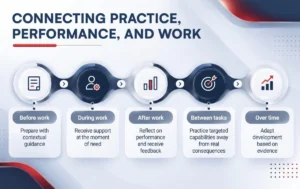
This necessitates a paradigm shift in learning and development strategies. Rather than relying on one-off informational sessions or tool-specific tutorials, organizations must implement structured development programs designed to build AI fluency over time. Crucially, these programs must extend beyond technical teams to encompass all leadership layers, particularly those directly responsible for operational execution.
Addressing the Growing Undercurrent of Uncertainty
Compounding the competency gap is a growing undercurrent of uncertainty among leaders regarding AI’s impact on their own roles and the future of their organizations. A third of leaders (33 percent) have already eliminated or decided against opening a new role in the past year, believing AI could fulfill its responsibilities. This figure rises to 52 percent within the technology sector. Moreover, the proportion of leaders who anticipate AI replacing most or all of their workforce within the next decade has increased from 13 percent in 2025 to 20 percent in 2026.
Confidence in personal job security at the leadership level is also eroding. Only 56 percent of leaders now believe their roles will not be replaced by AI within 10 years, a decline from 65 percent in 2024. This pervasive uncertainty can significantly hinder efforts to mobilize leaders around strategic AI transformation. When leaders are grappling with existential questions about their own relevance, their capacity to champion and drive organizational change can be compromised.
For CLOs, this undercurrent of anxiety is a critical factor. Effective capability-building initiatives do more than just enable AI adoption; they provide leaders with a tangible framework for understanding and engaging with AI, offering a compelling reason to embrace it rather than fear it. By equipping leaders with the skills and strategic understanding to leverage AI, organizations can mitigate this uncertainty and foster a more proactive, rather than reactive, approach to AI integration.
Bridging the Gap Through Strategic Learning and Development
Organizations that successfully transition from AI experimentation to enterprise-wide adoption will not be those that simply acquire the most advanced tools. Instead, they will be the organizations that systematically invest in building AI capability across all organizational levels. This strategic imperative begins with leadership.
Fostering AI fluency among leaders creates a powerful ripple effect. It leads to clearer strategic direction, the development of more impactful use cases, increased team confidence, and ultimately, more meaningful and sustainable AI adoption. This is precisely the mission that General Assembly and EZRA are focused on: assisting organizations in translating their AI ambitions into practical, executable capabilities through structured learning and comprehensive leadership development programs.
The opportunity for CLOs is to lead this critical shift. The focus must move beyond mere access to AI tools and exposure to AI concepts, towards cultivating deep fluency and strategic application. This ensures that the individuals entrusted with driving organizational transformation are adequately equipped to navigate the AI-powered future. The AI competency gap is not an insurmountable technological hurdle; it is fundamentally a leadership challenge, and its resolution lies in strategic, sustained investment in human capability.
Organizations seeking to understand and implement effective strategies for closing this critical AI competency gap can explore resources and programs designed to empower their leadership teams. By focusing on structured learning and development, companies can ensure their leaders are not just aware of AI’s potential, but are actively capable of harnessing it for genuine, transformative business outcomes.
Explore how organizations are closing that gap.