


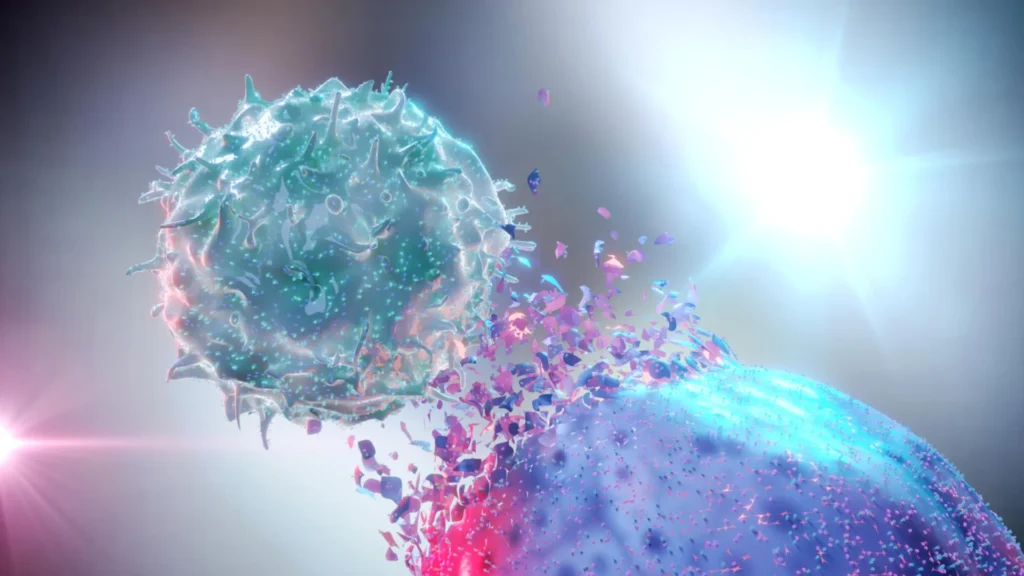
Natural killer (NK) cells stand as pivotal defenders within the complex architecture of the human immune system. These specialized lymphocytes are crucial for early immune responses, acting as a first line of defense against a spectrum of threats, including invading microbes, foreign substances, and compromised or infected host cells. By rapidly identifying and neutralizing these dangers, NK cells play a vital role in containing potential pathogens and preventing their widespread dissemination throughout the body. Their strategic deployment occurs either through active circulation in the bloodstream or by maintaining residence within specific tissues and organs, where they stand ready to confront local threats. A decline in the number or functionality of NK cells can significantly impair the immune system’s capacity to mount effective defenses, thereby elevating an individual’s vulnerability to a range of illnesses, from common infections to more serious conditions like cancer.
The intricate interplay between psychological well-being and physiological health has long been a subject of scientific inquiry. Recent decades have seen a notable increase in the prevalence of mental health conditions such as anxiety disorders and sleep disturbances like insomnia, particularly among younger demographics. These conditions are increasingly recognized not merely as isolated psychological ailments but as systemic stressors capable of interfering with fundamental biological processes, including the robust functioning of the immune system. A groundbreaking study conducted by researchers in Saudi Arabia has shed new light on this connection, specifically investigating the relationship between anxiety, insomnia, and the crucial levels of NK cells in a cohort of young female students. Their compelling findings, which underscore a concerning link between psychological distress and immune compromise, were meticulously peer-reviewed and subsequently published in the esteemed scientific journal Frontiers in Immunology.
Unveiling the Immune Impact: Key Findings from Saudi Arabia
The research revealed a distinct and concerning pattern: students experiencing symptoms consistent with insomnia exhibited a measurable reduction in both the total count and percentage of NK cells, encompassing their various sub-populations. Dr. Renad Alhamawi, the study’s first author and an assistant professor of immunology and immunotherapy at Taibah University, articulated these findings, stating, "We found that in students with insomnia symptoms, count and percentage of total NK cells and their sub-populations were declined." This indicates a broad impact on the NK cell compartment due to sleep disturbances. Furthermore, the study elucidated a separate but equally critical observation regarding anxiety. "Students with general anxiety symptoms, on the other hand," Dr. Alhamawi continued, "had a lower percentage and number of circulatory NK cells and their sub-populations, compared to symptom-free students." This distinction highlights that while insomnia affected overall NK cell levels, anxiety appeared to specifically target the circulating populations, which are vital for patrolling the body and responding to systemic threats. These findings provide empirical evidence for the long-suspected physiological toll that chronic psychological stressors exact on the body’s primary defense mechanisms.
A Deeper Dive: Understanding Natural Killer Cells
To fully appreciate the implications of these findings, it is essential to understand the functional diversity of NK cells. These lymphocytes are characterized by their ability to recognize and eliminate target cells without prior sensitization, a feature that distinguishes them from T and B cells, which require specific antigen recognition. NK cells play a critical role in innate immunity, providing immediate protection against viral infections and contributing significantly to tumor surveillance. They are particularly adept at detecting cells that have lost their "self" markers (MHC class I molecules), a common evasion strategy employed by viruses and cancer cells.
The study specifically focused on two primary subgroups of NK cells, both considered circulatory:
- CD16+CD56dim cells: This subgroup constitutes the vast majority (approximately 90%) of peripheral NK cells, meaning those found in the bloodstream and circulating throughout the body. These cells are highly cytotoxic, equipped with potent granule-dependent mechanisms to induce apoptosis (programmed cell death) in target cells. Their primary function involves directly destroying cells infected with viruses or transformed into cancerous cells, acting as the immune system’s frontline assassins.
- CD16+CD56high cells: While less abundant (comprising about 10% of peripheral NK cells), this subgroup is crucial for immunomodulation. These cells are potent producers of various cytokines, such as interferon-gamma (IFN-$gamma$) and tumor necrosis factor-alpha (TNF-$alpha$). These proteins act as chemical messengers, orchestrating the activities of other immune cells and contributing to the broader immune response, including inflammation and adaptive immunity. Although they possess some cytotoxic capabilities, their primary role lies in regulating and supporting the overall immune landscape.
The observed decline in both these subgroups, either total or circulatory, depending on the specific psychological stressor, suggests a broad impairment of NK cell-mediated immunity, affecting both direct cellular destruction and crucial immune signaling.
The Rising Tide of Anxiety and Insomnia: A Global Health Concern
The context for this research is framed by an alarming global trend: the escalating prevalence of anxiety disorders and insomnia. According to the World Health Organization (WHO), anxiety disorders are among the most common mental health conditions worldwide, affecting hundreds of millions of people. Estimates suggest that globally, over 284 million people experienced an anxiety disorder in 2017 alone, with numbers continuing to rise, exacerbated by recent global crises. Insomnia, characterized by persistent difficulty with sleep initiation, duration, consolidation, or quality, affects a significant portion of the adult population, with chronic insomnia prevalence rates often reported between 10% and 30%, and even higher in specific populations.
Young adults, particularly female students, represent a demographic acutely vulnerable to these conditions. Academic pressures, social expectations, financial concerns, and the complexities of navigating early adulthood contribute to heightened stress levels. Data from various international studies consistently indicate that college-aged women report higher rates of anxiety and sleep disturbances compared to their male counterparts and other age groups. For instance, surveys in North America and Europe have shown that over 60% of university students report at least one sleep problem, and anxiety symptoms are prevalent in over 40% of this population. The Saudi Arabian study’s focus on this specific demographic is therefore highly relevant, reflecting a pressing public health challenge that extends far beyond the Kingdom’s borders. The self-reported rates within the study cohort — 53% experiencing sleep difficulties consistent with insomnia and a striking 75% reporting anxiety symptoms (with 17% moderate and 13% severe) — underscore the gravity of these issues within this student population, mirroring broader global trends.
Methodology and Participant Profiles: A Closer Look at the Study Design
The rigorous methodology employed in the Saudi Arabian study lends significant weight to its conclusions. Sixty female students, ranging in age from 17 to 23 years, were recruited to participate. Each participant underwent a comprehensive assessment protocol designed to gather sociodemographic information and evaluate the presence and severity of anxiety and insomnia symptoms. This involved the administration of three distinct questionnaires:
- Sociodemographic Questionnaire: Collected basic information about the participants, ensuring a clear understanding of the study population.
- Anxiety Assessment Tool: While the specific scale was not detailed in the original brief, such tools typically employ standardized questions to gauge the frequency and intensity of anxiety symptoms, often leading to classifications of minimal, mild, moderate, or severe anxiety.
- Insomnia Assessment Tool: Similar to anxiety assessments, these questionnaires evaluate various aspects of sleep quality, including difficulty falling asleep, staying asleep, early morning awakenings, and the impact of poor sleep on daytime functioning.
A crucial aspect of the study design involved the collection of peripheral blood samples from each participant. These samples were then subjected to advanced laboratory analyses to quantify and characterize the different types of NK cells. Flow cytometry, a sophisticated cell analysis technique, would typically be employed to identify and count the specific NK cell subgroups (CD16+CD56dim and CD16+CD56high) based on their unique surface markers. This dual approach – combining self-reported psychological states with objective biological markers – provided a robust framework for investigating the hypothesized links. The self-described nature of anxiety and sleep disturbance reports, while a common limitation in psychological studies, was carefully contextualized by the objective blood analyses.
Anxiety and Insomnia: Differential Impacts on NK Cell Subsets
The detailed analysis of the collected data yielded nuanced insights into how anxiety and insomnia differentially, yet convergently, affect NK cell populations. For students reporting general anxiety symptoms, a consistent pattern emerged: both the percentage and the absolute number of circulatory NK cells, along with their respective subtypes (CD16+CD56dim and CD16+CD56high), were significantly lower compared to their symptom-free peers. This finding is critical as it indicates a systemic reduction in the body’s readily available NK cell patrol, potentially weakening the immediate immune response to threats encountered in the bloodstream or peripheral tissues.
Moreover, the study meticulously explored the impact of anxiety severity. It revealed a dose-response relationship: students grappling with moderate or severe anxiety symptoms exhibited a notably pronounced reduction in the percentage of circulatory NK cells. In contrast, those experiencing minimal or mild anxiety symptoms showed only a small and, importantly, statistically insignificant decrease. This suggests that while any level of anxiety might have some subtle impact, it is the chronic and more intense forms of anxiety that significantly compromise NK cell populations.
The interplay between insomnia and anxiety also yielded important insights. Among students who reported symptoms of insomnia, higher anxiety scores were found to be associated with a lower proportion of total peripheral NK cells. This suggests a potentially synergistic effect, where the combined burden of sleep deprivation and heightened anxiety may further exacerbate the depletion of these critical immune cells. This could imply a heightened vulnerability for individuals suffering from both conditions, a common co-occurrence in clinical practice.
The Grave Consequences of Compromised Immune Defenses
The observed decline in NK cell numbers and percentages carries profound implications for overall health. A weakened NK cell arm of the immune system can significantly diminish the body’s capacity to defend against a multitude of health challenges. This increased vulnerability extends to:
- Infectious Diseases: NK cells are paramount in early antiviral and antibacterial defense. Their reduction can lead to more frequent, severe, and prolonged infections, including common colds, flu, and potentially more serious viral illnesses.
- Cancers: A critical function of NK cells is immune surveillance, where they identify and eliminate nascent cancer cells before they can form detectable tumors. A decline in NK cell activity is a known risk factor for various malignancies and can impair the effectiveness of certain cancer therapies.
- Autoimmune Conditions: While primarily known for their destructive capabilities, NK cells also play a role in regulating immune responses. Dysregulation or reduction can contribute to an imbalance that might predispose individuals to autoimmune diseases.
- Mental Health Conditions: The relationship between immunity and mental health is bidirectional. While psychological stressors can suppress immunity, chronic inflammation and immune dysregulation, partly mediated by altered NK cell function, can also contribute to the pathophysiology of mental health conditions such as depression, creating a vicious cycle.
Dr. Alhamawi emphasized the broader implications of these findings, stating, "Understanding how these psychological stressors influence the distribution and activity of immune cells, especially peripheral NK cells, may provide valuable insights into the mechanisms underlying inflammation and tumorigenesis." This highlights the potential of this research to unlock deeper understandings of chronic disease development, positioning anxiety and insomnia not merely as mental health issues but as systemic risk factors for physical ailments. The chronic stress and inflammation associated with these conditions are increasingly implicated in a wide array of non-communicable diseases, from cardiovascular disease to metabolic disorders.
Limitations and the Path Forward for Research
While providing critical insights, the researchers were meticulous in acknowledging the inherent limitations of their study. The primary limitation was the relatively narrow scope of the participant pool, which consisted exclusively of young female students. This demographic, while strategically chosen due to the disproportionately rising rates of anxiety and sleep problems within it, restricts the generalizability of the findings. The immune responses and psychological profiles can vary significantly across different age groups, sexes, ethnic backgrounds, and geographical regions. For instance, hormonal fluctuations in women might influence immune parameters differently than in men, and cultural factors could impact the expression and reporting of psychological symptoms.
The cross-sectional design of the study also means that it can establish correlations but not definitively prove causality. It is possible that pre-existing lower NK cell levels could predispose individuals to anxiety or insomnia, or that other unmeasured confounding factors might be at play. To establish a clearer causal link, longitudinal studies that track participants over extended periods, observing changes in NK cell levels in response to the onset or remission of anxiety and insomnia, would be invaluable.
Recognizing these constraints, the research team strongly advocated for future studies that encompass a wider array of participants. "Studies involving a wider range of ages, sexes, and geographic regions are needed for a more complete understanding of how anxiety and insomnia influence NK cell levels and function," the authors stressed. Such expanded research would not only validate the current findings but also elucidate potential demographic-specific nuances in the neuro-immune axis, paving the way for more targeted and effective interventions. Furthermore, future research could explore the specific molecular pathways through which anxiety and insomnia exert their suppressive effects on NK cells, potentially identifying novel therapeutic targets.
Proactive Lifestyle Measures and the Broader Impact of Stress on Immunity
The findings of this study reinforce a growing body of evidence highlighting the profound impact of psychological stress and sleep deprivation on immune health. Fortunately, prior research has consistently suggested that adopting healthy lifestyle habits can serve as potent countermeasures, helping to bolster NK cell levels and enhance their performance. These include:
- Consistent Physical Activity: Regular moderate exercise has been shown to increase NK cell activity and numbers, improve immune surveillance, and reduce inflammation. Activities like brisk walking, jogging, swimming, or cycling, performed consistently, can significantly benefit immune function.
- Lowered Stress Levels: Engaging in stress-reduction techniques such as mindfulness meditation, deep breathing exercises, yoga, spending time in nature, or even simple hobbies can mitigate the detrimental effects of chronic stress on the immune system, including its impact on NK cells. Cognitive Behavioral Therapy (CBT) and other psychotherapeutic interventions are also highly effective in managing anxiety and improving sleep.
- Balanced Diet: A diet rich in fruits, vegetables, whole grains, and lean proteins provides essential vitamins, minerals, and antioxidants that are crucial for immune cell function. Specific nutrients like Vitamin D, Zinc, and Vitamin C are particularly important for supporting NK cell activity. A healthy gut microbiome, nurtured by dietary fiber and probiotics, also plays a critical role in immune regulation.
- Adequate Sleep: Prioritizing 7-9 hours of quality sleep per night is fundamental. Establishing a consistent sleep schedule, creating a conducive sleep environment, and avoiding stimulants before bedtime are key components of good sleep hygiene.
The pervasive nature of anxiety and insomnia means that their interference with normal biological processes extends far beyond immune responses. They can disrupt hormonal balance, alter metabolic function, and contribute to systemic inflammation, thereby increasing the risk of chronic and inflammatory diseases throughout the body. Public health initiatives and educational programs are increasingly focusing on mental health literacy and stress management techniques, recognizing their critical role in preventive health. Healthcare providers are also encouraged to screen for and address anxiety and insomnia as integral components of holistic patient care.
As Dr. Alhamawi succinctly concluded, "Such impacts ultimately compromise overall health and quality of life." This statement underscores the urgency of addressing anxiety and insomnia not only as individual psychological struggles but as significant public health challenges with tangible, detrimental effects on the body’s fundamental defense mechanisms. The Saudi Arabian study provides a crucial piece of the puzzle, reinforcing the interconnectedness of mental and physical well-being and advocating for comprehensive approaches to health that prioritize both mind and body.