

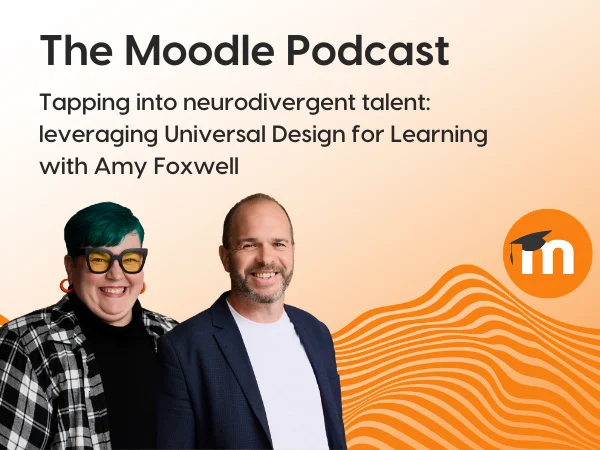
Moodle, a global leader in open-source learning platforms, is championing a paradigm shift in educational design, advocating for a more inclusive and effective learning experience for all. The organization’s commitment to "learning that works for everyone, everywhere – now, and in the future" is underscored by its recent exploration of neuro-inclusive design principles. This focus was prominently featured in the latest episode of the Moodle Podcast, where Shalimar and Dan, hosts of the podcast, engaged in a compelling discussion with Amy Foxwell of ReadSpeaker, a Moodle Certified Integration partner. The conversation delved into the significant advantages of adopting neuro-inclusive design strategies within educational and organizational learning environments, highlighting how these approaches benefit not only neurodivergent learners but the entire learning community.
The core philosophy driving neuro-inclusive design, as articulated by Foxwell and explored in the podcast, is the fundamental belief that there is no such thing as an "average learner." Instead, Moodle and its partners emphasize the inherent uniqueness of individuals and their capacity to thrive when presented with learning experiences that resonate with their diverse ways of interacting with the world. This perspective moves away from a deficit model, where certain learners are seen as requiring separate accommodations, towards a proactive approach that embeds flexibility and inclusivity from the outset.
Designing for Diversity: A Proactive Approach to Learning
A central tenet of neuro-inclusive design is the creation of learning environments that are inherently proactive rather than reactive. This means constructing digital and physical learning spaces that are flexible, interactive, and designed to accommodate the broadest possible spectrum of learners. Amy Foxwell articulated this by referencing the foundational principles of Universal Design for Learning (UDL), a framework that posits that "variability is the norm." This viewpoint challenges the traditional educational model, which often assumes a homogenous learning audience, and instead encourages educators and instructional designers to anticipate and embrace the wide range of learning styles, abilities, and cognitive differences present in any group of learners.
The podcast episode underscored that rather than viewing neurodivergent learners as outliers who necessitate specialized interventions, the focus should be on designing learning experiences that inherently support everyone from the very beginning. This proactive stance aims to reduce the cognitive load and emotional toll often experienced by neurodivergent individuals in traditional learning settings.
One significant aspect discussed was the emotional impact of "masking." This refers to the exhausting and often detrimental process many neurodivergent individuals undertake to appear "normal" and conform to societal expectations within conventional learning environments. This constant effort to suppress natural behaviors, communication styles, or sensory sensitivities can lead to burnout, anxiety, and a diminished capacity to engage with the actual learning material. By implementing neuro-inclusive design principles, such as offering varied presentation formats, flexible engagement options, and clear, accessible communication, educational institutions and organizations can significantly alleviate this burden, fostering a more authentic and supportive learning experience.
The "Curb-Cut Effect": Universal Design Benefits Everyone
The conversation also illuminated the powerful concept of the "curb-cut effect," a phenomenon where features initially designed to enhance accessibility for specific groups ultimately benefit a much wider audience. Text-to-speech technology, a prime example, was initially developed to support learners with visual impairments. However, its widespread adoption has revealed its utility for a multitude of learners.
According to research and anecdotal evidence, text-to-speech tools are now invaluable for individuals with dyslexia, ADHD, language processing differences, and even those who simply prefer to process information through auditory channels. This phenomenon highlights a critical insight: designing for accessibility is not a zero-sum game; rather, it often leads to universally improved user experiences. For instance, features like closed captions, initially mandated for hearing-impaired individuals, are now widely used by people in noisy environments, those learning a new language, or individuals who find visual information easier to digest when paired with audio. The Moodle platform, through its integration capabilities and commitment to open standards, is well-positioned to facilitate the adoption of such accessibility features, thereby amplifying the "curb-cut effect" across its user base.
The implication of the curb-cut effect is profound for educational institutions and businesses alike. By investing in accessible design, they are not merely fulfilling compliance requirements; they are strategically enhancing the learning and engagement potential for their entire user base, leading to greater knowledge retention, improved performance, and increased satisfaction. This aligns with Moodle’s overarching mission to democratize education and empower learners globally.
Reducing Friction and Empowering Learner Agency
The podcast episode made a compelling argument for neuro-inclusion as an indispensable component of effective learning design. Environments that are neuro-inclusive are increasingly correlated with heightened innovation, enhanced creativity, and improved overall performance. By building adaptable and supportive learning experiences, organizations not only benefit their learners but also foster a more dynamic and productive workforce.
The implications of this approach extend beyond individual learning. For businesses, embracing neuro-inclusive design can unlock untapped potential within their workforce. Studies by organizations like the National Autistic Society in the UK have indicated that autistic individuals possess unique strengths, such as exceptional attention to detail, logical reasoning, and pattern recognition, which can be invaluable in various professional roles. By creating learning and development programs that cater to neurodiverse thinking styles, companies can tap into this talent pool, leading to improved problem-solving and innovation.
For educators and Learning & Development (L&D) professionals, understanding and implementing neuro-inclusive strategies offers a pathway to more effective and equitable teaching. The Moodle Podcast episode provided practical insights into identifying "quick wins" for course designers, enabling them to make immediate improvements to their learning materials. These quick wins might include offering alternative formats for assignments, providing clear and structured instructions, using visual aids effectively, and ensuring that digital content is easily navigable.
Furthermore, the discussion emphasized the importance of learner agency. Neuro-inclusive design empowers learners by giving them more control over their learning journey. This can manifest in choices regarding how they access information, how they demonstrate their understanding, and the pace at which they progress. When learners feel empowered and supported, their motivation and engagement naturally increase, leading to more profound and lasting learning outcomes.
The Strategic Advantage of Neuro-Inclusion
The conversation with Amy Foxwell positioned neuro-inclusion not merely as an ethical imperative but as a strategic advantage. Organizations that proactively embrace these principles are likely to experience a ripple effect of positive outcomes:
- Enhanced Employee Retention and Engagement: By creating inclusive environments, companies can foster a sense of belonging and reduce the likelihood of burnout among neurodivergent employees, leading to higher retention rates.
- Increased Innovation and Problem-Solving: Diverse cognitive approaches bring fresh perspectives to challenges, driving innovation and more robust problem-solving.
- Improved Learning Outcomes: When learning is accessible and adaptable to individual needs, knowledge acquisition and skill development are enhanced for all.
- Stronger Brand Reputation: Demonstrating a commitment to inclusivity can significantly enhance an organization’s reputation among customers, potential employees, and the wider community.
- Greater Operational Efficiency: By reducing the need for ad-hoc accommodations and building flexibility into core processes, organizations can streamline operations and improve efficiency.
The Moodle Podcast episode, titled "Tapping into neurodivergent talent: leveraging Universal Design for Learning with Amy Foxwell," serves as a valuable resource for anyone interested in the practical application of inclusive learning design. It offers a deep dive into how educators, L&D professionals, and instructional designers can leverage these principles to create more effective, equitable, and ultimately, more successful learning experiences. The podcast encourages listeners to actively seek out and implement these strategies, emphasizing that the benefits are far-reaching, impacting individuals, organizations, and the broader educational landscape.
Moodle continues to advocate for a future where learning is truly accessible and effective for everyone. By championing initiatives like neuro-inclusive design and collaborating with partners like ReadSpeaker, Moodle is not just providing a platform; it is fostering a movement towards a more equitable and empowering educational future. The ongoing commitment to exploring and disseminating knowledge on these critical topics through resources like the Moodle Podcast reinforces their dedication to making learning work for all.
Listeners are encouraged to follow the Moodle Podcast to stay abreast of future episodes dedicated to learning, technology, and the continuous effort to make education more inclusive. The conversation around neuro-inclusion is ongoing, and Moodle remains at the forefront, providing valuable insights and practical guidance for building a learning world that celebrates and supports the diversity of all learners.