


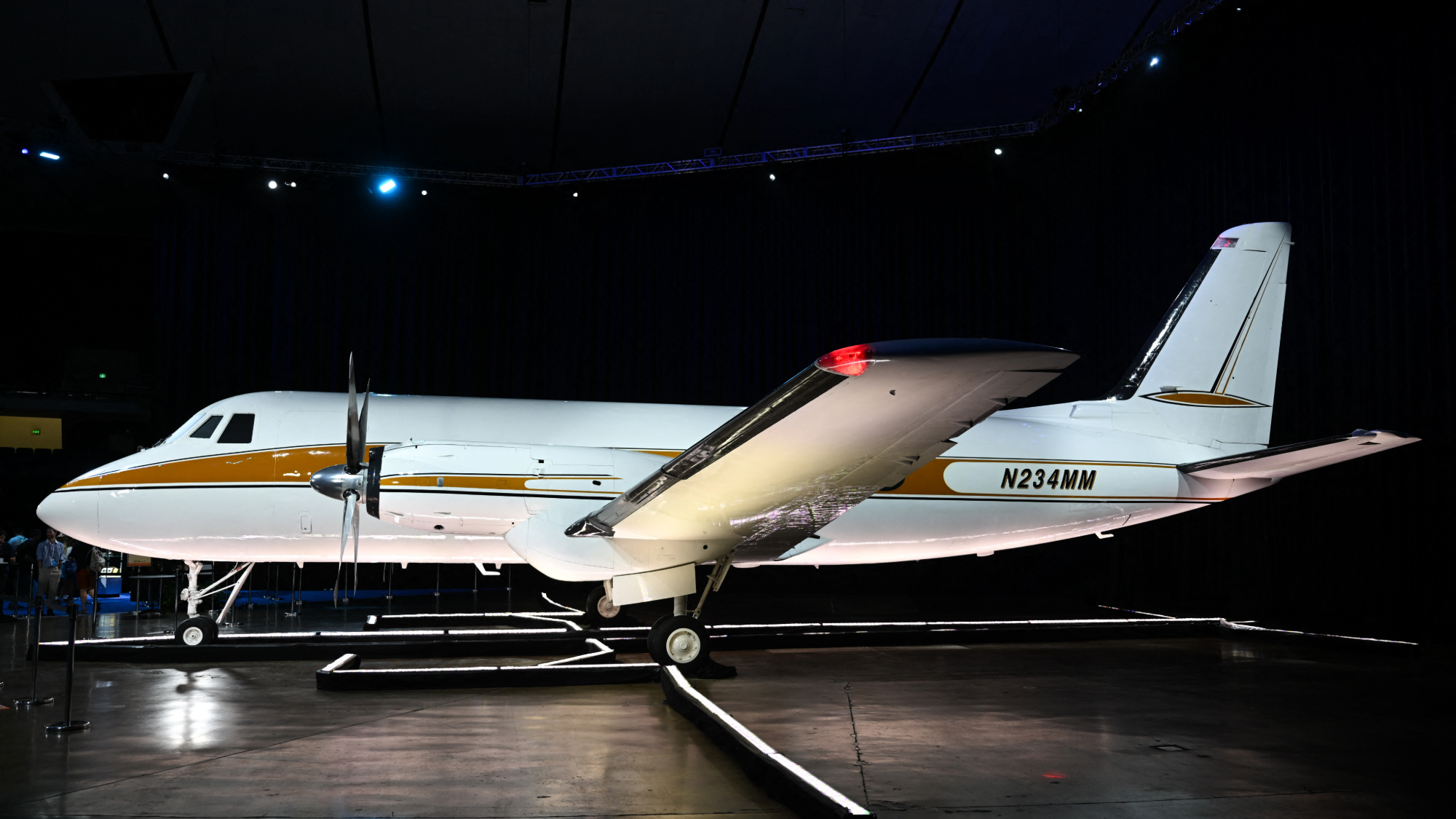
The meticulously restored Grumman Gulfstream I, famously known as The Mouse and once the private transport of Walt Disney, has officially returned to the public eye at the Palm Springs Air Museum. This restoration concludes a multi-year collaborative effort to rescue a piece of mid-century Americana that had spent over a decade deteriorating in the harsh climate of Central Florida. The project, a joint venture between the Walt Disney Archives, Walt Disney Imagineering, and the Phoenix Air Group, represents not only the preservation of an aircraft but the conservation of a pivotal tool that facilitated the expansion of the Disney global empire during the 1960s and 1970s.
The aircraft, bearing the Federal Aviation Administration (FAA) registration number N234MM, served as a mobile executive office for Walt Disney during a period of unprecedented growth for his company. While the plane is no longer airworthy—its engines having been removed and its structural integrity specialized for static display—the restoration of its interior and exterior provides a rare window into the golden age of executive aviation.
The Technical Legacy of the Grumman Gulfstream I
To understand the significance of The Mouse, one must first examine the aircraft itself. The Grumman Gulfstream I (G-159) was a landmark in aviation history, recognized as the first aircraft specifically designed for business and executive use. Before its introduction in the late 1950s, corporations typically relied on converted World War II-era military transport planes, which were often loud, uncomfortable, and inefficient.
The Gulfstream I changed this paradigm. Powered by two 2,220-horsepower Rolls-Royce Dart turboprop engines, the aircraft offered a cruising speed of approximately 350 miles per hour and a service ceiling of 30,000 feet. With a wingspan of 78 feet and a fuselage length of 64 feet, it provided a pressurized cabin that could be customized for luxury or utility. For Walt Disney, who purchased the aircraft in 1963, the Gulfstream I was the pinnacle of modern technology, offering the range and reliability necessary to manage a bicoastal operation.
During its 29-year career with the Walt Disney Company, the aircraft logged more than 20,000 flight hours. It is estimated to have transported 83,000 passengers, ranging from internal staff and Disney family members to world leaders and Hollywood elite. The plane’s N234MM tail number—where "MM" stood for Mickey Mouse—became a recognizable symbol in the skies, signaling the arrival of the "Air Force One of cartoons."
A Chronology of The Mouse: From Acquisition to Decay
The timeline of N234MM is inextricably linked to the most ambitious period of Walt Disney’s career.
1963: Acquisition and the Florida Project
Disney acquired the Gulfstream I in 1963 to replace an earlier, smaller aircraft. Its primary initial mission was the scouting of land for what would eventually become the Walt Disney World Resort. Walt Disney and his executives used the plane to conduct secret aerial surveys of the Florida swamps, allowing them to identify the 27,000-acre site near Orlando without alerting local real estate speculators or the media.
1966–1992: Corporate Workhorse
Following Walt Disney’s death in 1966, the plane continued to serve the company for decades. It was the primary shuttle for executives traveling between the Burbank studios and the construction site in Florida. It also played a role in promotional tours for films and the 1964-1965 New York World’s Fair. High-profile guests during this era included future U.S. Presidents Ronald Reagan and Jimmy Carter, as well as legendary Disney "Nine Old Men" animators.
1992: Decommissioning and Display
The aircraft was officially retired from service in 1992. It was subsequently added to the "Studio Backlot Tour" at Disney-MGM Studios (now Disney’s Hollywood Studios) in Florida. For over 20 years, it was a staple of the theme park, parked on the "Backlot" where guests could view it from a tram.
2014–2022: Deterioration and Rescue
When the Studio Backlot Tour closed in 2014 to make way for new park expansions, the plane was moved to a remote storage area on Disney property. Exposed to the intense Florida sun, high humidity, and heavy rainfall, the aircraft’s exterior paint began to peel, and the interior suffered from significant moisture damage and mold. In 2022, the Walt Disney Company announced that the plane would be moved to the Palm Springs Air Museum for a full restoration and long-term display.
Restoration Challenges and Interior Design
The restoration process was a painstaking endeavor that required balancing historical accuracy with the realities of material decay. Because the plane had been exposed to the elements for eight years, much of the original 1960s upholstery had rotted beyond repair.
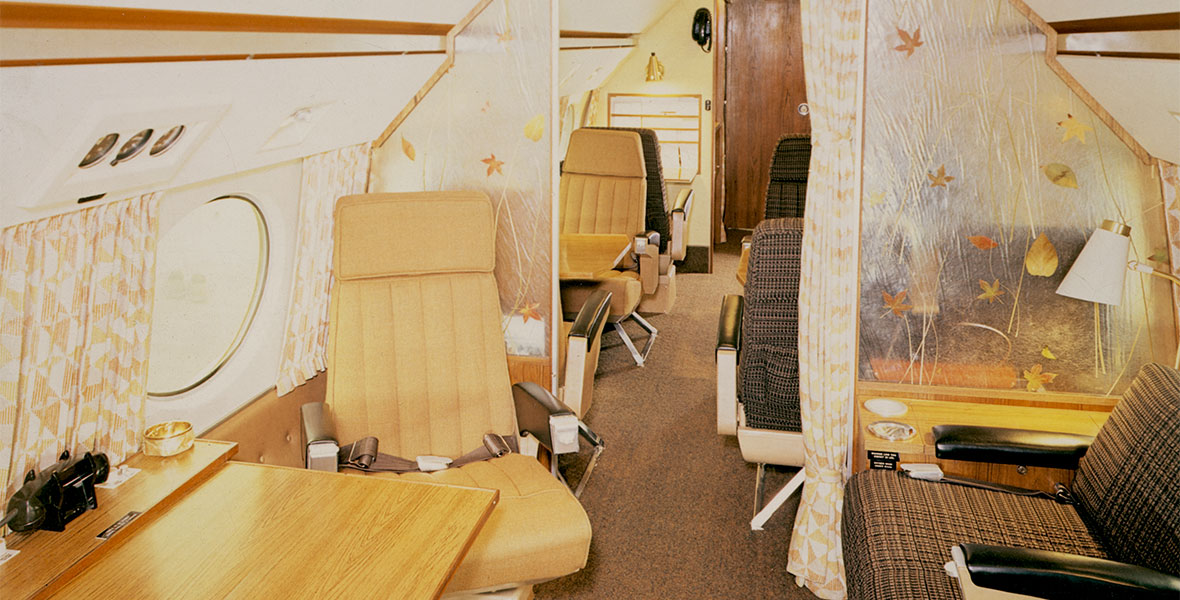
Restorers utilized original specifications and photographs from the Walt Disney Archives to recreate the cabin’s mid-century modern aesthetic. The interior features a palette of cream, beige, and rust tones, complemented by dark wood accents. The seating arrangement includes lounge-style chairs, a sofa, and a large desk where Walt Disney reportedly spent hours reviewing scripts and park blueprints.
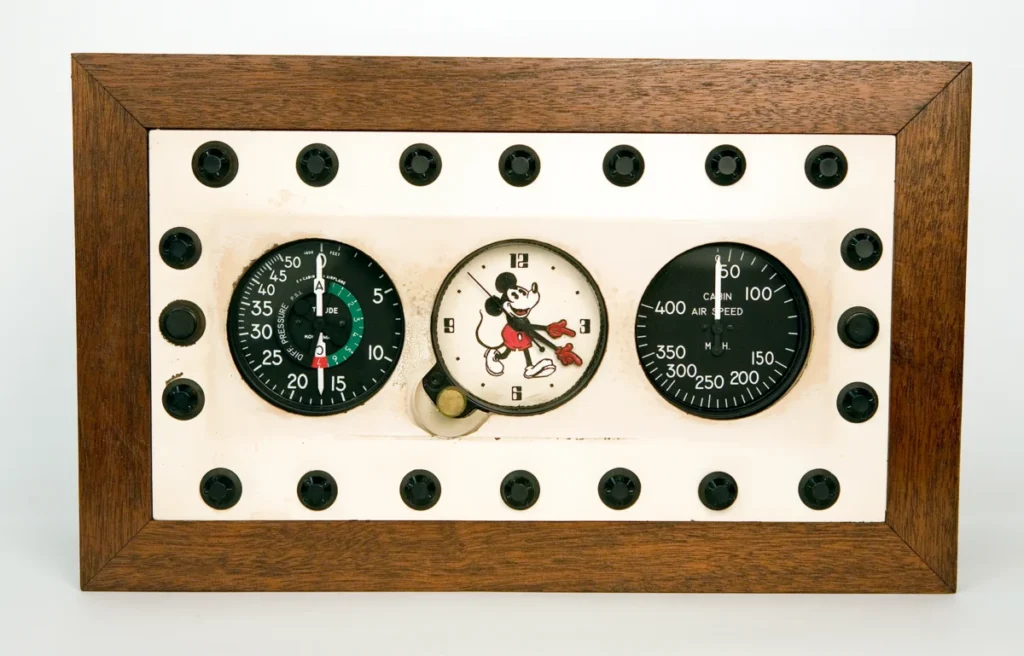
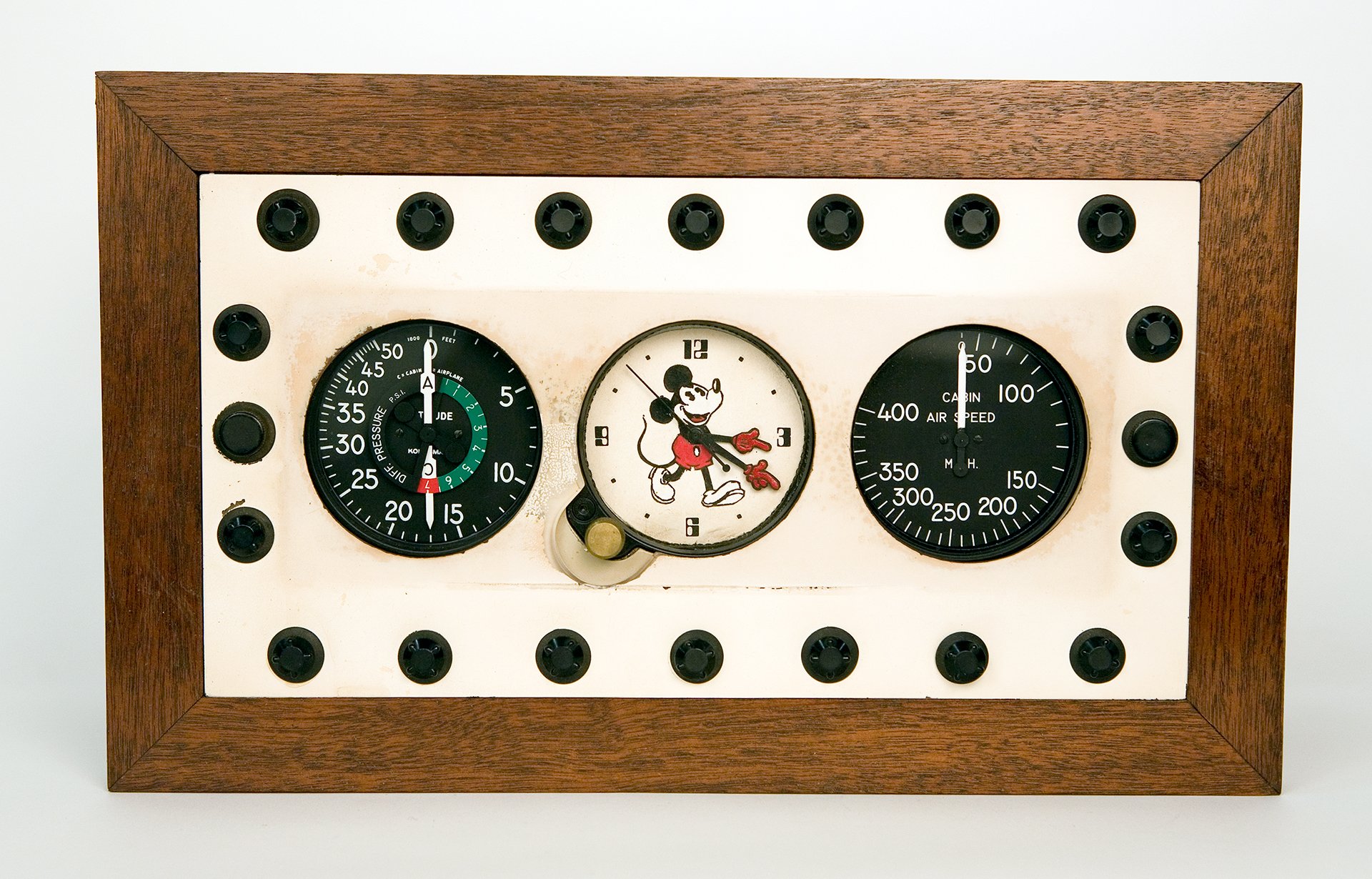
One of the most unique features of the interior is a customized instrument panel installed on the bulkhead behind Walt’s seat. An aviation enthusiast, Disney wanted to monitor the flight’s progress personally. The panel includes an altimeter, a speed gauge, and a clock. During the restoration, these instruments were cleaned and re-installed to match their 1960s configuration.
Furthermore, the cabin is filled with "Mickey Mouse" touches that reflect the branding of the era. This includes custom cocktail napkins, matchbooks, and ashtrays—a reminder of a time when smoking was permitted and common on executive flights. A particularly notable decorative element is a floor-to-ceiling clear plastic divider filled with leaves that were reportedly collected from the Disney family’s backyard, a personal touch added by Walt himself.
The Strategic Importance of Private Aviation
Beyond the nostalgia and the Mickey Mouse branding, the restoration of The Mouse highlights the historical shift toward corporate aviation. As Edward Ovalle, manager of the Walt Disney Company Archives, has noted in historical retrospectives, the private jet was a necessity for corporate security.
In the 1960s, Disney was involved in sensitive land acquisitions and high-stakes media negotiations. Flying commercial posed a risk of industrial espionage or the leaking of trade secrets. The Gulfstream I provided a secure environment where Walt and his inner circle could discuss the "Florida Project" or upcoming film slate without the fear of being overheard. This move toward private, secure travel set a standard that is now ubiquitous among Fortune 500 companies.
Official Responses and Museum Impact
The relocation of the aircraft to Palm Springs is geographically significant. Walt Disney was a frequent visitor to the Palm Springs area, maintaining a home at the Smoke Tree Ranch. The desert climate of Palm Springs is also far more conducive to the long-term preservation of the aircraft than the humid environment of Orlando.
Officials from the Palm Springs Air Museum have expressed that the addition of The Mouse is expected to significantly boost attendance. The museum, which already houses an impressive collection of World War II and Cold War-era aircraft, views the Disney plane as a bridge between military aviation history and the evolution of civil aviation.
"Walt Disney’s Gulfstream I is more than just a plane; it’s a piece of cultural history," a museum spokesperson stated during the unveiling. "It represents the intersection of technology, entertainment, and the vision of a man who changed the world."
Broader Implications for Aviation Preservation
The successful restoration of N234MM serves as a case study for the preservation of "orphan" aircraft—planes that are no longer supported by their original manufacturers or that have fallen into extreme disrepair. The project demonstrates that with corporate backing and archival documentation, even aircraft damaged by years of neglect can be returned to a state of educational value.
For the public, the display offers a tactile connection to the 1960s. At a time when air travel is often viewed as a utilitarian and stressful experience, The Mouse serves as a reminder of an era when flying was considered a glamorous, high-tech adventure. The $25 admission fee to the Palm Springs Air Museum allows visitors to walk through the cabin, offering an immersive experience that photos alone cannot provide.
As the Walt Disney Company continues to evolve into a digital-first media giant, the physical preservation of its history becomes increasingly important. The Mouse stands as a monument to the physical labor, travel, and bicoastal coordination required to build the modern Disney empire. It is no longer just a transport vessel; it is a preserved office of the man who scouted the future from the clouds.