


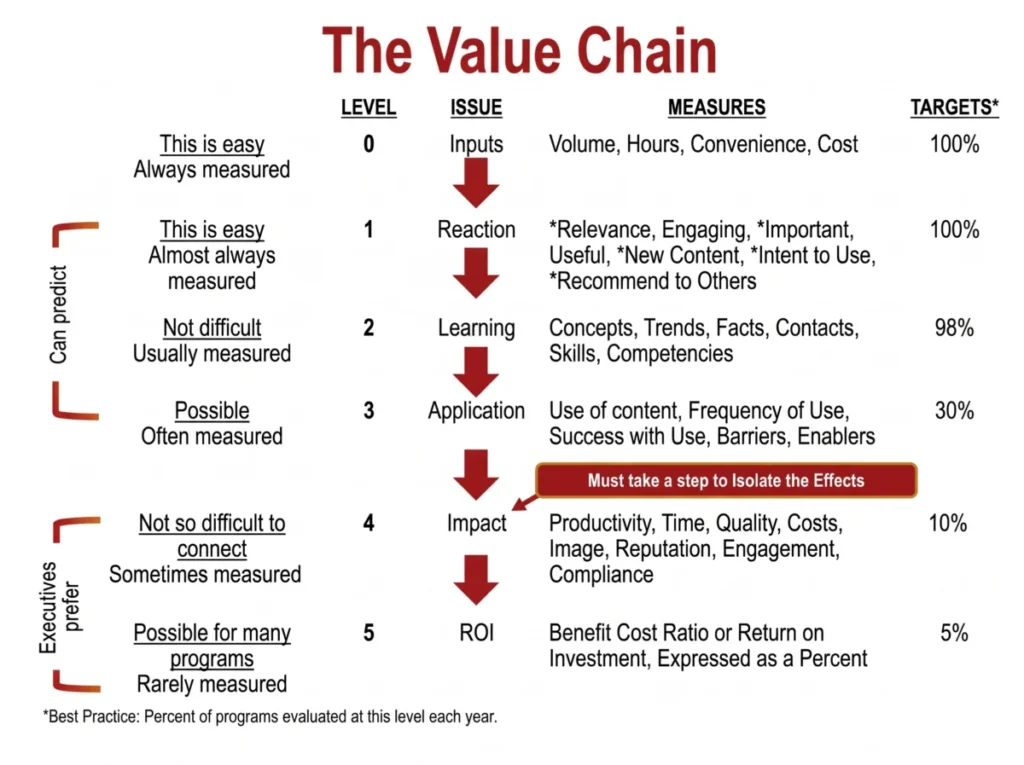

For decades, a deceptively simple question has echoed through boardrooms and learning departments alike: "How do we know learning is working?" The answers, historically, have been equally straightforward, often revolving around metrics like course completion rates, attendance figures, and post-training assessment scores. While these traditional indicators provided a basic measure of engagement and knowledge acquisition, they inadvertently created a significant disconnect. Organizations became adept at quantifying learning activity but struggled to demonstrate its tangible impact on business outcomes. This persistent challenge, a long-standing concern for Chief Learning Officers (CLOs), is now being fundamentally reshaped by the transformative power of artificial intelligence (AI). The conversation has pivoted from the sheer volume of participation to the demonstrable changes in employee performance, the delivery of superior results, the capacity to solve increasingly complex problems, and ultimately, the organization’s ability to achieve its strategic objectives. AI is not merely altering how employees learn; it is revolutionizing how learning effectiveness is measured, positioning organizations that embrace this shift to elevate learning from a support function to a critical strategic business capability.
The Measurement Conundrum: A Legacy of Limited Data
The evolution of learning measurement was intrinsically linked to the data landscape of its time. Learning Management Systems (LMS) primarily offered access to data points such as attendance records, course completion percentages, quiz scores, and feedback surveys. These became the de facto benchmarks of success, largely because they were the most readily available and quantifiable metrics. However, for senior business leaders, these indicators rarely address their core concerns, which typically revolve around productivity gains, fostering innovation, enhancing customer satisfaction, improving product or service quality, driving revenue growth, accelerating time-to-market, and mitigating risk.
This disparity left learning functions in a challenging position, caught between the metrics they could easily measure and the business outcomes that truly mattered to executives. A common scenario often plays out within fast-paced industries like technology. Consider a global technology services company embarking on a significant cloud transformation initiative. After six months of intensive learning programs designed to equip employees with new cloud skills, the learning team might proudly present a report highlighting:
- 10,000 employees completed the cloud fundamentals course.
- 85% of participants achieved a passing score on the certification exam.
- An average participant satisfaction rating of 4.2 out of 5.
While these figures represent a successful rollout of training, the executive team’s inevitable follow-up questions often expose the limitations of traditional measurement:
- "Has our cloud adoption rate increased?"
- "Are our cloud-related project delivery times improving?"
- "Are we seeing a reduction in cloud infrastructure costs?"
Frequently, the learning team lacks concrete answers, not because the learning initiative failed, but because the prevailing measurement approaches were never designed to address these critical business-impact questions. This gap has persisted for years, creating a perpetual challenge in justifying learning investments.
AI: The Catalyst for a Paradigm Shift in Measurement
The advent of Artificial Intelligence introduces a crucial capability that learning functions have historically lacked: the ability to seamlessly connect and interpret data across a multitude of disparate organizational systems. In today’s complex business environment, organizations generate vast amounts of data across various platforms, including:
- Customer Relationship Management (CRM) systems: Tracking customer interactions, sales cycles, and satisfaction levels.
- Enterprise Resource Planning (ERP) systems: Managing financial data, supply chains, and operational efficiency.
- Project Management Software: Monitoring project timelines, resource allocation, and task completion.
- Human Resources Information Systems (HRIS): Housing employee performance reviews, skills inventories, and career progression data.
- Collaboration Tools (e.g., Slack, Microsoft Teams): Capturing team communication patterns, knowledge sharing, and problem-solving discussions.
- Customer Support Platforms: Recording issue resolution times and customer feedback.
- Productivity Suites (e.g., Microsoft 365, Google Workspace): Analyzing document creation, communication frequency, and task management patterns.
Historically, these valuable datasets existed in isolated silos, rendering cross-functional analysis impractical. AI, however, possesses the power to break down these barriers, enabling organizations to identify intricate patterns, uncover hidden relationships, and detect predictive indicators across these previously disconnected sources.
This newfound analytical prowess allows learning leaders to begin answering previously unanswerable questions, such as:
- "How do employees who completed the advanced cybersecurity training perform on phishing simulation tests compared to their peers?"
- "Is there a correlation between participation in leadership development programs and increased team productivity or employee retention?"
- "Can we predict which individuals are most likely to successfully adopt new sales methodologies based on their engagement with relevant learning resources and their subsequent performance metrics?"
The focus irrevocably shifts from merely measuring learning activity to achieving true outcome intelligence.
Learning’s New Mandate: Architecting Business Capability
Perhaps the most profound transformation facing learning leaders is philosophical rather than technological. The future of learning and development lies in shifting their self-perception from mere providers of training experiences to architects of tangible business capabilities. Capability represents the critical intersection where learning strategy and business strategy converge.
When learning functions adopt this mindset, the approach to measurement naturally evolves. The primary objective becomes understanding whether specific capabilities are demonstrably improving and, more importantly, whether these enhanced capabilities are directly influencing and driving key business outcomes. As many industry experts now articulate, learning should not be measured by how many individuals completed a program, but by how many individuals have become demonstrably capable of performing the tasks and exhibiting the behaviors that the business needs to succeed in the present and future.
The IMPACT Framework: A Blueprint for Outcome-Driven Learning Measurement
To guide organizations in this pivotal transition and reimagine learning measurement, a comprehensive framework is essential. Based on extensive experience in the field, the IMPACT framework offers a structured approach:
I – Identify Strategic Outcomes
Every learning initiative must originate with a clearly defined business objective. Without this foundational alignment, demonstrating value becomes an uphill battle. Examples of strategic outcomes include:
- Increasing market share by 5% within the next fiscal year.
- Reducing customer churn by 10% through enhanced customer service skills.
- Accelerating the launch of new products by 15% by improving cross-functional collaboration.
- Decreasing operational costs by 8% through optimized process efficiencies.
If a learning program cannot be directly linked to a measurable strategic outcome, its value proposition remains weak and difficult to substantiate.
M – Map Capability Requirements
Once strategic outcomes are identified, the next critical step is to meticulously map the specific capabilities required to achieve them. These capabilities are the essential building blocks that translate strategic intent into actionable performance. For instance, a comprehensive digital transformation initiative might necessitate the development of a range of capabilities, such as:
- Cloud Architecture and Engineering: Essential for migrating and managing infrastructure.
- Data Analytics and Interpretation: Crucial for leveraging insights from new digital platforms.
- Agile Project Management: To ensure flexibility and rapid iteration in development cycles.
- Cybersecurity Best Practices: To protect sensitive data in a cloud-native environment.
- Customer Experience Design: To ensure digital solutions meet evolving user needs.
These identified capabilities serve as the vital bridge connecting learning interventions to tangible business performance improvements.
P – Predict Performance Influencers
AI’s power to analyze complex datasets allows organizations to move beyond reactive measurement and proactively identify factors that significantly influence employee performance. These predictive influencers can span a wide range, including:
- Specific skill proficiencies: The mastery of particular technical or soft skills.
- Engagement with learning resources: The depth and breadth of an individual’s interaction with training materials and platforms.
- Collaboration patterns: The frequency and quality of an employee’s interactions with colleagues on relevant projects.
- Mentorship and coaching interactions: The impact of guidance from more experienced individuals.
- Access to tools and technology: The availability and effective use of necessary resources.
Understanding these underlying drivers empowers learning leaders to strategically allocate resources and design interventions that will have the greatest impact on performance.
A – Analyze Learning Signals
Instead of solely relying on traditional completion data, AI enables the analysis of richer, more nuanced learning signals. These advanced indicators provide deeper insights into the true development of capabilities:
- Time spent on specific learning modules: Indicating areas of focus or difficulty.
- Performance on practice exercises and simulations: Demonstrating application of knowledge.
- Contribution to knowledge-sharing platforms: Reflecting the transfer of learning to colleagues.
- Application of new skills in simulated or real-world projects: The ultimate test of capability.
- Peer feedback on skill application: Offering qualitative insights into effectiveness.
These diverse signals paint a more comprehensive picture of capability development than simple completion rates ever could.
C – Connect Learning to Business Metrics
This is the transformative stage where learning’s contribution to business success becomes clearly visible and quantifiable. By correlating learning investments with key business metrics, organizations can demonstrate tangible ROI:
- Linking sales training to increased revenue or improved conversion rates.
- Correlating customer service training with higher customer satisfaction scores and reduced churn.
- Connecting project management training to faster project completion times and reduced budget overruns.
- Associating technical upskilling with increased innovation output or reduced system downtime.
In this phase, learning transitions from being perceived as a cost center to being recognized as a direct contributor to business performance, fundamentally altering how its value is understood.
T – Track and Refine Continuously
Learning measurement should not be a static, annual exercise. AI facilitates continuous monitoring of both learning progress and business impact, enabling leaders to adapt interventions in real-time. This agile approach allows for immediate adjustments to learning pathways, content, or support mechanisms based on ongoing performance data, ensuring that learning remains aligned with evolving business needs.
A Practical IT Industry Example: From Certification to Capability
Consider an organization undergoing a significant transition from traditional software development methodologies to agile, cloud-native engineering practices. Historically, success in such a transformation might have been measured solely by the number of employees who achieved cloud certifications. However, an AI-powered approach delves deeper, examining a broader spectrum of outcomes.
The organization would analyze data points such as:
- Employee engagement with cloud-native development tools and platforms.
- Frequency of code deployments to cloud environments.
- Team collaboration patterns on cloud-related projects.
- Performance metrics of applications deployed in the cloud.
- Customer feedback on new cloud-based services.
Through AI analysis, the organization discovers that teams demonstrating stronger cloud engineering capabilities exhibit:
- Significantly higher deployment frequencies of new features.
- Reduced incident resolution times for cloud-based applications.
- Improved customer satisfaction scores for services delivered via the cloud.
- Faster iteration cycles for product development.
Suddenly, the discussion around learning is no longer about the cost of certifications. It transforms into a strategic conversation about how learning directly drives business performance, innovation, and customer value. This shift has profound implications for resource allocation, strategic planning, and the overall perception of the learning function within the organization.
Moving Beyond Reporting: The Era of Insight Generation
Many current learning dashboards function primarily as reporting tools, offering a retrospective view of what has happened. The future, however, lies in robust insight generation. Reporting tells us what occurred, but insight explains why it occurred. Predictive intelligence then takes this a step further by helping to forecast what should happen next. This progression represents the next significant evolution in learning analytics.
The Chief Learning Officer of the future will not merely review static dashboards; they will leverage sophisticated AI-powered intelligence to guide critical workforce capability decisions. This involves understanding not just current performance but also identifying emerging skill gaps and proactively developing the talent needed to navigate future business challenges and opportunities.
The Human Element in Measurement: Balancing Analytics with Empathy
While AI dramatically expands the possibilities for analytical measurement, learning leaders must be vigilant to avoid a common pitfall: over-reliance on data to the exclusion of human understanding. It is crucial to remember that:
- Learning is inherently a human process: Involving motivation, curiosity, and personal growth.
- Context matters: Data alone may not capture the nuances of individual learning journeys or organizational culture.
- Qualitative feedback is invaluable: Direct conversations and anecdotal evidence can provide crucial context that data may miss.
Organizations that successfully balance sophisticated data analytics with a deep understanding of human behavior and organizational dynamics will undoubtedly generate the most meaningful and impactful outcomes. Ultimately, capability development remains a fundamentally human endeavor; technology serves as a powerful tool to illuminate patterns and inform decisions, but it is people who drive transformation.
Looking Ahead: Redefining the CLO’s Role and the Future of Learning
The next decade promises to redefine the strategic importance and operational scope of the Chief Learning Officer. The most successful CLOs will transcend traditional responsibilities like course management and content curation. They will instead:
- Become strategic partners: Collaborating closely with executive leadership to align learning initiatives with overarching business goals.
- Champion data-driven decision-making: Utilizing AI and advanced analytics to inform talent development strategies.
- Architect scalable capability-building frameworks: Designing learning ecosystems that foster continuous growth and adaptability.
- Drive organizational agility: Ensuring the workforce possesses the skills and mindset to navigate a rapidly changing business landscape.
- Measure impact beyond completion: Focusing on the demonstrable contribution of learning to business performance and competitive advantage.
Organizations that embrace this transformative shift will reap benefits far beyond improved learning metrics. They will cultivate a more capable, adaptable, and resilient workforce, positioning themselves for sustained success and a significant competitive advantage in the marketplace. The future of learning measurement is not about meticulously tracking what individuals learned yesterday; it is about understanding and optimizing how learning empowers organizations to achieve their most ambitious goals tomorrow.