


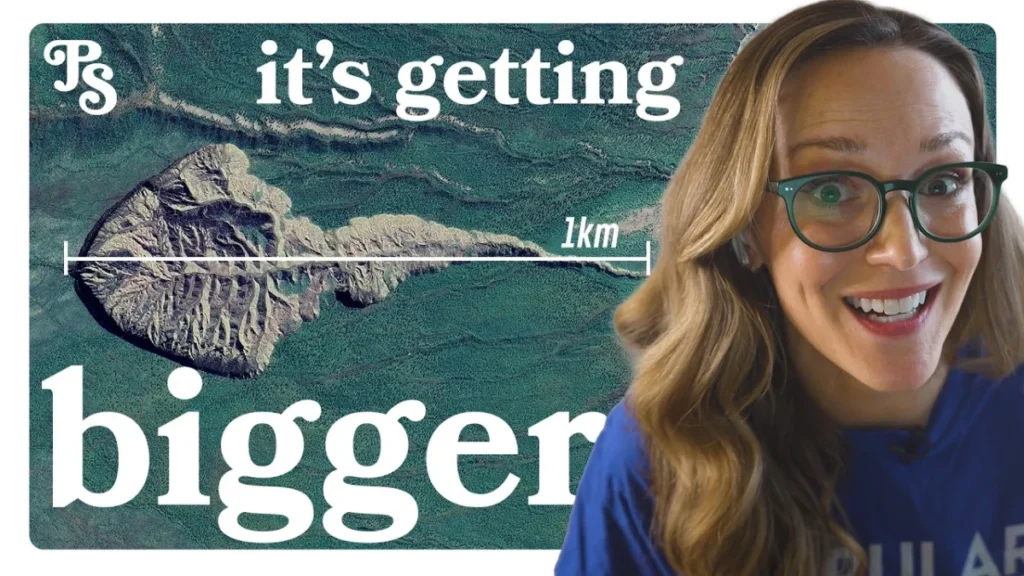
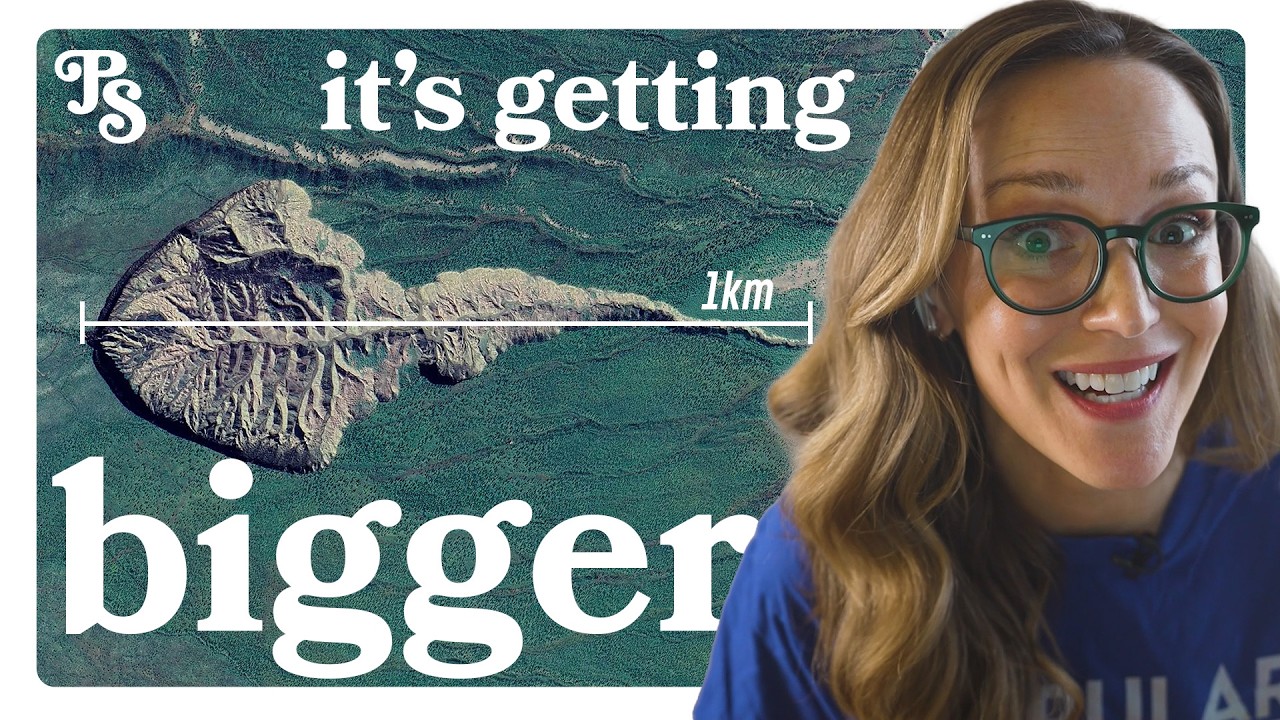
Deep within the remote Yana Highlands of the Sakha Republic in eastern Siberia, a geological anomaly known to the local Yakut people as the Gateway to Hell is fundamentally altering the landscape and providing a stark warning about the state of the global climate. While the Batagay crater—properly referred to in scientific literature as the Batagay megaslump—resembles a massive scar on the earth, it is not the result of a volcanic eruption or a meteor impact. Instead, it is the world’s largest retrogressive thaw slump, a phenomenon driven by the rapid degradation of permafrost. As the planet warms, this chasm is expanding at an unprecedented rate, exposing ancient geological layers and releasing long-sequestered greenhouse gases into the atmosphere.
The Genesis of a Geological Giant
The origins of the Batagay crater are not ancient, despite the age of the soil it exposes. The site remained stable for millennia until the mid-20th century. During the 1960s, a significant portion of the surrounding forest was cleared for industrial purposes and road construction. This removal of the taiga’s canopy had immediate and catastrophic consequences for the thermal stability of the ground. Without the shade provided by the trees and the insulating layer of moss and peat, the dark surface of the earth absorbed more solar radiation.
This increased heat began to penetrate the permafrost—ground that had remained frozen for hundreds of thousands of years. As the ice within the soil melted, the land lost its structural integrity and began to subside. What started as a small gully soon transformed into a massive slump. By the 1980s, the feature had become a prominent landmark, and by the 21st century, it had earned its reputation as a "megaslump" due to its sheer scale. Today, the Batagay crater measures approximately one kilometer in length and reaches depths of up to 100 meters, carving a tadpole-shaped void into the Siberian tundra.
The Mechanics of a Retrogressive Thaw Slump
To understand why the Batagay crater is so significant, one must understand the specific mechanics of a retrogressive thaw slump (RTS). Unlike a traditional landslide, which occurs when a mass of earth moves quickly down a slope due to gravity, an RTS is a slow-motion collapse driven by "thermokarst" processes.
In the Batagay region, the permafrost is of the "Yedoma" type—ice-rich soil that dates back to the Late Pleistocene. This soil can consist of up to 80% ground ice. When this ice melts, the volume of the terrain decreases drastically. The "headwall" of the crater—the steep cliff at the top of the slump—is particularly vulnerable. As the exposed ice in the headwall melts, the remaining sediment becomes a slurry that flows downward, further exposing the frozen layers behind it. This creates a feedback loop where the slump "retreats" further into the hillside every year.
Observers at the site often report a constant cacophony of sounds: the trickling of meltwater, the wet thud of falling mud, and occasional thunderous cracks as massive chunks of frozen earth break away from the rim. These sounds are the audible signals of a landscape in the midst of a rapid and irreversible transformation.
Chronology of Expansion and Scientific Data
Scientific monitoring of the Batagay crater has intensified over the last decade as researchers utilize satellite imagery and remote sensing to track its growth. Data collected by the Alfred Wegener Institute in Germany and the Melnikov Permafrost Institute in Russia reveal a startling acceleration in the slump’s expansion.
- 1960s: Initial deforestation triggers the first signs of subsidence.
- 1990s: The slump reaches a length of several hundred meters; local reports of "the gateway" begin to circulate.
- 2010-2020: High-resolution satellite data shows the headwall retreating at a rate of 10 to 15 meters per year. During particularly warm summers, this rate has been known to double.
- Present Day: The crater is expanding by approximately 1 million cubic meters of volume annually.
Recent studies published in journals such as Geomorphology indicate that the slump is not just growing in length but also in width and depth. The volume of sediment and ice lost since the collapse began is estimated to be equivalent to several Great Pyramids of Giza. This rapid growth is a direct reflection of the rising temperatures in the Arctic, which is warming two to four times faster than the global average.
A Paleontological Time Machine
While the Batagay crater represents an environmental crisis, it has also become an accidental treasure trove for the scientific community. As the permafrost thaws and the earth falls away, it exposes layers of soil that have been frozen for up to 650,000 years. This makes Batagay one of the most important sites in the world for studying the history of the Earth’s climate.
Paleontologists have discovered incredibly well-preserved remains of Pleistocene megafauna within the crater’s walls. Notable finds include:
- A 42,000-year-old Lena horse foal, found with its skin, hair, and internal organs intact.
- Remains of woolly mammoths, steppe bison, and cave lions.
- Ancient plant matter and pollen that allow scientists to reconstruct the ecosystems of past interglacial periods.
By analyzing these layers, researchers can understand how the Siberian environment responded to previous periods of natural climate change. However, the irony is not lost on the scientific community: the very process of global warming that is destroying the modern landscape is the only reason these ancient secrets are being revealed.
The Permafrost Carbon Bomb
The most pressing concern regarding the Batagay crater is its role in the global carbon cycle. Permafrost acts as a massive carbon sink, trapping organic matter from dead plants and animals that lived thousands of years ago. As long as the ground remains frozen, this carbon stays locked away.
When the permafrost thaws, as it is doing so dramatically at Batagay, microbes begin to break down the newly available organic matter. This process releases carbon dioxide and methane—a greenhouse gas that is roughly 25 to 30 times more potent than CO2 over a 100-year period. Scientists refer to this as the "permafrost carbon feedback." The more the planet warms, the more permafrost thaws; the more permafrost thaws, the more greenhouse gases are released, which in turn accelerates further warming.

Estimates suggest that the world’s permafrost contains twice as much carbon as is currently in the Earth’s atmosphere. The Batagay crater serves as a localized "hotspot" for these emissions, pouring ancient carbon into the modern atmosphere at a rate that far exceeds the surrounding tundra.
Cultural and Regional Impact
For the indigenous Yakut people, the expansion of the Batagay crater is more than a scientific curiosity; it is a source of spiritual and physical unease. The name "Gateway to Hell" reflects a deep-seated cultural wariness of the site. In Yakut tradition, the underworld is a place of power and danger, and the sudden opening of the earth is seen as a disturbance of the natural and spiritual order.
On a practical level, the slump poses a threat to local infrastructure. While the immediate area around the crater is sparsely populated, the increase in sediment runoff is affecting the Batagay River. The influx of silt and organic matter can alter water quality and disrupt local fish populations, which are vital for the subsistence of northern communities. Furthermore, the crater is a harbinger of what is happening across the Sakha Republic, where thawing permafrost is causing roads to buckle, buildings to tilt, and pipelines to rupture.
Broader Implications and Future Projections
The Batagay crater is an extreme example of a phenomenon that is occurring across the entire circumpolar North. From Alaska to Canada to Scandinavia, thousands of smaller thaw slumps are appearing. However, Batagay remains the "canary in the coal mine" due to its scale and the speed of its transformation.
Climate models suggest that if current warming trends continue, the Batagay crater will continue to expand until it reaches the bedrock or runs out of ice-rich soil to consume. There is no known engineering solution to stop a megaslump of this size; the forces of thermal degradation are too vast to be contained by human intervention.
The primary lesson of the Batagay crater is one of thresholds. The initial trigger—deforestation in the 1960s—seemed minor at the time, but it crossed a thermal threshold that the environment could not recover from. It serves as a stark reminder that human activities can initiate geological processes that quickly move beyond our control.
As the "Gateway to Hell" continues to groan and collapse in the Siberian wilderness, it stands as a monument to the fragility of the frozen north and a loud, crashing demand for global attention to the accelerating reality of climate change. The secrets it reveals from the past are invaluable, but the future it portends is one of profound and unpredictable change.