


In the contemporary corporate landscape, succession planning has long been regarded as the bedrock of long-term organizational stability. However, recent industry assessments reveal a growing chasm between the identification of high-potential employees and the practical readiness of those individuals to assume executive responsibilities. While most organizations invest heavily in leadership development programs, a significant portion of these initiatives fails to translate into effective performance when critical roles become vacant. This misalignment suggests that the prevailing approach to succession management is fundamentally flawed, prioritizing the theoretical promise of "potential" over the demonstrated capacity for "readiness."
The State of Leadership Pipelines
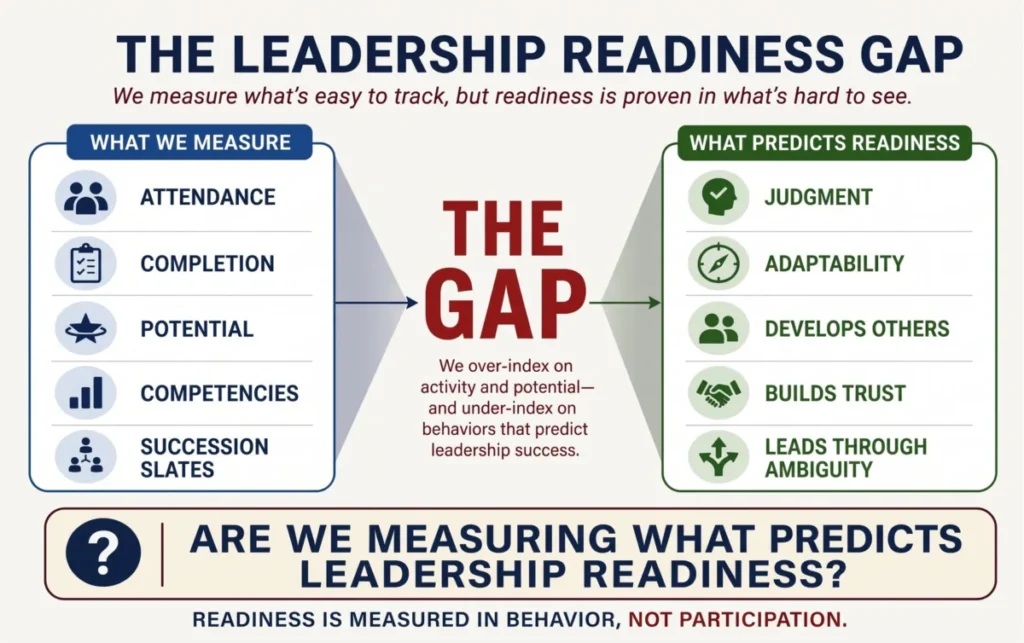
According to the DDI Global Leadership Forecast 2025, 80 percent of organizations report a lack of confidence in their current leadership pipelines. This figure highlights a systemic vulnerability that persists despite decades of investment in talent management software, executive coaching, and formal leadership curricula. The disparity between investment and outcome has triggered a reassessment among human capital experts who argue that organizations are conflating two distinct metrics: high potential—which indicates future trajectory—and leadership readiness—which indicates the current ability to navigate complex business environments.
The chronology of this trend can be traced back to the post-pandemic shift in corporate agility requirements. Following the economic volatility of 2020 and 2021, the demands placed on leadership teams shifted from maintaining status quo operations to leading through rapid digital transformation, supply chain disruptions, and shifting labor models. Consequently, the traditional succession planning cycle—often conducted on an annual or biennial basis—has struggled to keep pace with the hyper-contextual needs of the modern C-suite.
Deconstructing the Readiness Gap
Leadership readiness is inherently contextual. A manager who excels at leading an established, stable team may prove ineffective when tasked with leading a corporate turnaround or a high-growth startup unit. The failure to distinguish between these contexts often leads to the "Peter Principle" in practice, where individuals are promoted to their level of incompetence because their past success in a different environment was misread as a guarantee of future performance.
When an organization identifies an employee as "high potential," it is often an assessment of past performance combined with ambition. However, the transition into a senior role frequently requires a fundamental shift in behavior: moving from individual contribution to influence-based leadership, and from technical problem-solving to strategic delegation. Failure to bridge this gap does not just impact the individual; it ripples through the organization, affecting team morale, project delivery, and overall business strategy.
Chronology of a Failed Transition
The typical path to a failed succession event often follows a predictable, albeit tragic, trajectory:
- Identification Phase: The organization identifies a high-performer through standardized performance reviews. The individual is labeled "high potential" and placed into a leadership development program.
- Program Participation: The individual completes the curriculum, achieving high marks in theoretical training and workshops. The organization records this as a success metric.
- The Appointment: A vacancy arises. The individual is promoted based on their status in the "high potential" pool.
- The Performance Dip: Within six to twelve months, the newly appointed leader struggles to manage the shift in scope. The team they lead begins to show signs of disengagement or decreased output.
- Systemic Reassessment: The organization concludes the individual "wasn’t ready," often failing to acknowledge that the development system itself was designed to reward participation rather than verify readiness through applied, real-world experience.
Measuring Value Beyond Participation
The reliance on "activity metrics"—such as the number of learning hours logged or the percentage of leaders who have completed a specific module—has created a false sense of security. As noted by industry practitioners, such as Dr. Keith Keating, the focus must shift from activity-based measurement to value-added outcomes.
In a modernized talent development framework, the focus shifts to a four-tier progression model:

- Activity: Tracking participation in developmental events.
- Capability: Measuring the acquisition of new skills.
- Behavior: Observing whether these skills are applied in daily operations.
- Impact: Evaluating the measurable improvement in business results or team performance attributable to the leader’s actions.
By prioritizing this progression, HR departments can move away from passive dashboards and toward an evidence-based approach to talent management. This involves creating "stretch assignments" that test a leader’s ability to handle ambiguity before they are placed in a permanent role. If an employee cannot successfully navigate a smaller-scale transformation or a cross-departmental project, it provides the organization with the necessary data to withhold a promotion until the specific readiness gap is closed.
The Role of Systemic Infrastructure
The transition from leadership programs to leadership systems is perhaps the most significant hurdle for modern HR leaders. A program is a finite event, whereas a system is a continuous cycle of observation, feedback, and reassessment. Research indicates that the most successful organizations treat leadership development as a component of the workflow, rather than an auxiliary task.
For instance, when a leader is identified as a candidate for a future promotion, they should be given opportunities to "act" in that capacity during periods of stability. This creates a feedback loop where the organization can observe the leader’s judgment under pressure. If the leader fails to demonstrate the required judgment, the organization has the opportunity to provide coaching or redirect the candidate’s career path before a permanent, high-stakes appointment is made.
Implications for Corporate Governance
The inability of organizations to accurately predict leadership readiness carries severe financial and strategic implications. The cost of a failed executive hire can exceed three times the individual’s annual salary, not accounting for the loss of institutional knowledge, the disruption to business continuity, and the erosion of employee trust.
Furthermore, investors are increasingly looking at "human capital depth" as a key indicator of firm longevity. When an organization cannot demonstrate a robust, ready-to-deploy bench, it signals a risk to long-term value creation. Consequently, the pressure on boards and executive committees to overhaul their succession planning processes is mounting.
Moving Toward Evidence-Based Succession
The path forward requires a shift in the fundamental question posed by leadership committees. Moving away from "Who is next?" allows the focus to shift toward "Who is actually ready?" This change in lexicon is indicative of a broader cultural shift.
To achieve this, firms must:
- Decouple Potential from Readiness: Acknowledge that high potential is a baseline, not a promotion guarantee.
- Integrate Real-World Simulation: Use internal projects as testing grounds for leadership capabilities.
- Institutionalize Feedback: Ensure that leadership systems include rigorous, candid performance data that is not clouded by the "succession bias" of selecting familiar faces.
As organizations navigate an increasingly complex global economy, the ability to develop leaders who can operate effectively in the face of ambiguity will become a key competitive advantage. The era of relying on static, activity-based succession planning is coming to a close. In its place, a more rigorous, evidence-based paradigm is emerging—one that values the tangible, demonstrated capability of leaders over the theoretical promise of their past accomplishments. The success of the next decade’s industry leaders will depend not on how many programs they have attended, but on their ability to execute when the pressure is at its highest.