


For decades, the pursuit of perfection has been the hallmark of engineering and systems design. From the standardized components in a power grid to the uniform architecture of synthetic materials, the underlying assumption was that reliability is best achieved through homogeneity. However, a groundbreaking study published September 17 in the journal Science challenges this long-standing paradigm, suggesting that the "imperfections" found in nature—what physicists call disorder or heterogeneity—are not flaws to be eliminated, but are instead vital components that bolster the stability of complex systems.
Led by Adilson Motter, the Charles E. and Emma H. Morrison Professor of Physics and Astronomy at Northwestern University, the research team has developed a rigorous mathematical framework that proves how and why variation can shield networks from catastrophic failure. This discovery holds profound implications for everything from the stability of global energy infrastructure to the design of next-generation metamaterials and the understanding of ecological collapse.
The Myth of Uniformity and the Rise of Complexity Science
The scientific community has historically relied on simplified models to understand interconnected systems. One of the most prevalent, the Kuramoto model, represents network nodes as nearly identical units. While these models have been instrumental in providing foundational insights, they often fail to capture the nuance of real-world environments. In reality, a power grid consists of generators with varying load capacities and response times; a brain is composed of neurons with distinct firing patterns; and an ecosystem is a web of species with highly diverse roles.
The assumption that "identical is better" has dominated engineering since the Industrial Revolution. By striving for uniformity, engineers believed they could minimize variance and, by extension, minimize risk. However, as systems have become more interconnected and complex, this approach has encountered diminishing returns. When every component in a system behaves in lockstep, the entire network becomes vulnerable to synchronized failures. If one component is pushed to its limit, its neighbors—being identical—are likely to fail in the same way, creating a domino effect that can lead to total system collapse.
A Chronology of Discovery: Moving Beyond the Kuramoto Model
The journey toward understanding "disorder-promoted stability" did not happen overnight. It is the culmination of years of theoretical refinement and experimental observation.
In 2020, a study published in Nature Physics by Motter’s group provided an early glimpse into this phenomenon. The team observed that electrical generators in a simulated grid could achieve more robust synchronization when they were operated with intentional, subtle differences in their parameters. This counterintuitive finding suggested that total uniformity was not the optimal state for synchronization.
Following this, in 2025, a study in Nature Communications led by postdoctoral researcher Arthur Montanari expanded the scope to biological and mechanical systems. By analyzing flocking behavior in birds and the coordination of drone swarms, the team found that variability in individual behavior prevented the "herd" from falling into unstable, rigid patterns. Instead, the disorder allowed the collective to remain fluid and resilient to external disturbances, such as wind gusts or communication lag.
The current study in Science marks a significant leap forward, moving from case-specific examples to a general, universal framework. The researchers sought to answer a fundamental question: Is disorder a rare exception to the rule of stability, or is it a hidden principle of nature? By developing a comprehensive mathematical model that accounts for node dynamics and link connectivity, the team has successfully demonstrated that the latter is true.
The Mechanics of Stability: Why Disorder Works
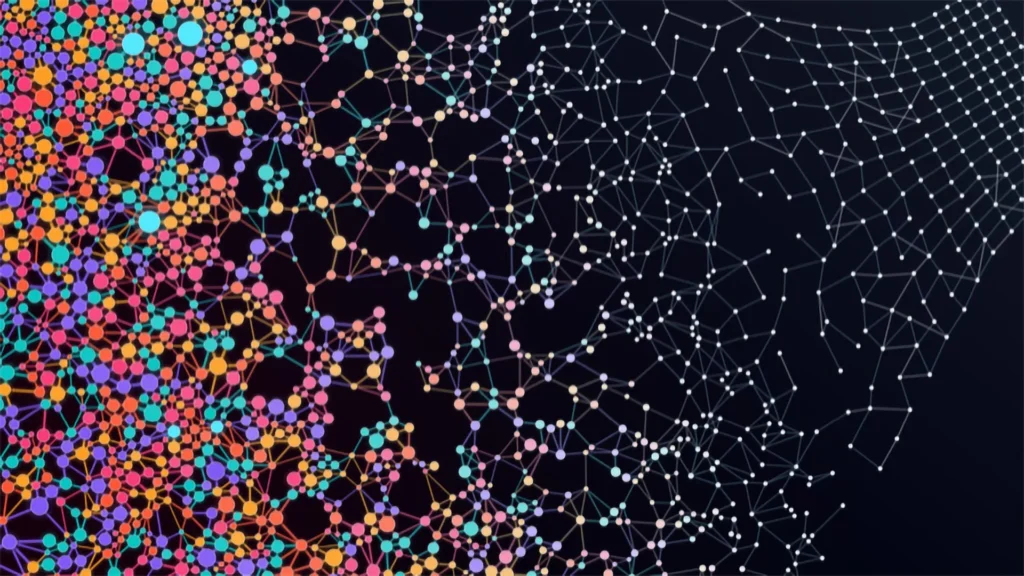
To determine when disorder enhances stability, the Northwestern team subjected various network models—including power grids, neural networks, and ecological webs—to mathematical "disturbances." They observed how these systems recovered when their components were identical versus when they possessed varying degrees of heterogeneity.
The researchers identified two primary mechanisms through which disorder improves resilience:
- Node-Level Diversity: When nodes possess different internal dynamics, they are less likely to oscillate in a synchronized, volatile manner. By "de-tuning" the components, the system avoids the dangerous resonance that can lead to total collapse.
- Link-Level Asymmetry: Even when nodes are simple, if the links connecting them vary in strength or type, the network can distribute stress more effectively. This ensures that a shock to one part of the network is damped rather than amplified across the entire system.
However, the team emphasizes that this is not a "more is better" scenario. There is a "Goldilocks zone" for disorder. Too much uniformity creates a brittle system prone to catastrophic synchronization failures. Conversely, too much disorder leads to chaos and a loss of coherence. The researchers’ new framework allows engineers to pinpoint the precise level of variation required to maximize the stability of a specific system.
Ecological Paradoxes and Engineering Applications
The findings offer a long-awaited solution to one of the most enduring puzzles in theoretical ecology. Since the early 1970s, mathematical models have consistently predicted that large, complex ecosystems should be inherently unstable and prone to collapse. Yet, reality presents the opposite: the most diverse ecosystems on Earth, such as rainforests and coral reefs, are also the most persistent.
"Our findings suggest that the variation among mutually beneficial interactions, such as those between pollinators and flowers, could help explain this paradox," Montanari noted. By integrating this new framework, ecologists may finally have the tools to model these systems accurately, potentially improving conservation strategies for endangered habitats.
The implications for engineering are equally transformative. In the field of architected materials—materials designed with specific structural properties—engineers have traditionally relied on periodic, repeating unit cells. By deliberately introducing structural disorder into these designs, researchers could create materials that are tougher, more impact-resistant, and better at absorbing energy. This could lead to lighter, safer aircraft components, more durable medical implants, and advanced metamaterials capable of manipulating sound or light in ways previously thought impossible.
Official Response and Future Directions
The research has been met with enthusiasm by the physics and engineering communities. While the study is primarily theoretical, its application is already being explored. The research team has launched a public-facing website that allows users to visualize these principles in action. By adjusting parameters within the interactive model, users can observe how networks form organized, resilient patterns that would be impossible to sustain in a perfectly uniform environment.
"When disorder enhances stability, the next challenge is figuring out how best to design it," Motter stated. The next phase of research will focus on developing computational tools that can automatically "evolve" the optimal degree of disorder for a given system. Rather than designing by hand, engineers could feed their performance requirements into an algorithm that determines the necessary level of heterogeneity to achieve the desired balance between efficiency and stability.
The project, supported by the Army Research Office and the National Science Foundation, underscores a shift in how we perceive the world. For decades, the goal of science was to strip away "noise" to find the underlying order. Now, it appears that the noise itself—the irregularity, the asymmetry, and the disorder—is the very fabric of resilience.
Implications for a Complex Future
As our global infrastructure becomes increasingly digitized and interconnected, the risk of systemic failure has never been higher. Power grids are transitioning to decentralized renewable energy, creating a more complex and variable landscape. Brain-computer interfaces are attempting to map the most complex network in existence. In this environment, the traditional approach of rigid, uniform control is increasingly inadequate.
By accepting and even embracing disorder, we gain a new lever for stability. The Northwestern study serves as a critical reminder that in complex systems, the path to robustness is not found in the suppression of difference, but in the intelligent orchestration of it. As we move forward, the most successful designs will likely be those that mirror the natural world: diverse, asymmetrical, and beautifully imperfect.