


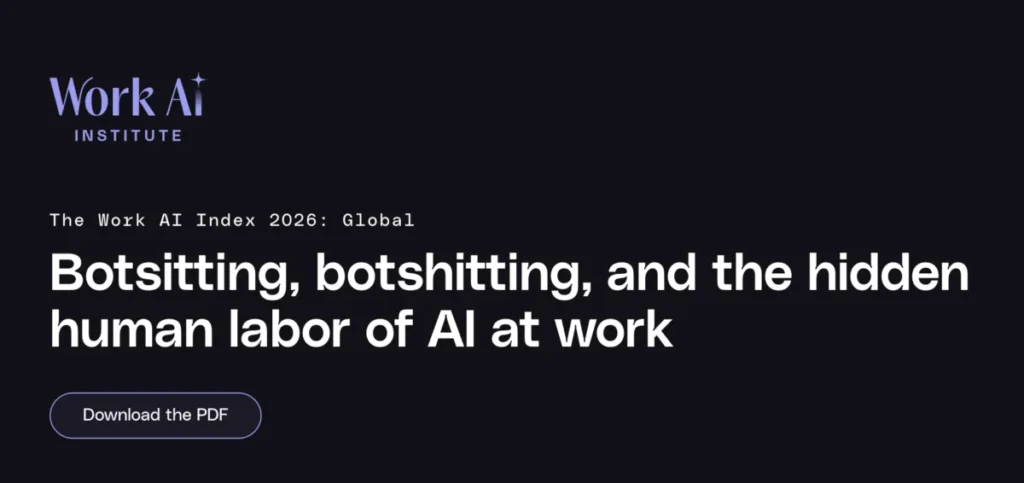
A recent report by the Financial Times, detailing an interview with Rebecca Hinds, head of the Work AI Institute, has illuminated a profound paradox at the heart of modern workplace productivity. Hinds, discussing findings from a new survey of 6,000 digital workers, revealed a startling statistic: while respondents claimed that artificial intelligence (AI) saved them an average of 11 hours per week, a mere 13% reported any tangible improvement in overall company performance. This discrepancy suggests that the integration of AI, far from being a panacea for efficiency, is merely exposing deeper, pre-existing structural flaws within contemporary work environments. The insights presented by Hinds echo sentiments articulated by productivity expert Cal Newport, whose early 2024 book, Slow Productivity, delves into the very issues now magnified by AI, without even mentioning the technology. Newport’s thesis suggests that the current challenges are not novel creations of AI but rather an exacerbation of long-standing inefficiencies rooted in the fragmented nature of digital work.
The Productivity Paradox Revisited: AI’s Discrepant Impact
The core finding of the Work AI Institute survey—a significant reduction in perceived individual workload coupled with a negligible impact on organizational output—challenges the prevalent narrative surrounding AI’s transformative power. This disconnect is critical, particularly as leading AI firms like OpenAI and Anthropic gear up for anticipated initial public offerings (IPOs), where market valuation hinges on demonstrating concrete value proposition and return on investment for businesses. Hinds offers three principal explanations for this counterintuitive outcome, each pointing to systemic issues rather than technological shortcomings:
- Unnecessary Tasks and Misdirected Automation: A significant portion of the "saved" time comes from automating tasks that are inherently unnecessary, poorly designed, or should not exist in the first place. This implies that organizations are optimizing processes that contribute little to strategic objectives, essentially polishing proverbial brass on a sinking ship.
- Trivial Work, Negligible Bottlenecks: AI is often deployed to automate trivial work that was never a genuine bottleneck. This means the technology addresses symptoms rather than root causes, freeing up time that was never truly constraining high-value output. For example, automating minor data entry might save a few minutes, but if the bottleneck lies in strategic decision-making or creative problem-solving, those minutes remain inconsequential.
- Lack of Strategic Integration and Complementary Investment: Companies are failing to invest in the complementary processes, training, and strategic re-evaluation necessary to translate saved hours into higher-value activities. Without a deliberate shift in how work is organized, how employees are redeployed, and what tasks are prioritized, the efficiency gains remain isolated and unimpactful.
These explanations underscore that the problem is not with AI itself, but with the organizational context into which it is introduced. The technology acts as a powerful magnifying glass, revealing inefficiencies that have long been obscured by the sheer volume of digital activity.
A Deeper Look: The Roots of Workplace Inefficiency
Cal Newport’s Slow Productivity, published months before the Financial Times report, provides a compelling pre-AI framework for understanding these issues. Newport argues that the modern digital workplace has been plagued by what he terms "pseudo-productivity"—a state where individuals are constantly busy, responding to emails, attending meetings, and switching between applications, yet achieving little deep, meaningful work. This phenomenon, which he also refers to as "workplace theater," creates an illusion of productivity that masks a lack of true accomplishment.
Newport highlights how an earlier generation of digital tools—email, Slack, video conferencing, and mobile computing—while promising connectivity and speed, inadvertently fostered a culture of constant availability and fragmented attention. Workers found themselves perpetually "wrangling diverse devices, applications," and "rapidly toggling back and forth between different tasks and channels." This context-switching overhead, far from being a minor inconvenience, significantly erodes cognitive focus and deep work capacity. The cumulative effect is a workforce that feels overwhelmed and busy, yet struggles to deliver impactful results. AI, in this scenario, does not introduce new problems but rather amplifies these pre-existing conditions, making the costs of fragmentation and pseudo-productivity more apparent.
The Evolution of Digital Tools and the Fragmented Workday
To fully appreciate the current AI paradox, it is essential to trace the chronology of digital tools and their impact on workplace productivity. The journey began with the widespread adoption of personal computers in the 1980s, promising automation of manual tasks. This was followed by the internet revolution in the 1990s, ushering in email as a primary communication tool. While email initially streamlined communication, it quickly morphed into an overwhelming inbox, demanding constant attention and fostering a reactive work style.
The 2000s saw the rise of mobile computing, tethering employees to their work 24/7, blurring the lines between professional and personal life. The 2010s introduced collaborative platforms like Slack and Microsoft Teams, aiming to centralize communication and reduce email reliance. However, these tools often created new streams of constant notifications, exacerbating context-switching and digital overload. A 2018 study by the University of California, Irvine, for instance, found that office workers are interrupted every 11 minutes and take an average of 23 minutes to return to their original task. Another report indicated that knowledge workers spend an average of 28% of their workweek managing email, with additional significant chunks dedicated to meetings and internal communications.
Each wave of technology, while offering undeniable benefits, also layered new demands and distractions onto the existing work structure, rarely prompting a fundamental re-evaluation of how work should be done. Instead, organizations often bolted new tools onto old, inefficient processes, hoping for a magical transformation. This historical context reveals that the current AI paradox is not an anomaly but a predictable outcome of a long-standing pattern of technology adoption without corresponding strategic and cultural transformation.
The Three Pillars of AI’s Underperformance: An Expanded Analysis
The explanations offered by Rebecca Hinds warrant a deeper dive, as they articulate the systemic failures that prevent AI from delivering its promised value.
1. Unnecessary Tasks and Misdirected Automation
The automation of unnecessary tasks points to a fundamental flaw in organizational design and process management. Many businesses operate with legacy processes, bureaucratic layers, and reporting requirements that evolved over decades and may no longer serve a strategic purpose. When AI is introduced, the immediate inclination is often to automate existing workflows, regardless of their intrinsic value. This "optimizing the irrelevant" syndrome can be driven by several factors:
- Lack of Strategic Clarity: Organizations may not have a clear understanding of which tasks genuinely contribute to their core objectives versus those that are merely habitual or performative.
- Fear of Disruption: Questioning existing processes can be politically challenging, leading to a preference for automating the familiar rather than redesigning the essential.
- "Sunk Cost" Fallacy: Significant past investment in certain processes makes it difficult to acknowledge their obsolescence.
- "Shiny Object" Syndrome: The allure of deploying cutting-edge technology can overshadow the critical upfront work of process analysis and re-engineering.
This results in AI being used to make inefficient processes marginally faster, rather than eliminating the inefficiency altogether.
2. Trivial Work, Negligible Bottlenecks
This pillar highlights a misdiagnosis of productivity bottlenecks. True bottlenecks are the constraints that limit overall system output. Automating tasks that are not bottlenecks, even if they consume some time, will not significantly improve overall performance. For example, if a company’s primary bottleneck is a slow decision-making process by leadership, automating routine report generation for lower-level employees will have a minimal impact on the speed of strategic execution.
The focus on trivial work can stem from:
- Ease of Automation: Simple, repetitive tasks are often the easiest to automate, leading to a preference for low-hanging fruit over tackling more complex, but impactful, strategic challenges.
- Perceived "Busyness" vs. Actual Impact: Employees and managers often equate "being busy" with "being productive." Automating tasks that contribute to busyness but not to impact reinforces this misconception.
- Lack of Holistic Process View: Departments may optimize their internal processes without considering how those processes fit into the larger organizational value chain, leading to localized efficiency gains that don’t translate to systemic improvements.
3. Lack of Strategic Integration and Complementary Investment
Perhaps the most critical factor, this refers to the absence of a holistic strategy for AI deployment. Implementing AI is not merely about installing software; it requires a concerted effort to rethink job roles, train employees, redesign workflows, and cultivate a culture that supports higher-value activities. "Complementary processes" can include:
- Upskilling and Reskilling: Training employees to leverage AI-freed time for analytical thinking, problem-solving, creativity, and strategic initiatives. This includes developing "AI literacy" – understanding how to best prompt, utilize, and verify AI outputs.
- Process Re-engineering: Actively identifying and eliminating obsolete workflows, not just automating them. This involves deep dives into value streams and challenging the status quo.
- Leadership Buy-in and Vision: Leaders must clearly articulate how AI aligns with strategic goals and actively steer the organization towards higher-value activities, rather than simply expecting efficiency gains to materialize organically.
- Performance Metrics Redefinition: Shifting away from measuring "activity" (e.g., hours worked, emails sent) to measuring "impact" (e.g., project completion, innovation, customer satisfaction).
- Organizational Redesign: Potentially restructuring teams or creating new roles that capitalize on the enhanced capabilities AI offers, allowing humans to focus on tasks requiring unique human judgment, creativity, and empathy.
Without these complementary investments, the "saved" 11 hours per week might simply translate into more time spent on existing pseudo-productive activities, more meetings, or even more digital distractions, ultimately leading to increased burnout rather than improved performance.
Stakeholder Perspectives and Reactions
The findings from the Work AI Institute survey elicit varied reactions from key stakeholders:
- AI Developers (e.g., OpenAI, Anthropic): While facing pressure to demonstrate tangible ROI, these companies are likely to acknowledge the complexity of enterprise integration. Their messaging would emphasize the continuous improvement of AI models, the development of more sophisticated integration tools, and the importance of strategic partnerships to ensure effective deployment. They might argue that the technology is still nascent and that organizations are in the early stages of learning how to best harness its power. The pressure of upcoming IPOs, however, will compel them to highlight success stories and demonstrate clearer pathways to value creation.
- Business Leaders: Initial enthusiasm for AI, often fueled by marketing hype, is giving way to a more pragmatic and cautious approach. While many leaders recognize AI’s potential, they are increasingly seeking concrete frameworks for implementation and measurable outcomes. The survey results serve as a wake-up call, prompting them to look beyond superficial metrics and delve into the structural inefficiencies within their organizations. Forward-thinking leaders will view this as an opportunity to initiate a deeper transformation, while others might persist in the hope that AI will eventually solve problems without fundamental organizational change.
- Productivity Experts and Academics (e.g., Cal Newport): For experts like Newport, these findings validate long-held theories about the fundamental flaws in modern work design. They would emphasize that technology is a tool, and its effectiveness is entirely dependent on the context and strategy of its application. This reinforces the need for "human-centric" approaches to productivity, prioritizing focused work, intentional design, and strategic clarity over simply adding more digital tools.
- Employees: For many digital workers, the "saved" 11 hours might feel illusory. If these hours don’t translate into reduced overall workload, more meaningful work, or improved work-life balance, they may simply experience increased pressure to fill the newly available time with more tasks, or find themselves struggling with "busyness" without impact. This can contribute to phenomena like "quiet quitting," where employees disengage from going above and beyond due to a perceived lack of meaningful contribution or recognition.
Beyond the Hype: Reimagining Work in the AI Era
The "silver lining" identified by Cal Newport is perhaps the most optimistic takeaway from this paradox. The disruptive potential and novel nature of AI are compelling business leaders to pay unprecedented attention to its impacts. In their quest to understand how to make AI effective, they might finally be forced to confront and address the systemic issues that have long rendered the workplace "broken."
This moment presents a unique opportunity for a fundamental reimagining of work, shifting from a focus on automating tasks to strategically redesigning entire work systems.
- From Task Automation to Strategic Work Redesign: The conversation needs to evolve from "what tasks can AI do?" to "what should our employees be doing, and how can AI enable them to do it better?" This requires a top-down strategic approach that defines desired outcomes, identifies core human contributions, and then leverages AI to support those objectives, rather than simply speeding up existing, potentially flawed, processes.
- The Importance of Deep Work: In an era of increasing digital noise, the ability to engage in "deep work"—focused, uninterrupted concentration on cognitively demanding tasks—becomes even more critical. Organizations need to create environments and cultures that protect time for deep work, recognizing that true innovation and strategic thinking emerge from sustained concentration, not fragmented attention.
- Leadership’s Role: Leaders must move beyond being mere adopters of technology to becoming architects of meaningful work. This involves setting clear strategic priorities, fostering a culture of continuous improvement and learning, investing in human capital, and actively challenging entrenched inefficiencies. It also means leading by example, demonstrating how to use AI strategically to free up time for high-value activities, rather than simply accelerating busyness.
- Defining and Measuring True Productivity: The current metrics for productivity, often tied to activity rather than impact, need a radical overhaul. Organizations must develop new ways to measure the value created by human effort, augmented by AI, focusing on outcomes like innovation, problem-solving, customer satisfaction, and strategic growth.
Implications for the Future of Work
The AI productivity paradox carries significant implications across various facets of the future of work:
- For Company Strategy: Businesses must integrate AI into a broader digital transformation strategy that prioritizes organizational redesign and human capability development. Simply investing in AI tools without addressing underlying operational and cultural issues will lead to wasted resources and disillusionment. The focus must shift to creating "intelligent enterprises" that strategically combine human intellect with AI capabilities.
- For Employee Development: The emphasis on skills will shift from routine task execution to higher-order cognitive functions. Employees will need to develop critical thinking, creativity, complex problem-solving, emotional intelligence, and adaptability—skills that are inherently human and complementary to AI. Lifelong learning and continuous upskilling will become non-negotiable.
- For AI Development: AI developers may be prompted to shift their focus from mere task automation to creating tools that actively facilitate strategic thinking, enhance human creativity, and support complex decision-making. The demand for AI solutions that integrate seamlessly into redesigned workflows, rather than simply augmenting existing ones, will grow.
- The Potential for a "Great Reset": This moment could catalyze a "Great Reset" in how we conceive of work itself. If AI can genuinely automate routine tasks, it opens up the possibility for humans to focus on what truly matters: innovation, deep collaboration, personal growth, and creating societal value. However, realizing this potential requires conscious, strategic effort from all stakeholders.
In conclusion, the emerging data on AI’s impact in the workplace reveals that the technology is not the root cause of inefficiency but rather a powerful mirror reflecting long-standing systemic issues. While AI offers immense potential to revolutionize work, its true value will only be unlocked when organizations are willing to confront and dismantle the deeply embedded structures of pseudo-productivity and misdirected effort that have characterized the digital workplace for decades. This is not merely about adopting a new tool; it is about embracing a fundamental transformation of how we define, design, and deliver work.