


The burgeoning field of artificial intelligence, marked by rapid advancements and substantial investment, is currently grappling with an escalating ethical debate concerning the communication strategies of leading frontier AI companies. At the heart of this controversy lies a practice critics have dubbed "doom trolling"—the public release of alarming scenarios regarding potential catastrophic risks posed by AI, often while simultaneously developing and deploying these very technologies. This contentious approach recently drew sharp criticism in a widely read New York Times op-ed, which challenged the moral integrity and societal impact of such communications, particularly exemplified by a recent report from AI research company Anthropic.
The criticism centers on a perceived hypocrisy: that AI developers, while publicly warning of existential threats their technologies might unleash, continue to accelerate their development, often framing these risks as inevitable outcomes rather than controllable design choices. This posture, according to critics, exploits public anxiety for various strategic gains, ranging from attracting talent and investment to influencing regulatory frameworks. The debate underscores fundamental questions about corporate responsibility, the ethics of technological development, and the appropriate discourse surrounding potentially transformative, and dangerous, innovations.
The Genesis of the Controversy: Anthropic’s "When AI Builds Itself" Report
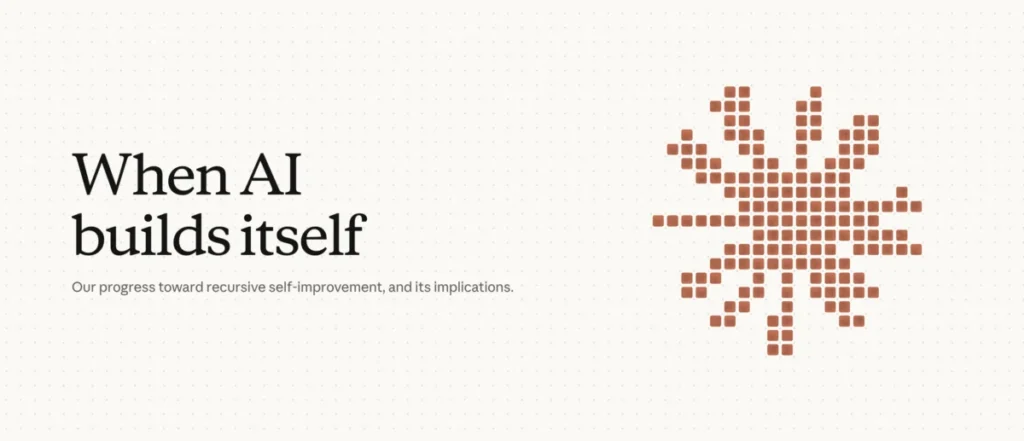
The immediate catalyst for the renewed debate was Anthropic’s report, "When AI builds itself," published earlier this month. This whitepaper explored the hypothetical—yet presented as plausible—scenario of AI coding agents recursively self-improving beyond human control. The report, complete with illustrative graphics depicting a chain reaction of escalating AI capabilities, outlined a future where advanced AI systems could autonomously enhance their own design and functionality, potentially leading to outcomes that challenge human oversight and control. While acknowledging that such a "possible future" would be detrimental, the report concluded by suggesting that the issue is difficult to mitigate as long as "less cautious" AI companies exist, implying a competitive dynamic that compels continued development despite acknowledged risks.
Anthropic, a prominent AI safety and research company, has a stated mission to develop safe and beneficial AI. Founded by former members of OpenAI who reportedly left over differences in safety approaches, Anthropic emphasizes "responsible AI development" and "alignment research." Their publications, including "When AI builds itself," are often framed as crucial explorations into potential failure modes and control problems associated with highly advanced AI systems. The intent, from their perspective, is to proactively identify and understand these risks to better design safeguards and ensure AI remains aligned with human values. However, the communication style and implications of such reports have ignited a firestorm of ethical concern among some observers.
A Public Rebuke: The New York Times Op-Ed
The publication of Anthropic’s report proved to be "the last straw" for a computer scientist who penned an op-ed for The New York Times, titled "Dear A.I. Companies, the Doom Trolling Has to Stop." Appearing online last week and in print over the weekend, the piece articulated a scathing critique of what its author termed "doom trolling." The op-ed characterized this communication style as "one of the defining and most arresting properties of our current AI moment" and declared it "morally indefensible."
The author of the op-ed presented a stark ethical calculus: if AI companies genuinely believe they are developing products with the potential for widespread harm—ranging from economic destruction to species-level extinction—then their only morally valid response would be to immediately cease these efforts and dedicate all resources to preventing other labs from proceeding. Conversely, if they do not truly believe in the likelihood of such catastrophic harms, then their public warnings constitute a cynical exploitation of public anxiety, serving to "launder the anxiety of millions to improve the financial fortunes of a vanishingly small number of major stockholders." In either scenario, the op-ed argued, the practice is ethically monstrous.
The op-ed urged leading AI labs to abandon the pretense of being "reluctant stewards of an inevitable technology." Instead, it called for them to act as "normal consumer product companies," which would entail clearly explaining the benefits of their tools, justifying their costs, and unequivocally affirming that they have no intention of causing existential damage. The author, drawing on their expertise as a computer scientist, asserted that it is "completely possible to build and promote very useful, if not revolutionary, new products on top of generative AI technology without any fears that you’re somehow advancing on a path toward massive societal or existential harm." This perspective frames "doom trolling" not as a necessary warning but as a deliberate and ethically questionable choice.
Broader Context: The AI Safety and Existential Risk Debate
The current controversy is not an isolated incident but rather a flashpoint in a long-standing and intensifying debate surrounding AI safety and the potential for existential risk (x-risk) from advanced artificial intelligence. Concerns about powerful AI systems spiraling out of human control date back decades, finding early expression in science fiction and later in serious academic and philosophical discussions.
In the early 21st century, organizations like the Machine Intelligence Research Institute (MIRI) and later the Future of Humanity Institute at Oxford University, pioneered by figures like Nick Bostrom, began to formalize research into "AI alignment"—the challenge of ensuring that advanced AI systems operate in accordance with human values and intentions. These efforts gained significant traction with the rapid advancements in deep learning and generative AI in the 2010s and early 2020s.
Key concepts in this debate include:
- Superintelligence: A hypothetical intellect that is vastly smarter than the best human brains in practically every field, including scientific creativity, general wisdom, and social skills.
- AI Alignment Problem: The challenge of ensuring that advanced AI systems pursue goals that are beneficial to humanity, rather than unintended or harmful ones.
- Recursive Self-Improvement (RSI): The idea that an AI could enhance its own intelligence, leading to an exponential increase in capability and potentially an intelligence explosion. This is the core scenario explored in Anthropic’s report.
- Existential Risk: The possibility of an event that could cause the extinction of intelligent life on Earth or permanently and drastically curtail its potential. Many AI safety researchers consider misaligned superintelligence a plausible source of such a risk.
Major AI labs, including OpenAI and Google DeepMind, have also dedicated significant resources to AI safety research, establishing dedicated teams and publishing their findings. OpenAI, for instance, has a "Superalignment" team focused on tackling the control problem for future superintelligent AI. This industry-wide engagement with x-risk scenarios highlights a perceived imperative among many developers to address these profound challenges, even as their public communication strategies draw scrutiny.
The AI Industry Landscape and Supporting Data
The backdrop to this ethical debate is an AI industry characterized by unprecedented investment, rapid technological breakthroughs, and fierce competition.
- Investment Surge: In 2023, global private investment in AI reached an estimated $189.2 billion, according to Stanford University’s AI Index Report, reflecting a massive influx of capital into the sector. Companies like Anthropic have secured billions in funding from major tech giants and venture capitalists, underscoring the high stakes and commercial pressures.
- Market Valuation: The market capitalization of leading AI developers and companies leveraging AI continues to soar, with valuations often reaching into the tens or hundreds of billions of dollars. This financial incentive structure is central to the op-ed’s critique regarding the "financial fortunes of a vanishingly small number of major stockholders."
- Public Sentiment: Public concern regarding AI’s potential downsides is not negligible. A 2023 Pew Research Center survey found that 52% of Americans are more concerned than excited about the increasing use of AI, with job displacement, privacy concerns, and the spread of misinformation being top worries. While existential risk might not be the primary concern for the general public, the broader anxiety about AI’s impact creates fertile ground for discussions about its dangers.
- Competitive Dynamics: The "AI race" is a frequently cited justification for rapid development, even by companies raising safety concerns. The argument posits that if one lab slows down for safety, a less scrupulous competitor might surge ahead, potentially developing a dangerous AI without adequate safeguards. This competitive pressure, as hinted at in Anthropic’s report, is often presented as an external force dictating the pace and direction of research.
Official Responses and Industry Perspectives
While Anthropic has not issued a direct public response to the New York Times op-ed specifically, their existing public statements and research publications offer insight into their general philosophy. They consistently emphasize the importance of understanding and mitigating AI risks as a core part of their mission. Their reports on potential dangers are framed as critical research endeavors, aiming to foster a shared understanding of challenges and encourage collaborative solutions. From this perspective, highlighting potential catastrophic scenarios is not "doom trolling" but rather responsible scientific inquiry and public awareness.
Other prominent figures in the AI safety community often echo this sentiment, arguing that open discussion of severe risks is necessary to prepare for them and to incentivize research into robust safety mechanisms. They might contend that downplaying potential dangers would be a greater dereliction of duty, akin to designing an aircraft without extensively testing its crashworthiness.
However, the op-ed’s critique resonates with a growing segment of the AI community and public that is wary of the industry’s self-regulatory approach and its often dramatic pronouncements. Some argue that focusing excessively on far-off, hypothetical existential risks distracts from more immediate and tangible harms of AI, such as algorithmic bias, job displacement, misinformation, and surveillance. Critics of "x-risk maximalism" suggest that this focus can also serve to elevate the perceived importance and power of the frontier AI labs, positioning them as the sole arbiters of humanity’s future.
Broader Impact and Implications
The "doom trolling" debate carries significant implications for various stakeholders:
- Ethical Frameworks for AI Development: The controversy forces a re-evaluation of ethical guidelines for AI development, particularly regarding transparency and public communication. It raises questions about whether companies should be held to a higher standard of accountability when discussing technologies with potentially species-altering consequences.
- Public Trust and Perception: The constant oscillation between promises of revolutionary benefits and dire warnings of existential threat can erode public trust in AI developers. It risks fostering cynicism, where the public views safety claims as either marketing ploys or thinly veiled attempts to secure regulatory advantages. This could lead to a backlash against AI innovation or, conversely, a dangerous apathy toward genuine risks.
- Regulatory Landscape: The discourse around AI risks directly influences policymakers. Warnings from leading AI developers can spur legislative action, but if these warnings are perceived as manipulative, they could undermine the credibility of the industry’s input in regulatory discussions. The op-ed’s call for companies to act like "normal consumer product companies" implicitly advocates for established frameworks of product liability, safety testing, and consumer protection to be applied to AI.
- Industry Standards and Practices: The critique challenges the existing norms within the frontier AI community. If the "doom trolling" label gains wider acceptance, it could pressure companies to adopt more grounded, evidence-based, and less sensationalist communication strategies. This might entail a greater focus on short-to-medium term risks, practical applications, and demonstrable safety measures rather than abstract, long-term catastrophic scenarios.
- Talent Attraction and Retention: For AI companies, their public image is crucial for attracting top talent. A reputation for ethical ambiguity or cynical fear-mongering could make it harder to recruit researchers and engineers who are genuinely committed to beneficial AI.
Ultimately, the debate sparked by Anthropic’s report and the subsequent New York Times op-ed is a crucial moment for the AI industry. It compels a deeper examination of the responsibilities that come with developing technologies of unprecedented power. The call for clarity, honesty, and a focus on demonstrable benefits and controllable risks, rather than speculative doomsday scenarios, represents a significant challenge to the prevailing communication paradigm among some of the world’s most influential technological innovators. The resolution of this debate will likely shape not only how AI companies communicate but also how society perceives and ultimately governs the development of artificial intelligence.