


The landscape of Chinese apparel, known as fushi (服饰), represents a complex tapestry of historical progression, social stratification, and aesthetic philosophy that spans over four millennia. From the structured elegance of the Han-era yi to the contemporary "Guochao" (China-chic) movement, clothing in China has functioned as more than mere utility; it has served as a visual language for social status, moral values, and ethnic identity. As China’s influence on the global stage expands, the study of its sartorial history has shifted from niche academic interest to a significant driver of the international fashion economy, valued at billions of dollars.
Historical Chronology: The Dynastic Foundations of Chinese Attire
The evolution of Chinese clothing is traditionally categorized by the dominant dynasties, each of which introduced specific regulations regarding materials, colors, and silhouettes to reflect the prevailing political and philosophical climate.
The Han Dynasty (206 BCE – 220 CE): The Standardization of Hanfu
The Han Dynasty is credited with the formalization of Hanfu (汉服), the traditional clothing of the Han Chinese. During this period, the garment structure was dictated by Confucian principles, emphasizing modesty and the "unity of man and nature." The standard ensemble consisted of the yi (衣), a cross-collared narrow-sleeved upper garment, and the chang (裳), a wrap-around skirt. Key characteristics included the "left lapel over right" (youshen) design, which became a hallmark of Han civilization. Historical records indicate that the length of sleeves and the width of sashes were strictly regulated based on the wearer’s rank within the imperial bureaucracy.
The Tang Dynasty (618 – 907 CE): The Cosmopolitan Golden Age
Often regarded as the peak of Chinese cultural achievement, the Tang Dynasty introduced an era of unprecedented fashion diversity. The Silk Road facilitated a massive influx of Persian, Central Asian, and Indian influences. For women, this era saw the rise of the high-waisted ruqun (襦裙) and the introduction of lower necklines, reflecting a more liberal social atmosphere. The use of bold colors and intricate floral patterns became widespread. It was during this period that silk production reached new heights of technical sophistication, making China the premier textile exporter to the known world.
The Ming Dynasty (1368 – 1644 CE): Institutionalized Traditionalism
Following a period of foreign Mongol rule, the Ming Dynasty sought to restore indigenous Han Chinese customs. Clothing became more structured and formal. The "Mandarin collar"—a high, close-fitting upright collar—emerged during this period and would later become a defining feature of Chinese fashion in the eyes of Western observers. Men’s attire often featured the changshan (长衫), a long robe that denoted scholarly or upper-class status.
The Qing Dynasty (1636 – 1912 CE): Manchu Integration and the Qipao
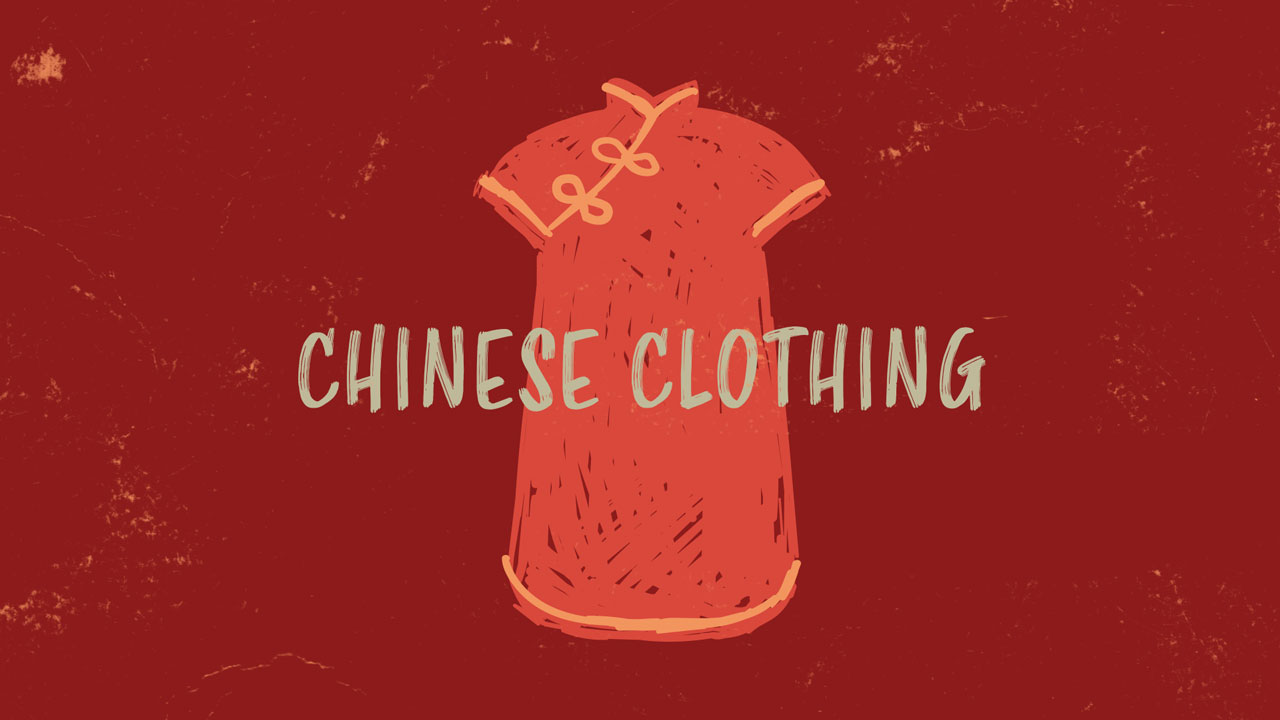
The Manchu-led Qing Dynasty imposed significant changes, most notably the mandatory adoption of Manchu hairstyles and clothing styles. This era introduced the qipao (旗袍) for women and the tangzhuang (唐装) for men. Originally loose-fitting to facilitate horseback riding, the qipao featured high collars and side slits. Over the centuries, particularly in the early 20th-century Shanghai, this garment evolved into the form-fitting cheongsam, which remains an enduring symbol of Chinese femininity and grace.
Ethnic Diversity: The Sartorial Heritage of Minority Nationalities
While Han culture dominates the historical narrative, China’s 55 officially recognized ethnic minority groups contribute a diverse array of clothing styles that reflect regional climates and spiritual beliefs.
- The Dai People (Yunnan Province): Influenced by Southeast Asian aesthetics, Dai clothing is characterized by short, tight-fitting blouses and colorful sarongs (tongqun). This attire is designed for the tropical climate of Xishuangbanna and emphasizes agility and breathability.
- The Tibetan People (Qinghai-Tibetan Plateau): To combat extreme cold, Tibetans utilize the zangpao (chupa), a voluminous robe made of wool (yangmao) or sheepskin. The robe is typically worn with one sleeve off to allow for temperature regulation during physical labor.
- The Uyghur People (Xinjiang): Uyghur fashion reflects Central Asian Islamic influences, featuring the atlas silk with its vibrant, ikat-dyed patterns and the doppa (headscarf or skullcap), which serves both religious and decorative purposes.
- The Zhuang People (Guangxi): As the largest minority group, the Zhuang are renowned for their intricate brocade and indigo-dyed fabrics. Their designs frequently incorporate motifs of birds and flowers, symbolizing a deep connection to the agricultural landscape.
Supporting Data: The Economic Impact of the Hanfu Resurgence
In the 21st century, the "Hanfu Movement" (hanfu yundong) has transitioned from a subculture to a mainstream economic powerhouse. According to market research data from iMedia Research, the number of Hanfu enthusiasts in China surpassed 10 million in 2023, with the market value of the industry exceeding 12.5 billion yuan (approximately $1.7 billion USD).
This growth is driven largely by Gen Z and Millennials, who view traditional clothing as a medium for expressing cultural confidence. Social media platforms like Douyin (the Chinese version of TikTok) and Xiaohongshu have become primary catalysts, with "Hanfu" related hashtags garnering billions of views. This resurgence has also spurred growth in related sectors, including traditional photography, textile manufacturing, and historical tourism in cities like Xi’an and Hangzhou.
Materiality and Symbolism: The Language of Textiles
The choice of fabric and color in Chinese clothing is never arbitrary; it is governed by a complex system of semiotics.
Textiles and Social Hierarchy
- Silk (sichou): Historically reserved for the nobility, silk remains the pinnacle of Chinese textile art. Its production (sericulture) was a state secret for millennia.
- Cotton (mianhua): Introduced later in Chinese history, cotton became the staple for the general population due to its durability and comfort.
- Linen (yama): Valued for its cooling properties, linen was frequently used for summer garments and mourning attire.
The Symbolic Power of Color
In Chinese tradition, colors are linked to the "Five Elements" theory:
- Red (hongse): Corresponding to Fire, it symbolizes joy, vitality, and good fortune. It is the mandatory color for traditional weddings.
- Yellow (huangse): Corresponding to Earth, it was historically the exclusive color of the Emperor. Wearing yellow without imperial sanction was once a capital offense.
- White (baise): Corresponding to Metal, it is the color of mourning and is traditionally worn at funerals.
- Black (heise): Corresponding to Water, it was favored in the Qin Dynasty as a color of power and solemnity.
Modern Fusion and Global Haute Couture
The influence of Chinese aesthetics has transcended national borders, impacting the global luxury fashion market. Renowned Chinese designers such as Guo Pei and Laurence Xu have gained international acclaim for integrating traditional embroidery (cixiu) and dynastic silhouettes into haute couture. Guo Pei’s "Yellow Queen" gown, which took two years to create, became a viral sensation at the Met Gala, highlighting the global appetite for Chinese craftsmanship.
Furthermore, international fashion houses including Dior, Valentino, and Armani have increasingly looked to Chinese motifs—such as the dragon, phoenix, and lotus—to appeal to the lucrative Chinese luxury market. This "New Chinese Style" (Xin Zhong Shi) blends traditional elements, like the Mandarin collar, with modern western tailoring, creating a versatile aesthetic suitable for the globalized professional environment.
Linguistic Markers of Identity: A Vocabulary of Fashion
The terminology associated with Chinese clothing provides insight into the culture’s evolving relationship with fashion. Essential terms include:
- Standard Items: T-xu (T-shirt), niuzaiku (jeans), and yangzhuang (western-style dress).
- Patterns: Huawen (floral patterns) and tiaowen (stripes) reflect the transition from symbolic embroidery to modern graphic design.
- Accessories: The shanzi (fan) and zhanzi (hairpin) remain popular collectors’ items, bridging the gap between functional tools and artistic heirlooms.
Broader Impact and Future Implications
The evolution of Chinese clothing serves as a barometer for the nation’s socio-political health. The current shift toward traditional styles reflects a broader trend of "cultural self-confidence" (wenhua zixin) promoted by the Chinese government. By revitalizing ancient dress, the state and the public are engaging in a form of soft power that reclaims the historical narrative from Western-centric fashion perspectives.
As the industry moves forward, sustainability is becoming a key focus. The revival of traditional natural dyes (such as indigo) and hand-weaving techniques offers an eco-friendly alternative to fast fashion. Analysts suggest that the future of Chinese clothing lies in the successful integration of "Intangible Cultural Heritage" with smart manufacturing, ensuring that the elegance of the past remains relevant in a digital-first world.
The Chinese proverb, "People rely on clothes for appearance, just as Buddha relies on gold for decoration" (ren kao yi zhuang, fo kao jin zhuang), remains as relevant today as it was in the dynastic era. Clothing continues to be the primary vessel through which the Chinese people negotiate their identity, balancing a revered past with an ambitious future.