

The proliferation of artificial intelligence (AI) tools has sparked a growing concern among educators and researchers regarding their impact on students’ cognitive and creative development. A significant and escalating body of academic work is now documenting how AI is contributing to a process termed "cognitive offloading," where individuals delegate thinking and problem-solving tasks to AI, potentially diminishing their own abilities. These studies, appearing in reputable journals such as Societies, Springer Nature, Science Direct, and the Journal of Computer Information Systems, paint a concerning picture of AI’s subtle yet pervasive influence on learning and critical thought.
The Rise of Cognitive Offloading and Student Reliance on AI
The concept of cognitive offloading, the act of using external resources to reduce the cognitive demands of a task, is not new. However, the advent of sophisticated AI, particularly generative AI models like ChatGPT and Copilot, has dramatically amplified this phenomenon. For students, especially those who have navigated recent years of disrupted education due to the COVID-19 pandemic and experienced the widespread availability of AI in their formative academic years, this reliance has become deeply ingrained.
Initial observations from educators suggest a startling level of AI integration into academic work. In a first-year ancient global history course, a casual survey revealed that every single student in a 45-person class had utilized AI for at least one assignment in the past year. This anecdotal evidence is supported by broader surveys, such as a recent KPMG study indicating that 73 percent of Canadian high school students self-reported using generative AI to assist with their schoolwork in 2025. This widespread adoption, while indicative of AI’s utility, raises critical questions about the depth of understanding and the skills students are actually developing.
Unpacking the Limitations of AI: Hallucinations, Formulaic Output, and Bias
A core issue highlighted by researchers and educators is the disconnect between students’ trust in AI and the inherent limitations of these technologies. Many students, it appears, are unaware of the significant shortcomings of even the most advanced AI models.
One of the most persistent problems with free versions of AI chatbots, such as Copilot and ChatGPT, is their tendency to "hallucinate" – generating fabricated or inaccurate information, including nonexistent references. This can lead students to cite non-existent sources or build arguments on flawed foundations. Furthermore, the "literature" produced by AI chatbots often exhibits a formulaic and shallow quality, frequently lacking the nuanced examples, contextual depth, and original insights that characterize genuine scholarship.
The design of these AI models also contributes to their perceived reliability. They are engineered to be eager to please and to foster engagement, which can lead them to agree with user inputs, even when those inputs are incorrect or lead to flawed reasoning. For instance, when presented with different translations of a Latin sentence, one AI model readily agreed with every variation, failing to identify potential grammatical inaccuracies or stylistic choices. Similarly, in analyzing complex legal texts like Hammurabi’s Law Code, an AI demonstrably struggled to adhere to fundamental legal principles, refusing to generate a narrative based on the principle of lex talionis (reciprocal justice or the "eye-for-an-eye" principle) when prompted.
Beyond factual accuracy and analytical rigor, AI models can also be susceptible to biases and the propagation of misinformation. Reports have emerged detailing how pro-Kremlin forces have actively manipulated AI models to spread propaganda and distort historical narratives, underscoring the critical need for users to critically evaluate AI-generated content, especially in sensitive areas like geopolitics and history.
The "Map Mishap": A Stark Illustration of Unquestioning Trust
To directly address the issue of AI over-reliance and to foster AI literacy, an educator in a first-year premodern global history class designed a series of assignments that required students to interact with AI-generated content and then critically analyze it. Using Microsoft Copilot, provided through a university enterprise license offering basic data protection, students engaged in tasks such as editing AI-produced essays, summarizing articles, and, crucially, prompting the AI to create accurate maps.

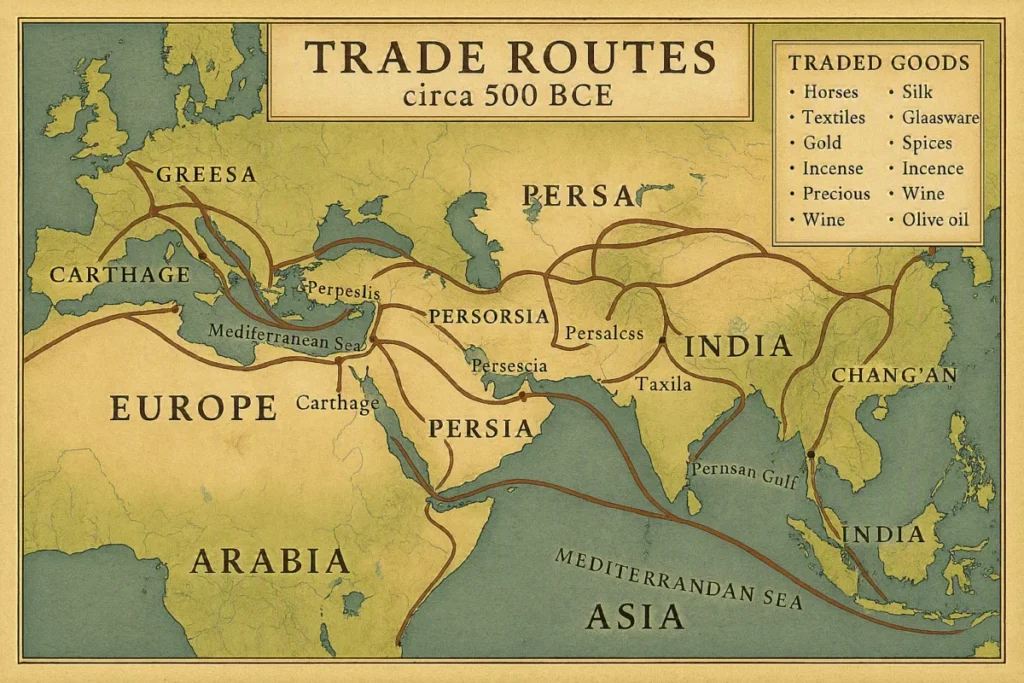
It was the map-creation assignment that provided a particularly alarming revelation about the extent of student complacency. Students were tasked with generating a map depicting common trade routes across Afro-Eurasia around 500 BCE. The output, as illustrated by a sample provided by the educator, was profoundly inaccurate. The maps contained egregious geographical errors, including mislabeling continents, placing countries in incorrect geographical locations (e.g., India in Europe), and confusing landmasses with oceans. The visual evidence presented was of maps that were, by any standard, disastrously flawed.
Despite the glaring inaccuracies, a staggering 75 percent of students who attempted this assignment failed to identify any problems with the AI-generated maps. This was not attributed to a lack of basic geographical knowledge among the students; rather, it stemmed from an almost absolute trust in the AI’s output. Even with explicit warnings that AI could produce error-ridden maps, the majority of students simply accepted the generated content as accurate without any critical review. This unquestioning acceptance is a significant concern for educators, as it suggests a diminished capacity for critical evaluation and a blind spot for subtle errors or deliberate disinformation.
The Urgent Need for AI Literacy: Cultivating Skepticism and Analytical Skills
The "map mishap" underscores a critical educational imperative: the development of robust AI literacy. Educators must equip students with the skills to not only use AI tools effectively but also to critically assess their output. The ability to scrutinize AI responses analytically is rapidly becoming one of the most vital competencies for navigating the modern academic and professional landscape.
To further emphasize the unreliability of AI-generated geographical information, the educator incorporated a final exam question that required students to identify six errors (both geographical and related to ancient trade routes) in a Copilot-generated map based on the prompt: "Please draw common trade routes across Afro-Eurasia circa 500 BCE." This map, notoriously inaccurate, was presented to the students. The majority of students answered this question correctly, demonstrating that they could identify factual and geographical errors when specifically prompted to do so. However, the fact that they needed this explicit prompt highlights a crucial point: the skill of automatically questioning AI production must be instilled. An attitude of constant skepticism and rigorous analysis is paramount.
Bridging the Gap: Empowering Students to Be Smarter Than AI
The current situation, where students often believe AI is inherently more knowledgeable or capable than they are, is unsustainable and detrimental to their intellectual growth. The goal of education must shift towards proving to students that their own critical thinking, analytical abilities, and human understanding remain superior to AI, especially in complex and nuanced domains.
This requires a proactive and integrated approach to AI literacy education, starting in high schools and extending into university classrooms. Crucially, this education should not be confined to STEM fields but must be a core component of humanities education as well. The very skills that humanists have long championed – analytical reading, understanding the construction of knowledge, and fostering critical thinking – provide a fertile ground for teaching responsible and effective AI utilization. By integrating AI literacy into existing curricula, educators can help students develop the discernment necessary to harness AI as a powerful tool without succumbing to its potential pitfalls.
Broader Implications for Education and Society
The implications of this pervasive reliance on AI extend far beyond individual student learning. If unchecked, this trend could lead to a generation of individuals less adept at independent thought, problem-solving, and creative innovation. This could have profound consequences for scientific advancement, artistic expression, and the very fabric of democratic discourse, which relies on an informed and critically thinking populace.
The challenges presented by AI necessitate a collaborative effort involving educational institutions, technology developers, policymakers, and parents. Developing standardized frameworks for AI literacy, promoting ethical guidelines for AI use in education, and fostering ongoing dialogue about the societal impact of AI are critical steps.
As AI continues to evolve at an unprecedented pace, the educational sector faces the monumental task of adapting. The current trajectory, marked by an unquestioning trust in AI, threatens to undermine fundamental cognitive skills. The imperative is clear: to cultivate a generation of critical thinkers who can leverage the power of AI while retaining and strengthening their own intellectual faculties. The future of learning, and indeed, the future of human ingenuity, depends on our success in this endeavor.