



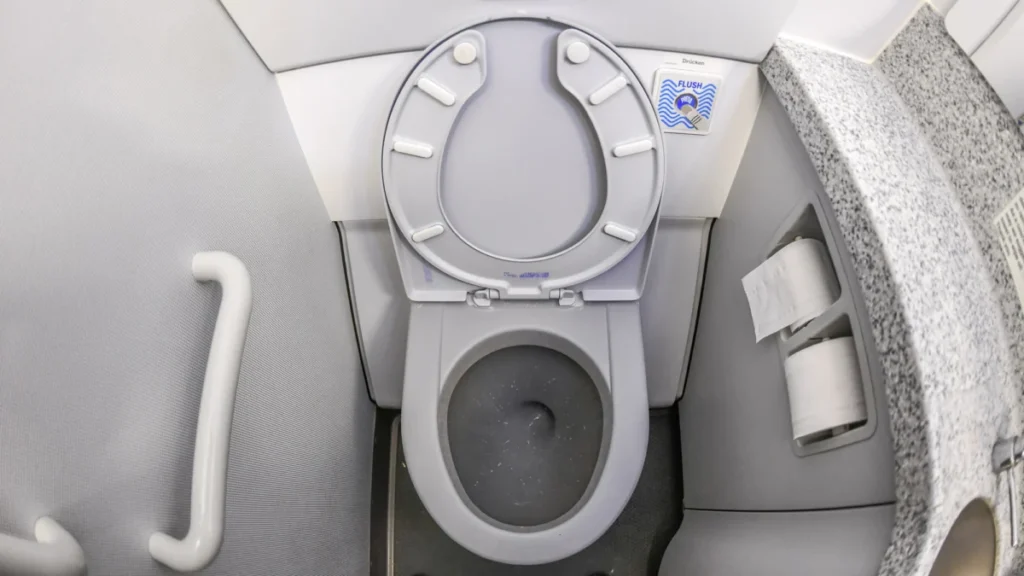
The thunderous roar of an airplane toilet flush is a sound familiar to billions of travelers, yet the sophisticated engineering required to manage human waste at 35,000 feet remains one of the most overlooked triumphs of modern aerospace design. While a standard household toilet relies on the simple force of gravity and several gallons of water to move waste, the aeronautical equivalent must operate in a high-velocity, pressurized environment where weight is at a premium and gravity is an unreliable partner. The evolution of this system from primitive buckets to the high-tech vacuum systems used today represents a century of innovation in physics, material science, and logistics.
The Mechanics of the Vacuum Flush
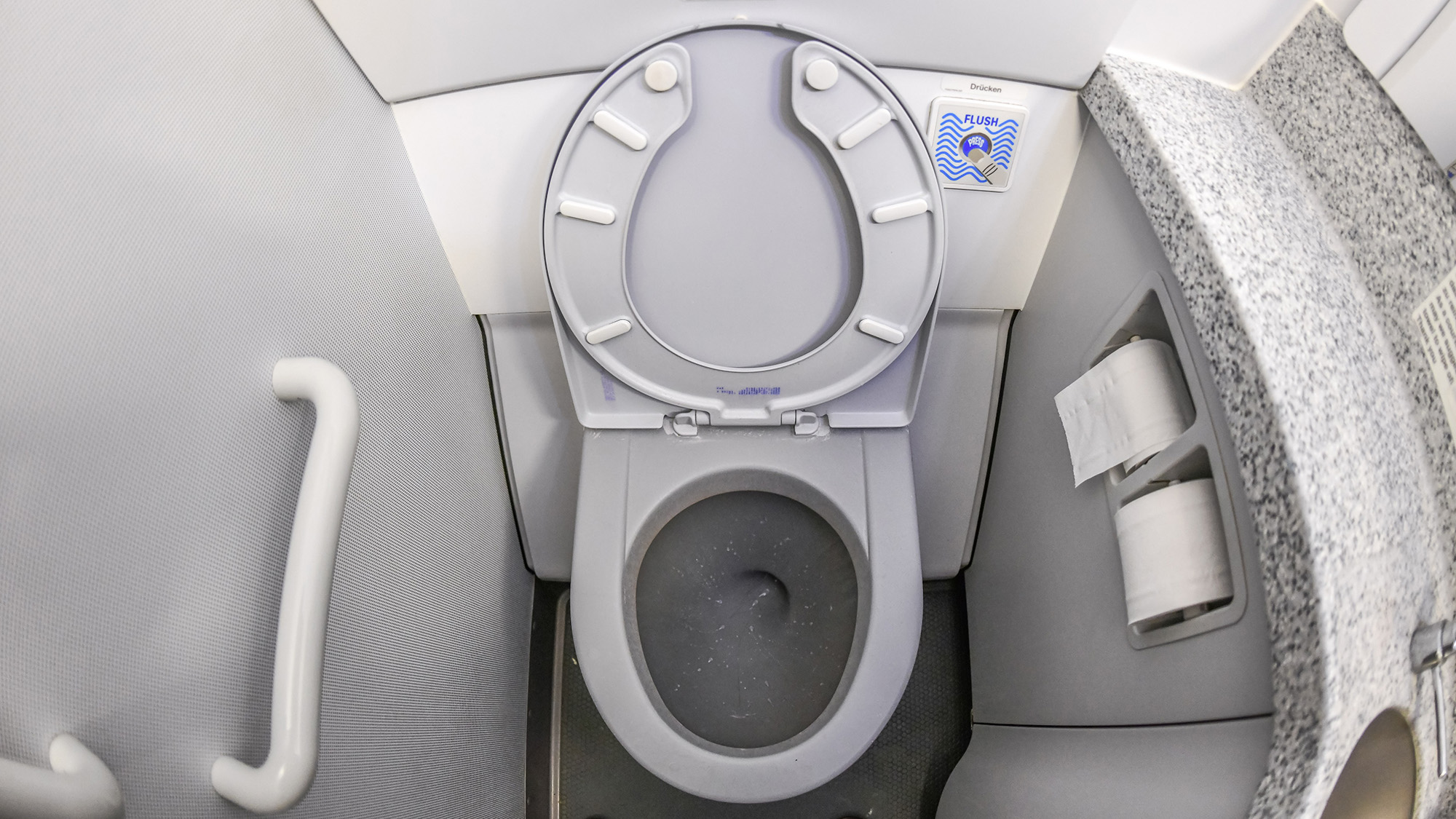
Modern commercial aircraft, such as the Boeing 787 Dreamliner or the Airbus A350, utilize vacuum toilet technology to dispose of waste efficiently. This system, first patented by James Kemper in 1975 and introduced on Boeing aircraft in 1982, relies on the pressure differential between the aircraft’s pressurized cabin and the lower-pressure atmosphere outside.
When a passenger activates the flush button, a flush valve opens at the bottom of the toilet bowl. Because the cabin is pressurized to roughly the equivalent of 6,000 to 8,000 feet of altitude, while the waste tank is vented to the outside air (or maintained at a lower pressure via a vacuum generator at lower altitudes), the resulting pressure surge creates a high-speed suction. This vacuum pulls the waste through the plumbing at speeds often exceeding 100 miles per hour.
This method is significantly more efficient than traditional gravity-based systems. A standard household toilet requires approximately 1.6 gallons of water per flush, whereas an airplane vacuum toilet uses less than half a gallon—often as little as a few ounces of a disinfecting rinse. This reduction in liquid volume is critical for aviation; every gallon of water weighs approximately 8.34 pounds. By minimizing the water required for sanitation, airlines can reduce the aircraft’s takeoff weight by hundreds of pounds, leading to substantial savings in fuel consumption and a reduction in carbon emissions.
The Evolution of In-Flight Sanitation
The history of airplane toilets is a testament to the rapid advancement of aviation technology. In the earliest days of flight, sanitation was an afterthought, largely due to the short duration of journeys and the low altitudes at which aircraft operated.
The Era of Open-Air Disposal
During the First World War and the early 1920s, pilots frequently resorted to primitive solutions. Anecdotal evidence from the era suggests that pilots in open-cockpit planes would occasionally use their boots or specialized containers, which were then discarded over the side of the aircraft. Some early military planes featured a simple hole in the cockpit floor, a design that was as rudimentary as it was unhygienic.
The 1930s and the DC-4
As passenger travel became a commercial reality, airlines recognized the need for enclosed lavatories. The Douglas DC-4, which began service in the late 1930s, was among the first to offer a dedicated bathroom space. However, these systems were still gravity-fed and utilized removable bowls. Ground crews were tasked with the unenviable job of boarding the aircraft after landing to manually remove and empty these containers.
The Chemical Toilet and the Rise of Blue Ice
By the mid-20th century, the industry transitioned to chemical toilets, similar to those found in modern portable restrooms. These systems utilized a recirculating blue liquid—a mixture of water and deodorizing chemicals—to move waste into a holding tank. While an improvement over previous methods, these systems were heavy and prone to leakage.
Leaks in chemical toilet systems led to the phenomenon known as "blue ice." When the blue disinfecting liquid leaked from the aircraft at high altitudes, the sub-zero temperatures caused it to freeze instantly onto the exterior of the fuselage. As the plane descended into warmer air, these frozen blocks of waste could break off and fall to the ground. While the Federal Aviation Administration (FAA) notes that such incidents are extremely rare, there have been documented cases of blue ice damaging roofs or vehicles. The transition to vacuum systems has largely eliminated this risk by utilizing sealed, internal plumbing.
Ground Operations and the Honey Truck
The lifecycle of aviation waste does not end when the flush valve closes. All waste is directed through a network of pipes to a large holding tank, typically located at the rear of the aircraft. These tanks are designed to be airtight and are equipped with multiple failsafes to prevent accidental discharge during flight. Contrary to popular urban legends, pilots cannot "dump" waste while in the air; the external waste valves can only be operated from the outside of the aircraft while it is on the ground.
Once the aircraft arrives at the gate, ground support personnel take over. A specialized vehicle, colloquially known in the industry as a "honey truck," connects a heavy-duty hose to the aircraft’s waste port. The truck’s vacuum system pumps the accumulated waste out of the aircraft’s holding tank and into the truck’s reservoir. Following the extraction, the aircraft’s tank is rinsed with a disinfecting solution to prepare it for the next leg of the journey. This process is a critical component of the "turnaround time" that airlines strive to minimize to maintain flight schedules.
Maintenance Challenges and Economic Impact
The efficiency of the vacuum system is contingent upon the integrity of the plumbing. Because airplane toilet pipes are relatively narrow—designed to maximize suction—they are highly susceptible to clogs. Maintenance crews frequently report finding non-flushable items such as paper towels, diapers, soda cans, and even cutlery in the waste lines.
A single clog can have a cascading effect on airline operations. If a lavatory becomes inoperable, it may necessitate grounding the aircraft for several hours or even days, as technicians must often dismantle portions of the cabin floor to access the vacuum lines. According to industry analysts, a grounded aircraft can cost an airline thousands of dollars per hour in lost revenue and passenger compensation. Consequently, airlines invest heavily in passenger education, utilizing signage to remind travelers that only the provided tissue should be flushed.
Comparison with Space-Based Sanitation
The challenges of waste management are amplified when gravity is removed from the equation entirely. Recent events involving the Artemis II mission highlight the complexities of "cosmic plumbing." NASA astronauts, tasked with orbiting the Moon, must rely on systems that use powerful fans to create suction in a microgravity environment.
In 2024, during a simulated mission, NASA reported a failure in a space toilet fan, a critical component that prevents liquid and solid waste from floating throughout the cabin. Astronaut Christina Koch and mission control were required to perform rapid troubleshooting to restore the system. In space, the stakes are significantly higher than on a commercial flight; a broken toilet can compromise the health of the crew and the functionality of sensitive electronic equipment. While airplane toilets use the atmosphere to create a vacuum, space toilets must generate their own airflow, illustrating the extreme engineering required for long-duration spaceflight.
The Future of In-Flight Sanitation
As the aviation industry moves toward greater sustainability, the next generation of airplane toilets is expected to incorporate even more advanced technology. Research is currently underway into self-cleaning surfaces that use ultraviolet (UV) light to kill 99.9% of bacteria in seconds. This would improve hygiene for passengers and reduce the frequency of deep-cleaning cycles required by ground crews.
Furthermore, engineers are exploring the use of non-stick coatings, similar to Teflon, for toilet bowls to further reduce the amount of rinse water needed. Some manufacturers are even investigating ways to convert human waste into energy or biofuels on the ground, potentially turning a logistical burden into a sustainable resource.
The airplane toilet, though often the subject of humor or minor anxiety, is a marvel of integration. It combines aerodynamics, fluid mechanics, and logistical precision to ensure that one of the most basic human needs can be met while traveling at nearly the speed of sound. As technology continues to evolve, these systems will become even lighter, cleaner, and more integral to the goal of efficient global travel.