





Effective classroom instruction is rarely the result of spontaneous inspiration; rather, it is the product of meticulous architectural planning. As educational institutions face increasing pressure to demonstrate measurable student growth and alignment with rigorous state standards, the methodology behind unit design has become a critical focal point for professional development. Recent pedagogical research indicates that teachers who utilize systematic, backward-designed planning frameworks report higher levels of self-efficacy and observe more consistent student achievement outcomes compared to those relying on day-to-day lesson improvisation.
The current landscape of K-12 education demands a high level of precision. According to data from the National Center for Education Statistics, the average teacher spends approximately 10 to 12 hours per week on lesson planning and instructional preparation. Despite this significant time investment, studies published in the Journal of Educational Research suggest that a lack of cohesive unit-long planning often leads to fragmented learning experiences, where individual lessons fail to coalesce into a deeper understanding of core concepts. To address this, many school districts are moving toward a four-stage instructional planning model that prioritizes structural alignment, assessment-driven design, sequential lesson scaffolding, and adaptive differentiation.
Historical Context and the Evolution of Backward Design
The shift toward structured unit planning gained significant academic momentum with the 1991 publication of Understanding by Design by Grant Wiggins and Jay McTighe. This framework, commonly known as "Backward Design," challenged the traditional "forward" model—where teachers select textbooks and activities first, then develop assessments at the conclusion of a unit. By reversing this sequence, educators are tasked with identifying the desired results before determining the evidence of learning.

In a modern context, this approach is often integrated with state-mandated academic standards. While standards provide the "what"—the broad goals for student mastery—they frequently lack the "how"—the instructional roadmap necessary to guide students from novice to proficient. The gap between a list of standards and a high-functioning classroom is filled by the curriculum, which organizes these standards into manageable units. A unit, in this professional capacity, is defined as a thematic or skill-based cluster of lessons lasting between two and six weeks.
The Three-Step Framework for Instructional Success
The architecture of a professional unit plan consists of three distinct, sequential phases that ensure internal consistency.
Phase One: Objective Definition and Goal Alignment
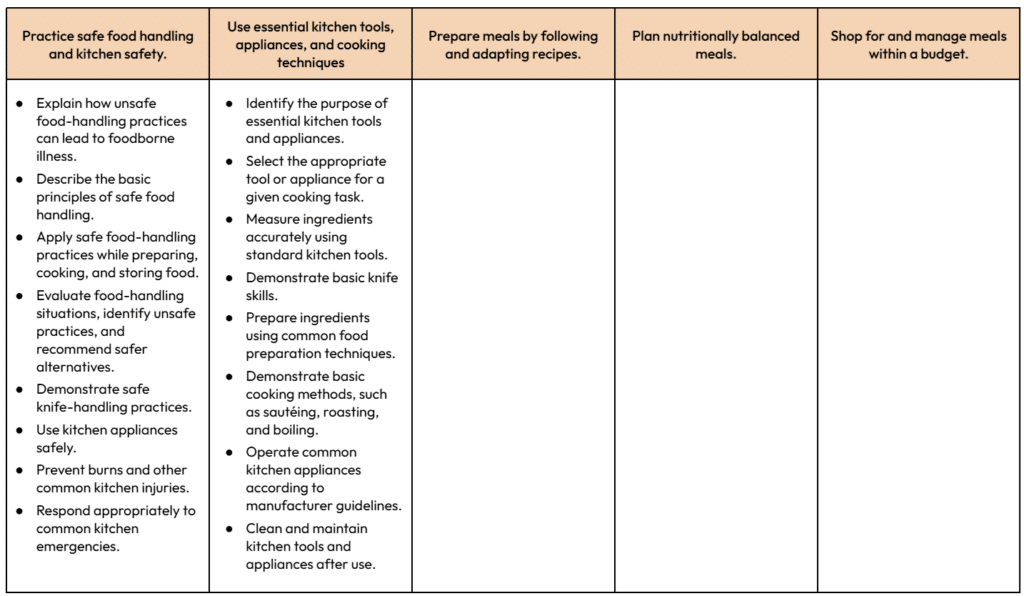
The process commences with the translation of broad state or district standards into specific, observable, and measurable learning objectives. Educators are encouraged to move beyond abstract concepts like "understanding" or "knowing," which are difficult to quantify, and instead focus on observable behaviors. For example, rather than stating that a student will "understand food safety," a measurable objective would state that a student will "identify three primary sources of cross-contamination and demonstrate proper hand-washing techniques according to health department protocols." By anchoring the unit in these observable outcomes, teachers create a clear target for student success.
Phase Two: Assessment Design
Following the establishment of objectives, the focus shifts to the summative assessment. This is the cornerstone of the backward design model. An effective summative assessment acts as the definitive measure of whether the objectives have been met. Pedagogical experts note that the most robust assessments are those that require students to apply knowledge in novel, real-world contexts. Instead of relying solely on multiple-choice examinations, which may measure recall rather than mastery, educators are increasingly incorporating performance-based tasks—such as case study analyses, laboratory demonstrations, or project-based applications—that mirror the complexities of the subject matter.
Phase Three: Instructional Scaffolding
Only after the objectives are solidified and the final assessment is designed does the teacher move to the planning of individual daily lessons. This sequence ensures that every classroom activity serves as a building block toward the final assessment. By working backward, the teacher can identify exactly what prior knowledge is required to succeed on the final assessment and can scaffold daily lessons to bridge the gap between current student capability and the desired learning outcome.
Implications for Professional Development
The move toward these standardized planning models has significant implications for both novice and veteran educators. For pre-service teachers, mastering these frameworks during their residency programs is highly correlated with retention rates; burnout is frequently linked to the stress of improvisational planning. For experienced teachers, adopting a formalized process acts as a "reset," allowing them to audit existing materials and discard activities that do not directly contribute to the unit’s core objectives.
Educational administrators often view this rigorous approach to planning as a key component of school improvement initiatives. When an entire department or grade-level team aligns their unit planning using a shared methodology, the result is a more equitable experience for students across different classrooms. It facilitates vertical alignment, where the skills taught in one grade level effectively prepare students for the demands of the next.
Technological and Resource Integration
While the methodology remains constant, the tools available for unit planning have evolved. Modern educators now have access to digital platforms that allow for the archiving and peer-reviewing of unit plans. However, experts warn against the over-reliance on pre-packaged curricula. While commercial textbooks and scripted programs provide a baseline, they often lack the nuance required for specific student populations. The most effective instructional design happens when teachers use the structure of backward design to adapt pre-existing curriculum materials to the specific cultural and academic needs of their classrooms.
Future Outlook and Closing Thoughts
As the education sector continues to emphasize data-driven instruction, the ability to translate high-level standards into cohesive units will remain a high-value competency. The "Mastering the Lesson Plan" model serves as an example of the current trend in professional development, focusing on self-paced, iterative learning that encourages teachers to treat their curriculum as a living document.
Ultimately, the goal of this systemic planning is to ensure that learning is intentional rather than incidental. By clearly defining what students need to learn, creating a transparent path toward demonstrating that knowledge, and carefully curating the lessons that facilitate that journey, educators can foster an environment where student achievement is not a matter of chance, but a product of design. As teachers continue to refine these skills, the focus remains on the primary objective: transforming the abstract requirements of education into tangible, long-term mastery for every student.