
The late days of a semester at Carleton University, typically a period of reflection and summation, took an unexpected turn when Dr. Gabriel Maracle, a political science professor specializing in Indigenous governance in Canada, posed a provocative question to his students. "What would you think of your experience in this class if, two weeks after it ended, you found out that I was not Indigenous, but actually Italian-American?" This deliberately uncomfortable inquiry was designed to probe their understanding of Indigenous knowledge production and to confront the increasingly visible issue of "pretendians" – individuals who falsely claim Indigenous heritage. Dr. Maracle’s aim was to equip his students with the critical tools necessary to navigate the complex intersection of scientific integrity and the crucial process of Indigenization within academic institutions.
The emergence of individuals falsely claiming Indigenous identity has become a significant concern in recent years, casting a shadow over genuine Indigenous scholarship and initiatives. One high-profile instance occurred in November of the previous year, with the revelation that Thomas King, a celebrated author whose works exploring Indigenous themes are widely studied in universities, was not of Cherokee descent as he had previously represented. For Dr. Maracle, a member of the Mohawks of the Bay of Quinte, these repeated discoveries underscore a painful reality and highlight the urgent need for more robust verification processes.
Addressing the "Pretendian" Challenge: A New Guide for Institutions
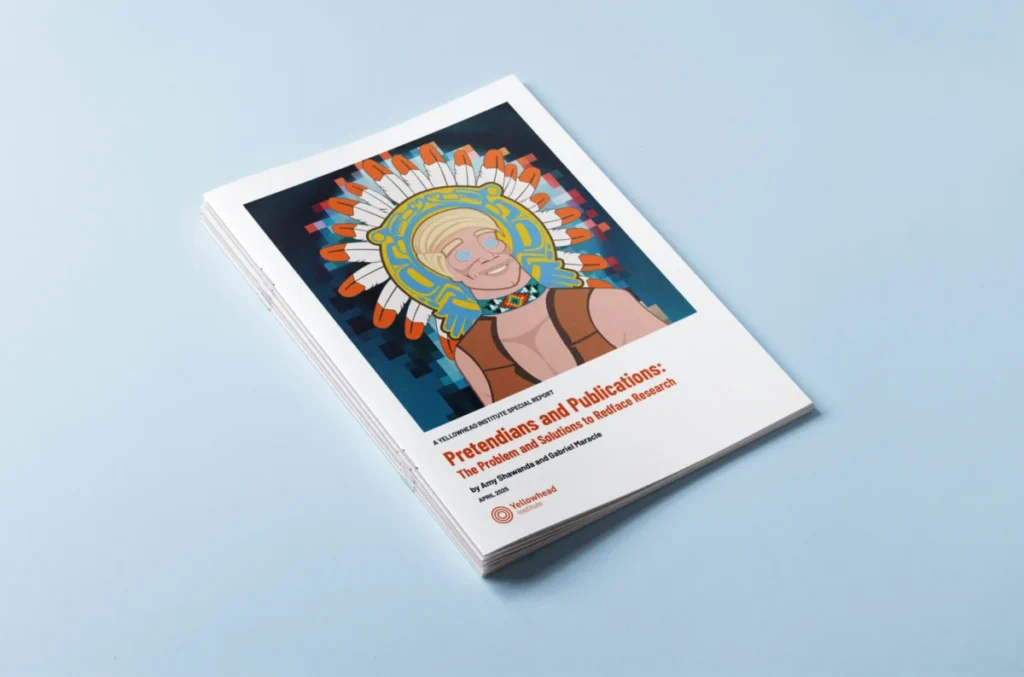
Recognizing the immense challenge universities face in understanding the diverse and often intricate methods First Nations, Inuit, and Métis communities employ to verify their members, Dr. Maracle, in collaboration with Amy Shawanda of McGill University, has developed a comprehensive reference guide. This 17-page document, titled "Pretendians and Publications: The Problem and Solutions to Redface Research," published by the Yellowhead Institute, an Indigenous research and education lab at Toronto Metropolitan University, serves as both a report and a call to action. It aims to provide institutions with a framework for addressing the issue without resorting to punitive investigations or "pretendian witch-hunts."
The guide emphasizes that verifying Indigenous identities is an inherently complex undertaking, demanding diligence, cultural competency, and flexibility. A critical aspect highlighted by the authors is the necessity of ensuring that First Nations, Inuit, and Métis faculty members, who remain significantly underrepresented in academia, are not unduly burdened with the responsibility of either unmasking fraudulent claims or being forced to work alongside individuals who have misrepresented their heritage. This is particularly pertinent given the historical underrepresentation and the ongoing efforts to foster a more inclusive academic environment.
Understanding Indigenous Identity: A Complex and Sensitive Matter
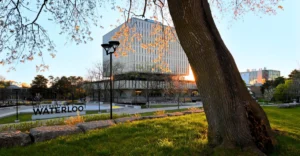
Dr. Maracle describes the guide as "avant-garde," acknowledging its pioneering nature in tackling the negative impacts of knowledge fraud. It outlines nine key recommendations designed to help organizations screen out individuals whose "fraudulent identity claims compromise the integrity of Indigenous Data and Indigenous Data Sovereignty." These recommendations are intended to be universally applicable, and several institutions have already begun to implement similar measures. The University of Waterloo, for example, has established an Indigenous Verification Advisory Committee to address these concerns.
The guide’s publication comes at a time when universities across Canada are actively engaged in recruitment campaigns for Indigenous students and faculty. While these initiatives are vital for advancing Indigenization, the authors argue they need to be re-evaluated and rebalanced to ensure genuine representation and to address the delicate topic of Indigenous identity, which Dr. Maracle notes is as "deeply uncomfortable" for Indigenous communities as it is for external institutions.
A Chronicle of Deception: High-Profile Cases and Their Impact
The issue of "pretendianism" has gained significant public attention through several high-profile cases that have exposed the vulnerabilities within academic and professional spheres. One such case that sent shockwaves through the academic community involved Carrie Bourassa, a former professor of medicine at the University of Saskatchewan. Dr. Bourassa had occupied positions designated for Indigenous individuals and had built a reputation as a fervent advocate for Indigenous healthcare access, a critical area plagued by systemic racism. Her unmasking as a "pretendian" was deeply disillusioning for many who had placed their trust in her. Dr. Maracle’s poignant reflection, "It turns out the few people we thought we could trust weren’t even Indigenous," encapsulates the profound sense of betrayal experienced by Indigenous communities.
The implications of such deception extend beyond individual careers. Dr. Maracle points to the "contaminated" nature of scientific research led by individuals like Dr. Bourassa, alleging that work carried out "by and for Indigenous people" can be compromised by a "questionable knowledge base." The potential for biased methodologies to impact research conducted in partnership with communities and healthcare services is a serious concern, necessitating a thorough review of such work.
Statistical Realities: The Underrepresentation and Verification Gap
Statistics Canada data from the 2021 census reveals a significant disparity in Indigenous representation within higher education. While 51,100 Indigenous individuals had attended university, and 2,980 had graduated with a PhD, there were only 1,190 Indigenous university instructors. A critical point raised by Drs. Maracle and Shawanda is that these figures are based on self-identification without any evidentiary requirement. Statistics Canada confirmed this in writing, a lack of rigor that, according to the authors, casts doubt on the accuracy of the numbers and further underscores the need for more robust verification processes.
This statistical snapshot highlights the urgent need to address not only the underrepresentation of Indigenous scholars but also the integrity of the data used to track and support them. The current system, relying solely on self-identification, can inadvertently allow individuals to benefit from positions and resources intended for Indigenous scholars, thereby perpetuating a cycle of deception and undermining the efforts of genuine Indigenous academics.
Reforming Protocols: A Path Towards Data Integrity and Trust
Drs. Maracle and Shawanda advocate for a fundamental reform of admission and recruitment protocols. They propose that these processes be reviewed and managed on an ongoing basis by committees comprised of Indigenous knowledge-keepers. "This kind of policy is very new," Dr. Maracle states, emphasizing the complexity of identity verification. "The question of identity is too complex to be delegated to universities."
The implementation of committee-led verification systems, they argue, would represent a significant transformation, preventing imposters from "profiting from Indigenous identity." This could include securing research grants, promotion opportunities, or other academic advantages that are specifically intended to support and advance Indigenous scholars and Indigenous knowledge.
The Broader Impact: Reconciliation and the Fight Against Cultural Appropriation
The prevalence of "pretendianism" exacerbates the existing suspicion Indigenous people hold towards institutions, hindering the fragile progress of truth and reconciliation efforts. Dr. Maracle asserts that universities must confront "a long history of exploiting Indigenous people." By fostering collaboration between Indigenous and non-Indigenous individuals, leveraging both practical and theoretical knowledge, institutions can work towards rectifying past injustices and establishing administrative safeguards to protect the integrity of the scientific community.
The guide’s recommendations also extend to ensuring that all scientific research involving Indigenous peoples is conducted with genuine collaboration and ethical oversight. The federal tri-agencies have recently introduced a new policy to verify individuals who self-identify as Indigenous. However, Drs. Maracle and Shawanda point out that this policy lacks measures to address the scientific output of scholars who have falsely claimed Indigenous identity. "Policies should be drafted and research conducted with communities’ input," Dr. Maracle concludes, "but communities should also have a role in contextualizing the data and guiding the research process." This holistic approach, integrating community perspectives at every stage, is crucial for rebuilding trust and ensuring that academic endeavors truly serve and reflect the interests of Indigenous peoples. The journey towards genuine Indigenization requires not only the inclusion of Indigenous voices but also the rigorous protection of Indigenous knowledge and identity from appropriation and misuse.