


The global fashion landscape is currently witnessing a profound shift as traditional Chinese aesthetics, once relegated to museums and historical dramas, re-emerge as a dominant force in both domestic markets and international haute couture. This phenomenon, characterized by the "Hanfu Movement" and the rise of "Guochao" (national trend), represents more than a fleeting sartorial preference; it is a sophisticated reclamation of cultural identity that bridges three millennia of textile history with 21st-century consumerism. As China continues to consolidate its position as a global cultural superpower, the evolution of its clothing—known as Zhongguo fushi—serves as a primary medium for expressing social status, ethical values, and national pride.
The Chronological Evolution of Chinese Sartorial Systems
The history of Chinese clothing is not a linear progression of style but a series of complex transformations dictated by dynastic shifts, ethnic integration, and philosophical mandates. Each major era established a distinct aesthetic paradigm that continues to influence modern designers.
The Han Dynasty (206 BCE – 220 CE): The Foundation of Hanfu
The Han Dynasty is credited with formalizing the Hanfu, the foundational garment system for the Han Chinese people. This period established the Yi (a narrow-sleeved, knee-length tunic) and the Chang (a narrow, ankle-length skirt). The silhouette was defined by the jiaoling youren—a cross-collar that always wraps the left side over the right, a detail that historically distinguished "civilized" dress from that of neighboring nomadic tribes. During this era, clothing was strictly regulated by the Rites of Zhou, where the length of a sash or the intricacy of a border pattern denoted a specific rank within the imperial bureaucracy.
The Tang Dynasty (618–907 CE): The Cosmopolitan Golden Age
Often cited as the most liberal and flamboyant period in Chinese fashion history, the Tang Dynasty benefited from the flourishing Silk Road. As the capital, Chang’an, became a global hub of commerce, fashion became more diverse and expressive. Women’s attire moved toward the Ruqun—a wrap top tucked into a high-waisted skirt, often tied just below the bust. This era introduced vibrant dyes and sheer fabrics, reflecting a society that was increasingly open to foreign influences from Central and Western Asia. The "Hufu" (nomadic dress) influence brought about narrower sleeves and more practical riding gear, demonstrating an early instance of cross-cultural fashion fusion.
The Ming Dynasty (1368–1644 CE): The Restoration of Tradition
Following the collapse of the Mongol-led Yuan Dynasty, the Ming Dynasty sought to restore Han Chinese traditions. Fashion became more structured and conservative. Notable developments included the proliferation of the "Mandarin collar" and the "Pipa" sleeve (shaped like a Chinese lute). Embroidery reached new heights of sophistication during this period, with the "rank patch" (buzi) becoming a mandatory accessory for officials, featuring specific birds or animals to indicate civil or military grade.
The Qing Dynasty (1636–1912 CE): Manchu Integration and the Qipao
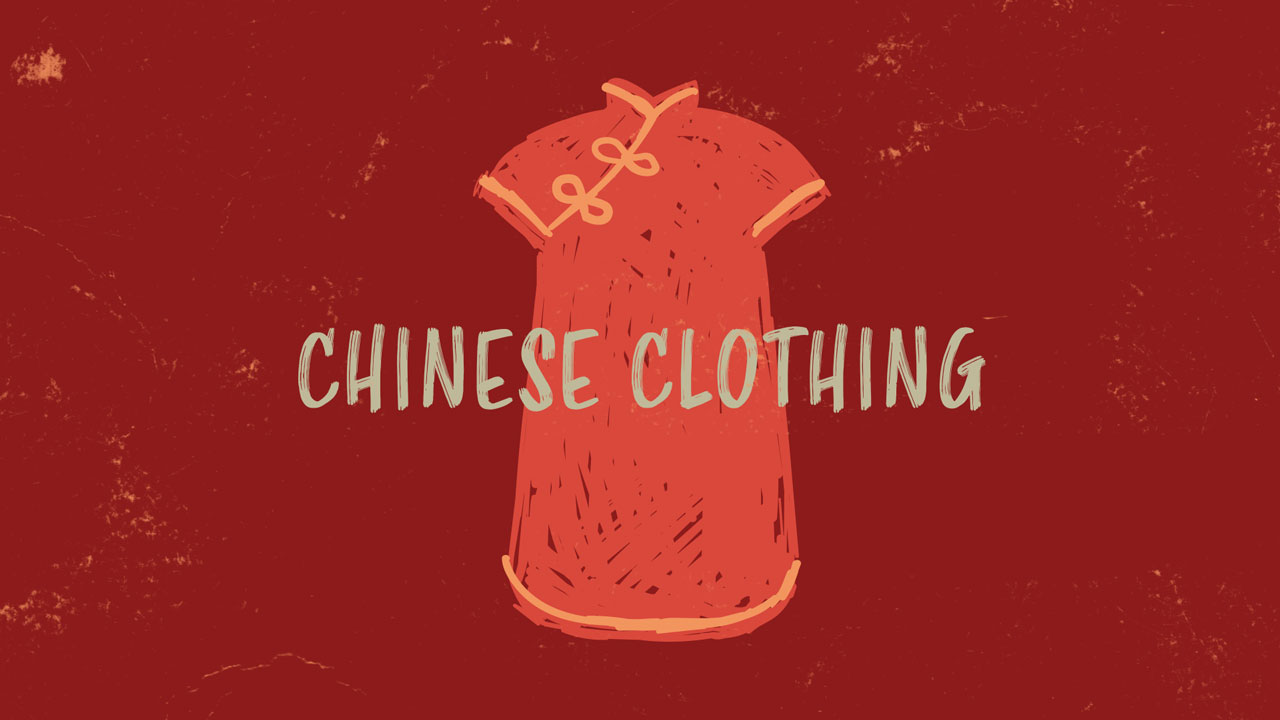
The Manchu-led Qing Dynasty introduced the most radical change in Chinese dress. The traditional Hanfu was largely suppressed in official circles in favor of the Qizhuang (Banner dress). This included the Changpao (long robe) for men and the evolution of the Qipao for women. Originally a wide, loose garment designed to conceal the figure, the Qipao (or Cheongsam in Cantonese) was modified in the early 20th century in Shanghai to become the form-fitting, high-slit garment recognized globally today. This transition marked the beginning of China’s intersection with Western modernism.
Diversity Beyond the Han Majority: Ethnic Minority Textiles
China’s sartorial identity is further enriched by the traditions of its 55 officially recognized ethnic minority groups. These styles are not merely decorative but are functional responses to specific geographic and climatic conditions.
- The Dai People (Yunnan Province): Influenced by the tropical climates of Southeast Asia, Dai clothing utilizes light silks and tight-fitting silhouettes. Women typically wear short, narrow-sleeved shirts with long, wrap-around skirts (tongshen), emphasizing elegance and breathability.
- The Tibetan People (Qinghai-Tibetan Plateau): Functionality is paramount in the harsh Himalayan environment. The Chupa, a long, wide-sleeved robe made of wool or sheepskin, is the staple garment. It is designed to be worn with one sleeve off during the day to regulate body temperature as the sun warms the plateau, and wrapped tightly at night for insulation.
- The Uyghur People (Xinjiang Uyghur Autonomous Region): Reflecting Central Asian heritage, Uyghur attire is famed for Atlas silk, a vibrant, ikat-dyed fabric. The Doppa (skullcap) remains a vital cultural marker, featuring intricate embroidery that varies by region and social occasion.
- The Zhuang People (Guangxi Zhuang Autonomous Region): As China’s largest minority group, the Zhuang are masters of indigo dyeing and brocade. Their clothing often features nature-based motifs, such as birds and flowers, symbolizing a spiritual connection to the agricultural landscape.
Supporting Data: The Economic Impact of the Hanfu Revival
The resurgence of traditional clothing is backed by significant economic data. According to market research reports from iiMedia Research, the value of the Hanfu market in China has grown exponentially. In 2015, the market was valued at approximately 190 million yuan; by 2021, it had surged to over 10 billion yuan (approximately $1.5 billion USD).
This growth is driven by a consumer base that is overwhelmingly young; statistics indicate that over 70% of Hanfu buyers are under the age of 25. This demographic shift suggests that traditional clothing has moved from the realm of historical reenactment into the mainstream "Guochao" consumer trend. E-commerce platforms like Taobao and Tmall have reported that "Hanfu" is consistently among the top-searched keywords in the apparel category, leading to the emergence of specialized brands like Shisanyu, which recently secured multi-million dollar venture capital funding.
Official Responses and Cultural Policy
The Chinese government has increasingly recognized the role of traditional dress in bolstering "cultural confidence" (wenhua zixin). State-sponsored media, including CCTV, regularly feature programs highlighting traditional textile crafts, such as Kesi (fine silk tapestry) and Yunjin (cloud brocade).
Industry experts and cultural historians have noted that this support is part of a broader strategic effort to promote Chinese "soft power." In a statement regarding the preservation of intangible cultural heritage, officials from the Ministry of Culture and Tourism emphasized that "traditional clothing is a living carrier of Chinese civilization," advocating for the integration of traditional crafts into modern education and vocational training.
Furthermore, international fashion houses have taken note. Designers such as Guo Pei, who gained global fame after dressing Rihanna for the 2015 Met Gala, have been instrumental in bringing Chinese "haute couture" to the Paris runways. These designers argue that Chinese fashion is no longer about "copying the West" but about utilizing a 5,000-year-old "vocabulary of design" to create something entirely new.
Materiality and Symbolism: The Language of the Loom
The "enrichment" of Chinese clothing lies in its symbolic depth. Materials and colors are never chosen at random; they are dictated by a complex system of semiotics.
- Materiality: Silk (Sichou) remains the pinnacle of Chinese textiles. China remains the world’s largest producer, accounting for over 75% of global raw silk production. However, for daily wear, linen (Yama) and cotton (Mianhua) have historically been preferred for their durability and comfort, particularly among the agrarian classes.
- Color Semantics:
- Red (Hongse): Represents fire, luck, and joy. It is the mandatory color for weddings and Lunar New Year.
- Yellow (Huangse): Historically reserved for the Emperor, representing the earth and central authority.
- White (Baise): Associated with metal and traditionally worn during mourning, representing a departure from the earthly realm.
- Black (Heise): Representing water and the "heavens" in ancient times, often used for formal scholar robes.
Analysis of Broader Implications and Future Trends
The evolution of Chinese clothing suggests a future where the distinction between "Western" and "Oriental" dress becomes increasingly blurred. We are seeing the rise of "Neo-Chinese Style" (Xin Zhongshi), which simplifies traditional elements—such as the disc button (Pankou) or the stand-up collar—into minimalist, modern garments suitable for a corporate environment.
This trend has significant implications for the global textile supply chain. As demand for high-quality traditional fabrics like Xiangyunsha (gambiered Guangdong silk) increases, there is a renewed investment in sustainable, plant-based dyeing techniques. This aligns with global shifts toward sustainable fashion, positioning China not just as a manufacturing hub, but as a leader in "heritage sustainability."
In conclusion, the story of Chinese clothing is one of resilience and adaptation. From the rigid social hierarchies of the Han Dynasty to the multi-billion dollar e-commerce industry of today, the silk thread of Chinese fashion remains unbroken. It continues to serve as a powerful tool for identity, a lucrative sector for economic growth, and a bridge between a storied past and a globalized future. As the proverb suggests, ren kao yizhuang—people rely on clothes for their appearance—but in modern China, those clothes are increasingly telling a story of cultural reclamation and global influence.