




The innate human tendency to visualize complex information, often manifested by reaching for a pen and paper to "show" rather than merely "tell," underscores a fundamental aspect of cognitive processing. This instinct finds its structured application in concept mapping, a pedagogical tool increasingly recognized for its profound impact on learning and knowledge retention. At its core, a concept map is a graphical organizer, a visual representation of knowledge where key concepts are encapsulated within nodes (boxes or bubbles) and interconnected by lines or arrows that delineate their relationships. While variations like mind maps or spider maps exist, the underlying principle of establishing meaningful links between ideas remains constant. These tools, despite their low-tech accessibility, hold significant potential for fostering deeper learning when implemented with an understanding of the cognitive principles that govern their effectiveness.
The growing body of research supporting the efficacy of concept mapping is compelling, positioning it as a cornerstone strategy in evidence-based pedagogy. Dr. Kripa Sundar, a distinguished cognitive scientist specializing in concept mapping research, highlights its multifaceted benefits. Her contributions, featured in the influential book "Smart Teaching Stronger Learning: Practical Tips from 10 Cognitive Scientists," co-edited by Dr. Pooja Agarwal, advocate for the strategic integration of such tools in educational settings. The book serves as a vital resource, bringing together the actionable insights of ten cognitive scientists to bridge the gap between scientific understanding of learning and practical classroom application. Previous chapters have already illuminated powerful retrieval practice strategies, and Dr. Sundar’s work extends this focus to the potent domain of visual knowledge representation.
The Cognitive Architecture of Learning: Why Concept Maps Excel
Dr. Sundar’s research, corroborated by numerous meta-analyses, consistently demonstrates that concept mapping can yield greater learning gains than traditional methods such as lectures, discussions, or passive text summarization. This superior performance is not accidental but deeply rooted in how the human brain processes and stores information. Concept maps are particularly effective because they actively engage all three critical stages of memory formation: encoding, storage, and retrieval.
-
Encoding: When students create a concept map, they are actively processing information, identifying core concepts, and determining the relationships between them. This active engagement during the encoding phase is crucial. Instead of passively receiving information, learners are constructing their understanding, which leads to stronger, more elaborate memory traces. The act of selecting key terms and formulating linking phrases requires deep semantic processing, far beyond superficial memorization. This process helps to integrate new information with existing knowledge structures, making it more meaningful and memorable.

-
Storage: Concept maps inherently promote organized knowledge storage. By visually representing hierarchical and cross-linked relationships, they mimic the way knowledge is theorized to be stored in semantic networks within the brain. This structured organization prevents isolated facts from floating disjointedly in memory; instead, they become part of a coherent schema. The visual-spatial arrangement also leverages dual coding theory, where information is processed and stored both verbally (the concepts and linking words) and visually (the nodes and lines), creating redundant pathways for retrieval and strengthening overall memory.
-
Retrieval: The very act of constructing a concept map is a powerful form of retrieval practice. Students must recall and connect information from memory to build the map. Furthermore, reviewing a well-constructed concept map serves as an efficient retrieval cue, allowing learners to quickly access and reactivate an entire network of related ideas. This contrasts sharply with linear notes, which often require re-reading large sections of text to recall specific points. The visual nature of maps facilitates rapid scanning and identification of key relationships, reinforcing neural pathways and making future retrieval more efficient.
Beyond these core memory processes, concept mapping also fosters metacognition – the ability to think about one’s own thinking. As students construct maps, they are constantly evaluating their understanding, identifying gaps in their knowledge, and refining their connections. This self-assessment is vital for developing effective learning strategies and promoting intellectual autonomy. The process of externalizing one’s understanding through a map provides a tangible artifact for reflection and revision.
Best Practices for Maximizing Concept Map Efficacy
While the underlying principles are robust, the practical implementation of concept mapping requires thoughtful consideration to unlock its full potential. Dr. Sundar outlines several key best practices for educators:
-
Clarifying Motivation and Purpose: Before embarking on concept mapping activities, educators must establish a clear "why." The purpose dictates the design and expected outcomes. Is the map intended for individual learning and note-taking, a collaborative group activity, a whole-class synthesis, or a form of assessment? For instance, a map designed for formative assessment might start with predefined nodes, whereas a map for exploratory learning might be entirely student-driven. Understanding the objective guides decisions about complexity, scope, and scaffolding. Without a clear purpose, concept mapping can become a mere exercise in diagramming rather than a tool for deep learning.
-
Employing a Guiding Question: To prevent overwhelm and ensure focus, a specific guiding question is indispensable. This question acts as a conceptual anchor, directing the selection of concepts and the nature of their interconnections. Without a guiding question, students might attempt to include every conceivable piece of information, resulting in an unwieldy and less effective map.
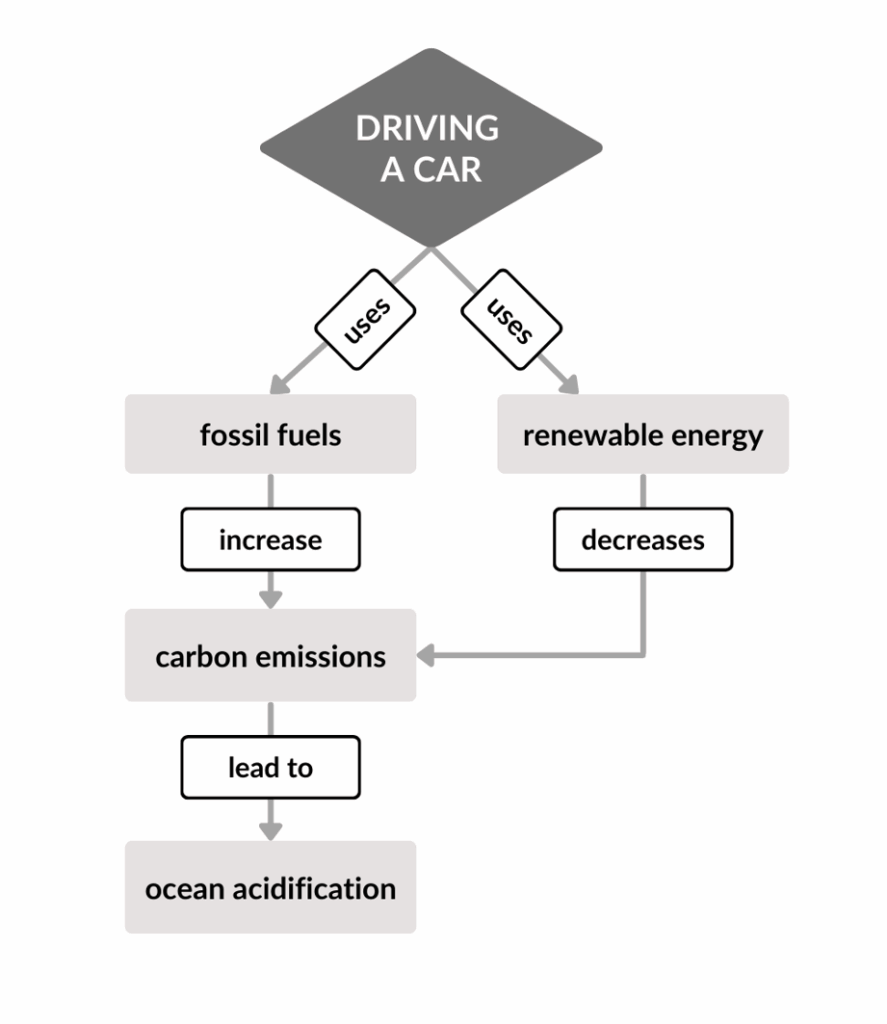
Dr. Sundar illustrates this with examples related to ocean acidification. A guiding question like "What is the relationship between driving a car and ocean acidification?" leads to a relatively focused map, tracing a specific causal chain from vehicle emissions to atmospheric carbon dioxide, its absorption by oceans, and subsequent acidification. In contrast, a broader question such as "What is the relationship between human activities and ocean acidification?" necessitates a far more complex map, encompassing industrial processes, deforestation, agricultural runoff, and various other anthropogenic factors, each with its own web of sub-concepts and causal links. The narrower focus allows for deeper exploration of specific pathways, while the broader question demands a more comprehensive, multi-faceted understanding, suitable for different stages of learning or levels of prior knowledge. The guiding question effectively manages cognitive load, ensuring that the mapping activity remains productive and manageable. -
The Critical Role of Linking Words and Directional Arrows: A fundamental distinction between a mere diagram and a powerful concept map lies in the explicit labeling of connections. Simply drawing lines between nodes is insufficient. True concept maps demand directional arrows and, crucially, linking words or phrases that articulate the precise nature of the relationship between two concepts. For example, instead of just a line between "Driving a car" and "CO2 emissions," a map would show "Driving a car produces CO2 emissions." And between "CO2 emissions" and "Ocean acidification," it might state "CO2 emissions contribute to ocean acidification."
Dr. Sundar acknowledges that this requirement adds a layer of cognitive effort, describing it as "a pain in the beep." However, she emphasizes that "that’s when you really push your learning harder." This demanding process forces learners to articulate their understanding precisely, moving beyond superficial recognition to a deeper, relational comprehension. The linking words transform the map from a collection of terms into a coherent narrative of interconnected ideas, making the implicit explicit and thereby strengthening the semantic network. This elaborative rehearsal during the mapping process significantly enhances long-term retention and transfer of knowledge.
Diverse Applications in the Modern Classroom
Concept maps are remarkably versatile and can be integrated into various instructional strategies across disciplines and grade levels.
-
Expert Maps for Unit Overviews: Teachers can create "expert maps" to provide students with a comprehensive visual representation of the key concepts and relationships within a unit of study. These maps serve as invaluable reference tools, offering a "big picture" overview that helps students contextualize new information as it is introduced. Dr. Sundar notes that expert maps effectively combat the feeling of disorganization that can arise in complex units, demonstrating "how they all connect."
However, a critical caveat is "concept map shock." Presenting an overly complex expert map at the outset can overwhelm students, leading to disengagement. To mitigate this, teachers can progressively reveal layers of the map. Beginning with only the major, overarching concepts and gradually adding finer details as the unit progresses allows students to build their understanding incrementally, fostering a sense of mastery rather than intimidation. This scaffolding approach aligns with cognitive load theory, ensuring that students are not presented with too much information before they have the foundational knowledge to process it. -
Strategic Note-Taking: Traditional linear note-taking, while common, can often obscure the relationships between ideas, reducing learning to a serial list of facts. Concept maps offer a more efficient and effective alternative. By transforming lectures, readings, or discussions into a visual network, students capture not just individual pieces of information but also their interdependencies. This method encourages active listening and critical thinking during the note-taking process, as students must constantly evaluate and synthesize information to fit it into their evolving map.
Dr. Sundar highlights that maps allow for "capturing more information in just a few words and diagrams," bypassing the need for lengthy, often redundant, explanations. A practical approach is to maintain a running list of key terms—on a classroom wall or in student notebooks—and periodically challenge students to construct maps illustrating the relationships among these terms. This low-stakes, ongoing practice reinforces learning and builds confidence.
-
Formative Assessment and Diagnostic Tool: Concept maps are exceptional formative assessment tools. They provide teachers with immediate, granular insights into students’ understanding and misconceptions. Unlike multiple-choice questions that only assess recall, a concept map reveals the structure of a student’s knowledge. A teacher can quickly identify if a student understands not just individual concepts, but also how they relate to one another, where their understanding is robust, and where gaps or erroneous connections exist.
One highly effective strategy is to provide students with a partially completed concept map and ask them to finish it. This could involve adding missing nodes, formulating linking words, or even rearranging existing elements. Such an approach reduces the initial cognitive load of starting from scratch while still demanding active recall and synthesis. Analyzing these student-generated maps allows teachers to tailor subsequent instruction, address common misunderstandings, and provide targeted feedback, thereby closing learning loops effectively. Furthermore, comparing a student’s map to an expert map can facilitate powerful peer- and self-assessment, encouraging students to reflect on and refine their conceptual frameworks.
Broader Implications and the Future of Pedagogical Design
The integration of concept mapping into educational practices extends beyond individual classroom activities, bearing significant implications for curriculum design, teacher professional development, and the overall educational philosophy. As educational systems increasingly prioritize critical thinking, problem-solving, and the ability to synthesize complex information, tools like concept maps become indispensable.
The emphasis on evidence-based practices, championed by cognitive scientists like Dr. Sundar and Dr. Agarwal, represents a paradigm shift in education. Moving away from pedagogical fads, this approach grounds instructional strategies in rigorous scientific understanding of how humans learn. Concept mapping, with its strong foundation in cognitive psychology, exemplifies this shift. It offers a tangible method for educators to apply principles of active learning, elaborative rehearsal, and dual coding, all proven to enhance long-term retention and transfer of knowledge.
For curriculum developers, concept maps offer a powerful way to visualize the progression of learning objectives within a unit or across an entire course. They can help ensure logical sequencing of topics and highlight interdisciplinary connections that might otherwise be overlooked. For teacher professional development, training in concept mapping not only equips educators with a versatile instructional tool but also deepens their understanding of cognitive science principles, empowering them to become more effective facilitators of learning.
Moreover, in an era saturated with information, the ability to organize and make sense of vast datasets is a critical skill. Concept mapping trains students in this essential competency, preparing them not just for academic success but for lifelong learning and professional challenges. By making thinking visible, concept maps democratize the learning process, providing a common language for discussing and refining understanding.
While the benefits are clear, successful implementation requires ongoing commitment. Teachers need adequate training, time to experiment with different approaches, and support to integrate concept mapping authentically into their teaching. Addressing "concept map shock" through careful scaffolding and progressive revelation is key to ensuring student buy-in and sustained engagement.
In conclusion, concept mapping stands as a testament to the power of visually representing ideas, transforming abstract concepts into tangible, interconnected knowledge structures. Rooted in robust cognitive science, and championed by experts such as Dr. Kripa Sundar and Dr. Pooja Agarwal, it offers educators a potent, versatile, and accessible tool to foster deeper understanding, enhance memory retention, and cultivate critical thinking skills essential for navigating an increasingly complex world. Its continued adoption and refinement promise to elevate learning outcomes across all educational levels, marking it as a cornerstone of modern, evidence-based pedagogy.