



The landscape of corporate learning and development (L&D) is undergoing a profound transformation, shifting from a supplementary function to a strategic imperative that directly fuels business outcomes. At the forefront of this evolution are Chief Learning Officers (CLOs) and other learning executives who are reimagining how organizations empower their workforces. Chief Learning Officer‘s Learning Insights series aims to illuminate the strategies, challenges, and successes of these trailblazers. In a recent discussion, a prominent CLO shared their journey and perspective on the critical role of L&D in today’s dynamic business environment.
From Training Designer to Strategic Architect: A Career Evolution
The CLO’s initial foray into the field of learning and development was driven by a fundamental desire to foster individual growth and enhance performance. "I was drawn to L&D because I’ve always been motivated by helping people grow and perform better," the CLO stated. This intrinsic motivation has been a constant, but the scope of the role has dramatically expanded over the years. The CLO elaborated, "Over time, my role has evolved from designing training to shaping strategy connecting learning directly to performance, engagement and business outcomes." This evolution signifies a broader understanding of L&D’s potential, moving beyond the delivery of discrete training modules to the creation of integrated systems that drive measurable business results.
This shift reflects a wider industry trend. Historically, L&D departments were often perceived as service providers, tasked with fulfilling training requests as they arose. However, as organizations grapple with rapid technological advancements, evolving market demands, and the increasing importance of employee retention and engagement, the strategic value of L&D has come into sharper focus. Modern CLOs are increasingly expected to act as strategic partners, aligning learning initiatives with overarching business objectives and demonstrating a clear return on investment.
Building an Integrated Performance Ecosystem
A cornerstone of the CLO’s approach has been the deliberate dismantling of traditional, siloed training events in favor of a comprehensive performance ecosystem. This strategic pivot involves several key initiatives designed to embed learning into the fabric of daily operations. "I’ve shifted L&D from isolated training events to an integrated performance ecosystem," the CLO explained. This ecosystem encompasses a multi-faceted strategy:
- Standardized Onboarding: Recognizing that the initial employee experience sets the tone for long-term success, the CLO has prioritized the standardization of onboarding processes across all roles and geographical locations. This ensures a consistent and effective introduction to the company culture, policies, and essential job functions, regardless of where an employee begins their journey.
- Competency-Based Leadership Development: Moving beyond generic leadership training, the organization has focused on developing leaders tied to real, observable competencies. This ensures that leadership programs are directly relevant to the skills and behaviors required for effective management within the specific industry and organizational context.
- Embedding Learning into Operational Systems: A critical innovation has been the integration of learning resources and support directly within the operational systems employees use daily. This "just-in-time" learning approach provides immediate access to information and guidance, reducing the need for pre-scheduled training and enabling employees to learn and apply new knowledge in real-time.
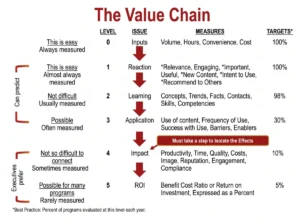
- Data-Driven Decision-Making: The CLO emphasizes the use of data to inform and refine L&D strategies. Metrics such as "time to competency" (the time it takes for an employee to reach a proficient level in a role), "Top Box scores" (a measure of customer satisfaction, often derived from surveys), and productivity metrics are utilized to guide decisions, identify areas for improvement, and demonstrate the impact of learning initiatives.
The CLO summarized this approach by stating, "The focus is consistency, accountability and making development part of how work actually gets done." This philosophy underscores a departure from viewing learning as an add-on activity to seeing it as an inherent component of operational efficiency and employee effectiveness.
The Impact of Redesigned Onboarding and Front-Line Performance Programs
The most significant impact, according to the CLO, has been observed in the organization’s redesigned onboarding and front-line performance programs. These initiatives represent a fundamental rethinking of how new employees are trained and supported in their initial roles. By revamping the approach to systems training, service delivery, and leadership behaviors, the organization has achieved remarkable results:
- Reduced Time to Competency: The redesigned programs have led to a reduction in the time it takes for new hires to become fully proficient by more than 60 percent. This significant improvement translates to faster ramp-up times, increased productivity, and quicker contributions to business goals.
- Improved Guest Experience: In customer-facing roles, the enhanced training has directly contributed to improved guest experience "Top Box" scores, indicating a higher level of customer satisfaction. This demonstrates a clear link between employee development and customer loyalty.
- Cost Savings: The efficiency gains and reduced need for repeated training have resulted in significant savings in training labor costs.
- Enhanced Employee Confidence: Beyond the quantifiable metrics, the CLO highlighted the qualitative impact on new hires. "More important, new hires leave onboarding confident, capable and ready to perform – not just ‘trained.’" This emphasis on confidence and capability suggests that the new programs foster a sense of empowerment and readiness, which are crucial for early employee success and retention.
The success of these programs can be attributed to a strategic shift from theoretical instruction to practical application and skill development. By focusing on the core competencies and behaviors required for success in front-line roles, and integrating learning into the operational context, the organization has created a more effective and engaging learning experience.
Addressing Misconceptions: L&D as a Strategic Partner, Not a Cost Center
A persistent misconception within many organizations is that the L&D function operates as a cost center or merely as an "order-taker" for training requests. The CLO actively combats this perception by framing L&D as a strategic partner that drives business results. "That L&D is a cost center or an order-taker," the CLO acknowledged. "I address it by leading with data, business problems and outcomes." This data-centric approach is crucial for demonstrating the value of L&D. The CLO’s philosophy is clear: "If learning doesn’t move a metric, it doesn’t matter."
This perspective aligns with the evolving expectations of modern business leadership. In an era where every departmental investment is scrutinized for its contribution to the bottom line, L&D professionals must be able to articulate the tangible impact of their initiatives. This requires a deep understanding of business challenges, the ability to identify learning gaps that hinder performance, and the capacity to measure the effectiveness of interventions. By focusing on key performance indicators (KPIs) that are directly linked to business objectives, L&D departments can move beyond being seen as an overhead expense to being recognized as a vital driver of growth and profitability.
Embracing the Future: Personalization, AI, and Performance Support
The future of workplace learning is brimming with exciting possibilities, and the CLO is particularly enthusiastic about the convergence of several key trends. "The shift toward personalization, AI and performance support excites me most," the CLO stated. These advancements offer the potential to create more tailored, efficient, and impactful learning experiences.
- Personalization: Moving away from one-size-fits-all approaches, personalized learning allows individuals to access content and development opportunities that are most relevant to their specific roles, career aspirations, and learning styles.
- Artificial Intelligence (AI): AI is poised to revolutionize L&D by enabling intelligent content curation, personalized learning paths, automated feedback, and predictive analytics to identify potential learning needs before they become critical issues.
- Performance Support: This concept emphasizes providing learning resources and support exactly when and where employees need them to perform a task. It shifts the focus from formal training sessions to integrated, in-the-moment assistance.
To prepare the organization for these shifts, the CLO’s strategy involves proactive engagement and experimentation. "We’re preparing by experimenting early, upskilling our team and designing learning that fits into the flow of work, not around it," the CLO explained. This forward-thinking approach ensures that the organization remains agile and adaptive in a rapidly changing learning landscape.
Essential Qualities of a Successful L&D Leader
The demands on L&D leaders are significant, requiring a unique blend of skills and attributes. The CLO identifies three essential qualities: "Business acumen, courage and curiosity."
- Business Acumen: A deep understanding of the organization’s business strategy, financial performance, and operational challenges is paramount. This allows L&D leaders to align learning initiatives with critical business needs.
- Courage: The courage to challenge existing norms, advocate for innovative approaches, and have difficult conversations about performance and development is crucial for driving meaningful change.
- Curiosity: A continuous desire to learn, explore new technologies, and understand evolving workforce needs is essential for staying ahead of the curve.
Cultivating these traits is an ongoing process. The CLO emphasizes staying connected to the operational realities of the business, being transparent about what works and what doesn’t, and fostering an environment where the team feels empowered to question assumptions, including those of the CLO.
A Timeless Piece of Advice: Impact Over Volume
Reflecting on their career journey, the CLO offers a powerful piece of advice to their younger self: "Stop trying to prove your value through volume. Focus on impact, speak the language of the business, and trust that clarity is more powerful than complexity." This advice encapsulates a fundamental truth for L&D professionals: the goal is not to deliver the greatest quantity of training, but to achieve the greatest positive impact on individuals and the organization.
This perspective resonates with the broader challenges faced by the L&D industry. As the CLO notes, the single biggest challenge is "Relevance. Too much learning still exists outside the realities of the job." The industry must evolve to ensure that learning is not only accessible but also directly applicable to the tasks and challenges employees face daily. This requires a willingness to embrace change, to continuously reassess the effectiveness of existing programs, and to prioritize initiatives that demonstrably contribute to business success.
The path forward for L&D is one of strategic integration, data-driven decision-making, and a relentless focus on employee performance and business outcomes. As the CLO’s insights demonstrate, by embracing innovation and aligning learning with the core objectives of the organization, L&D professionals are not just training employees; they are building the future of work.