

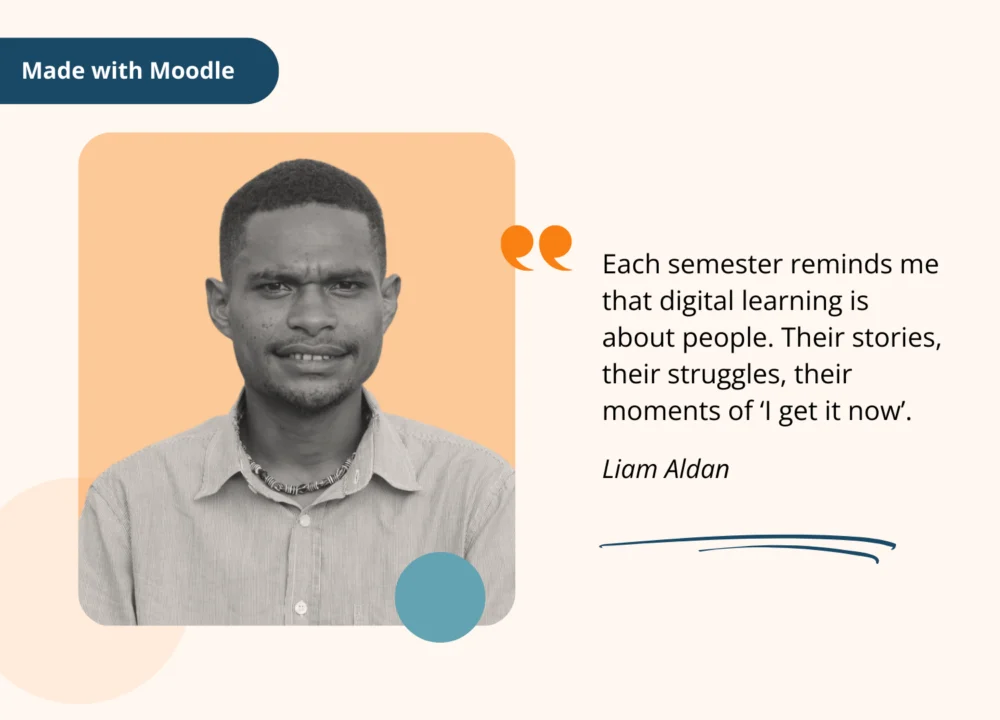
The journey of a thousand digital courses begins with a single, thoughtfully designed step. At Divine Word University (DWU) in Papua New Guinea, Liam Aldan, a dedicated Moodle Learning Designer, has spent the last four years meticulously crafting online learning environments that transcend the limitations of traditional digital instruction. His work, a testament to the power of user-centered design, has demonstrably enhanced student engagement, empowered educators, and fostered a more accessible and effective learning ecosystem. This "Made with Moodle" spotlight delves into Aldan’s transformative approach, exploring the challenges he faced, the strategies he employed, and the profound impact his dedication has had on the DWU community.
The Genesis of a Learning Design Vision
Aldan’s foray into learning design at Divine Word University was not born from a pre-existing blueprint but rather from an organic response to observed needs. Initially joining the university, he found himself confronted with online courses that, while containing essential information, often felt disconnected and overwhelming for students. These digital spaces were characterized by a lack of clear navigation and limited guidance, creating a frustrating experience for learners attempting to assimilate complex material. Concurrently, academic staff faced significant time constraints, making it challenging to dedicate the necessary resources to develop engaging and pedagogically sound Moodle courses.
"When I look back, it’s hard to believe that this year marks my fourth year as a Moodle Learning Designer at Divine Word University," Aldan reflects. He vividly recalls opening digital courses that "felt like long corridors with closed doors." This analogy powerfully encapsulates the student experience of encountering a wealth of information without a clear path to understanding or application. The inherent challenge, Aldan recognized, was not merely about uploading content but about cultivating an environment where learning could genuinely flourish.
This realization prompted a critical shift in his perspective. Aldan moved away from the notion of simply "designing courses" to the more holistic and impactful objective of "designing clear, meaningful learning experiences." This fundamental reorientation set the stage for a series of strategic interventions aimed at demystifying the digital learning landscape for both students and educators.
A Collaborative Approach to Enhancing Digital Pedagogy
Aldan’s strategy centered on building strong relationships with academic staff. He understood that effective online learning design was intrinsically linked to understanding the unique pedagogical approaches and subject matter expertise of each lecturer. By actively listening to their challenges and immersing himself in their teaching styles, Aldan was able to translate their academic goals into intuitive and engaging digital formats.
"I began working with academic staff – listening to their challenges and learning their teaching styles," Aldan states. This collaborative process allowed him to identify specific pain points within existing Moodle courses, such as poor content organization, lack of interactive elements, and cumbersome assessment methods. Armed with this invaluable insight, he then set about redesigning these courses, transforming them into digital environments that students could navigate with ease and confidence.
Beyond individual course redesigns, Aldan also took on the crucial role of educator himself. He initiated training and support initiatives to help his colleagues better understand and leverage the full potential of the Moodle Learning Management System (LMS). This proactive approach empowered faculty members, equipping them with the skills and knowledge necessary to not only utilize Moodle more effectively but also to reimagine what online learning could truly achieve. The impact of this dual focus – on student experience and faculty empowerment – began to yield tangible results.
The Moodle Renaissance at Divine Word University
The university’s Moodle site, once a collection of disparate and often challenging digital spaces, gradually transformed into a vibrant and dynamic learning hub. This evolution was particularly significant for diverse learners, many of whom navigated the university with varying levels of digital literacy and access to technology. The more welcoming and intuitive online environment fostered greater inclusivity and reduced the barriers to academic success.
Aldan describes the platform coming to life, likening each redesigned course to "opening a window – more light, more structure, more room for engagement." This evocative metaphor highlights the increased clarity and accessibility that characterized the improved courses. Students who had previously felt lost and disoriented now had a clear sense of direction. Lecturers, who may have once felt intimidated by the technological demands of online course creation, began to feel inspired and empowered, recognizing the potential for Moodle to enhance their teaching.
The transformation was evident in the increased activity within course forums, which evolved from passive repositories of information into active spaces for genuine dialogue and peer-to-peer learning. The integration of rich multimedia content, including videos, interactive quizzes, and engaging presentations, further enhanced the learning experience, making courses more immersive and stimulating. This deliberate infusion of dynamic elements was instrumental in fostering greater student engagement and active participation.
A Culture of Continuous Improvement and Human-Centered Design
Aldan’s work at DWU is characterized by a commitment to continuous improvement and a deep-seated belief in the human element of digital education. His responsibilities have expanded to encompass the development of consistent course templates, the seamless integration of multimedia resources, the enhancement of assessment strategies, and the ongoing effort to inspire staff to explore new possibilities in online pedagogy.
"My work has grown into building consistent templates, weaving in multimedia, improving assessments, and helping staff rethink what online learning could look like," Aldan explains. This ongoing evolution underscores his dedication to not only maintaining but also continuously elevating the quality of the digital learning experience at DWU.
At the core of his philosophy lies a profound understanding that digital learning is fundamentally about people. "And each semester reminds me that digital learning is about people. Their stories, their struggles, their moments of ‘I get it now.’" This perspective is a powerful counterpoint to the often technologically-driven discourse surrounding online education, emphasizing the emotional and intellectual journey of the learner.
When Aldan joined Divine Word University, he inherited a system that had been operational for many years, with courses shaped by numerous individuals and diverse teaching philosophies. Rather than advocating for a complete overhaul, his approach focused on honoring the existing foundations while guiding them toward improvement and evolution. This nuanced strategy ensured that the changes were sustainable and built upon the university’s established academic strengths.
The Profound Impact of Thoughtful Design
A particularly poignant anecdote that Aldan often recalls illustrates the profound impact of his design efforts. "There was a moment – one I still think about – when a first-year student told me, ‘I actually understand where everything is now,’" he shares. These seemingly simple words resonated deeply with Aldan, representing the culmination of his dedication and the tangible realization of his design goals.
"Just a few simple words, but to me, they meant everything. Thoughtful design really does change the learning experience – in ways people don’t always see," he emphasizes. This statement encapsulates the understated yet powerful nature of effective learning design. It is not always about flashy technological innovations but about creating environments that are intuitive, supportive, and conducive to genuine understanding.
The implications of Aldan’s work extend beyond the immediate benefits to students and faculty. By establishing a robust and user-friendly Moodle platform, DWU is better positioned to:
- Enhance Student Retention: Improved course design and increased student engagement can lead to higher completion rates and a more positive overall academic experience.
- Attract and Retain Faculty: Providing educators with effective tools and support for online teaching can enhance job satisfaction and encourage the adoption of innovative pedagogical practices.
- Expand Access to Education: A well-designed online learning environment can overcome geographical barriers and offer educational opportunities to a wider range of learners.
- Foster a Culture of Innovation: By demonstrating the success of thoughtful design, Aldan’s work can inspire further exploration and adoption of new digital learning strategies across the university.
In an era where digital learning is increasingly central to higher education, the work of individuals like Liam Aldan at Divine Word University serves as a crucial reminder of the human-centered approach that underpins effective educational technology. His story, a testament to the power of collaboration, empathy, and meticulous design, highlights how Moodle, when wielded with intention and expertise, can truly transform the landscape of learning for the better. The ongoing impact of his efforts at DWU underscores the vital role of learning designers in shaping the future of education, one thoughtfully crafted experience at a time.