



The frustration of educators striving to cultivate genuine student ownership over their learning is a widespread challenge in contemporary classrooms. A recent observation during instructional rounds highlighted this sentiment perfectly when a teacher, exiting her classroom where students were diligently working in groups, confessed with an exasperated tone, "I am trying to get them to own their learning. They are sweet. They do what I ask, but they just won’t own it." This anecdote encapsulates a core pedagogical dilemma: how to transition students from compliant task-followers to self-directed, intellectually curious learners. The answer, increasingly championed by educational thought leaders like Zaretta Hammond, lies in explicitly coaching students in "learn-to-learn" skills.
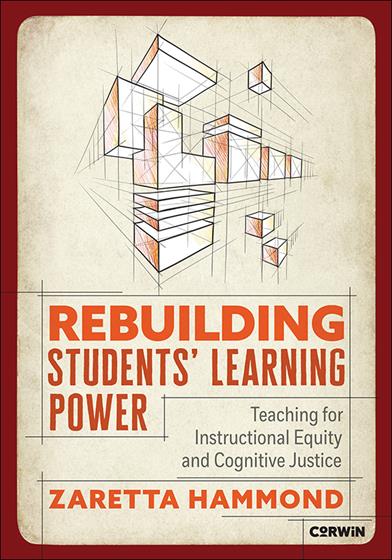
While modern pedagogical approaches such as project-based learning, Universal Design for Learning (UDL), and makerspace learning are lauded for their potential to engage students, they often assume that the underlying cognitive skills for effective learning will develop as a natural byproduct. However, without explicit instruction in the tools, techniques, and specific "moves" that govern information processing, students may struggle to fully capitalize on these rich learning environments. The fundamental truth remains that learning is an internal, learner-driven process. A teacher can design the most compelling lesson, but if a student’s intellectual curiosity isn’t ignited, if the learning environment lacks intellectual safety, or if the student hasn’t developed the metacognitive skills to move new content through the attention, elaboration, and consolidation phases of information processing, then true, deep learning will not occur. This principle forms the bedrock of Hammond’s upcoming work, Rebuilding Students’ Learning Power (Corwin, 2025), which advocates for equipping students with a defined set of learn-to-learn skills to transform them into adept information processors who make learning "sticky."
The Cognitive Imperative: Why Students Need Explicit Learning Skills
The human brain’s information processing cycle is a complex, multi-stage journey that dictates how new data is acquired, understood, stored, and retrieved. This cycle, which involves attention, elaboration, and consolidation, is not automatically optimized in every learner. For instance, the brain’s working memory has a limited capacity, typically holding only 3-5 "chunks" of new content and background knowledge at any given time. This inherent "choke point" means that without active strategies to manage and process these chunks, information can quickly be forgotten. Furthermore, fragile dendrites, the nascent connections formed during initial learning, are naturally pruned by the brain within 24-48 hours if not actively reinforced through application and reflection.
Many students, particularly those from under-resourced backgrounds or those who have historically struggled academically, often lack exposure to the implicit "trade secrets" of effective learning. These are the metacognitive strategies that successful learners intuitively employ, often without conscious thought. By making these strategies explicit, educators can bridge opportunity gaps and move towards more equitable academic outcomes. David Perkins of Harvard’s Project Zero refers to this as understanding the "game of learning," while Ron Berger, founder of EL Education, champions the "craftsmanship of learning." These metaphors highlight that learning is not merely about passively receiving information but an active, skilled endeavor requiring deliberate practice and strategic application.

It is crucial to differentiate learn-to-learn skills from executive function skills. While executive function skills – such as planning, organization, and time management – are undeniably important for academic success (e.g., using binders, developing study schedules), they primarily address the management of learning. Learn-to-learn skills, conversely, delve into the cognitive processing of information, directly enhancing a student’s ability to carry a greater cognitive load and achieve deeper understanding. The distinction is subtle but significant: executive function helps you prepare to learn efficiently, while learn-to-learn skills help you actually learn more effectively.
Deconstructing "Moves" vs. "Skills"
In the context of learning, a "move" is a specific, discrete action or technique executed in a particular moment. Think of it like a chess move, a dance step, or a wrestling hold – concrete, with a clear beginning and end. A "skill," on the other hand, is a broader, developed ability or competency. It encompasses the understanding, judgment, and capacity to execute various moves effectively, knowing when, how, and why to use them. For example, in basketball, a crossover dribble is a move, but ball-handling is a skill that involves knowing when to use a crossover, behind-the-back dribble, or hesitation move, and executing them proficiently under pressure. Skills are built from practicing moves, but they also involve developing adaptability and judgment that transcend any single technique.
Hammond proposes five core "learn-to-learn" moves that, when mastered, constitute a powerful skill set for processing new content meaningfully and deeply. Students are encouraged to use these moves adaptively, rather than in a strict, linear fashion, depending on the cognitive demands of the task.
The Five Learn-to-Learn Moves for Deep Processing:
-
Move 1: Size It Up and Break It Down: This foundational move begins with task analysis, requiring students to engage in a structured cognitive routine to comprehend the task’s demands. It involves asking a series of decision-making questions to identify the appropriate emotional stance and craft a strategic plan. For instance, students might ask: "What is the goal of this task?" "What prior knowledge might be relevant?" "What resources do I have?" "What are the key steps or components?" "What potential challenges might I encounter, and how can I prepare for them?" The "Break It Down" phase focuses on segmenting the task into manageable cognitive activities and assessing the necessary tools and strategies for completion. This move actively ignites the information processing cycle by prompting metacognitive awareness and strategic planning.

-
Move 2: Scan the Hard Drive: This move is critical for the attention phase of information processing. It involves consciously firing neural pathways associated with the student’s existing background knowledge, or "funds of knowledge" (schema), in preparation for new content. Research consistently shows that all new learning is most effectively assimilated when explicitly coupled with existing learning. When confronted with new or confusing information, students are prompted to conduct a "scavenger hunt" through their mental archives, searching for any related experiences, definitions, or concepts, no matter how tangential. This proactive activation of schema facilitates meaning-making and prevents new information from existing in isolation, thus making it more accessible for elaboration.
-
Move 3: Chew and Remix: Centered on the elaboration phase, this move encourages students to actively integrate new content with their activated schema. It’s about "mixing the new with the known" through active processing. The metaphor of "chewing" implies a sustained, effortful engagement with the material, leading to a "remix" or transformation of understanding. This is where productive struggle within a student’s Zone of Proximal Development (ZPD) becomes vital. Students are challenged to make sense of complex, conflicting, or competing information, moving beyond surface-level comprehension to deeper learning, aligning with higher levels of Bloom’s Taxonomy or Webb’s Depth of Knowledge wheel. This move signals the brain to actively construct meaning rather than passively absorb facts.
-
Move 4: Engage in Skillful Practice: While "Chew and Remix" focuses on general meaning-making, "Skillful Practice" targets deepening understanding of core concepts and building automaticity with specific skills and procedures, particularly in subjects like mathematics and reading. This move emphasizes deliberate practice designed to myelinate new neural pathways, fostering proficiency and automaticity. It goes beyond rote repetition by cueing the brain’s meta-strategic awareness. Students learn to identify the weakest parts of their skill execution and intentionally focus on improving those small, specific "moves." This involves continuous refinement, self-correction, and targeted repetition until the skill becomes fluid and efficient.
-
Move 5: Make It Sticky: This crucial move addresses the consolidation phase of information processing, aiming to strengthen newly formed neural pathways and counteract the brain’s natural pruning mechanism. The core task is to apply newly learned content in diverse settings, ideally within 12-48 hours of initial exposure. This means engaging with the material outside the immediate classroom context through activities like teaching it to someone else, explaining it in their own words, creating analogies, or applying it to real-world scenarios. By prompting the brain to revisit and actively utilize the information in varied, applied ways, students transform fragile dendrites into robust, enduring neural connections, ensuring long-term retention.
Cultivating Cognitive Independence: Strategies for Implementation
Merely introducing these learn-to-learn moves is insufficient; the real challenge lies in fostering consistent, self-directed application by students. This requires a paradigm shift in how educators frame the learning process, moving beyond simply giving directions to actively cultivating cognitive independence. Hammond outlines three key strategies for achieving this:
-
Initiate Students into a Cognitive Apprenticeship: Drawing parallels to traditional apprenticeships in trades like carpentry or culinary arts, educators can establish the classroom as a cognitive apprenticeship. This involves an explicit "onboarding" process where the teacher clearly articulates the path to mastery as a learner. This initiation period, typically lasting 4-6 weeks, focuses on helping students develop the six capacities of a proficient information processor: self-awareness, self-monitoring, self-regulation, strategic thinking, metacognitive reflection, and resilience in the face of challenge. During this phase, the teacher acts as a master craftsman, modeling, scaffolding, and gradually releasing responsibility to the apprentices, guiding them from novice to independent learner.
-
Invite Students to Revise Their Learner Identity: A student’s "learner identity"—their perceptions and beliefs about their abilities, motivations, and place in the academic world—profoundly impacts their engagement and persistence. Many struggling students develop negative self-perceptions, often manifesting as statements like, "I’m not a math person." By explicitly inviting students to reflect on and revise their learner identity, educators can foster a growth mindset. This involves helping students understand that intelligence is malleable, that effort leads to mastery, and that mistakes are opportunities for learning. Creating an intellectually safe environment where students feel a sense of belonging and agency is paramount, allowing them to shed limiting beliefs and embrace themselves as capable, evolving learners.
-
Integrate Regular Opportunities for Reflection: Developing learning power, like any skill set, demands consistent reflection and constructive feedback. Students need structured opportunities, several times a week, to engage in instructional conversations about their learning process. This includes reflecting on their successes, their mistakes, moments of confusion, and the specific learn-to-learn moves they employed (or could have employed) to navigate these challenges. This metacognitive dialogue helps students identify their "choke points"—natural constraints in information processing, such as limited working memory capacity—and "pitfalls"—self-sabotaging behaviors like cramming or multitasking. By understanding these individual barriers, students can develop personalized strategies to work with their cognitive constraints and overcome counterproductive habits. These reflective practices transform learning from a passive reception of information into an active, iterative process of self-improvement.
Broader Implications for Educational Equity and the Future of Learning
The explicit teaching and cultivation of learn-to-learn skills represent more than just a collection of individual classroom strategies; they form a crucial "hidden equity curriculum." Every student, regardless of their background, deserves access to these meta-skills that unlock true academic independence. Historically, these skills have often been implicitly acquired by students from privileged backgrounds or those with innate academic advantages, perpetuating existing achievement gaps. By making them explicit, educators can empower all students to navigate the complexities of information processing, develop resilience, and become effective, lifelong learners.
This shift also redefines the role of the teacher. Instead of solely being a dispenser of content, the teacher evolves into a cognitive coach—a facilitator who guides students in understanding how they learn, not just what they learn. This coaching approach aligns with the demands of the 21st century, where information is abundant, and the ability to critically evaluate, synthesize, and adapt to new knowledge is paramount. Investing in these skills equips students not only for academic success but also for navigating an ever-evolving world that demands continuous learning and adaptation. Ultimately, fostering the craftsmanship of learning is an investment in human potential and a step towards a truly equitable educational landscape.