

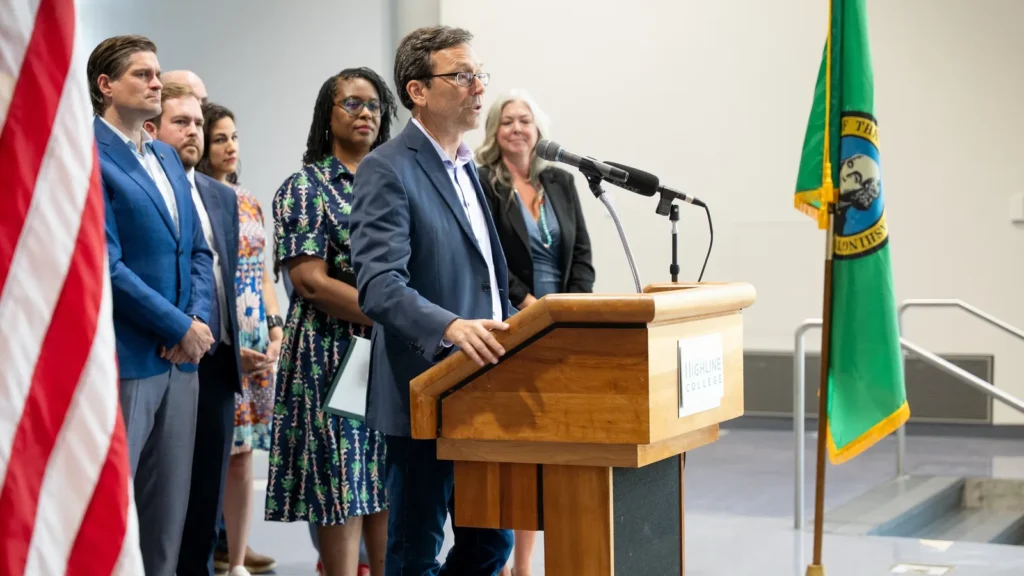
Since assuming office last year, Democratic Governor Bob Ferguson has placed a significant emphasis on elevating Washington state’s completion rate for the federal student aid form, commonly known as the FAFSA (Free Application for Federal Student Aid). This initiative stems from a recognition that a substantial portion of Washington’s high school graduates are not accessing the financial aid crucial for pursuing higher education or vocational training, despite the state offering considerable financial assistance. The push represents a strategic effort to bridge this accessibility gap and unlock educational opportunities for a wider range of students.
FAFSA Completion: A Growing National Concern
The FAFSA serves as the gateway to a multitude of federal and state financial aid programs, including grants, scholarships, and loans, all of which are essential for making post-secondary education affordable. Nationally, the drive to increase FAFSA completion rates has gained momentum as policymakers and educational organizations acknowledge the direct correlation between form completion and college enrollment, particularly among low-income and first-generation students.
As of July 3, 2026, the National College Attainment Network (NCAN) reported a record-breaking 59.6% of the graduating class of 2026 had completed the FAFSA nationwide. This figure marks a significant achievement and underscores a growing national awareness of the form’s importance. However, within this national success story, Washington state’s performance has historically lagged behind. In the most recent reporting period, only 50.7% of Washington’s graduating class had completed the FAFSA, placing it below the national average.
Governor Ferguson’s Strategic Approach
Despite the state’s overall lower completion rate, the recent data indicates a promising upward trend. Washington’s FAFSA completion rate saw an improvement of 11.6% from the previous year, a testament to targeted efforts and increasing attention to the issue. Governor Ferguson, a vocal advocate for educational access, has identified the FAFSA completion rate as a pivotal policy goal since taking office.
"Washington provides more free money for students to attend college or job training than virtually any other state in the nation, yet we haven’t demonstrated the same commitment to helping students access that money," Governor Ferguson stated in a press release issued on Monday, July 13, 2026. This statement highlights a perceived disconnect between the availability of financial aid and the state’s ability to ensure its students are aware of and can readily access these resources.

Evidence from Pilot Programs
The governor’s office has pointed to the success of K-12 districts that have already implemented FAFSA or Washington Application for State Financial Aid (WASFA) — Washington’s state-specific aid application — completion requirements. In three such districts, two-thirds of students successfully completed the form, significantly outperforming both the state and national averages. This data strongly suggests that a mandated approach, or at least a highly encouraged one, can dramatically increase FAFSA completion rates. These districts have become models for the state, demonstrating the tangible benefits of proactive engagement and streamlined processes.
Establishing a State-Level Framework
In response to these observations and to formalize the push for increased completion, Governor Ferguson directed the Washington Student Achievement Council (WSAC) in September 2025 to establish a statewide FAFSA completion goal. This directive is set to take effect for the 2026-2027 academic year. The WSAC has been tasked with a multi-faceted approach to achieving this goal. Key responsibilities include identifying K-12 schools and districts with the lowest FAFSA completion rates, a crucial step in targeting interventions where they are most needed. Furthermore, the agency is mandated to convene an advisory board comprised of educators, financial aid experts, and community leaders to develop comprehensive recommendations aimed at elevating the state’s overall FAFSA completion rate. The WSAC is scheduled to present its initial progress report in October 2026, providing a critical benchmark for future efforts.
A Shifting Landscape for Washington Students
The increased attention to FAFSA completion appears to be yielding measurable results. Between the 2025 and 2026 graduating classes, Washington state saw a notable improvement in its national ranking for FAFSA completion, moving from 47th to 40th place. This rise, while still indicating room for growth, signifies a positive momentum that Governor Ferguson’s office aims to accelerate. The administration views its proposed legislative measures as instrumental in further enhancing this ranking and ensuring more Washington students can leverage available financial aid.

The Broader Context of Universal FAFSA Requirements
Washington’s efforts align with a growing national trend where several states have adopted or are considering universal FAFSA requirements for graduating high school seniors. Currently, approximately a dozen states have some form of a mandatory FAFSA policy. Notably, three of the top five states in FAFSA completion have implemented such requirements, underscoring their effectiveness in driving participation.
However, the implementation of these policies is not without its challenges or historical reversals. Louisiana and New Hampshire, for instance, previously repealed their universal FAFSA requirements for the 2024-25 academic year. The stated reasons for these repeals included concerns about student privacy, highlighting the delicate balance between encouraging aid application and safeguarding sensitive personal information. These instances serve as important case studies for other states, including Washington, as they navigate the complexities of implementing such mandates. The discussion around privacy, data security, and opt-out provisions is therefore a critical component of any legislative proposal aimed at increasing FAFSA completion.
Analyzing the Implications and Future Outlook
The implications of Governor Ferguson’s intensified focus on FAFSA completion are far-reaching. By addressing the financial barriers to higher education, the state aims to foster a more equitable educational landscape, boost its future workforce, and stimulate economic growth. Students who successfully complete the FAFSA are more likely to enroll in college, persist through their studies, and ultimately earn degrees or certifications that lead to higher earning potential and greater economic mobility.
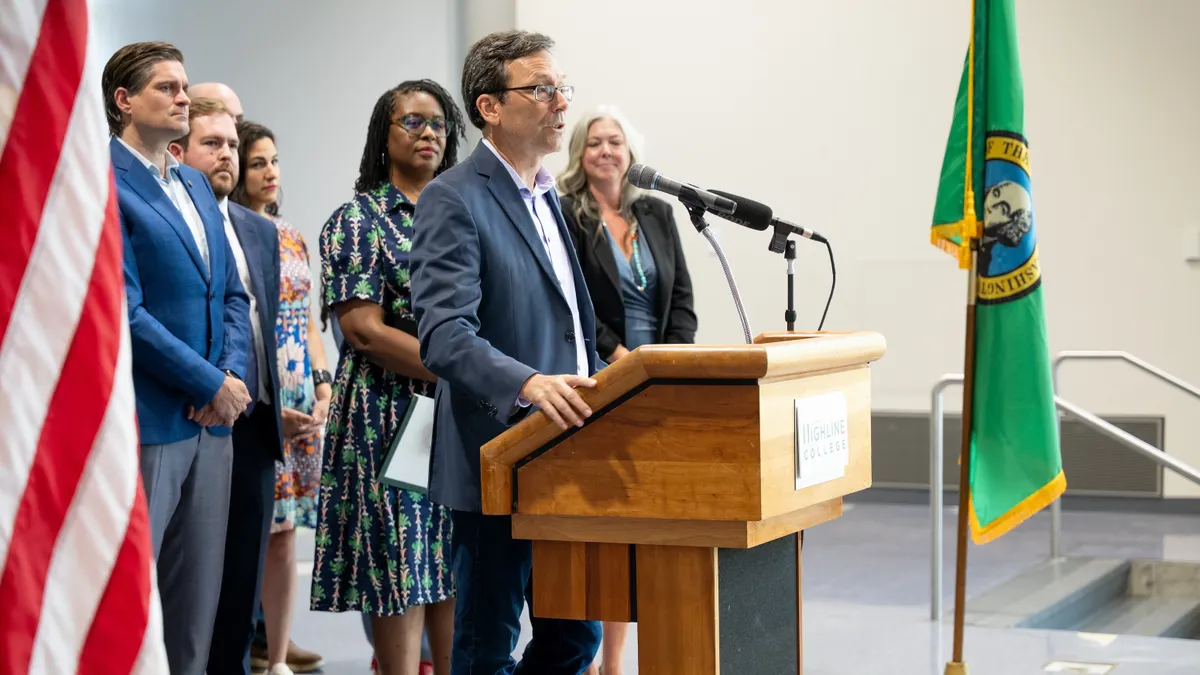
The success of this initiative will depend on several factors, including the effective implementation of the WSAC’s recommendations, the engagement of K-12 schools and communities, and the potential passage of any legislative proposals that may emerge from the governor’s office. The advisory board’s recommendations will be crucial in identifying best practices and addressing potential obstacles, such as lack of awareness, complex application processes, or language barriers.
Furthermore, the legislative proposal to require FAFSA or WASFA completion, or an opt-out, will need to navigate the state’s Democratic-controlled Legislature. The debate surrounding such a mandate is likely to involve discussions on parental consent, student autonomy, and the administrative burden on school districts. The experience of other states that have repealed similar policies will undoubtedly inform these discussions, emphasizing the need for a robust and sensitive approach.
Ultimately, Governor Ferguson’s commitment to increasing FAFSA completion rates in Washington represents a significant investment in the state’s future. By prioritizing access to financial aid, Washington seeks to empower its students, strengthen its educational pipeline, and ensure that more individuals can achieve their post-secondary aspirations, contributing to a more prosperous and equitable society for all. The coming months, with the WSAC’s initial report and potential legislative action, will be critical in shaping the trajectory of this important initiative.