



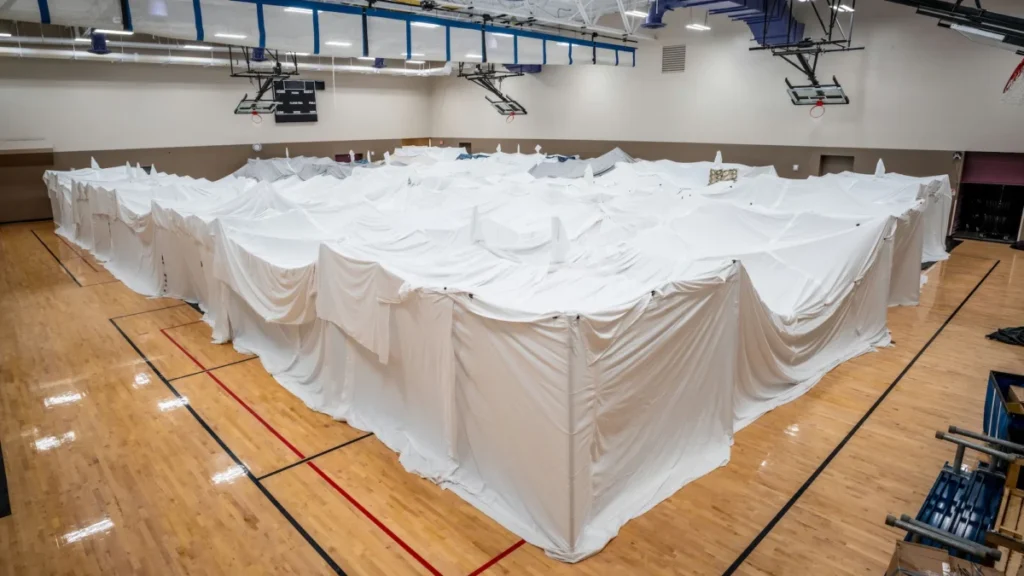
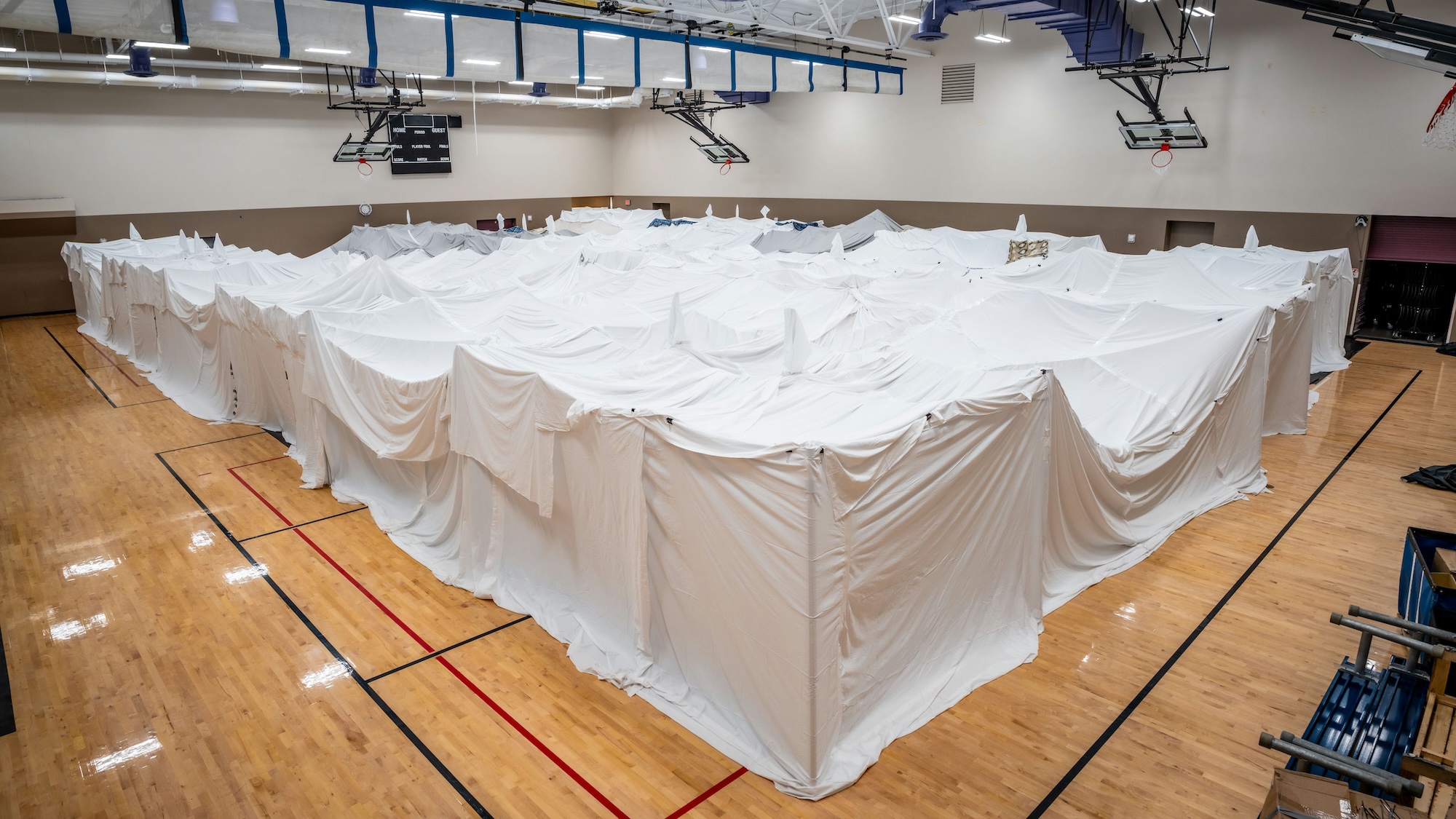
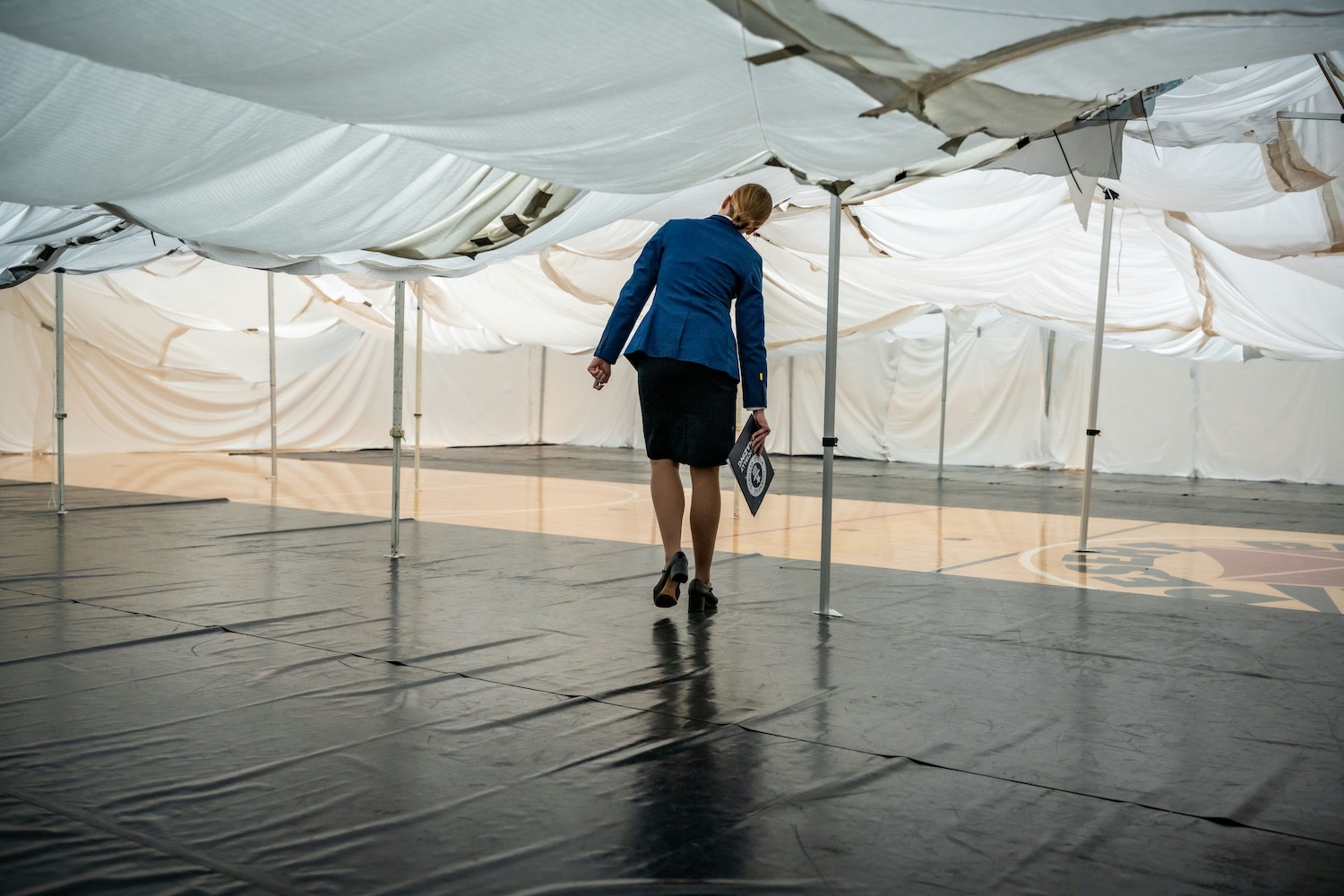
In a remarkable display of community collaboration and structural engineering, residents and students in Las Vegas, Nevada, have officially secured the Guinness World Record for the largest blanket fort ever constructed. Spanning an expansive 14,103 square feet, the massive textile structure was completed inside the basketball gymnasium of the Desert Breeze Community Center. This achievement surpasses the previous record of 12,291 square feet, which was established in South Carolina earlier in 2024. The project, which transformed a standard athletic facility into a labyrinth of billowy fabric, represents a sophisticated marriage of childhood nostalgia and modern engineering principles.
The successful record attempt was the culmination of months of planning and a high-intensity build phase that required the coordination of a "small army" of volunteers. Spearheaded by engineering students from Las Vegas’ West Career & Technical Academy (WCTA), the project served as both a community-building exercise and a practical application of structural design. By utilizing hundreds of individual sheets, professional-grade tent poles, and an assortment of anchoring devices, the team managed to create a continuous, self-supporting environment that met the stringent criteria set forth by Guinness World Records.
The Engineering Behind the Enclave
While the concept of a blanket fort is often associated with domestic play and haphazard construction, the scale of the Las Vegas project necessitated a rigorous technical approach. Students from West Career & Technical Academy were tasked with designing a framework that could support the weight of thousands of square feet of fabric without collapsing under its own mass or the tension required to keep the "ceiling" elevated.
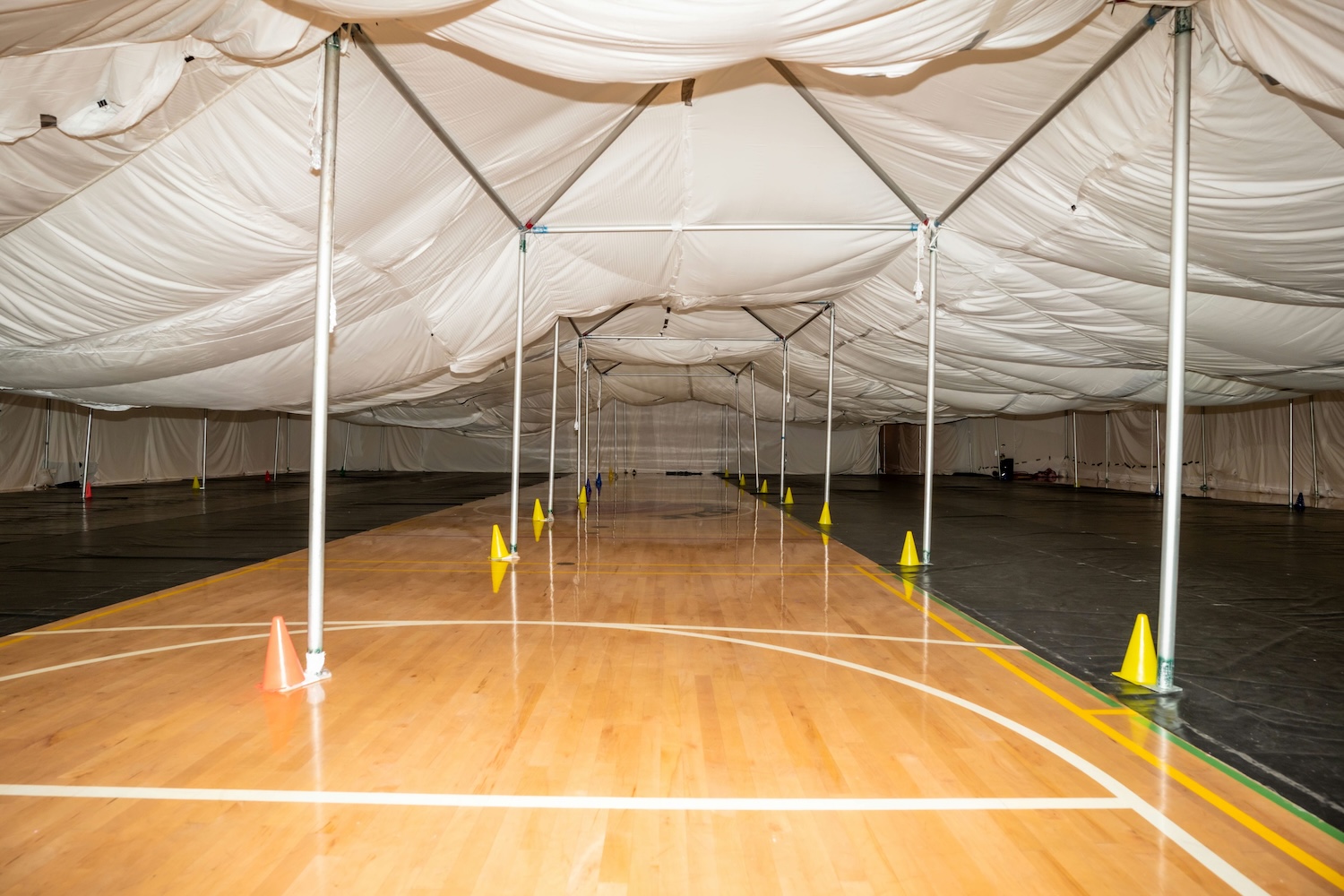
The design utilized a modular approach, employing a network of tent poles and PVC piping to create a skeleton for the fort. Engineering students had to calculate the load-bearing capacity of these supports, ensuring they were distributed evenly across the gymnasium floor. To maintain the structural integrity of the fabric roof, volunteers used thousands of binder clips to fuse individual sheets together, creating a singular, cohesive canopy.
One of the primary challenges identified during the design phase was the "sag factor." Large expanses of fabric naturally dip in the center, which could potentially violate the Guinness requirement regarding minimum interior height. To counteract this, the engineering team implemented a series of tensioning ropes and counterweights, effectively pulling the fabric taut across the support poles. This allowed the structure to maintain a consistent height, ensuring that visitors could navigate the interior without the fabric obstructing their movement.
Strict Adjudication and the Guinness Standards
The transition from a community project to a world record holder required the presence of an official Guinness World Records adjudicator, who performed a meticulous inspection of the site. The certification process for the "Largest Blanket Fort" category is notably rigorous, involving more than just a simple measurement of the total area. To qualify, the structure had to adhere to several non-negotiable architectural standards.
First, the adjudicator enforced the "no-gap" rule, which dictates that no space between the joined sheets can exceed one inch. This requirement ensures that the structure is a singular, enclosed fort rather than a series of disconnected tents. Volunteers spent hours double-checking every seam, using industrial binder clips and safety pins to seal any potential openings.
Second, the "ground contact" rule required that the perimeter of the fort remain in constant contact with the floor. This necessitated the use of weights and anchors to prevent the edges of the blankets from fluttering or lifting, which would have disqualified the attempt.
Finally, the "livability" standard required that the interior space be tall enough for an adult to sit comfortably throughout the entirety of the measured area. This rule is designed to prevent participants from simply laying sheets flat on the floor to inflate their square footage. The Las Vegas team successfully met this requirement by maintaining a ceiling height that accommodated both sitting and, in many sections, standing, throughout the 14,103-square-foot expanse.
A Timeline of the Record-Breaking Build
The realization of the fort followed a strict chronological progression, beginning with the logistical staging of materials and ending with the official certification and subsequent disassembly.
The process began several months prior to the build, with a city-wide donation drive. Local residents and businesses contributed hundreds of clean bedsheets, blankets, and linens. On the day of the event, the timeline unfolded as follows:
- 06:00 AM: Logistics teams arrived at the Desert Breeze Community Center to begin the layout of the structural grid.
- 08:00 AM: Engineering students from WCTA began the assembly of the primary support poles and piping infrastructure.
- 10:00 AM: The "Small Army" of community volunteers began the "sheeting" process, draped the first layer of blankets over the supports.
- 01:00 PM: Structural teams conducted a "gap audit," moving through the interior to clip and secure seams that had separated during the initial draping.
- 03:00 PM: The Guinness World Records adjudicator arrived to begin the formal measurement process using laser-distancing tools and physical inspections.
- 05:00 PM: Official certification was announced, confirming that the Las Vegas fort had exceeded the South Carolina record by over 1,800 square feet.
Following the announcement, the fort remained standing for a brief period to allow participants to experience the record-breaking space. However, due to the operational needs of the Desert Breeze Community Center, the structure was disassembled within 24 hours.
Official Responses and Community Impact
The success of the project drew praise from local government officials and educational leaders. Representatives from Clark County, Nevada, emphasized the importance of such events in fostering community spirit and providing students with "real-world" challenges.
"This project is a testament to what can be achieved when our youth and our community partners work toward a common, albeit unconventional, goal," a spokesperson for Clark County stated in an official release. "It isn’t just about the record; it’s about the application of STEM education and the power of volunteerism."
For the students of West Career & Technical Academy, the project served as a high-stakes laboratory. Instructors noted that the students had to pivot several times during the build as environmental factors—such as the gymnasium’s HVAC system creating air currents—affected the stability of the fabric. These real-time adjustments provided invaluable lessons in structural dynamics and problem-solving.
Beyond the educational and record-breaking aspects, the project also had a charitable component. Following the disassembly of the fort, the thousands of sheets and blankets used in the construction were laundered and prepared for donation to local shelters and non-profit organizations, ensuring that the materials would continue to serve the community long after the record was set.
Broader Implications and the Evolution of the Record
The competition for the world’s largest blanket fort has intensified in recent years, reflecting a broader trend of "mass-participation" world records. These events are increasingly used by municipalities and organizations to generate positive publicity and engage younger demographics.
The jump from the 2024 South Carolina record of 12,291 square feet to the Las Vegas record of 14,103 square feet represents a nearly 15% increase in size. This rapid escalation suggests that future attempts will likely require even larger venues, such as convention centers or indoor stadiums, to accommodate the necessary footprint.
From a sociological perspective, the blanket fort record highlights a collective desire for lighthearted, low-stakes achievement in an era often dominated by complex global challenges. The fort serves as a physical manifestation of "the comfort of home" scaled to an industrial level, offering a unique sensory experience for those involved.
As the record returns to the West Coast, the Las Vegas community has set a high bar for future challengers. The combination of professional-grade engineering and massive community support has transformed a simple childhood pastime into a significant feat of temporary architecture. While the Desert Breeze Community Center gymnasium has returned to its primary function as a basketball court, the legacy of the 14,103-square-foot "sheet city" remains a point of pride for the residents of Clark County.