


The widespread apprehension that artificial intelligence would unleash a "jobs apocalypse," rendering vast swathes of the workforce redundant, has begun to recede as a more nuanced understanding of AI’s integration into the economy emerges. Initially, prominent figures in the AI industry frequently drew parallels between their burgeoning technology and historical industrial automation, suggesting that just as mechanical innovations supplanted jobs requiring physical labor, AI would similarly eliminate roles dependent on cognitive functions. This perspective fueled anxieties across professional sectors, particularly among white-collar workers, who were told their intellectual contributions were next in line for digital replacement.
The Initial Automation Discourse and Dire Predictions
For several years, the narrative around AI’s impact on employment was heavily influenced by stark predictions from the very innovators leading its development. Dario Amodei, CEO of Anthropic, a leading AI safety and research company, repeatedly suggested that AI-powered tools could automate a significant portion—up to half—of entry-level white-collar jobs. His remarks, often highlighted in tech and business media, painted a picture of rapid and extensive job displacement, particularly in administrative, analytical, and creative fields that form the backbone of modern corporate operations.
Similarly, Mustafa Suleyman, CEO of Microsoft AI and co-founder of DeepMind, articulated an even more ambitious timeline for AI’s capabilities. In February of the previous year, Suleyman famously predicted that AI would achieve "human-level performance on most if not all professional tasks" within a remarkably short window of twelve to eighteen months. Such pronouncements, coming from individuals at the vanguard of AI development, naturally amplified public and professional concern. The implication was clear: the era of human intellectual dominance in the workplace was drawing to a close, and a future of widespread unemployment, particularly for knowledge workers, loomed large. These predictions were often accompanied by discussions of universal basic income (UBI) as a potential societal safety net, further solidifying the perception of inevitable job losses.
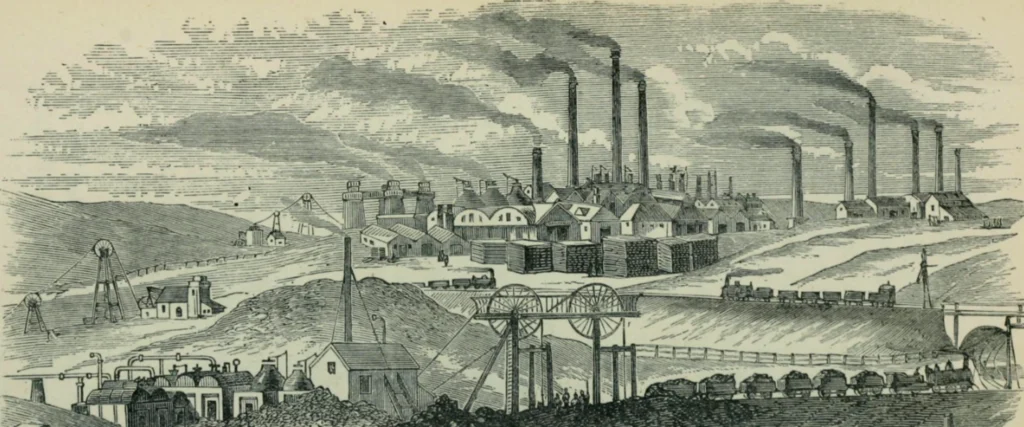
The historical context for these fears is rooted in past technological revolutions. From the Luddite movement’s resistance to textile machinery in the 19th century to the concerns about factory automation in the 20th, each wave of significant technological advancement has sparked fears of mass unemployment. AI, with its capacity to emulate human cognitive processes, felt like a uniquely potent threat, capable of disrupting not just manual labor but the very core of intellectual work that had long been considered immune.
A Shifting Narrative: From Apocalypse to Augmentation
However, a notable recalibration of this automation discourse has begun to take shape among some of these same industry leaders. This shift marks a significant pivot from the earlier, more alarmist forecasts, suggesting a growing understanding of AI’s practical implementation and limitations within real-world business environments.
A prominent example of this evolving perspective came from Sam Altman, CEO of OpenAI, the company behind ChatGPT. During a conference appearance in Australia two weeks prior, Altman expressed his "delight" at being proven wrong about the prospect of AI creating a "jobs apocalypse." This statement, from one of the most influential voices in AI, signaled a departure from the earlier rhetoric of widespread displacement. Altman’s revised view suggests that the immediate impact of AI is not the wholesale elimination of jobs but rather a transformation of existing roles.
Dario Amodei, who once spoke of automating half of entry-level white-collar jobs, has also adjusted his position. He is now emphasizing that AI will not entirely replace jobs but will instead replace large parts of existing jobs, fundamentally altering the nature of tasks employees perform within their roles. This distinction is crucial: it moves the discussion from job destruction to job redefinition, suggesting a future where humans and AI collaborate, rather than one where AI unilaterally displaces human labor.
This evolving understanding aligns with what some economists refer to as the "Jevons Paradox" in a labor context, where increased efficiency through technology doesn’t necessarily lead to reduced demand for human input but can instead create new demands or expand the scope of activities. While the original Jevons Paradox refers to resource consumption, its spirit here suggests that rather than reducing the need for human work, AI might enable humans to do more, or different, kinds of work, potentially even creating new categories of jobs.
Cal Newport’s "Freestyle Work" and the "Vibe Code" Analogy
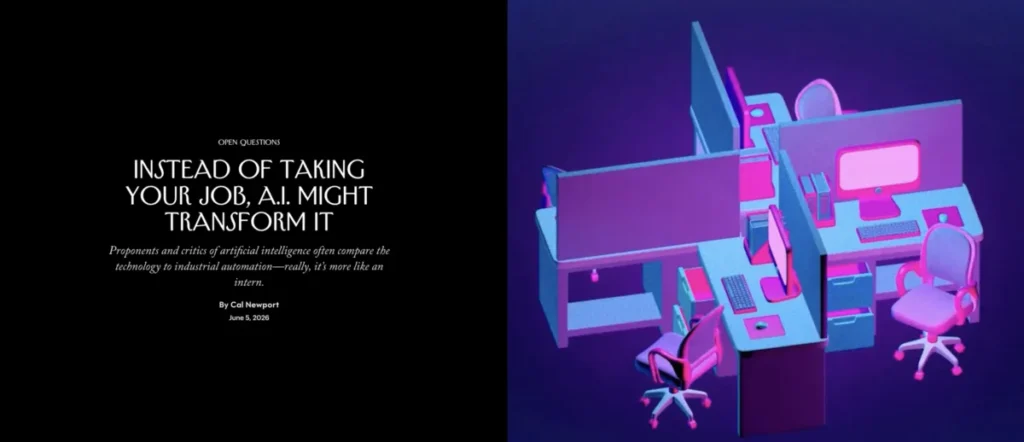
This revised outlook finds strong support in the observations and analysis of scholars like Cal Newport, a computer science professor and author, who recently explored this phenomenon in his New Yorker article titled "Instead of Taking Your Job, A.I. Might Transform It." Newport’s investigation into how AI is actually being deployed in practical business settings offers a compelling counter-narrative to the initial fears of mass automation.
Newport introduces his article with a personal anecdote, recalling a summer job in high school where he programmed custom web-based applications for internal use at a management consulting firm. These weren’t sophisticated, polished software products; rather, they were "quick-and-dirty tools" he could "hack together quickly" to solve annoying, specific operational problems, such as managing timesheets or tracking IT inventory. This experience, he argues, offers a valuable lens through which to understand current AI adoption.
In his interviews with small business owners heavily utilizing AI, Newport discovered a striking resemblance to his high school programming experience. These businesses weren’t implementing complex, fully automated systems designed to replace entire departments. Instead, they were using AI to "vibe code" quick-and-dirty tools to streamline various parts of their operations. The term "vibe code" elegantly captures the essence of this approach: it’s about intuitively understanding a problem and rapidly prototyping a solution using AI, without necessarily adhering to traditional software engineering rigor. It’s about practical, immediate problem-solving rather than large-scale systemic overhaul.
As Newport articulates, these examples "were not the digital equivalent of a power loom, making large numbers of human jobs superfluous. Turns out, A.I. was assisting these small businesses in roughly the same way that my teen-age self had helped that consulting company—by hacking together whatever was useful." This analogy is critical. A power loom replaced skilled weavers entirely, leading to significant job losses in that specific craft. In contrast, Newport’s high school efforts, and similarly, current AI applications in many small businesses, served to augment human effort, making existing tasks easier or more efficient, rather than eliminating the need for human input altogether. It made consultants’ efforts "a little deeper" by freeing them from mundane tasks, allowing them to focus on more complex, strategic work.
This phenomenon has given rise to the concept of "freestyle work"—a strategy where employees leverage AI tools to rapidly create bespoke solutions for their specific needs, often without formal IT support or extensive coding knowledge. It democratizes the ability to automate small, repetitive tasks, allowing individuals and teams to tailor their workflows with unprecedented agility.
Supporting Data and Broader Economic Implications
The shift in perspective from AI leaders and observations like Newport’s are increasingly supported by broader economic data and analyses. While initial reports from institutions like the World Economic Forum (WEF) and McKinsey & Company projected significant job displacement due to AI, more recent studies have begun to emphasize job creation and augmentation.
For instance, the WEF’s 2023 Future of Jobs Report highlighted that while 23% of jobs are expected to change in the next five years, with some roles declining, others are emerging. The report noted that 44% of workers’ core skills are expected to change by 2027, underscoring the transformation rather than outright elimination of roles. It also pointed to the creation of new roles, particularly in areas related to AI and data, such as AI and Machine Learning Specialists, Data Analysts and Scientists, and Digital Transformation Specialists.
A report by Goldman Sachs in 2023 estimated that generative AI could expose 300 million full-time jobs to automation across major economies. However, it also concluded that most jobs would be augmented rather than eliminated, with workers spending less time on automated tasks and more time on other activities. The report projected a significant boost to global GDP, potentially increasing annual global GDP by 7% over a decade, primarily due to increased labor productivity. This suggests that the economic pie could grow, creating new opportunities even as existing roles evolve.
The impact of AI on productivity is a critical factor. If AI can significantly boost human productivity, it could lead to economic growth, which historically creates new industries and jobs, even as older ones decline. This is the essence of technological progress: it changes what we do, not necessarily how much we do. The "weirder" aspect that Newport mentions might refer to the unexpected ways AI tools are integrated, often informally, to enhance individual agency and problem-solving, rather than through top-down, enterprise-wide automation initiatives.
Official Responses and Expert Perspectives
Beyond the tech CEOs, labor economists, policy makers, and educators are increasingly aligning with the augmentation narrative. Organizations like the International Labour Organization (ILO) have stressed the importance of policy frameworks that focus on reskilling and upskilling the workforce to adapt to AI-driven changes. They advocate for investments in education and training to ensure that workers can leverage AI tools effectively, rather than be displaced by them.
Academic research from institutions like MIT and Stanford has also contributed to this evolving understanding. Studies have shown that while AI can perform specific tasks, the complexity of a full job role often requires a combination of cognitive, emotional, and social skills that AI currently lacks. Human judgment, creativity, critical thinking, and interpersonal communication remain invaluable, and AI often serves as a powerful assistant in these domains. For example, AI can draft reports or analyze data, but a human is still needed to interpret the nuances, make strategic decisions, and communicate findings effectively.
The focus has shifted from "humans vs. machines" to "humans with machines." This collaborative paradigm suggests that the most successful organizations and individuals will be those who master the art of integrating AI into their workflows, leveraging its strengths to compensate for human weaknesses in speed or data processing, and vice versa.
Broader Impact and Future Implications
The implications of this nuanced understanding are profound for individuals, businesses, and policymakers.
For individuals, the message is clear: lifelong learning and adaptability are paramount. Rather than fearing replacement, workers should focus on developing "AI literacy"—understanding how to effectively use AI tools, prompt them for optimal results, and integrate them into their professional routines. Skills that complement AI, such as creativity, emotional intelligence, complex problem-solving, and critical thinking, will become even more valuable. The ability to "vibe code" and create quick-and-dirty solutions using AI will likely become a sought-after informal skill across various professions.
For businesses, the emphasis shifts from cost-cutting through job elimination to productivity enhancement and innovation through augmentation. Companies that empower their employees with AI tools and foster a culture of "freestyle work" are likely to gain a competitive edge. This involves investing in AI infrastructure, providing training, and encouraging experimentation. The goal is not to reduce headcount but to enable existing employees to achieve more, delve deeper into their work, and generate greater value.
For policymakers, the focus should be on creating supportive environments for this transformation. This includes:
- Education Reform: Adapting curricula to include AI literacy, data science fundamentals, and critical thinking skills from early education through vocational training and higher education.
- Labor Market Policies: Implementing programs for reskilling and upskilling displaced workers or those in transitioning roles, potentially through partnerships between government, industry, and educational institutions.
- Regulatory Frameworks: Developing ethical guidelines and regulations for AI deployment that balance innovation with worker protection and societal well-being.
- Investment in R&D: Supporting research not just in AI capabilities but also in its societal and economic impacts, to better anticipate future trends.
In conclusion, the initial fears of an AI-driven jobs apocalypse, while understandable given the technology’s revolutionary potential, appear to be giving way to a more pragmatic and less dire reality. As Cal Newport and a growing chorus of AI leaders and experts suggest, AI is undeniably impacting the knowledge sector, but it is doing so in ways that are "weirder and less dire than we were predicting." Instead of wholesale replacement, we are witnessing a profound transformation of work, where AI acts as a powerful assistant, augmenting human capabilities, enabling "freestyle work," and ultimately making our collective efforts "a little deeper." The future of work with AI is not one of human obsolescence, but rather one of enhanced human potential and redefined collaboration between intelligence, both artificial and natural.