



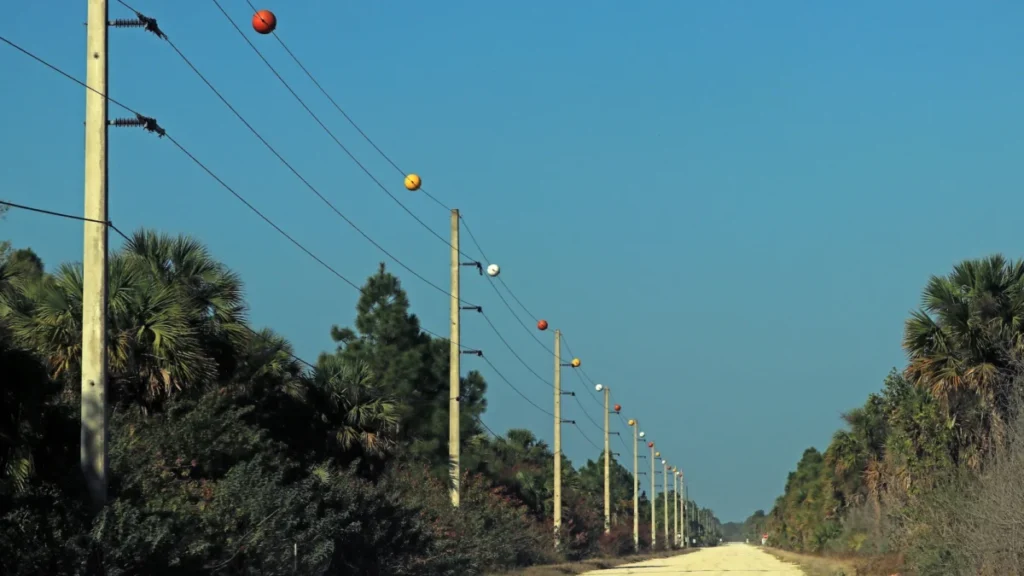
Aviation marker balls, the prominent spherical objects frequently observed suspended from high-voltage transmission lines, serve as a critical safety component within the global transportation and energy infrastructure. While they are often perceived by the public as decorative or minor components of the electrical grid, their presence is mandated by rigorous international and domestic aviation regulations. These devices, officially categorized as aerial marker spheres, are designed to mitigate the risk of wire strikes—a leading cause of accidents for low-flying aircraft, particularly helicopters and small fixed-wing planes. By increasing the visibility of nearly invisible spans of wire, these markers protect pilots, passengers, and the integrity of the electrical systems that power modern society.
The Engineering and Physical Specifications of Aerial Markers
Despite their appearance from the ground as small, lightweight beads, aviation marker balls are substantial pieces of industrial equipment. Standard spheres typically measure between 20 and 36 inches (50 to 91 centimeters) in diameter, though larger versions are utilized in areas with extreme terrain or high-altitude flight paths. The Federal Aviation Administration (FAA) in the United States generally requires markers on power lines to be at least 36 inches in diameter when positioned on spans across canyons, rivers, or valleys.
The materials used in their construction are chosen for durability and non-conductivity. Most markers are fabricated from high-grade fiberglass or UV-resistant plastics such as polyethylene. These materials must withstand decades of exposure to extreme environmental conditions, including intense solar radiation, sub-zero temperatures, high winds, and heavy ice accumulation. Internally, the balls are hollow to minimize weight, typically weighing between 10 and 25 pounds. They are designed as two hemispherical shells that are clamped together over the wire using corrosion-resistant hardware, such as aluminum or stainless steel bolts.
Crucially, because these markers are installed on high-voltage lines, they are engineered as insulators. They do not conduct electricity and are designed to prevent the buildup of corona discharge—a luminous glow caused by the ionization of air surrounding a conductor. The attachment mechanisms are designed to grip the wire securely without causing mechanical abrasion or fatigue, which could lead to line failure over time.
The Science of Visibility: Why "Aviation Orange"?
The selection of color for these markers is governed by the science of human perception and atmospheric optics. While markers can occasionally be found in white, yellow, or even checkered patterns, the most common color is "International Orange" (specifically Aviation Orange). This specific hue provides the highest degree of contrast against a wide variety of backgrounds, including the blue of the sky, the green of forest canopies, and the grey or brown of mountainous terrain.
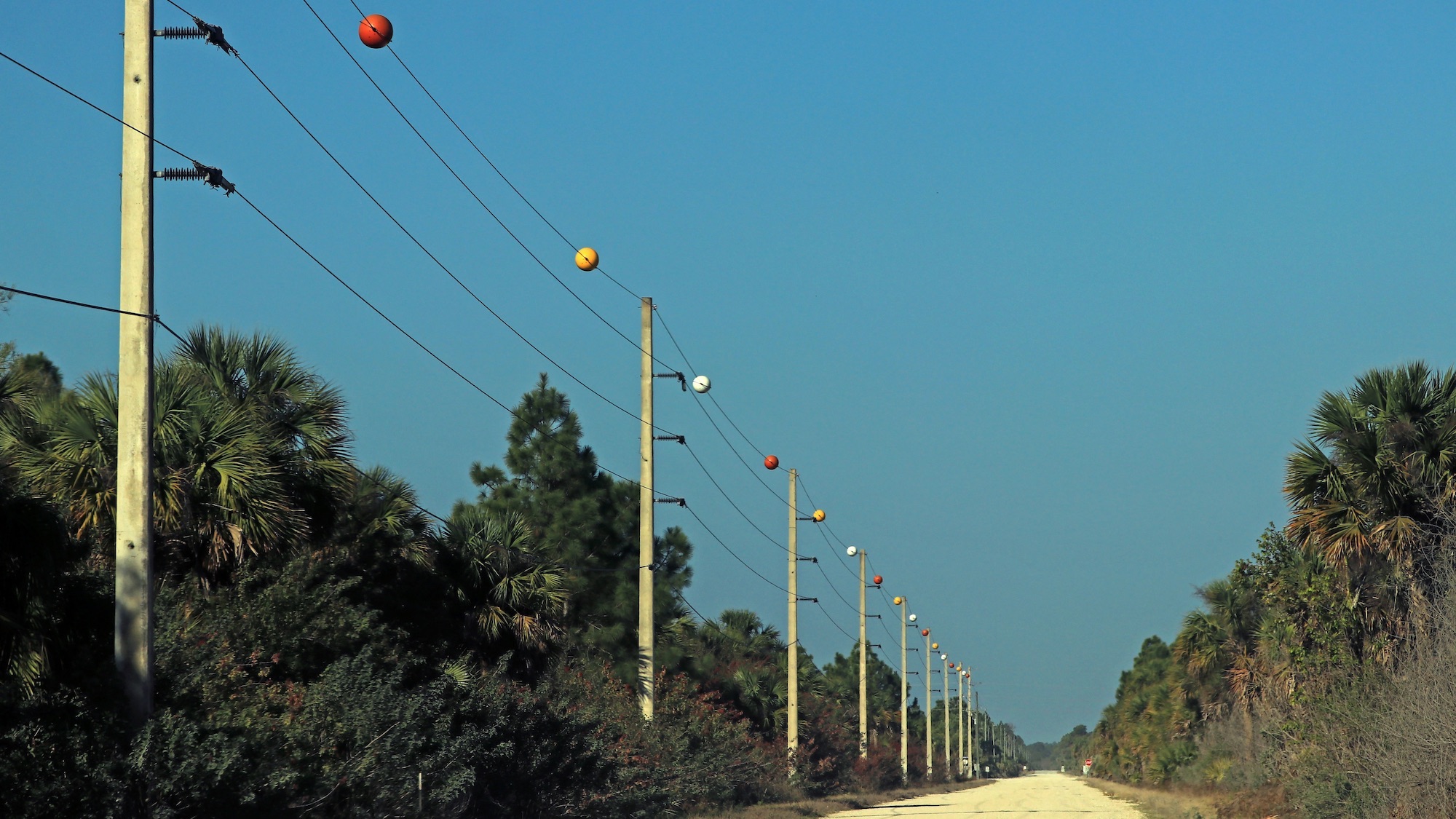
Visibility is a multi-dimensional challenge for pilots. At high speeds, a thin transmission wire—often weathered to a dull grey or oxidized green—becomes virtually invisible, blending into the horizon or the ground. This phenomenon is exacerbated during "flat light" conditions or inclement weather, such as fog or heavy rain. The spherical shape of the marker ensures that it presents a consistent visual profile regardless of the angle from which an aircraft approaches. In areas where the background is exceptionally bright or snow-covered, alternating patterns of orange, white, and yellow markers are often employed to ensure that at least one color remains distinct to the pilot’s eye.
Regulatory Framework and Safety Standards
The installation of aviation marker balls is not left to the discretion of utility companies but is instead dictated by stringent regulatory frameworks. In the United States, the FAA’s Advisory Circular 70/7460-1M provides exhaustive guidelines on the marking and lighting of obstructions. Internationally, the International Civil Aviation Organization (ICAO) sets similar standards under Annex 14, which governs aerodrome design and operations.
According to these regulations, markers must be installed on any overhead wire that crosses a navigable waterway, a valley, or is located in the vicinity of an airport or known flight path. The spacing of these markers is also standardized; they are typically placed at intervals of approximately 200 feet (60 meters) along the highest wire of a span. On longer spans, such as those crossing major rivers or canyons, the spacing may be reduced to increase the visual "density" of the obstacle.
The necessity of these regulations is underscored by historical data from the National Transportation Safety Board (NTSB). Wire strikes remain a persistent hazard, particularly for agricultural pilots (crop dusters), emergency medical services (EMS) helicopters, and search-and-rescue teams. By standardizing the appearance and placement of markers, authorities provide pilots with a predictable visual cue that allows for timely evasive maneuvers.
Integration with Electrical Grid Infrastructure
To understand why these markers are placed where they are, one must look at the architecture of high-voltage transmission lines. Most large-scale power grids utilize "shield wires" (also known as static wires or overhead ground wires). These are the thin wires located at the very top of a transmission tower, above the thicker, current-carrying conductors.
The primary purpose of the shield wire is to protect the system from lightning strikes. Because the shield wire is the highest point of the structure, it intercepts lightning and directs the electrical surge safely into the ground through the tower’s frame, preventing damage to the sensitive energized lines below. Because the shield wire is the highest wire in the span, it is the most likely to be struck by an aircraft. Consequently, aviation marker balls are almost exclusively installed on these shield wires. This placement ensures maximum visibility at the highest point of the obstacle while minimizing interference with the heavy electrical load carried by the lower conductors.
Installation Logistics: The High-Stakes Role of the Lineman
The installation and maintenance of aviation marker balls represent some of the most specialized tasks in the utility industry. Because transmission lines are often located in remote or inaccessible terrain, and because shutting down a high-voltage line can disrupt power to thousands of customers, these markers are frequently installed while the lines are "hot" (energized).
Two primary methods are utilized for installation:
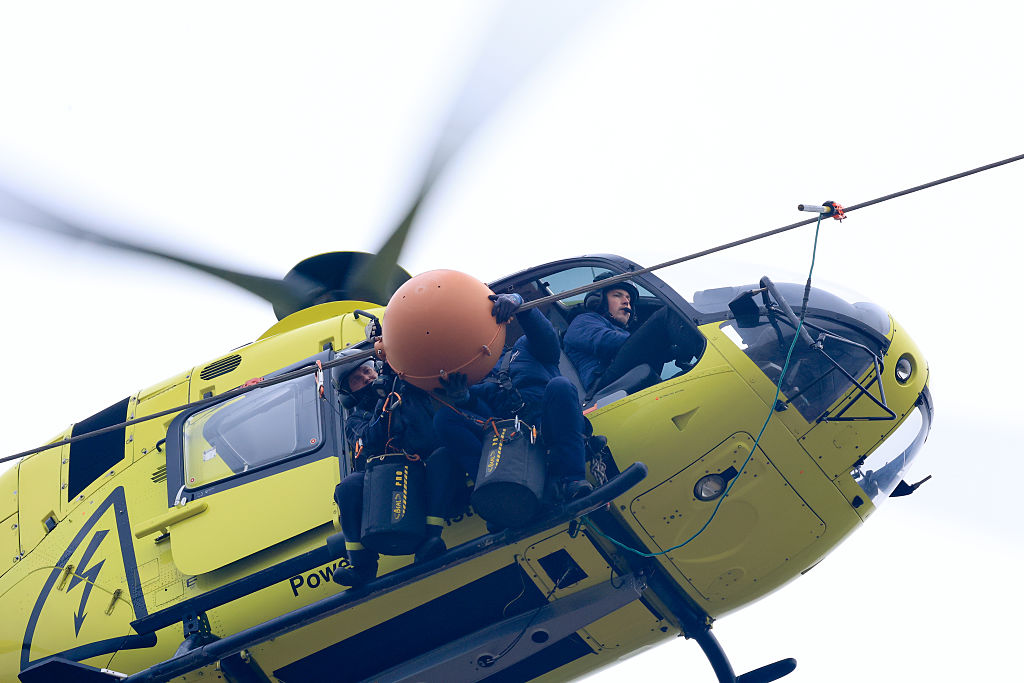
- Helicopter-Based Installation: A specialized helicopter maneuvers close to the wire, allowing a technician sitting on an external platform (a "skid") to reach out and bolt the marker halves onto the line. This requires extraordinary precision from the pilot and the technician, as they must maintain a stable position mere feet from high-voltage equipment.
- Line-Roving Robots and Carts: In some instances, technicians use "line carts" that roll along the wire, or increasingly, automated robotic systems that can travel the span to inspect the line and attach markers.
The lifespan of a marker ball is generally 10 to 15 years. Over time, environmental exposure can cause the fiberglass to crack or the color to fade, reducing its effectiveness. Utility companies conduct periodic aerial inspections, often using drones equipped with high-resolution cameras, to monitor the condition of these markers and schedule replacements before they become a safety liability.
Economic Impact and Infrastructure Protection
The presence of aviation marker balls provides significant economic benefits beyond the obvious preservation of human life. A single wire strike can result in catastrophic damage to the electrical grid. When an aircraft impacts a transmission line, it can cause "phase-to-phase" short circuits, leading to massive power surges that can destroy transformers and circuit breakers at substations.
The cost of repairing a major transmission span and its associated substation equipment can run into millions of dollars. Furthermore, the resulting power outages can have a cascading effect on regional economies, shutting down factories, hospitals, and communications networks. By investing in marker balls—which cost a few hundred to a few thousand dollars each—utility companies are implementing a highly cost-effective form of insurance against infrastructure failure.
Environmental and Social Considerations
As the global energy transition accelerates, the expansion of high-voltage transmission lines to connect renewable energy sources (such as wind and solar farms) to urban centers is increasing. This expansion often brings new power lines into contact with sensitive migratory bird paths and pristine wilderness areas.
While aviation marker balls are primarily for human flight safety, there is ongoing research into "bird flight diverters." These are similar devices, often smaller or equipped with reflective or glow-in-the-dark components, designed to prevent avian collisions. In many modern infrastructure projects, utility companies are required to install both aviation markers and bird diverters to satisfy both transportation safety and environmental protection mandates.
Conclusion: A Silent Guardian of the Skies
The orange spheres seen on power lines are far more than simple markers; they are the result of decades of engineering refinement, optical research, and international safety collaboration. As urban centers expand and the demand for low-altitude aerial services—such as medical transport and drone-based delivery—continues to grow, the importance of these markers will only increase.
By providing a clear, unmistakable warning to pilots, these devices serve as a silent guardian of the skies. They represent a successful intersection of electrical engineering and aeronautical safety, ensuring that the vital networks carrying power across the landscape do not become a hidden danger to those navigating above it. Through rigorous adherence to FAA and ICAO standards, the continued use of aviation marker balls remains a cornerstone of modern infrastructure safety management.