


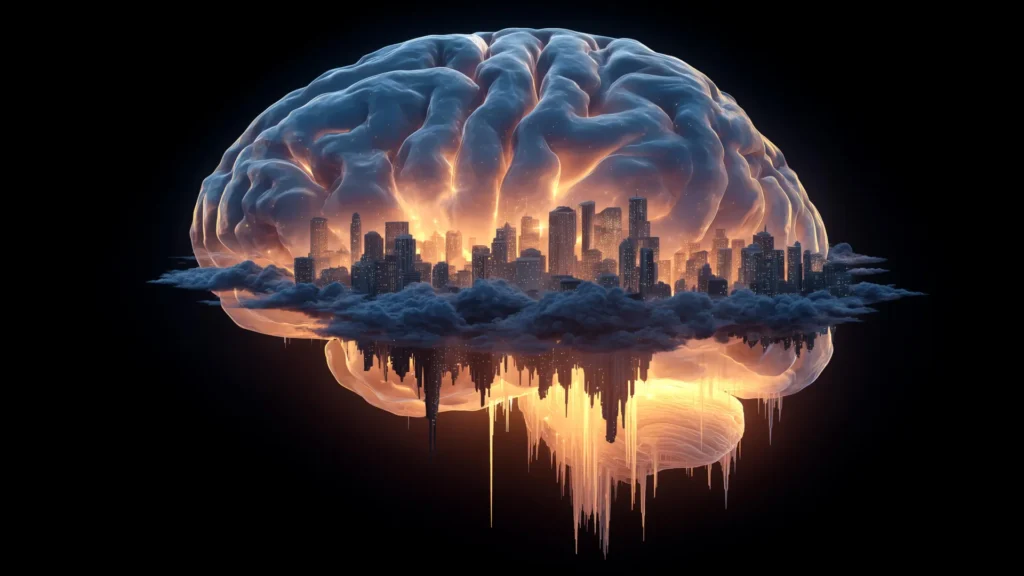
The enigmatic world of dreams, a realm where reality bends and the subconscious takes flight, has long fascinated humanity and perplexed scientists. While some nocturnal journeys are vividly remembered, imbued with lifelike detail and emotional resonance, others dissolve into a confusing haze upon waking, if recalled at all. New groundbreaking research from the IMT School for Advanced Studies Lucca offers compelling insights, suggesting that the intricate tapestry of our dreams is woven from a complex interplay of individual personality traits, cognitive styles, and the profound impact of shared life experiences. This study, leveraging cutting-edge artificial intelligence, posits that what we perceive and feel during sleep is far from random, instead reflecting a dynamic reconstruction of our waking lives filtered through our unique mental landscapes.
Unveiling the Architecture of Dreams: A New Computational Frontier
Published in the prestigious journal Communications Psychology, the study represents a significant leap forward in understanding the elusive nature of dreams. Traditional dream research has historically grappled with inherent challenges, primarily the subjective and often ephemeral nature of dream recall. Early psychoanalytic theories, such as those put forth by Sigmund Freud and Carl Jung, emphasized symbolic interpretation, while later neurobiological models, like the Activation-Synthesis Hypothesis by Hobson and McCarley, focused on the brain’s physiological processes during REM sleep. However, systematically analyzing vast quantities of qualitative dream reports remained a formidable hurdle until the advent of advanced computational methods.
The IMT School team circumvented these traditional limitations by employing sophisticated natural language processing (NLP) tools. This innovative approach allowed researchers to move beyond anecdotal evidence and subjective interpretations, enabling a systematic and quantitative analysis of dream narratives. By applying NLP algorithms to a massive dataset, the study could discern hidden patterns, semantic structures, and thematic consistencies that would be nearly impossible to detect through manual analysis. This computational lens revealed that dreams are not merely chaotic or random neuronal firings but possess a discernible structure, reflecting a complex interaction between an individual’s intrinsic characteristics and extrinsic influences.
The Dataset and Participants: A Rich Tapestry of Experiences
The foundation of this comprehensive study was an extensive dataset comprising over 3,700 detailed reports describing both dreams and corresponding waking experiences. These reports were meticulously collected from 287 participants, a diverse cohort ranging in age from 18 to 70, ensuring a broad representation of adult experiences. Over a period of two weeks, each participant diligently maintained daily records, chronicling their daily activities, thoughts, and emotions, alongside their recalled dreams. This concurrent collection of waking and sleeping data was crucial for establishing potential correlations and understanding how daily life translates into nocturnal narratives.
Simultaneously, researchers gathered an array of detailed psychometric and physiological data. This included exhaustive information on participants’ sleep habits, such as sleep onset latency, duration, and perceived quality. Crucially, the study also captured data on cognitive skills, including measures of attention, memory, and executive function. Furthermore, comprehensive personality inventories and psychological profiles were collected, allowing the researchers to characterize individual differences in traits like neuroticism, openness to experience, and conscientiousness, as well as any underlying psychological predispositions. This multi-faceted data collection strategy created an unprecedentedly rich resource for exploring the intricate connections between an individual’s waking mind and their dreaming self.
Bridging the Waking and Sleeping Worlds: Dreams as Active Reconstruction
A pivotal finding of the research was the nuanced relationship between waking life and dream content. Rather than merely replaying daily events like a passive video recorder, the brain actively reshapes and reimagines these experiences during sleep. Familiar settings that populate our waking lives—such as workplaces, hospitals, or schools—are rarely reproduced verbatim in dreams. Instead, they undergo a transformative process, emerging as vivid, often immersive scenes that frequently combine disparate elements and shift perspectives in unexpected, sometimes surreal, ways.
This process suggests that dreams are not simply reflections but active reconstructions of reality. The dreaming brain appears to blend memories of past events with imagined scenarios, anticipated future occurrences, and abstract concepts, forging novel and often fantastical narratives. This active reconstruction mechanism implies a sophisticated cognitive process at play, where the brain is not just consolidating memories but also engaging in creative synthesis, potentially exploring different possibilities and outcomes in a simulated environment. This perspective moves beyond the idea of dreams as mere byproducts of sleep and positions them as a critical, dynamic mental function.
The Human Element: Personality, Cognition, and Dream Style
The study illuminated how individual differences profoundly influence the style and content of dreams. It confirmed that "not everyone dreams in the same way," underscoring the personalized nature of our nocturnal experiences.
Cognitive Propensities and Dream Fragmentation: Participants who exhibited a greater tendency to "mind-wander" during their waking hours—a cognitive trait characterized by spontaneous shifts in attention away from the current task or environment—reported dreams that were more fragmented and constantly changing. This correlation suggests a continuity between waking cognitive styles and dream architecture. Individuals whose waking minds frequently drift between thoughts and ideas may experience a similar lack of coherence or sequential progression in their dreams, where scenes shift abruptly and narratives lack a clear linear flow. This offers a fascinating link between our conscious attentional habits and the structure of our subconscious narratives.
The Significance of Dream Engagement: Conversely, individuals who placed greater importance on their dreams and expressed a belief in their meaning tended to experience richer, more immersive, and often more coherent dream environments. This finding points to a potential feedback loop: an individual’s interest in and engagement with their dream life might enhance their recall, their ability to perceive detail, or even actively shape the dream’s narrative structure. This psychological predisposition suggests that our conscious attitude towards dreams can influence their subjective quality and memorability, making them feel more significant and impactful.
Echoes of Reality: Societal Events and the Collective Unconscious of Sleep
Beyond individual traits, the research also rigorously examined the impact of large-scale societal events on dreaming patterns. This was particularly evident through the analysis of data collected during the unprecedented global upheaval of the COVID-19 pandemic. A crucial comparative analysis was made possible by data gathered during the initial COVID-19 lockdown by researchers at Sapienza University of Rome, which was later cross-referenced with the findings from the IMT team.
The Pandemic’s Shadow on Dreamscapes: The results were striking. Dreams reported during the peak of the lockdown period were significantly more emotionally intense, frequently incorporating themes of restriction, limitation, and anxiety. This mirrored the collective psychological stress and the sudden imposition of social and physical boundaries experienced by populations worldwide. Common dream motifs included being trapped, unable to move freely, or encountering obstacles, reflecting the pervasive sense of confinement and uncertainty. This phase of the study provided compelling evidence that dreams act as a barometer for collective psychological states, absorbing and processing the anxieties and challenges of the waking world on a societal scale.
Dreams as Barometers of Psychological Adaptation: Interestingly, the study observed a gradual fading of these emotionally intense and restrictive dream patterns as time progressed and individuals adapted to the new normal of pandemic life. This chronological shift suggests that dream content evolves in tandem with psychological adjustment to major life changes. As coping mechanisms developed and the initial shock wore off, the subconscious processing of these external stressors appears to have modulated, leading to a normalization of dream themes. This finding underscores the dynamic nature of dreaming, portraying it not as a static phenomenon but as an adaptive mental process that reflects our ongoing psychological and emotional journey through life’s challenges.
A Paradigm Shift in Dream Analysis: The Power of AI
The IMT School study emphatically highlights the transformative potential of artificial intelligence in advancing the long-standing scientific inquiry into dreams. The application of NLP models to analyze dream reports marks a significant methodological breakthrough.
Overcoming Subjectivity: AI’s Role in Objective Dream Interpretation: Historically, the analysis of dream content has been fraught with subjectivity. Researchers often relied on manual coding schemes, which, while valuable, were labor-intensive, prone to inter-rater variability, and limited in their capacity to process vast amounts of data. The current study demonstrated that NLP models could capture the meaning and underlying structure of dream reports with an accuracy level comparable to, and in some aspects exceeding, that of human evaluators. This capability offers a path towards more objective, consistent, and replicable analyses of dream content. By standardizing the interpretation process, AI can help overcome the inherent biases and inconsistencies that have historically hindered large-scale dream research.
From Qualitative to Quantitative: The Promise of Scalability: The ability of AI to process and interpret massive datasets rapidly and systematically opens new frontiers for dream research. This computational approach makes it feasible to study complex topics such as consciousness, memory consolidation, and their intricate relationship with mental health on an unprecedented scale. Previously, researchers might have been limited to analyzing hundreds of dream reports; now, with AI, the potential exists to analyze tens of thousands, or even millions, of reports. This scalability is critical for identifying subtle patterns, cross-cultural differences, and long-term trends that would otherwise remain hidden. It also paves the way for longitudinal studies that track dream changes over extended periods, offering deeper insights into psychological development and adaptation.
Beyond the Veil: Implications for Consciousness, Memory, and Mental Health
The findings of the IMT School study carry profound implications, extending far beyond the immediate understanding of dream vividness and recall.
Decoding the Brain’s Nocturnal Narratives: At a fundamental level, this research contributes significantly to our understanding of consciousness itself. By demonstrating how the brain actively reconstructs reality during sleep, creating immersive and meaningful narratives, the study sheds light on the brain’s continuous process of generating subjective experience, even in altered states of awareness. It reinforces the idea that the brain is not merely "off-line" during sleep but engaged in complex cognitive work, potentially consolidating memories, processing emotions, and simulating future scenarios. This provides a rich avenue for neuroscientists to explore the neural correlates of narrative construction and self-awareness in the absence of external stimuli.
Potential Clinical Applications and Personalized Interventions: The ability to systematically analyze dream content, particularly its correlation with personality traits and external stressors, holds immense promise for clinical psychology and mental health. Dreams, often considered a "royal road to the unconscious," could become a more accessible and quantifiable diagnostic tool. For instance, consistent patterns of emotionally intense or fragmented dreams, as identified by AI, might serve as early indicators of underlying stress, anxiety disorders, or even post-traumatic stress disorder (PTSD). This could lead to personalized therapeutic interventions, where dream analysis, guided by AI insights, could inform clinicians about a patient’s internal state, facilitating more targeted and effective treatment strategies. The dynamic evolution of dream content, as seen during the pandemic, suggests that tracking dream changes could also be a powerful tool for monitoring psychological recovery and adaptation.
The Future Landscape of Dream Science: This research marks the beginning of a new era for dream science. Future investigations could leverage these AI methodologies to explore cross-cultural differences in dreaming, investigate the dreams of specific clinical populations (e.g., individuals with depression, schizophrenia, or neurodegenerative diseases), or even delve into the potential for dream incubation or manipulation for therapeutic purposes. The interdisciplinary nature of this study, blending psychology, neuroscience, and computational science, sets a precedent for how complex human phenomena can be tackled with innovative, data-driven approaches.
Acknowledgements and Collaborative Spirit
This pioneering research received crucial financial backing from a grant provided by the BIAL Foundation (#091/2020), an organization renowned for supporting innovative scientific studies in neuropsychophysiology. Further support came from the prestigious TweakDreams ERC Starting Grant (#948891), underscoring the European Research Council’s commitment to high-risk, high-gain research that pushes the boundaries of scientific knowledge. The project was a testament to collaborative academic effort, carried out primarily at the IMT School for Advanced Studies Lucca, in close partnership with esteemed researchers from Sapienza University of Rome, who contributed vital data on pandemic-era dreams, and the University of Camerino, further enriching the study’s scientific breadth and rigor. This collaborative spirit exemplifies the modern approach to tackling complex scientific questions, drawing on diverse expertise and resources to unlock new understanding.
In conclusion, the IMT School’s research stands as a monumental step in demystifying the intricate world of dreams. By elegantly combining large-scale data collection with the analytical prowess of artificial intelligence, it has uncovered that dreams are not merely fleeting nocturnal phantoms but a dynamic, structured process profoundly shaped by who we are as individuals and the significant life events we experience. This understanding transforms our perception of dreams from mere subconscious curiosities into a vital window into our cognitive, emotional, and psychological well-being, paving the way for unprecedented advancements in neuroscience, psychology, and personalized mental healthcare.