

For higher education institutions grappling with the complexities of digital transformation, Visual Studio Live! San Diego 2026 emerges as a pivotal event, scheduled from September 14–18 in San Diego. The conference is meticulously designed to provide higher education IT teams with actionable insights and development practices that are profoundly shaping the modern campus technology landscape. With a strategic focus on Microsoft technologies, the agenda spans critical areas including .NET, Azure, GitHub, advanced AI development, robust data platforms, scalable cloud architecture, and stringent application security. The overarching theme emphasizes the integration of Artificial Intelligence not merely as an ancillary tool but as a foundational component within the campus IT stack.
The Accelerating AI Imperative in Higher Education
The landscape of higher education IT is undergoing a radical shift, driven primarily by the rapid advancement and accessibility of Artificial Intelligence. Universities and colleges are no longer merely exploring AI; they are actively seeking to integrate it into core operations, from enhancing student learning experiences and streamlining administrative tasks to accelerating research and bolstering campus security. This push, however, is not without its significant challenges. Issues such as data privacy, ethical AI deployment, the immense computational infrastructure demands, and the critical need to upskill existing IT staff represent substantial hurdles. Despite these obstacles, the opportunities presented by AI—including personalized learning paths, intelligent advising systems, automated grading, and sophisticated data analytics for institutional planning—are too compelling for institutions to ignore.
Industry reports consistently underscore this trend. A recent survey conducted by EDUCAUSE indicated that over 70% of higher education institutions are currently piloting or planning to implement AI solutions within the next two years, signaling a broad institutional commitment to AI integration. Furthermore, market analysis projects a compound annual growth rate exceeding 25% for AI spending in the education sector through 2030, highlighting the financial and strategic investment being made in this transformative technology. VSLive! San Diego 2026 directly addresses this burgeoning demand by focusing on practical, real-world development workflows that transition AI from experimental pilots to fully operational, production-ready systems.
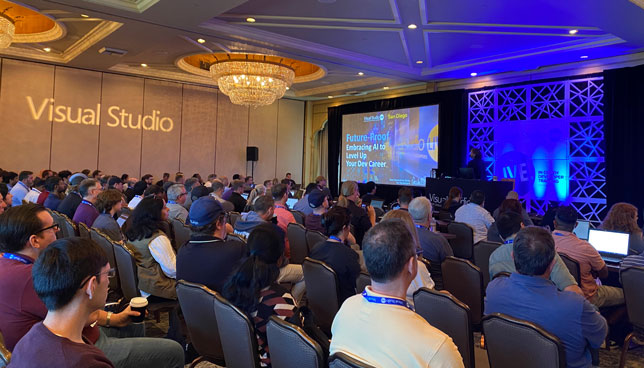
VSLive!’s Legacy and Evolution: A Nexus for Developers
Visual Studio Live! (VSLive!) has a long-standing tradition as a premier developer conference, renowned for its deep dives into Microsoft technologies and its commitment to providing practical, hands-on training. Since its inception, VSLive! has consistently adapted its content to reflect the latest technological shifts, evolving from a focus on desktop applications to embracing web, mobile, cloud computing, and now, the profound impact of AI. This continuous evolution has solidified its reputation as a vital resource for developers seeking to stay ahead of the curve.
The conference serves as a critical nexus where developers, architects, and IT leaders can connect directly with experts, including Microsoft developers and seasoned consultants. This direct engagement is often cited by attendees as one of the most valuable aspects of the event. Josh Yarbrough, a software developer at Vanderbilt University, exemplifies this benefit. Having attended a previous VSLive! conference to deepen his Blazor skills, Yarbrough highlighted the immediate, tangible impact of the instruction. "The instructors and classes were very good and focused on topics that I needed to be able to get up to speed quickly," Yarbrough recounted. His team, already proficient in C# for API and back-end development, sought to leverage Blazor for its UI capabilities. Following the conference, his team successfully developed and deployed several Blazor applications, demonstrating the direct applicability of the knowledge gained.
Yarbrough further emphasized the unique access to expertise beyond formal sessions. He and a colleague encountered specific technical challenges, and through informal interactions, presenters were able to directly connect them with Microsoft developers intimately involved in the creation of those particular tools. This level of access, bypassing traditional support channels, provides invaluable insights and accelerates problem-solving, a critical advantage for university IT teams operating with limited resources and tight deadlines. Such anecdotes underscore VSLive!’s enduring value proposition: not just theoretical knowledge, but practical, expert-led guidance that translates directly into institutional progress.
Operationalizing AI: Bridging the Gap from Concept to Reality

A significant portion of this year’s VSLive! agenda is dedicated to a familiar yet increasingly urgent challenge for higher education institutions: scaling AI initiatives from isolated pilots to widespread production environments. The sessions offer a comprehensive look at how AI is transforming core development workflows, moving beyond an optional add-on to an integral part of how applications are conceived, built, and supported.
The AI track covers a wide spectrum of topics designed to equip developers with the tools and understanding necessary for this transition. Attendees can explore the practical applications of GitHub Copilot, an AI-powered coding assistant that augments developer productivity by suggesting code snippets and completing functions, thereby accelerating development cycles. Sessions on Copilot Studio delve into customizing these AI assistants to specific organizational needs, enabling institutions to tailor AI tools to their unique data and operational contexts.
Beyond coding assistance, the conference explores advanced topics such as agent frameworks, which are crucial for building autonomous, intelligent systems capable of performing complex tasks within campus infrastructure. Multimodal applications, which allow AI to process and understand various forms of data—text, images, audio, and video—are also a key focus, illustrating how AI can interact with the rich and diverse data streams prevalent in an academic environment.
Crucially, VSLive! acknowledges that deploying AI is only the first step. Several sessions meticulously address the operational details required to maintain, monitor, and, most importantly, trust AI-enabled systems post-launch. This includes strategies for managing agent-based applications, establishing secure enterprise data connections for AI tools, implementing robust deployment practices, and integrating essential safety controls. As higher education institutions move beyond rudimentary chatbot pilots, critical questions arise that campus IT teams must address: Which existing campus systems can an AI tool securely access? How are the results generated by AI evaluated for accuracy and bias? And perhaps most profoundly, who bears responsibility when an automated workflow, powered by AI, produces an erroneous or suboptimal recommendation? These sessions provide frameworks and best practices for navigating these complex ethical and operational dilemmas, ensuring responsible and effective AI deployment.
Fortifying the Digital Campus: Cybersecurity as a Core Competency

In an era of escalating cyber threats, cybersecurity is no longer a peripheral concern but a foundational pillar of any robust IT strategy, especially within higher education, which often manages vast amounts of sensitive student, faculty, and research data. VSLive! San Diego 2026 integrates cybersecurity throughout its agenda, reflecting the reality that security must be an inherent part of every development practice.
A prime example is the session titled "Building Practical Zero Trust APIs with .NET 10 and Azure." This session delves into the principles of Zero Trust architecture, a security model that dictates "never trust, always verify," regardless of whether the user or device is inside or outside the network perimeter. For higher education, where a diverse user base accesses resources from various locations and devices, Zero Trust is not merely beneficial but essential. The session covers practical implementations, including managed identity, which ensures that only authorized services and applications can access specific resources, and stringent ingress and egress controls that monitor and restrict data flow.
Furthermore, leveraging Azure-native security capabilities is a key topic, demonstrating how institutions can capitalize on the robust security features built into Microsoft’s cloud platform. Efficient developer workflows are also emphasized, making it clear that security should not impede productivity but rather be seamlessly integrated into the development lifecycle. As applications become increasingly interconnected and data traverses multiple services, secure API design transcends being an optional consideration; it becomes a critical imperative. The pairing of Zero Trust principles with developer productivity in the VSLive! curriculum underscores a fundamental shift: security can no longer be "bolted on" as an afterthought. Instead, it must be meticulously "built in" to everyday engineering practices, ensuring that security is a proactive, rather than reactive, component of development. This proactive approach is particularly vital for higher education, where data breaches can have severe reputational, financial, and legal repercussions.
The Human Side of Technological Advancement
While VSLive! excels in its technical depth, the conference thoughtfully makes room for the human dimension of technological change, acknowledging that successful technology projects are not solely about tools and code. Sessions dedicated to code review culture, effective project management, career development, and the evolving impact of AI on software roles recognize that human collaboration, clear decision-making processes, and teams capable of managing complexity without undue friction are equally critical.

A healthy code review culture, for instance, fosters knowledge sharing, improves code quality, and serves as a vital peer-mentorship mechanism—all essential for retaining talent and building robust systems in academic environments. Project management sessions provide strategies for navigating the unique challenges faced by higher education IT teams, who are often stretched thin across multiple roles and responsibilities. These sessions equip leaders and team members with agile methodologies and best practices to ensure initiatives thrive in the long term, despite resource constraints.
The discussion around career development and AI’s impact on software roles is particularly timely. As AI augments and automates certain aspects of development, the roles of software professionals are evolving. VSLive! explores how developers can adapt, upskill, and reskill to leverage AI tools effectively, focusing on higher-order problem-solving, ethical considerations, and strategic system design—areas where human creativity and judgment remain indispensable. This holistic approach ensures that attendees not only gain technical prowess but also develop the soft skills and strategic mindset necessary to lead and implement successful technological initiatives within their institutions.
For higher education IT teams meticulously planning their next generation of application, data, and AI projects, VSLive! San Diego 2026 offers an unparalleled opportunity to gain insights into the future direction of the campus application stack. It provides a strategic roadmap for navigating the complexities of AI integration, fortifying cybersecurity defenses, and fostering a culture of innovation and collaboration. To explore the comprehensive agenda and register for this essential event, interested parties can visit the VSLive! site.
About the Author
Rhea Kelly is editor in chief for Campus Technology, THE Journal, and Spaces4Learning. She can be reached at [email protected].