



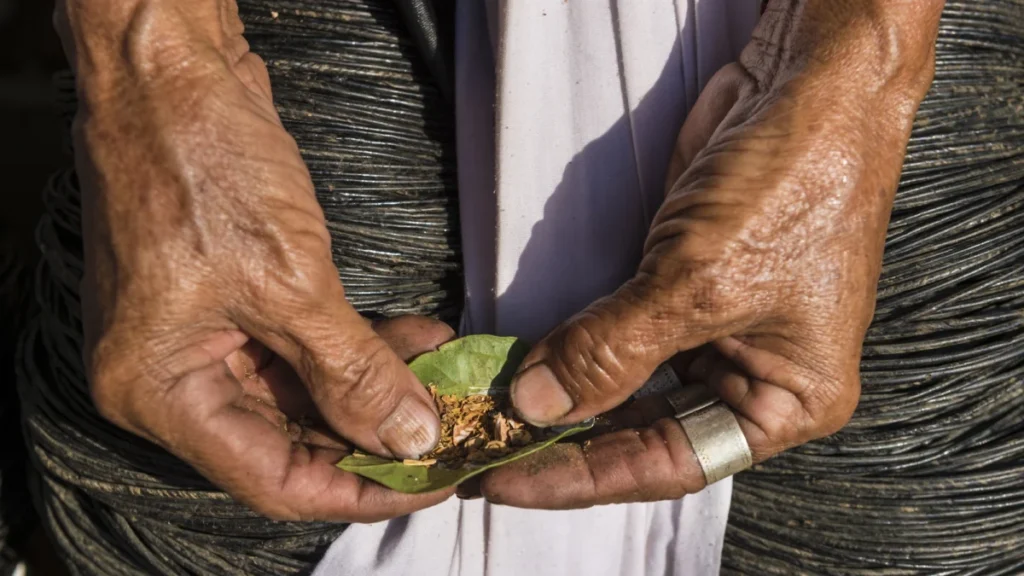
Archaeological excavations on the Indonesian island of Sulawesi have fundamentally reshaped our understanding of humanity’s enduring relationship with mind-altering substances. According to a landmark study published in the journal Science Advances, early human foragers in Southeast Asia were consuming the psychoactive betel nut as far back as 25,000 years ago. This remarkable discovery pushes back the timeline of documented human psychoactive substance use by more than 23,000 years, challenging long-held archaeological assumptions that intentional drug consumption began alongside the rise of agriculture and fermented alcoholic beverages during the Neolithic era.
The findings, led by an international team of researchers including archaeologist Adam Brumm from Australia’s Griffith University, demonstrate that the roots of modern intoxicant use extend deep into the Ice Age. By analyzing rare skeletal remains and dental pathology from ancient hunter-gatherers, scientists have uncovered a self-reinforcing cycle of traditional drug use, physiological relief, and severe dental degradation that predates settled civilization by millennia.
Main Facts and Archaeological Discoveries
The primary evidence for this ancient habit was recovered from deeply stratified cave sites on Sulawesi, a crucial stepping-stone island in the migration path of early humans moving through maritime Southeast Asia. Researchers examined the exceptionally rare skeletal remains of two prehistoric foragers. The older of the two individuals lived between 25,000 and 16,000 years ago, during the height of the Pleistocene epoch, while the second individual dates from 7,600 to 6,300 years ago, bridging the gap toward the mid-Holocene.
Upon inspecting the dental remains of these ancient foragers, scientists noticed an unusual and striking pattern of wear: deep, curved grooves etched directly into the enamel and dentin of the teeth. Unlike standard wear patterns caused by chewing gritty food or using teeth as tools for working hides and fibers, these specific lesions pointed toward a novel repetitive action. The research team hypothesized that the grooves were the direct physical consequence of chronically sucking on hard, abrasive whole betel nuts (Areca catechu).
To confirm this hypothesis, the researchers employed advanced biochemical techniques, testing dental calculus and micro-tissues preserved on the teeth. Chemical analysis successfully isolated traces of arecoline—the primary neuroactive alkaloid found in betel nuts—embedded within the ancient dental tissue. This discovery provided definitive chemical proof that these Ice Age foragers were regularly ingesting the psychoactive compounds of the areca palm long before the advent of pottery, metallurgy, or organized farming.
Reassessing the Pharmacology of Betel Nut Consumption
In contemporary societies across South and Southeast Asia, the betel nut ranks as one of the most widely consumed intoxicants in the world, trailing only caffeine, alcohol, and nicotine in terms of global user population. Modern consumption typically involves breaking down the fibrous seed, combining it with slaked lime (calcium hydroxide) to create an alkaline environment, and chewing it alongside tobacco or aromatic spices wrapped in a betel leaf. Pharmacologists have long maintained that the active alkaloid, arecoline, remains biologically inactive or imperceptible to the human nervous system unless chemically activated by this alkaline processing method.
This biochemical consensus created a significant puzzle for Brumm’s research team. If ancient foragers were merely sucking on raw, unprocessed betel nuts, would they have experienced any psychoactive or physiological effects at all?
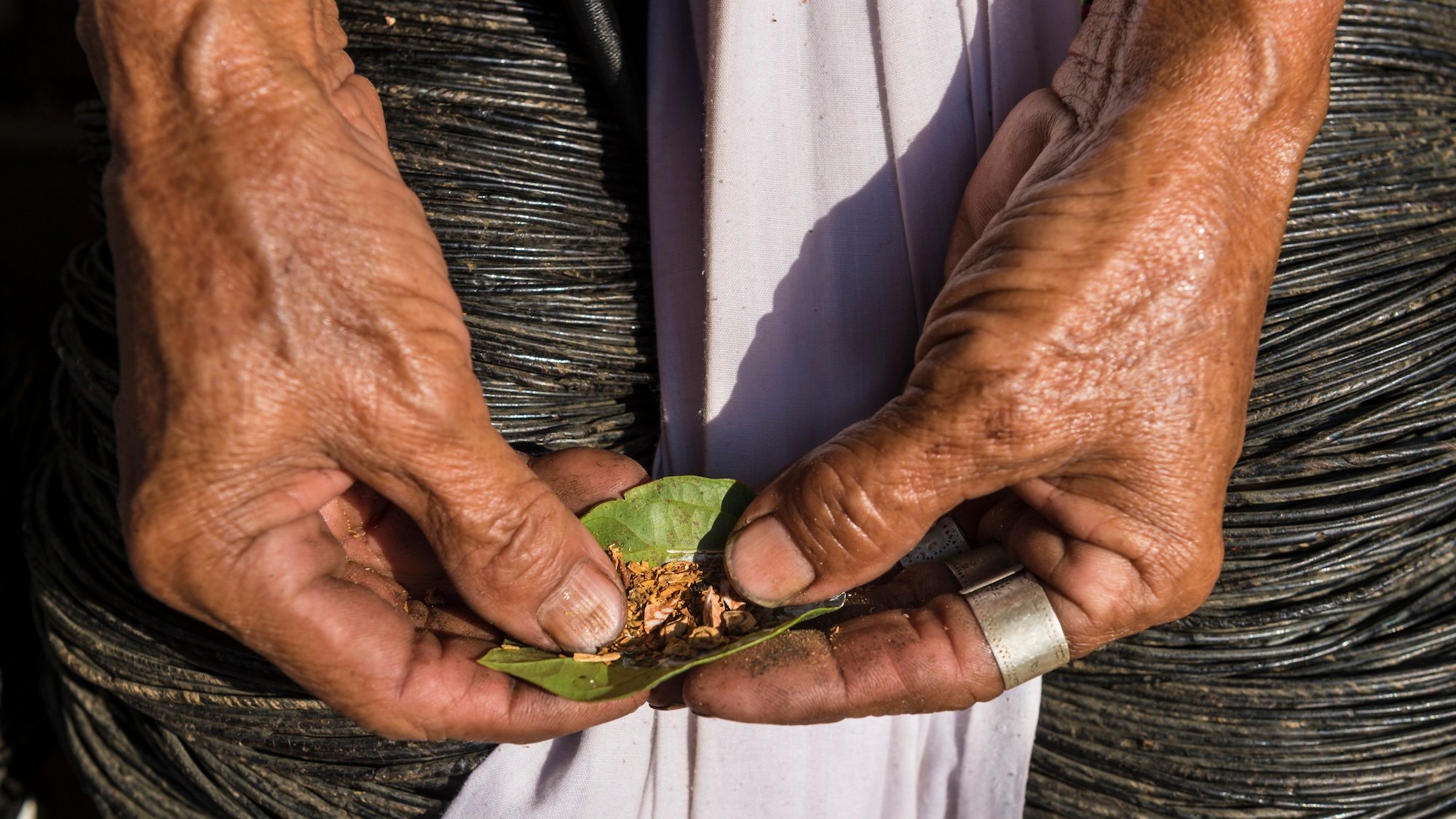
To answer this question, the research team conducted a series of controlled laboratory experiments. They soaked fresh betel nuts in artificial saliva to simulate the natural human chewing and sucking process. They then introduced these extracts to cloned human neural receptors grown from frog egg cells, which served as molecular stand-ins for the central nervous system.
The results challenged existing pharmacological dogmas. The laboratory tests revealed that simply sucking on whole, unprocessed betel nuts releases a sufficient concentration of arecoline to activate neural receptors and trigger physiological responses. The psychoactive potency may have been milder than modern processed quids, but it was potent enough to alter neurological activity and provide tangible systemic effects.
Chronology of Human Intoxicant Use
For decades, the prevailing academic consensus linked the origins of human drug use to the Neolithic agricultural revolution approximately 10,000 to 13,000 years ago. According to this traditional model, sedentary farming communities were required to cultivate grains and fruits in sufficient surpluses to allow for the accidental discovery and deliberate production of fermented alcoholic beverages. Psychoactive plants were similarly thought to have been domesticated alongside crops as human societies transitioned from nomadic foraging to permanent settlements.
The Sulawesi discovery disrupts this linear progression, establishing a new chronology for human interaction with mind-altering flora:
- 25,000 to 16,000 Years Ago (Pleistocene Epoch): Ice Age foragers in maritime Southeast Asia routinely suck on raw betel nuts, resulting in distinctive dental grooves and leaving chemical traces of arecoline in their tooth enamel.
- 16,000 to 7,600 Years Ago: The practice persists across generations among regional hunter-gatherer populations, sustained in part by the medicinal properties of the nut.
- Circa 11,000 to 13,000 Years Ago (Neolithic Transition): The traditional timeline for the emergence of fermented alcohol and agrarian psychoactive cultivation takes root in the Near East and other global centers.
- Circa 1,500 BCE (Bronze Age): Prior to the current findings, historical and archaeological records marked the earliest documented uses of betel nut preparations during later civilization periods.
- Present Day: An estimated one in ten people worldwide consume betel products, making it a cornerstone of cultural traditions across the Indo-Pacific region.
The Self-Reinforcing Cycle of Ancient Medication
While modern users consume betel nuts primarily for socialization, stimulation, and euphoria, the Pleistocene foragers of Sulawesi may have had an additional, more immediate motivation: pain relief. Arecoline functions not only as a stimulant and mild central nervous system activator, but also possesses natural analgesic properties.
This biochemical profile creates a compelling medical explanation for the severity of the dental damage observed in the fossils. Regular, forceful sucking on hard, fibrous seeds caused progressive enamel erosion, eventually wearing down teeth so severely that the inner pulp chambers were left entirely exposed. An exposed pulp chamber results in excruciating dental pain, nerve exposure, and localized infection.
Faced with severe toothaches, these ancient individuals likely discovered that sucking on additional betel nuts temporarily numbed the pain through local analgesic action. Consequently, a destructive physiological feedback loop was established: the very substance used to self-medicate the dental pain caused by the habit contributed to further structural decay, compelling the individual to continue using the drug for relief.
Official Responses and Expert Analysis
The publication of the study has drawn widespread attention from the archaeological, anthropological, and pharmacological communities, prompting a re-evaluation of how early humans interacted with their natural environments.

"This theory fails to account for the possibility that very ancient drug-taking lies at the roots of our most commonly used psychoactive substances," stated Dr. Adam Brumm, co-author of the study and professor of archaeology at Griffith University. Brumm emphasizes that researchers must expand their search parameters when evaluating Pleistocene diets and material cultures, as prehistoric populations possessed sophisticated empirical knowledge of local botany long before the invention of agriculture.
Other specialists in human evolution and paleopathology note that the Sulawesi findings highlight the resourcefulness of Ice Age foragers. Navigating tropical rainforest environments required an intimate, working knowledge of complex plant chemistry. Plants capable of altering consciousness, suppressing appetite, or reducing pain would have been highly valued commodities within hunter-gatherer pharmacopeias.
Broader Impact and Implications
The implications of the Sulawesi betel nut study extend far beyond updating the historical timeline of a single plant. By demonstrating that Pleistocene foragers intentionally consumed psychoactive substances, the research offers new insights into the evolutionary biology and behavioral ecology of Homo sapiens.
First, the findings suggest that the human drive to consume mind-altering substances is not a byproduct of civilization, sedentary agriculture, or social stress, but rather an ancient behavioral trait rooted deep within the hunter-gatherer lifestyle. The capacity to identify, process, and utilize pharmacologically active flora appears to be an enduring component of human adaptability.
Second, the study underscores the value of multidisciplinary archaeological investigations that combine osteology, dental micro-wear analysis, organic chemistry, and cellular biology. By applying modern laboratory assays to ancient biological tissues, researchers can reconstruct ancient lifeways that left no written records and few durable artifacts.
As archaeological excavations continue across island Southeast Asia and other key migratory corridors, scientists anticipate further discoveries that will illuminate the complex relationship between early humans and the natural world. The case of the Sulawesi foragers serves as a vivid reminder that the history of human innovation includes not only the mastery of fire and stone, but also an ancient, intimate engagement with the chemistry of the mind.