




Literacy education in the United States has undergone a seismic shift over the past decade, characterized primarily by the "Science of Reading" movement. While this national discourse has successfully realigned classroom instruction toward phonics, phonemic awareness, and structured literacy, a significant component of the literacy equation has been largely sidelined: writing. As policymakers and districts scramble to improve reading outcomes, the cognitive architecture required for proficient writing has remained an afterthought in many curricula.
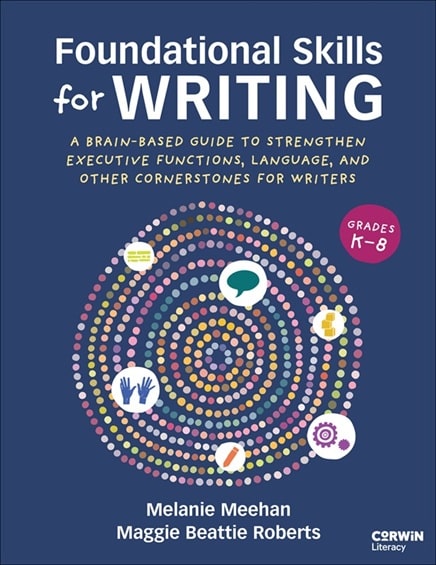
This professional gap is the focus of a new book, Foundational Skills for Writing: A Brain-Based Guide to Strengthen Executive Functions, Language, and Other Cornerstones for Writers, authored by veteran educators Melanie Meehan and Maggie Roberts. Released earlier this month, the book attempts to bridge the gap between neurological research and classroom practice, offering a framework that treats writing not merely as a creative output, but as a complex cognitive performance requiring the integration of transcription skills, oral language, and executive functioning.

The Missing Piece of the Literacy Puzzle
The current state of writing instruction is often criticized by literacy experts as being overly focused on the "product"—the essay or the report—rather than the "process" of how a student’s brain translates thoughts into coherent text. Research indicates that writing is one of the most cognitively demanding tasks a student performs. According to the Simple View of Writing, proposed by researchers Berninger and Graham, writing requires the simultaneous management of transcription (spelling, handwriting, and keyboarding) and text generation (syntax, vocabulary, and discourse).
When a student struggles with foundational skills, their "cognitive load" is taxed. If a child must expend all their mental energy on forming letters or recalling how to spell a word, they have no remaining capacity to focus on higher-order tasks like argument construction or narrative structure. Meehan, a former curriculum coordinator who currently operates a private writing center, and Roberts, a veteran literacy consultant, argue that educators must prioritize the automatization of these foundational skills to free up the working memory necessary for sophisticated writing.
A Chronology of Current Writing Challenges
The trajectory of this issue can be traced back to the early 2000s, when the No Child Left Behind Act prioritized standardized testing, which heavily favored reading comprehension over writing output. By the 2010s, the implementation of the Common Core State Standards introduced more rigorous writing expectations, yet professional development for teachers remained heavily skewed toward reading interventions.
By 2024, data from the National Assessment of Educational Progress (NAEP) indicated that less than 30% of eighth and twelfth-grade students performed at or above the "proficient" level in writing. This persistent underperformance is what motivated Meehan and Roberts to synthesize their decades of classroom experience into a actionable guide. Their work arrives at a time when schools are under immense pressure to show measurable gains in literacy, yet are often lacking the specific pedagogical tools to support students who fall behind in the mechanics of writing.
The "Minute Moves" Framework
To address these deficits without adding hours to an already packed school day, the authors propose a series of "Minute Moves." These are brief, high-impact activities designed to be integrated into natural classroom transitions, such as the time spent waiting in line for lunch or the five-minute buffer before a new subject begins.
The framework is divided into three primary categories:

1. Spelling and Linguistic Mapping
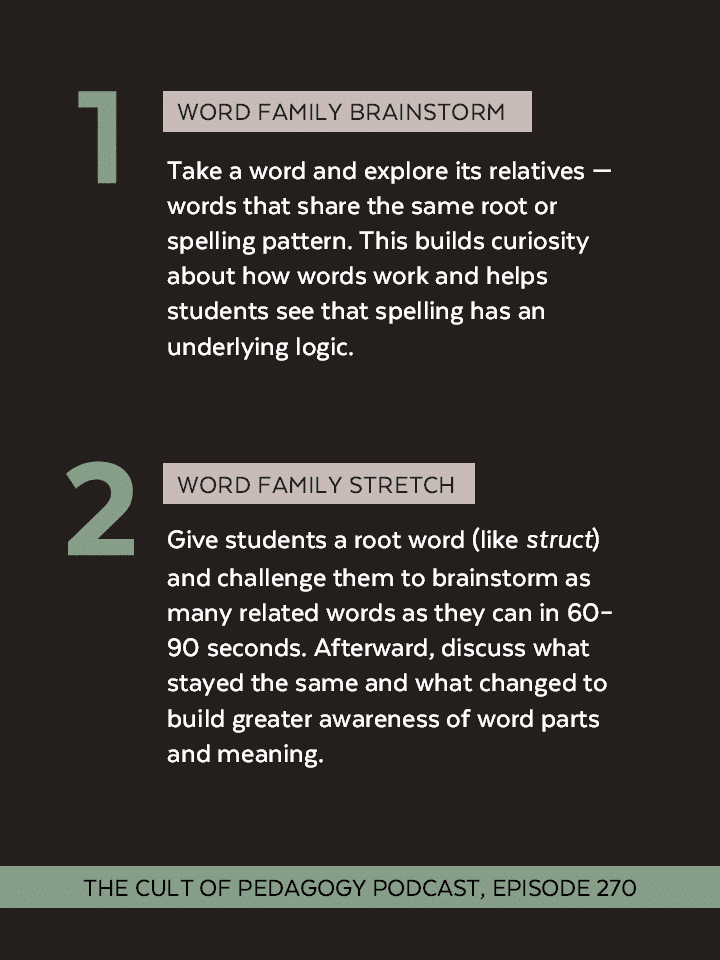
Drawing on the work of researchers like Rebecca Treiman, the authors argue that students should be taught that words are systems of meaning rather than arbitrary strings of letters. By utilizing "Word Family Brainstorms" and "Prefix Swaps," students learn to identify morphological patterns. For instance, understanding that the Latin root "struct" means "to build" allows a student to decode and spell a range of related words, from "instruction" to "destruction." This shifts the burden of memorization to a conceptual understanding of language.
2. Syntactic Construction
Sentence complexity is often a hurdle for students who rely on repetitive, simple sentence structures. Through activities like "Sentence Scrambles" and "Sentence Combining," students learn to manipulate parts of speech physically and mentally. Roberts emphasizes that these exercises allow students to experiment with syntax in a low-stakes environment, helping them "harvest" words and phrases from multiple simple sentences to create more sophisticated, nuanced prose.
3. Executive Functioning
Perhaps the most innovative aspect of the book is its explicit focus on executive functioning. Cognitive flexibility—the ability to pivot, revise, and consider multiple viewpoints—is treated as a learnable skill. Through exercises like "What’s Another Way?" and "New Angle," students are taught to rewrite sentences for different effects or to view a narrative through the eyes of a different character. This not only improves writing quality but also develops empathy and analytical thinking.

Broader Implications for Education
The release of this book coincides with a growing consensus among educational psychologists that writing instruction must become more systematic. If students are to meet the demands of modern education, they must be able to write with fluency and precision.
Fact-based analysis suggests that the "Minute Moves" approach could have a profound impact on schools serving multilingual learners. By focusing on root words and prefixes, students who are learning English can leverage their existing knowledge of other languages to accelerate their acquisition of academic vocabulary. Furthermore, the emphasis on reducing cognitive load is particularly beneficial for students with learning disabilities or ADHD, who often struggle with the multi-tasking nature of writing.
Official Reactions and Industry Reception
While the book is still in its infancy in the market, early feedback from literacy consultants suggests a positive reception. Many educators have noted that the "low-floor, high-ceiling" nature of the activities allows them to be used in inclusive classrooms where students perform at varying levels.
In a recent interview, the authors emphasized that these exercises are not intended to replace a robust, full-length writing curriculum. Instead, they serve as "neurological scaffolding." By consistently practicing these small, discrete skills, students build the neural pathways required to handle the long-term, sustained attention needed for essay writing and creative composition.
Future Directions for Writing Pedagogy
The integration of brain-based strategies into the writing classroom represents a necessary evolution in pedagogical theory. As schools continue to grapple with the "literacy crisis," the focus is likely to shift further toward the synthesis of reading and writing instruction.
If districts adopt these strategies, the potential result could be a reduction in the "writing anxiety" that plagues many middle and high school students. By demystifying the act of writing and breaking it down into manageable, neurologically sound components, educators may finally be able to close the gap between the literacy standards set by states and the actual writing proficiency of students.
The methodology proposed by Meehan and Roberts offers a pragmatic roadmap for a field that has, for too long, relied on intuition rather than cognitive science. As the educational community looks toward the next academic cycle, the focus on foundational writing skills—delivered in small, consistent, and scientifically grounded doses—may prove to be the critical intervention needed to foster a new generation of proficient, confident writers.