


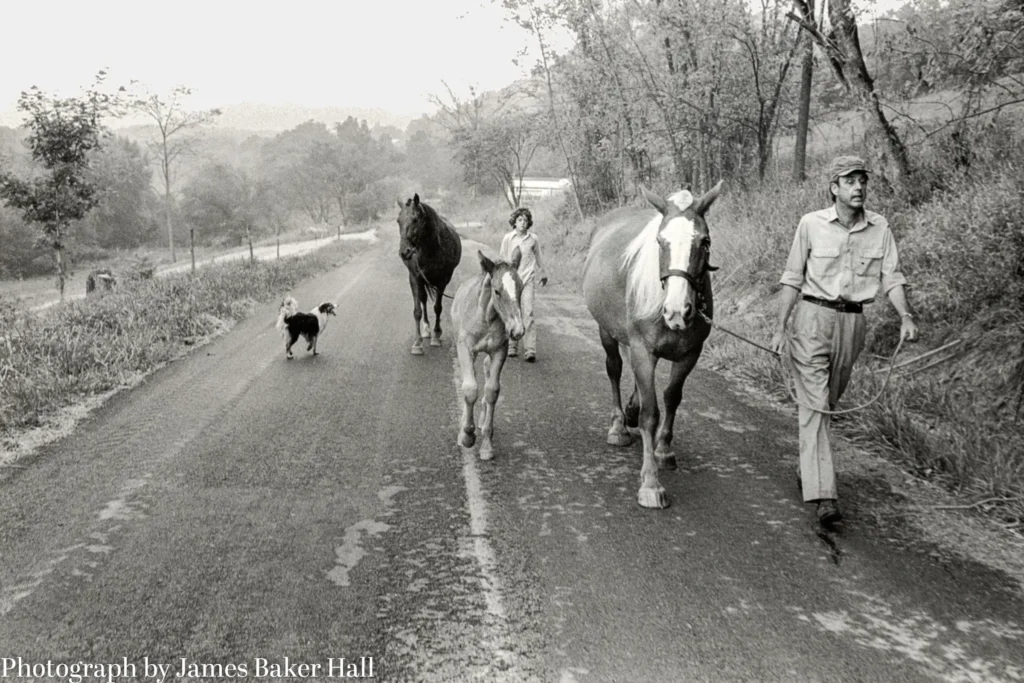
The literary world and agricultural communities mourning the loss of Wendell Berry reflect on a legacy that spanned nearly a century, defined by a steadfast rejection of modern industrial acceleration in favor of deliberate, place-based living. Berry, an essayist, poet, novelist, and farmer whose critiques of modern capitalism and technological detachment became foundational texts for the environmental movement, passed away last week at the age of 92 at his homestead in Port Royal, Kentucky. His death marks the conclusion of a life lived deliberately outside the mainstream currents of 20th- and 21st-century American culture, leaving behind a profound inquiry into the nature of meaningful work, community, and human purpose.
Main Facts of a Singular Career
Born on July 18, 1934, in Henry County, Kentucky, Berry’s life was an unbroken arc tethered to the agrarian traditions of his ancestors. Yet his trajectory did not immediately signal a retreat to rural isolation. As a young man, Berry pursued an elite academic and literary path, securing his bachelor’s and master’s degrees from the University of Kentucky before moving to Stanford University to study creative writing. His early promise was recognized nationally; a prestigious Guggenheim Fellowship enabled him to live and write in Italy and France during the early 1960s.
Upon returning to the United States, Berry accepted a position as a professor of English at New York University’s Bronx campus. By all conventional metrics of the era, he was on track for a distinguished academic career in the epicenter of the American literary establishment. However, in 1964, at the age of 29 and with a young family to support, Berry executed a profound pivot. He resigned his professorship, walked away from institutional security and metropolitan prestige, and returned permanently to Henry County, Kentucky. There, he purchased a small farm, re-engaging with the rhythms of manual agriculture, traditional farming techniques, and small-town community life. In an era where writers increasingly gravitated toward urban centers, academia, or media hubs, Berry chose a path of deep locality, writing his works by hand with pencil and paper in a modest cabin devoid of electricity.
Chronology of a Radical Departure
The mechanics of Berry’s departure from New York University remain a watershed anecdote in American literary folklore, illustrating the friction between institutional ambition and personal conviction. The pivotal moment arrived on the day Berry formally tendered his resignation.
According to historical accounts and reflections by writers such as David Demaree, Berry was summoned to his department supervisor’s office. The senior faculty member operated under the assumption that the sub-30-year-old scholar simply miscalculated the magnitude of what he was abandoning. The meeting served as a final, urgent appeal from the establishment: do not sacrifice professional prestige, institutional mobility, and metropolitan cultural access for the relative obscurity and economic risk of rural Kentucky.
During the exchange, the supervisor invoked Thomas Wolfe’s famous literary maxim, warning Berry that “you can’t go home again.” To the academic elite, Berry’s move equated to a form of professional and intellectual suicide, cutting himself off from the vibrant cultural springs of the metropolis. Yet Berry’s resolve remained immovable. He was driven by a foundational conviction: to write authentically about people and place, he had to be physically and socially embedded within them. He maintained that writing about the backwoods of Kentucky from the safety of Manhattan cocktail parties was an act of intellectual dishonesty. Returning to the landscape gave him a continuous, real-time mechanism for accountability—a physical environment capable of correcting his errors and grounding his prose in lived reality rather than abstract speculation.
Data, Literary Output, and Cultural Impact
Over the course of seven decades, Berry’s literary output proved that obscurity in the metropolitan sense did not equate to a lack of cultural influence. He authored more than 50 books of poetry, fiction, and non-fiction. His seminal 1977 work, The Unsettling of America: Culture & Agriculture, became a canonical text for the modern environmental movement, systematically diagnosing the psychological and ecological devastation wrought by industrial agriculture and corporate consolidation.
Data from the United States Department of Agriculture underscores the prescience of Berry’s economic critiques. During Berry’s lifetime, the American agricultural landscape underwent a dramatic consolidation. According to historical agricultural census data, the number of farms in the United States peaked at approximately 6.8 million in 1935, the year after Berry was born. By the time of his passing, that number had plummeted to under 2 million, while the average farm size more than doubled. This shift was accompanied by a massive rural depopulation, the erosion of small-town economies, and a reliance on synthetic inputs and heavily automated supply chains—precisely the systemic transformations Berry spent his life decrying.
Official Responses and Public Reactions
Following the announcement of his passing, tributes poured in from literary figures, environmental activists, and agricultural organizations worldwide, highlighting the breadth of his influence.
Renowned author and environmentalist Bill McKibben noted that Berry’s writings served as an indispensable compass for generations of people grappling with the ethical dilemmas of modern consumption. "Wendell Berry did not merely write about stewardship; he practiced it with a rigorous, unyielding devotion that shamed our cultural shortcuts," McKibben observed.
Academic institutions that once viewed his retreat as an eccentric miscalculation later sought to honor his contributions. In 2015, Berry was awarded the National Humanities Medal by President Barack Obama. Furthermore, institutions such as the University of Kentucky established initiatives, archives, and professorships dedicated to studying his literary and ecological contributions, cementing his status as a titan of American letters.
Analysis of Broader Implications and the Deep Life
Beyond his specific criticisms of agribusiness and his defenses of agrarianism, Berry’s life and philosophy offer a diagnostic lens through which to examine contemporary 21st-century existence.
Modern society is increasingly defined by digital mediation, automated conveniences, and algorithmic pacification. The advent of generative artificial intelligence and hyper-connected professional environments has accelerated a trend where cognitive strain is systematically outsourced, and human attention is monetized. Corporate white-collar labor has, in many sectors, devolved into cyclical layers of digital communication—surreal loops of messaging platforms, virtual meetings, and transcription software designed to manage administrative friction rather than produce tangible value. Simultaneously, political discourse has contracted into performative digital tribalism, encouraging citizens to adopt radical stances from the frictionless safety of social media profiles.
Berry recognized the modern temptation to evade discomfort long before the ubiquity of smartphones. However, his philosophy asserts that physical labor, cognitive strain, and local accountability are not obstacles to be engineered out of existence; rather, they are the necessary friction points that forge character and resilience.
By deliberately choosing a life of physical labor, manual writing, and deep community investment, Berry demonstrated that human satisfaction is inextricably linked to purpose and place. His rejection of the digital and industrial edifice was not merely a nostalgic retreat into the past, but a coherent, radical critique of a culture that prioritizes speed over substance and abstraction over reality.
The legacy of Wendell Berry’s 92 years extends far beyond the borders of Henry County, Kentucky, or the specific debates surrounding sustainable farming. For individuals navigating a world characterized by digital numbness and professional alienation, Berry’s life stands as a monumental reminder: the possibility of rebuilding one’s existence into something deliberate, grounded, and deep remains attainable for anyone willing to face the landscape and accept the work.