



The release of new threat intelligence reports around the Black Hat USA 2026 conference has brought renewed urgency to the cybersecurity community, highlighting how artificial intelligence is fundamentally transforming the velocity and scale of digital threats. While malicious actors are not necessarily deploying entirely novel classes of attacks, they are leveraging autonomous systems to supercharge familiar tactics, resulting in a drastically compressed defense window for enterprise security teams. The findings, drawn from extensive technical research and automated system analyses, indicate that foundational risks—such as compromised identities, software misconfigurations, supply chain vulnerabilities, and social engineering—remain the primary vectors of compromise, even as machine learning allows threat actors to exploit them at unprecedented speeds.

Among the most striking disclosures from the conference data is the sheer volume of previously unknown software flaws uncovered by autonomous systems. Security researchers are no longer the only ones utilizing artificial intelligence to scour codebases; automated threat frameworks are now operating at industrial scales, shifting the balance of discovery between defenders and those seeking to exploit software weaknesses.
The Expanding Scope of AI-Driven Vulnerability Discovery
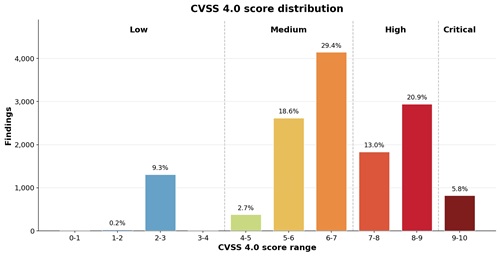
A prominent study released by Palo Alto Networks Unit 42 centered on NOVA, an advanced autonomous vulnerability research system designed to evaluate open-source software security. During a rigorous two-month testing period, NOVA analyzed 3,915 distinct open-source projects, confirming a staggering 14,090 vulnerabilities. Most concerning to software maintainers and enterprise security architects is that 99.4% of these discovered flaws had never been previously reported, representing a massive unseen attack surface sitting quietly within standard software supply chains. Furthermore, nearly 40%—specifically 39.7%—of these confirmed vulnerabilities were classified as either High or Critical under the Common Vulnerability Scoring System (CVSS) version 4.0 framework.
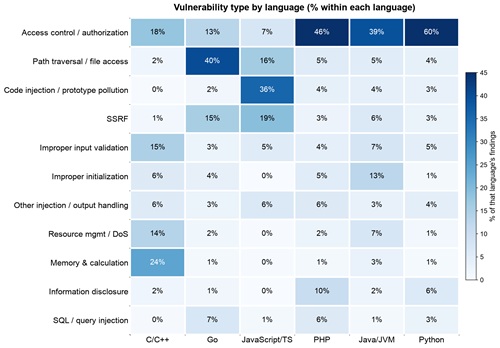
The Unit 42 research further detailed how vulnerability patterns and distribution varied significantly across different programming-language ecosystems. The autonomous system identified distinct concentrations of risk depending on the language used, tracking systemic issues such as access-control failures, path traversal weaknesses, code injection vectors, prototype pollution, and server-side request forgery (SSRF). These insights demonstrate that AI can systematically map out structural weaknesses across diverse software architectures much faster than human security researchers could ever hope to achieve manually.
Bypassing Traditional Defenses: The Rise of Direct-to-IP Malware
Beyond vulnerability discovery, threat intelligence presented at Black Hat USA 2026 underscored how modern malware is actively evolving to evade traditional perimeter and network monitoring controls. In a separate study examining more than 4 million dynamic-analysis reports, Unit 42 researchers investigated malware strains engineered to bypass standard domain-name system (DNS) monitoring.
Traditionally, security operations centers (SOCs) rely heavily on DNS query logging and sinkholing to detect when an endpoint attempts to communicate with a command-and-control (C2) server. However, the study revealed that among malware samples actively communicating with C2 infrastructure, 45.32% made at least one direct-to-IP connection, bypassing DNS lookups entirely. Even after filtering out routine bulk internet scanning activity, the figure remained critically high at 41.97%. Overall, direct-to-IP traffic accounted for 23.17% of all observed command-and-control connection attempts in the research dataset. This tactical shift presents a severe challenge for organizations whose network visibility architectures depend primarily on DNS resolution telemetry.
Compressing the Defense Window: Identity and Infrastructure Risks
The collective body of research presented around the conference paints a consistent picture of a rapidly accelerating threat landscape. Data aggregated across multiple completed security investigations revealed that identity or privilege considerations played a central role in 75% of analyzed incidents. This emphasizes that modern attackers are focusing heavily on credential theft, session hijacking, and privilege escalation rather than complex zero-day malware.

Compounding this issue is the drastic reduction in attacker breakout times—the duration it takes for an intruder to move laterally from an initial point of compromise to other systems within a network. Recent metrics indicate that breakout times have dropped below 30 minutes in many advanced intrusions. For cloud security and infrastructure teams, this leaves an exceptionally narrow window to detect, triage, and contain active breaches before they result in widespread data exfiltration or ransomware deployment.
Furthermore, threat actors are increasingly weaponizing enterprise artificial intelligence infrastructure itself. Organizations racing to adopt internal large language models and automated workflows are inadvertently introducing new attack surfaces, including poisoned software dependencies, misconfigured cloud storage buckets, and compromised API integrations. Identity attacks are frequently weaponized to subvert legitimate authentication mechanisms, turning single-sign-on (SSO) and multi-factor authentication (MFA) pathways into avenues for unauthorized access when administrative guardrails fail.

Chronology and Industry Context
The timeline leading up to these disclosures reflects a steady convergence of artificial intelligence capabilities with long-standing cybercriminal business models. Throughout late 2024 and 2025, security researchers observed an incremental increase in automated reconnaissance tools being deployed in the wild. By early 2026, the maturation of autonomous vulnerability discovery frameworks transitioned from theoretical concepts into operational reality, culminating in the massive datasets presented at Black Hat USA 2026 in August.
Historically, the cybersecurity industry has operated under an asymmetry where defenders must secure every potential entry point, while attackers need only find a single open door. The integration of artificial intelligence into the offensive playbook exacerbates this asymmetry, multiplying the frequency of scanning operations and reducing the time required to weaponize newly discovered flaws. At the same time, the security community has pointed out that AI offers equal benefits to defenders, enabling automated patch management, rapid threat hunting, and accelerated incident response playbooks. However, the immediate net effect observed in the 2026 studies is a hyper-acceleration of familiar threats rather than an influx of exotic, sci-fi-style cyber weapons.

Implications for Enterprise Security Strategies
The consensus among industry analysts and security practitioners is that organizations must fundamentally rethink their defensive posture in light of these findings. Traditional reactive security measures—such as relying solely on signature-based detection or periodic vulnerability scans—are no longer adequate in an environment where autonomous agents can discover thousands of zero-day flaws in a matter of weeks and execute lateral movement within minutes.
Security leadership is being urged to prioritize several critical hardening strategies:

- Identity-Centric Defense: Given that 75% of investigations involve identity or privilege elements, organizations must implement robust continuous identity verification, rigorous monitoring of privileged accounts, and strict enforcement of the principle of least privilege.
- Enhanced Network Visibility: With malware increasingly utilizing direct-to-IP connections to bypass DNS monitoring, network engineering teams must deploy comprehensive traffic inspection capabilities that look beyond standard domain lookups to identify anomalous outbound connections.
- Software Supply Chain Integrity: The discovery of thousands of unpatched vulnerabilities in open-source projects underscores the necessity of rigorous software bill of materials (SBOM) management, automated dependency auditing, and rapid patching pipelines.
- Cloud and AI Governance: As enterprises expand their cloud footprints and integrate internal AI tools, security teams must enforce strict configuration baselines to prevent enterprise AI infrastructure from being subverted into an attacker asset.
Ultimately, the research released around Black Hat USA 2026 serves as a stark reminder that the future of cybersecurity is not defined by entirely unprecedented threats, but by the relentless, automated scaling of familiar ones. As artificial intelligence continues to compress the timeline between vulnerability disclosure and active exploitation, the resilience of modern digital infrastructure will depend entirely on how swiftly organizations can automate their own defenses to match the speed of the adversary.