



The human relationship with facial hair is as ancient as it is complex, defying simple biological explanations and cultural assumptions. For generations, evolutionary theory regarding male facial hair was heavily influenced by the assertions of Charles Darwin. In his seminal 1871 work, The Descent of Man, Darwin posited that male facial hair functioned primarily as an ornament designed to charm, attract, or excite the opposite sex, likening it explicitly to the elaborate plumage of a peacock. While Darwin remains one of the most towering figures in the history of science, modern anthropological, psychological, and biomechanical research suggests that his hypothesis regarding the female preference for beards may have been overly simplistic. Contemporary scientific inquiry indicates that while sexual selection certainly plays a role in human physical traits, the evolutionary trajectory of the beard is deeply intertwined with social dominance, male-to-male competition, and potentially even physical protection.
To unpack the true evolutionary purpose of beards and mustaches, researchers over the past several decades have subjected facial hair to rigorous empirical testing. The findings challenge the conventional wisdom that beards evolved purely to win the favor of female mates, opening up a broader conversation about how human societies navigate status, aggression, and survival.
Examining the Attraction Hypothesis
To test Darwin’s theory that beards evolved primarily to appeal to potential mates, scientists have conducted numerous cross-cultural studies examining how women perceive male facial hair. One of the most notable studies, published in 2012, sought to eliminate Western cultural bias by asking women from two vastly different environments to rate the attractiveness of male faces. Researchers surveyed European women in New Zealand and Polynesian women in Samoa, showing them identical male faces digitally altered to appear clean-shaven, sporting stubble, or wearing full beards.
The results challenged Darwin’s premise. Across both cultural groups, women did not rate bearded faces as inherently more attractive than clean-shaven ones. When researchers expanded their scope to include a wide array of subsequent studies investigating the sexual attractiveness of facial hair, the results proved remarkably mixed. Some cohorts of women expressed a distinct preference for clean-shaven skin, while others favored light stubble or full beards. If the primary evolutionary engine driving the development of facial hair was direct sexual selection by females, evolutionary biologists would expect to find a consistent, universal preference across human populations. The absence of such a clear pattern strongly suggests that beards likely evolved to serve a different, or at least a multifaceted, primary function.

Signaling Status, Dominance, and Age
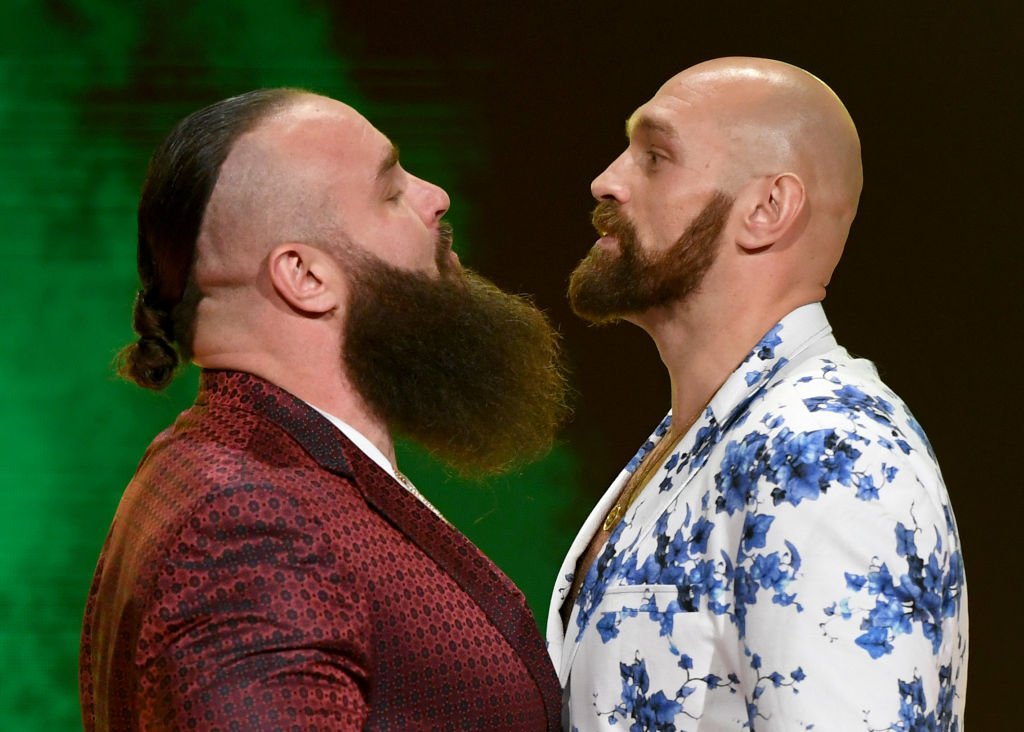
While the New Zealand-Samoa study did not find a strong correlation between beards and romantic attractiveness, it revealed a powerful and consistent effect regarding social perception. Across both European and Polynesian cultures, both male and female participants consistently judged men with beards to be significantly older and of a higher social status than the exact same men when they were clean-shaven. Furthermore, when the male subjects in the photographs displayed angry facial expressions, participants rated the bearded variations as substantially more aggressive than their clean-shaven counterparts.
Dr. David Puts, a prominent professor of anthropology and psychology at Pennsylvania State University, notes that facial hair likely functions as a visual amplifier of masculinity. According to Dr. Puts, beards serve to make men look more formidable by exaggerating the apparent size of the lower face and jaw. This visual trick signals sexual maturity alongside the underlying strength and formidability that accompany adult male development.
Consequently, anthropologists hypothesize that beards evolved primarily to help men establish and negotiate social status among other men. In ancestral human societies, high social status among males translated directly into better access to resources, territory, and, ultimately, mates, thereby indirectly driving reproductive success. This male-to-male competition model is further supported by historical analyses of fashion trends. For instance, a comprehensive study examining British facial hair fashions between 1842 and 1971 discovered that beards experienced surges in popularity during specific demographic shifts. Statistically, beards tended to become significantly more fashionable when the ratio of single men to available women was higher—periods characterized by intense, direct competition among men for fewer potential mates.
The Biomechanical Debate: Beards as Evolutionary Armor
Beyond social signaling, scientists have long debated whether beards provided tangible physical benefits during humanity’s evolutionary past. In addition to his work on sexual selection, Charles Darwin dedicated considerable thought to the neck hair found in apex predators and large mammals, such as lions, elk, and lynx. He theorized that this thick hair evolved primarily as physical protection, acting as a natural buffer to guard the vulnerable neck area during violent territorial and mating conflicts with rival animals.

This raised a compelling question among contemporary researchers: Could human facial hair function in a similar capacity as protective armor for the face and jaw? Testing this hypothesis presented obvious ethical and practical challenges. As one researcher dryly noted in a public lecture discussing the methodology, it was entirely unfeasible to recruit human subjects, systematically punch them in the face with and without beards, and measure the resulting trauma.
To circumvent this limitation, a team of biomechanics researchers developed an innovative experimental model designed to simulate the structural properties of a human face. The research team constructed artificial jawbones using a fiber epoxy composite engineered to match the exact physical strength, density, and toughness of human bone. To simulate skin conditions, they wrapped these composite jaws in layers of sheepskin—using shaven sheepskin to represent bare skin and dense, unshaven woolly sheepskin to represent a heavily bearded face. The researchers then utilized a specialized drop-weight apparatus to deliver calibrated impacts to the models, meticulously measuring the force absorbed by the synthetic bone.
The results of the biomechanical experiment were striking. The peak impact force recorded was approximately 16 percent greater on the shaved skin model compared to the unshaven woolly model. This empirical data suggested that human beards can indeed function as a form of biological cushion, absorbing and dispersing the energy of a blunt-force blow and potentially offering a degree of protection against traumatic jaw fractures.
Implications for Human Survival and Modern Combat
The prospect of mitigating facial trauma carried profound implications for early humans. In an evolutionary environment devoid of modern medical intervention, advanced surgical reconstruction, or the ability to consume liquid nourishment through a straw for several weeks, a severe jaw fracture would have been a catastrophic, potentially life-threatening injury. Modern medical data indicates that physical assault involving fists or blunt objects remains a leading global cause of jaw fractures, second only to vehicular accidents. Furthermore, epidemiological data shows that males suffer significantly more jaw fractures than females across nearly all societies, even though biological males possess inherently thicker and heavier jawbones than females.
Despite the intriguing laboratory findings regarding impact absorption, real-world data complicates the "beards-as-armor" narrative. A notable 2018 study analyzing data from Ultimate Fighting Championship (UFC) mixed martial arts bouts found that beards did not statistically reduce the frequency of knockouts or measurably improve a fighter’s actual combat capability. Furthermore, hand-to-hand combat specialists and martial arts instructors frequently argue that beards can act as a tactical disadvantage in physical altercations, as opponents can easily grip facial hair to control an adversary’s head movement and leverage strikes.
Broader Impact and Scientific Consensus
Synthesizing decades of psychological, anthropological, and biomechanical research, the scientific community continues to refine its understanding of why human facial hair evolved. The prevailing consensus articulated by researchers like Dr. Puts points toward social dominance and male-to-male signaling as the primary drivers of beard evolution. While the hypothesis that beards served as physical armor during fights remains a subject of active academic debate, the evidence for social signaling is robust.
Beards continue to function primarily as tools for negotiating status, projecting maturity, and signaling formidability within male social structures. While facial hair may exert a secondary influence on female mate choice, its impact in this arena remains remarkably smaller, highly variable, and deeply inconsistent across different human cultures and historical eras. Ultimately, while evolutionary pressures shaped the biological capacity for facial hair, whether a bearded man is perceived as attractive, formidable, or well-groomed remains firmly rooted in the eye of the beholder and the shifting tides of personal preference.