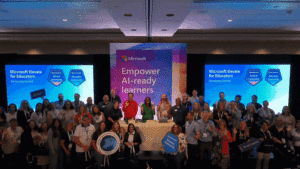



The integration of artificial intelligence and advanced digital tools within modern educational environments has transitioned from an experimental concept into a foundational pillar of global pedagogy. Across primary, secondary, and tertiary institutions, educators and administrators are actively redefining curriculum delivery, fostering essential digital literacy, and preparing students for a rapidly evolving workforce. In alignment with this transformative shift, technology sector leaders are stepping forward to champion institutional and individual excellence. Microsoft has officially announced the opening of the advanced recognition application window for the 2026–2027 academic year through its flagship initiative, Microsoft Elevate for Educators. This prestigious program invites K-12 and higher-education pioneers to submit their applications for the esteemed Educator Expert and Showcase School designations, with the submission period remaining open through July 31, 2026.
Background Context and Evolution of the Initiative
The Microsoft Elevate for Educators program emerges from a growing imperative within the global academic community: the need to navigate the complexities of the artificial intelligence era responsibly and effectively. As generative AI, cloud computing, and collaborative digital platforms become standard in industries worldwide, educational systems face mounting pressure to bridge the digital divide and equip students with robust AI literacy. Historically, technology adoption in classrooms faced significant hurdles, ranging from inadequate teacher training to data privacy concerns and institutional resistance. Programs like Microsoft Elevate were designed to systematically dismantle these barriers by providing structured, laddered professional development, peer-to-peer mentorship, and institutional roadmaps.
By fostering a global network that currently unites more than 43,000 innovative educators, the initiative transforms isolated pockets of classroom innovation into a cohesive international movement. The program provides participants with access to specialized toolkits, empirical research, and comprehensive guidance tailored to safely integrate emerging technologies into diverse pedagogical frameworks. The recognition tiers—Educator Expert and Showcase School—serve as benchmarks of excellence, honoring individuals and institutions that demonstrate measurable impact in leveraging Microsoft tools to inspire creativity, enhance critical thinking, and streamline institutional workflows.

Comprehensive Timeline and Application Schedule
To support prospective applicants throughout the submission cycle, the Microsoft Elevate for Educators team has established an extensive series of virtual global program overviews and dedicated office hours. These sessions are structured to provide step-by-step guidance on the application criteria, showcase successful case studies from previous cohorts, and offer direct Q&A opportunities with program coordinators.
The schedule for the 2026 informational sessions is as follows:
- June 3, 2026, at 8:00 AM PT: Program Overview
- June 17, 2026, at 4:00 PM PT: Office Hours
- June 24, 2026, at 11:00 PM PT: Office Hours
- July 8, 2026, at 4:00 PM PT: Program Overview
- July 15, 2026, at 8:00 AM PT: Office Hours
- July 15, 2026, at 4:00 PM PT: Office Hours
- July 15, 2026, at 11:00 PM PT: Office Hours
- July 29, 2026, at 8:00 AM PT: Office Hours
- July 29, 2026, at 4:00 PM PT: Office Hours
Following the conclusion of these advisory sessions, the application portal will officially close on July 31, 2026, after which independent panels will evaluate submissions based on demonstrated leadership, community impact, and innovative use of technology in learning environments.
Supporting Data and Global Educational Metrics

The urgency driving programs such as Microsoft Elevate is underscored by contemporary labor market analyses and educational technology adoption metrics. According to recent workforce development studies, over 70 percent of future employment sectors will require advanced digital literacy and a functional understanding of artificial intelligence applications. Despite this demand, global educational surveys indicate that less than half of practicing teachers feel adequately prepared to teach AI concepts or integrate machine learning tools into their daily lesson plans.
The Microsoft Elevate network directly addresses this preparedness gap. Quantitative tracking of past program participants reveals a marked increase in digital confidence among certified Educator Experts, with 88 percent reporting enhanced student engagement and improved collaborative problem-solving metrics within their classrooms. Furthermore, designated Showcase Schools frequently cite a measurable reduction in administrative overhead, allowing faculty members to dedicate more hours to direct student mentorship and personalized instruction. By scaling these proven methodologies across international borders, the initiative serves as a vital catalyst for closing equity gaps in technology access.
Perspectives from Educational Leaders and Industry Observers
While official statements from individual awardees vary, educational stakeholders and curriculum specialists widely regard tech-sponsored recognition programs as essential validation for frontline educators. Analysts note that teaching professionals often operate in decentralized environments where pioneering efforts go unnoticed beyond their immediate school buildings. Initiatives like the Microsoft Elevate designations provide a formal platform that elevates the status of innovative teachers, positioning them as thought leaders within their districts and international education forums.
"The landscape of education is undergoing its most profound transformation in a century," observes Dr. Elena Vance, a senior researcher in educational technology policy. "Programs that move beyond passive software deployment to actively cultivate professional learning communities are essential. When educators are given the credentials, community support, and institutional backing to experiment safely with AI, the entire ecosystem benefits—from the individual student in a rural classroom to district-wide administration."

Similarly, school administrators emphasize that achieving Showcase School status acts as a powerful morale booster and a strategic asset for community outreach. It signals to parents, school boards, and regional authorities that an institution is proactive, forward-thinking, and deeply committed to preparing students for higher education and competitive career paths.
Criteria and Pathways for Recognition
Achieving recognition within the Microsoft Elevate ecosystem requires a demonstrated commitment to continuous learning and pedagogical innovation.
For individual educators seeking the Educator Expert designation, candidates must showcase how they utilize Microsoft technologies—such as Microsoft Teams, OneNote, and integrated AI capabilities—to foster inclusive, student-centered learning environments. Applicants are evaluated on their willingness to share best practices with colleagues, their engagement in ongoing professional development pathways, and their ability to document tangible improvements in student creativity and academic outcomes.
For institutions pursuing the Showcase School designation, the evaluation criteria focus on systemic, whole-school transformation. Administrators must present a comprehensive vision for digital maturity, detailing how technology is embedded into the school’s strategic plan, operational efficiency, and instructional framework. This includes evidence of robust professional learning communities for staff, equitable student access to devices and digital resources, and measurable data indicating how technology adoption has improved retention, engagement, and foundational skill acquisition.

Broader Impact and Strategic Implications for the Future of Learning
The implications of the Microsoft Elevate for Educators initiative extend far beyond individual classroom accomplishments. As artificial intelligence continues to mature, educational institutions face unprecedented ethical, operational, and pedagogical challenges. Questions regarding data privacy, algorithmic bias, academic integrity, and the digital divide require thoughtful, collaborative solutions from both technology developers and educational practitioners.
By embedding ethical considerations and safety guidelines into its resource toolkits, Microsoft positions its community members not merely as consumers of technology, but as critical evaluators and co-creators of educational futures. The emphasis on capacity building ensures that schools in diverse socioeconomic contexts—from heavily funded suburban districts to under-resourced rural academies—can find scalable pathways to modernization.
Ultimately, the opening of the 2026–2027 application window marks another milestone in the ongoing digital evolution of schools worldwide. For educators and school leaders who have dedicated themselves to pushing the boundaries of traditional instruction, the program offers a vital avenue for validation, collaboration, and global impact. As the July 31 application deadline approaches, educational pioneers across the globe are invited to reflect on their achievements, engage with the upcoming global office hours, and take their place among the changemakers shaping the next era of learning.