




The United States Department of the Treasury has officially released its highly anticipated proposed rule for the Education Freedom Tax Credit, marking a monumental milestone as the nation’s first-ever nationwide school choice tax credit program. Published alongside a temporary rule governing the program’s inaugural year, the federal guidelines set the stage for a dramatic shift in how educational funding is sourced and distributed across the country. Scheduled to launch on January 1, 2027, the initiative stems from the landmark One Big Beautiful Bill Act passed by Congress and signed into law in 2025.
Proponents of the federal policy argue that the framework introduces unprecedented opportunities for families, allowing billions of dollars in taxpayer-backed donations to flow toward flexible educational expenses for children in both public and private schools. Conversely, opponents and civil rights organizations warn that the program represents a thinly veiled national voucher scheme. They contend it will siphon essential resources away from public school systems, undermine constitutional boundaries separating church and state, and disproportionately benefit private and religious institutions that serve only a fraction of American students.
As the policy moves through the federal regulatory pipeline, stakeholders across the political and educational spectrum are analyzing the text of the proposed and temporary rules. With a formal public comment period set to close on December 1 and a public hearing scheduled for December 15 in Washington, D.C., the debate over the future of American education policy has intensified.
Core Framework and Mechanics of the Education Freedom Tax Credit
Under the newly released rules, the Education Freedom Tax Credit relies on a mechanism wherein individual and corporate federal income taxpayers make voluntary donations to approved scholarship-granting organizations (SGOs). In exchange, donors receive a dollar-for-dollar federal income tax credit, capped at their total tax liability.
For individual taxpayers, the maximum annual donation eligible for the tax credit is set at $1,700. Married couples filing joint tax returns may contribute up to $3,400 annually. Financial analysts project that by 2030, the program will generate approximately $26 billion annually in taxpayer-supported donations earmarked for K-12 educational expenses.
To administer these funds, SGOs must operate within participating states, gathering donations and disbursing scholarships directly to eligible families. Participation in the program is entirely optional for individual states. To take part in the program for its launch year, states must formally opt in and submit their approved lists of SGOs by February 15, 2027. State participation will be evaluated and renewed on an annual basis.
Eligibility for the scholarships is structured to target low- and middle-income families. Students residing in participating states qualify if their household income does not exceed 300% of their local area’s median gross income. Once awarded, these scholarships can be applied to a broad array of qualified education expenses. This includes private school tuition, tutoring services for students enrolled in local public schools, specialized education resources for students with disabilities, instructional books and supplies, and qualifying extended-day or after-school programs.
Furthermore, the federal guidelines explicitly prohibit participating states from imposing additional restrictions on SGOs. States cannot dictate the types of schools that scholarship recipients must attend or limit the types of qualified education expenses that can be funded, provided they fall within the broad parameters established by federal statute. SGOs retain the autonomy to determine individual scholarship amounts based on their specific organizational missions, available funding reserves, and the demonstrated needs of student applicants.
Legislative Origins and Chronology
The path toward a federal school choice tax credit has evolved over several years, transitioning from fragmented state-level initiatives into a cohesive national policy.
- May 22, 2025: Following intense legislative negotiations, the U.S. House of Representatives narrowly passes a sweeping legislative package championed by the Trump administration, officially known as the One Big Beautiful Bill Act. This legislation establishes the statutory framework for the Education Freedom Tax Credit, creating a federal tax incentive for private donations to K-12 scholarship funds.
- October 2, 2026: The U.S. Department of the Treasury releases both the comprehensive proposed rule and a temporary rule for the Education Freedom Tax Credit. The temporary rule provides immediate, actionable guidance for states, taxpayers, and nascent SGOs as they prepare for the program’s operational kickoff.
- January 1, 2027: The statutory launch date of the Education Freedom Tax Credit. Authorized SGOs in participating states are officially permitted to begin collecting donations from individual and joint-filing taxpayers and disbursing scholarship funds to families.
- February 15, 2027: The strict deadline for participating states to submit their initial lists of authorized SGOs to finalize their participation for the 2027 tax year.
- December 1, 2026: The official deadline for the public comment period regarding the Treasury Department’s proposed rule. Stakeholders, advocacy groups, and ordinary citizens are invited to submit written feedback.
- December 15, 2026: The Treasury Department is scheduled to host a public hearing in Washington, D.C., allowing registered individuals to present verbal testimony regarding the proposed rule.
Sharp Divides and Official Responses from Stakeholders
Reactions to the release of the proposed and temporary rules have exposed deep ideological fractures concerning the role of government in education, school funding equity, and regulatory oversight.
Supporters of school choice celebrated the Treasury Department’s actions as a historic victory for parental rights and educational freedom. House Education and Workforce Committee Chair Tim Walberg, R-Mich., praised the announcement in a formal statement, asserting that the policy represents a major step toward "putting parents back in the driver’s seat and putting students — not Washington bureaucrats — first."
Similarly, religious and private school organizations welcomed the federal guidelines. The National Catholic Educational Association (NCEA), which represents nearly 140,000 educators serving 1.6 million students, endorsed the program’s inclusive approach to public and private school student expenses. Steven Cheeseman, president and CEO of the NCEA, noted in a statement that the organization cares deeply about public school students, pointing out that many Catholic children attend public schools.
Organizations such as Democrats for Education Reform also defended the program, arguing that every dollar generated by the federal tax credit is supplemental to existing educational appropriations. They maintain that public school children stand to be among the primary beneficiaries of the increased philanthropic investment in tutoring and extended learning opportunities.
On the other side of the aisle, public school advocates, civil rights organizations, and teacher unions condemned the regulations. Critics argue that the program undermines public education systems, which educate roughly 90% of American children.
Rachel Laser, president and CEO of Americans United for Separation of Church and State, delivered a scathing critique of the initiative. "The new national voucher scheme will funnel billions of taxpayer dollars into private, mostly religious schools to pay tuition for families who already can afford to send their kids to private schools," Laser said. She emphasized that public funds should remain dedicated to public schools, which are universally accessible and bound by strict anti-discrimination laws.
The National Education Association (NEA), the nation’s largest labor union, echoed these sentiments, releasing a statement that characterized the Education Freedom Tax Credit as a measure that "robs students of access to great public schools." The NEA argued that the federal rules replicate the most damaging aspects of existing state-level voucher programs while stripping states of their ability to enact meaningful protections for students.
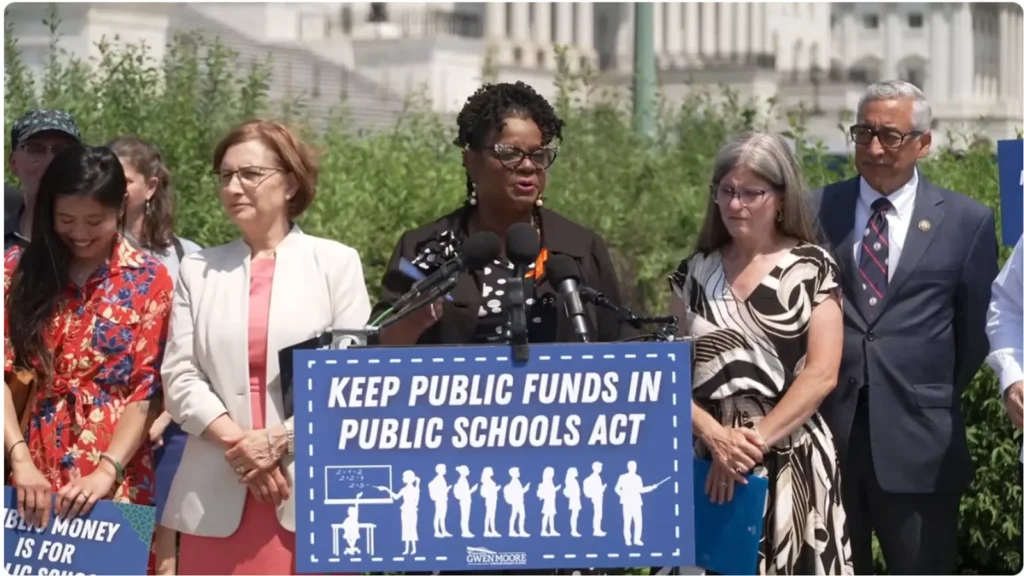
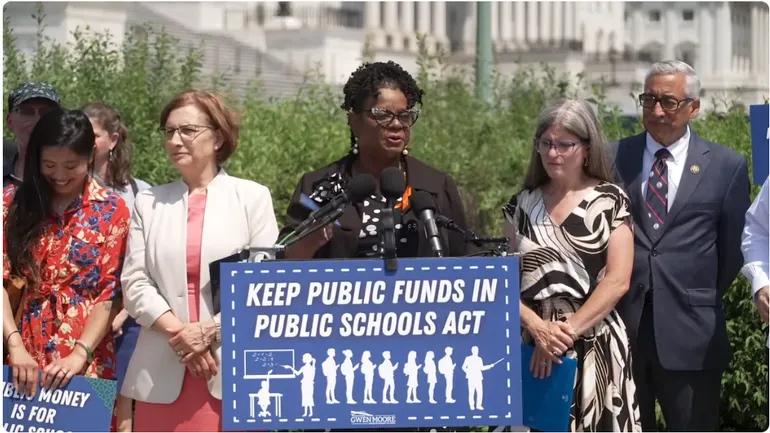
Jessica Levin, director of the Public Funds Public School campaign, highlighted regulatory constraints that prevent states from imposing stricter accountability measures. Because federal rules prohibit states from placing additional requirements on SGOs, Levin argued that states will be legally powerless to prevent waste, fraud, and abuse, enforce rigorous academic standards, or mandate civil rights protections for vulnerable student populations.
Lingering Policy Questions and Implementation Challenges
While the temporary rule provides immediate clarity for states and newly forming SGOs, numerous educational experts and organizational leaders have pointed out significant ambiguities within the proposed text.
One prominent area of discussion involves the scope of allowable educational expenses. While the draft rule explicitly designates academic tutoring as a qualifying expense, Narric Rome, managing director of government relations for the tutoring advocacy group Accelerate, noted that the proposal lacks precise definitions regarding program quality. Rome argued that federal guidelines should establish clear standards for tutoring frequency, dosage, and student-to-teacher ratios to ensure that scholarship funds purchase high-impact educational services.
Similarly, Jodi Grant, executive director of the Afterschool Alliance, urged the Treasury Department to issue explicit clarifications confirming that scholarships can fully cover summer learning programs and after-school initiatives hosted across diverse community settings, such as libraries, museums, and faith-based community centers.
Administrators of established scholarship organizations have also expressed a need for further guidance. Jackie Guglielmo, vice president of services for ACE Scholarships, stated that while the proposed rule connects eligible expenses directly to school enrollment, her organization is awaiting more granular definitions to effectively counsel families ahead of the 2027 rollout. The Treasury Department has acknowledged these concerns, indicating that additional guidance regarding allowable expenses remains a high administrative priority.
Beyond expense definitions, policy analysts like Qubilah Huddleston, a policy lead for EdTrust, emphasized the glaring absence of academic accountability metrics within the multi-billion-dollar program. Huddleston pointed out that while SGOs must fulfill basic annual reporting requirements to verify their organizational status, the federal government mandates no tracking of student academic progress or learning outcomes.
As the December 1 public comment deadline and the December 15 public hearing approach, the Treasury Department faces the complex task of balancing enthusiastic support from school choice advocates with intense scrutiny from public education defenders. With over thirty states already expressing preliminary interest in participating, the Education Freedom Tax Credit is poised to fundamentally reshape the American educational landscape when its doors officially open in January 2027.








