
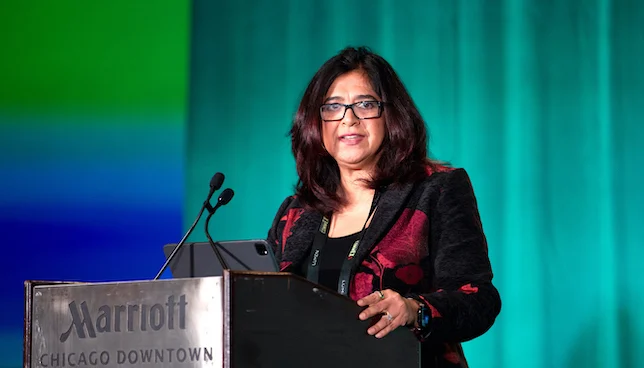
As the global digital landscape accelerates toward unprecedented levels of connectivity, data intensity, and collaborative research, the technological bedrock supporting higher education and scientific discovery is undergoing a profound transformation. October marks a monumental dual milestone for Internet2, the preeminent nonprofit networking and technology consortium serving the research and education (R&E) community. This month commemorates both the 30th anniversary of the organization’s founding and the completion of the first year of tenure for its president and chief executive officer, Tripti Sinha.
Having spent three decades deeply embedded in the R&E networking ecosystem—most recently serving as the chief technology officer at the University of Maryland—Sinha stepped into the role of CEO on October 15, 2025. Her ascension to the top leadership position brings a rare continuity of vision, blending historical institutional knowledge with a forward-looking mandate. In an extensive retrospective and prospective interview with journalist Mary Grush, Sinha discussed the foundational origins of Internet2, its evolution into a massive global technology backbone, the triumphant completion of a rigorous strategic planning cycle, and the horizon-scanning technologies poised to redefine academic research for decades to come.
The Genesis of an Academic Backbone: The Mid-1990s Pivot
To understand the critical value proposition of Internet2 today, one must examine the geopolitical and technological shifts of the mid-1990s. The modern internet was rapidly transitioning from a federally funded academic experiment into a commercialized consumer utility. This shift was precipitated by the official retirement of NSFNET, a foundational National Science Foundation initiative that had long linked regional academic networks with the nation’s premier high-performance computing centers.
As commercial entities flooded the nascent digital sphere, leaders within higher education recognized a glaring vulnerability. Commercial infrastructure, designed primarily for broad consumer access and profit-driven optimization, could not adequately support the hyper-specialized, data-intensive demands of advanced scientific research. Universities required massive bandwidth, ultra-low latency, and secure, dedicated pathways to transmit petabytes of experimental data across continents.
In response to this existential technological gap, approximately 30 visionary research universities coalesced in October 1996 to establish Internet2. Their objective was unambiguous: to design, build, and deploy a specialized national network backbone dedicated exclusively to the advancement of higher education and scientific discovery. What began as a localized coalition of elite research institutions has since burgeoned into an expansive, highly complex technological federation.
A Comprehensive Ecosystem: Current Scale and Membership Demographics
Over the past three decades, Internet2’s footprint has expanded far beyond its original core of founding research universities. The organization has successfully cultivated a diverse, multi-sector community that bridges academia, federal research, private industry, and regional networking initiatives.
Recent operational data highlights the breadth of the Internet2 ecosystem, which now boasts a total membership of 517 distinct organizations. This comprehensive tally includes:
- 352 Higher Education Members: Spanning community colleges, comprehensive universities, and premier global research powerhouses.
- 62 Industry Members: Technology firms, telecommunications providers, and enterprise partners collaborating on next-generation networking solutions.
- 34 Federal Affiliates: Government agencies utilizing high-performance networks for mission-critical scientific applications.
- 46 Regional R&E Network Members: State and regional entities extending high-speed connectivity down to local institutions.
- 23 Nonprofit Affiliates: Organizations dedicated to cultural heritage, scientific advancement, and educational outreach.
This sprawling membership base relies on Internet2 not merely as a high-speed transit network, but as a holistic collaborative ecosystem. The organization provides advanced trust and identity services, cloud connect solutions, cybersecurity frameworks, and coordinated advocacy that underpins modern collaborative research on a global scale.
Navigating the First Year of CEO Leadership
Reflecting on her inaugural year as president and CEO, Sinha emphasizes that her transition from community member and technologist to chief executive has been defined by direct engagement with the diverse stakeholders who drive the R&E sector. Throughout her first twelve months in office, Sinha has traversed the globe, engaging directly with university chief information officers, researchers, federal lab directors, and international peering partners.
Central to Sinha’s first year at the helm has been the culmination of an intensive strategic planning process. Initiated in response to shifting technological demands—such as the exponential growth of artificial intelligence workloads, quantum computing experiments, and large-scale instruments like the Large Hadron Collider or the Vera C. Rubin Observatory—the strategic plan maps out Internet2’s trajectory for the next decade.
According to organizational insiders, the strategic blueprint focuses heavily on three core pillars: modernizing network infrastructure to support hyperscale data movement, enhancing cybersecurity resilience across academic institutions, and lowering barriers to entry for under-resourced colleges and universities that require advanced technological capabilities to remain competitive.

Technological Horizons: What Excites the R&E Community
As Internet2 enters its fourth decade, Sinha points to several emerging breakthrough technologies that are transforming the research landscape and challenging network architects to innovate faster than ever before.
Chief among these is the integration of artificial intelligence and machine learning into everyday scientific workflows. Modern research initiatives no longer simply analyze static datasets; they train massive foundational models using real-time telemetry from remote sensors, particle accelerators, and astronomical surveys. These workloads demand unprecedented network elasticity and automated provisioning, pushing Internet2 to deploy dynamic software-defined networking capabilities that can scale bandwidth allocation on demand.
Furthermore, the advent of quantum communication and quantum networking represents a profound paradigm shift. While still in its nascent stages, quantum entanglement and distributed quantum computing require ultra-stable, highly synchronized optical fiber networks. Internet2 is actively collaborating with federal agencies and academic researchers to test quantum key distribution and explore the foundations of a future quantum internet.

Security and trust frameworks also remain paramount. In an era marked by sophisticated cyber threats targeting intellectual property and sensitive institutional data, Internet2’s community-driven trust and identity services—such as InCommon—provide the foundational authentication architecture required for secure, cross-institutional global collaboration.
Broader Implications and Future Outlook
The trajectory of Internet2 over the next ten years holds profound implications not only for higher education, but for the broader global economy. As academic research increasingly dictates commercial innovation—ranging from pharmaceutical discovery to clean energy technologies—the health and capacity of the R&E network backbone serve as a vital indicator of national competitiveness.
By maintaining a neutral, high-performance infrastructure untethered from the commercial imperatives of consumer internet service providers, Internet2 ensures that academic researchers can continue to push the boundaries of human knowledge without technological bottlenecks. As Tripti Sinha guides the organization through its milestone 30th year, Internet2 stands positioned at the intersection of public service, technological innovation, and global scientific collaboration, ready to build the digital infrastructure of tomorrow.