



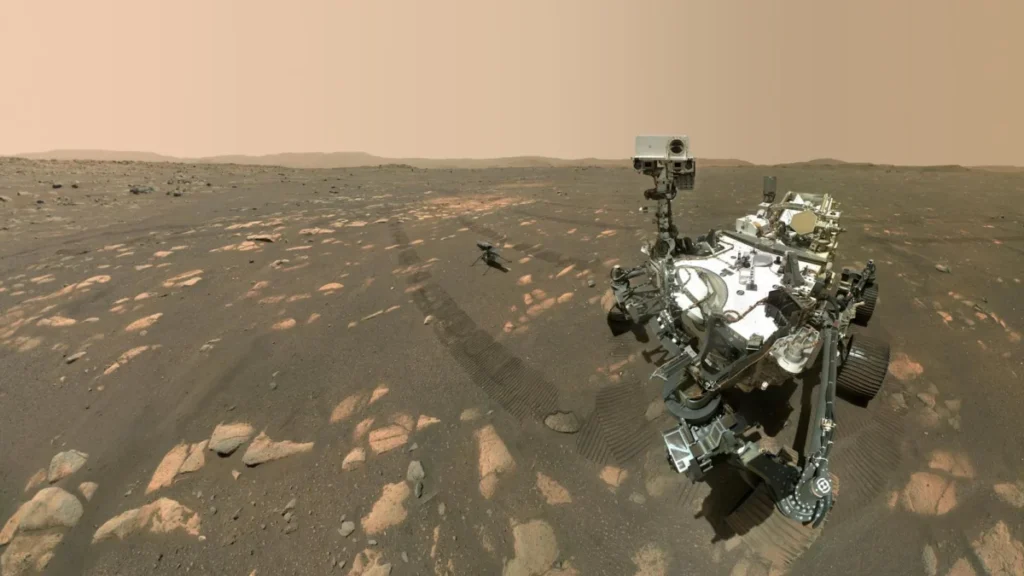
NASA’s Perseverance rover has officially entered the history books by eclipsing a monumental interplanetary milestone. Traversing 28.10 miles across the harsh, rusty terrain of the Red Planet, the six-wheeled robotic explorer has now driven farther across an alien world than any wheeled vehicle in human history. This achievement not only redefines the boundaries of robotic endurance but also highlights a generational leap in autonomous space exploration technology.
What makes the milestone even more remarkable is the sheer efficiency with which it was accomplished. Perseverance surpassed the previous milestone of 28.06 miles—held by its veteran predecessor, the Opportunity rover—in a fraction of the time. While Opportunity required nearly 15 years of painstaking operations to accrue its distance before communications ceased in June 2018, Perseverance crossed the finish line in less than six years, achieving the feat on the 2,006th Martian day, or sol, of its mission.
The historic milestone underscores the unprecedented pace of modern planetary science and the advanced engineering capabilities that allow contemporary missions to push deeper into uncharted territory than ever before.
Main Facts and Mission Overview
Landing on the Martian surface on February 18, 2021, Perseverance touched down inside the Jezero Crater, an ancient river delta that scientists selected due to its high potential for harboring signs of ancient microbial life. Since that landmark arrival, the rover has systematically explored the region, combining mobility with a sophisticated suite of scientific instruments designed to decode the planet’s geological past.
The core objective of the mission has never been purely about distance; driving is simply the mechanism that enables scientific discovery. As Perseverance rolls across the landscape, it conducts meticulous sediment drilling surveys, extracting core samples from the Martian crust. These samples are chemically analyzed by onboard laboratory equipment, providing researchers with unprecedented insights into the mineralogy and historical environment of Jezero Crater. Selected samples are also hermetically sealed and cached on the surface, awaiting a future Mars Sample Return mission.
The mission’s original design parameters anticipated a much more modest exploratory footprint. "The original mission called for no more than 12.4 miles of driving. We’ve blown well past that," said Steven Lee, Perseverance and Curiosity project manager at NASA’s Jet Propulsion Laboratory (JPL) in Pasadena, California.
Chronology of the Record-Breaking Drive
The path to breaking the interplanetary distance record has been a slow, deliberate, and technically complex journey.
- February 18, 2021: Perseverance successfully executes its harrowing "seven minutes of terror" landing sequence, touching down safely inside Jezero Crater.
- Spring 2021: The rover undergoes initial system checkouts, successfully deploys the Ingenuity helicopter, and begins baseline mobility tests.
- 2022–2024: Perseverance embarks on extensive campaigns exploring the Jezero Crater floor and ascending the ancient river delta, drilling core samples and analyzing sedimentary deposits.
- Mid-2025: The rover approaches the western rim of the crater, entering rugged terrains that present unique navigational challenges.
- October 2026: NASA officially approves an extended mission, ensuring operational funding through the end of 2028.
- Late 2026: Perseverance officially surpasses Opportunity’s long-standing record of 28.06 miles, reaching a cumulative odometer reading of 28.10 miles while navigating an expanse nicknamed "Lac de Charmes" toward an area designated as Idubi.
Supporting Data and the Role of AutoNav
A critical factor in Perseverance’s record-breaking pace is its advanced autonomous navigation system, known as AutoNav. Unlike earlier generations of Mars rovers that required continuous, step-by-step route planning and manual steering by ground controllers on Earth—a process bottlenecked by signal transmission delays of up to 24 minutes each way—Perseverance operates with a high degree of robotic independence.
AutoNav continuously captures stereo imagery of the rover’s immediate surroundings, constructs high-resolution 3D maps in real-time, identifies potential hazards such as sharp rocks, deep sand pits, and steep slopes, and independently calculates the safest and most efficient path around them. While NASA mission specialists select overarching waypoints, the rover handles the day-to-day tactical driving entirely on its own.
Data released by NASA highlights a dramatic evolution in robotic piloting capabilities. Perseverance has completed approximately 90 percent of its total excursion utilizing AutoNav. By contrast, NASA’s older rovers, Spirit and Opportunity, relied on early iterations of autonomous hazard-avoidance software for only about five percent of their total drives, forcing human engineers to meticulously map out nearly every wheel rotation from Earth.
Geological Significance of the Current Terrain
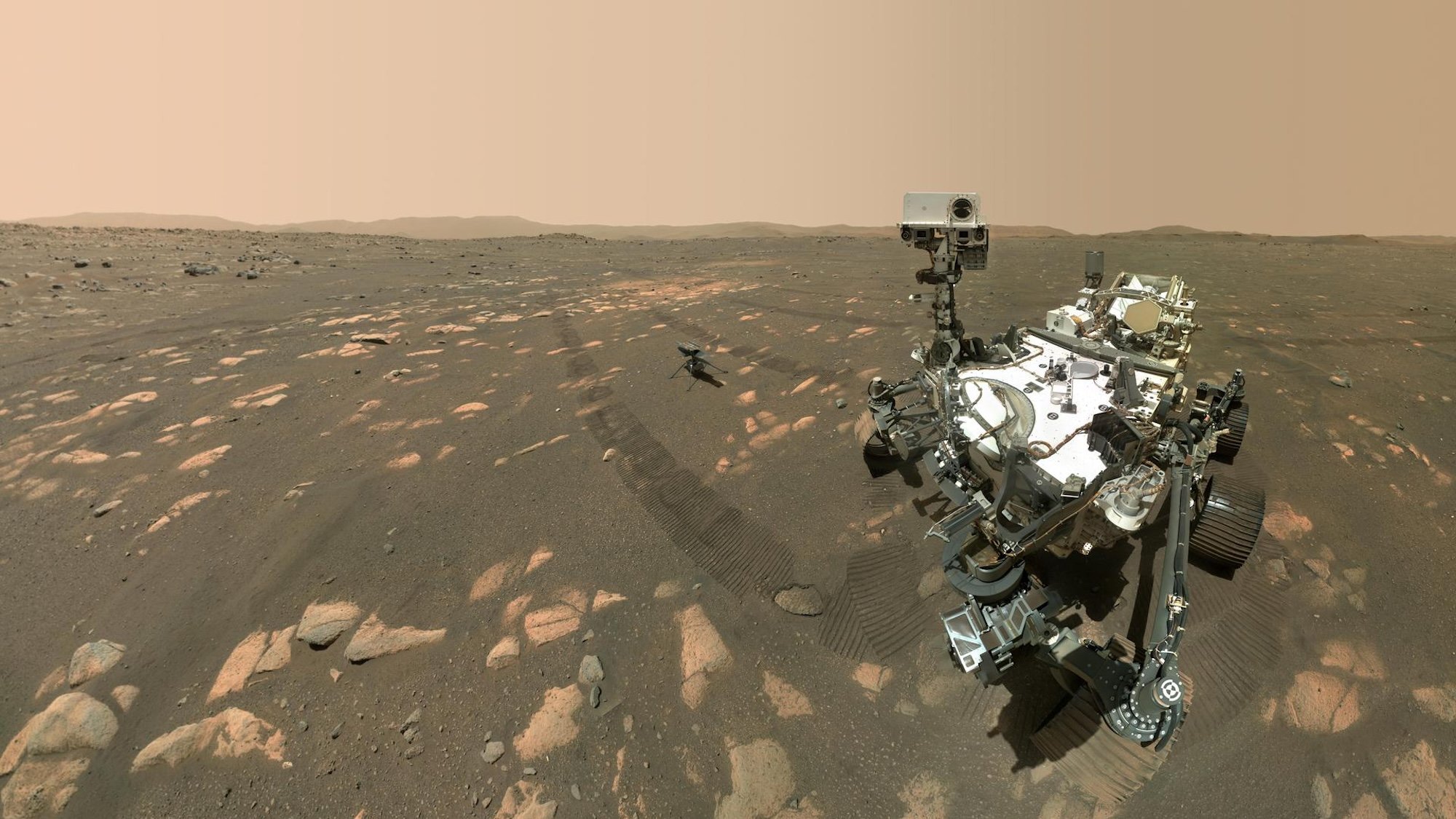
The landscape where Perseverance achieved its record-breaking milestone offers unique scientific value. The rover is currently traversing an expanse known as "Lac de Charmes" on its way toward a region called Idubi, located near the western rim of Jezero Crater.
Planetary geologists consider this region to host some of the oldest landscapes ever investigated in the solar system. Unlike Earth, which is characterized by active plate tectonics that continuously recycle crust through subduction and mountain-building, Mars lacks tectonic plates. Consequently, ancient terrains on the Red Planet remain preserved for billions of years, largely safe from the erosive forces and crustal recycling that erase Earth’s deepest geological history.
Studying these pristine, ancient environments allows scientists to peer backward into the formative epochs of the inner solar system, gaining critical context about how terrestrial planets evolve, how atmospheres change, and under what conditions planetary habitability can arise or fade.
Official Responses and Institutional Reactions
The milestone has generated widespread celebration across the planetary science community and within NASA leadership. Engineering teams at JPL, who spent years designing, testing, and refining the rover’s hardware and software, viewed the record as a validation of complex system architecture.
"With all mobility systems fully operational and favorable extended-ground-life test results, we expect Perseverance to keep adding to this record for many years to come," Steven Lee stated following the announcement.
Mission planners emphasize that the robustness of the rover’s hardware—including its specialized wheel design, reinforced suspension, and redundant motor controls—has played an essential role in preventing the kind of mechanical failures that historically limited past missions. Engineers have learned valuable lessons from the mechanical wear experienced by Curiosity and Opportunity, applying those insights to ensure Perseverance could endure miles of traversing jagged, abrasive volcanic and sedimentary rocks.
Broader Impact and Implications for Future Exploration
The success of Perseverance’s extended driving campaigns carries profound implications for the future of robotic space exploration. As humanity looks toward more complex robotic missions and eventual human exploration of Mars, the reliance on advanced onboard autonomy will only grow.
Traditional mission operations are personnel-intensive and slow, constrained by the speed of light and the limited windows during which Deep Space Network antennas can communicate with Mars. By proving that a rover can safely navigate tens of miles of complex, hazardous terrain autonomously, NASA has validated a operational model that dramatically increases scientific return per dollar spent. Modern rovers can cover more ground, explore multiple geological units in a single seasonal cycle, and react dynamically to unexpected discoveries without waiting hours for Earth-based command approvals.
Furthermore, the longevity and endurance demonstrated by Perseverance validate the engineering standards required for long-duration interplanetary hardware. With NASA’s recent approval of a mission extension keeping Perseverance operational through the end of 2028, the rover’s odometer is expected to climb significantly higher.
As Perseverance rolls onward into the ancient landscapes of Jezero Crater, it carries not only the hopes of planetary scientists searching for the origins of life, but also the technological blueprint for the future of automated discovery across the cosmos.