


In a major strategic realignment of its artificial intelligence ecosystem, OpenAI has announced plans to retire its popular Custom GPTs feature and transition specialized workflows to a unified plugin architecture spanning both ChatGPT and the Codex coding agent. The move marks a definitive shift away from standalone custom assistants toward a more versatile, reusable framework designed to integrate external services, instructions, and enterprise systems.
The decision impacts millions of individual developers, hobbyists, and enterprise organizations that have relied on Custom GPTs since their introduction. By consolidating its extension models into a single plugin structure, OpenAI aims to streamline how users package and distribute AI capabilities, though the transition has already sparked debate and operational challenges within the developer community.
Comprehensive Timeline and Phased Retirement Schedule

The retirement of Custom GPTs is structured across a carefully managed timeline to give workspace administrators and individual creators time to adjust, though exact dates may vary depending on account types and subscription tiers.
According to OpenAI’s roadmap, the complete phase-out of Custom GPTs is scheduled for December 11, 2026. However, enterprise-tier workspaces face an accelerated timeline. For these affected organizations, the creation of new Custom GPTs will be disabled starting October 26, 2026. Meanwhile, qualifying enterprise customers who have applied for and received approved deferrals will be granted an extension, allowing them to continue utilizing legacy Custom GPTs until February 11, 2027.
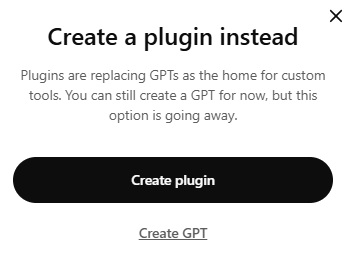
To signal this transition proactively, OpenAI has already altered its user interface. Custom GPTs have been made less prominent across the platform. When users attempt to initiate the creation of a new Custom GPT, the system now dynamically prompts them with an alternative option to build a plugin instead.
From Custom Assistants to Reusable Capabilities
The core philosophy driving this architectural pivot is a transition from isolated, distinct versions of ChatGPT toward modular, reusable capabilities. Under the new model, plugins can package specific instructions, reference materials, and direct connections to outside digital services into cohesive units that operate seamlessly across different AI environments.
OpenAI’s updated plugin architecture introduces several powerful components. Developers can build plugins incorporating one or more skills containing precise instructions and reference resources for repeatable workflows. Furthermore, plugins can leverage the Model Context Protocol (MCP) server framework to expose external tools and systems directly to the AI models. ChatGPT and Codex will share a universal plugin directory, streamlining distribution while still allowing certain capabilities to remain environment-specific.
For enterprise environments, this evolution transcends a mere nomenclature change. Organizations can now encapsulate recurring business processes into standardized skills, utilizing MCP servers or integrated applications to grant these workflows secure access to internal enterprise databases, customer relationship management systems, and proprietary software.
Migrating Existing Workflows: A Step-by-Step Transition
For creators looking to salvage their hard work, OpenAI has built a migration pathway through the My GPTs management interface. During the conversion process, a GPT’s existing instructions are automatically transformed into a skill within the new replacement plugin. Associated knowledge files are copied over as plugin reference files, and previously connected applications can generally be carried across.
However, this migration path comes with notable caveats and limitations. Not all elements of a Custom GPT transfer seamlessly. Existing chat histories and conversation logs do not migrate to the new system, and the specific model selected for the original GPT does not carry over automatically. Additionally, custom actions created within the legacy environment often need to be completely rebuilt utilizing an available application or a custom-configured MCP server.
Sharing dynamics and access controls will also undergo a fundamental reset. Newly migrated plugins will default to a private status, meaning that prior users of a Custom GPT will not automatically retain access to its plugin successor. Previous sharing permissions, links, and distribution settings must be re-established manually by the creator.
Industry Reactions, Pushback, and Compatibility Concerns

Perhaps the most significant friction point in OpenAI’s announcement centers on behavioral consistency. OpenAI has issued formal advisories warning organizations that migration will not necessarily preserve exact functional behavior. In official guidance, the company notes that a migrated plugin may respond differently than its predecessor, prompting recommendations that users rigorously retest familiar prompts, reference-material utilization, output formatting rules, and integrations prior to production deployment.
This cautionary stance has fueled skepticism and pushback within developer communities. On OpenAI developer forums and various tech platforms, multiple GPT builders have voiced frustration, arguing that the new plugin structure does not adequately replicate the dedicated, predictable environment guaranteed by Custom GPTs. Additional complaints have targeted the complexity of the migration process, unexpected changes to sharing protocols, and divergences in how migrated workflows interpret system instructions and reference materials.
Despite these vocal concerns, OpenAI remains steadfast in its strategic direction. The company views the consolidation around plugins as an essential maturity milestone for its product line. Current developer documentation frames plugins as standardized packages that users can easily discover, install, share, and publish across both ChatGPT and Codex.
Broader Implications for Enterprise AI Deployment

The deprecation of Custom GPTs and the pivot to a unified plugin ecosystem carry profound implications for the broader artificial intelligence landscape. As organizations increasingly depend on generative AI for mission-critical operations, the demand for predictable, governable, and deeply integrated AI tools has never been higher.
By phasing out Custom GPTs in favor of MCP-backed plugins, OpenAI is signaling a move toward a more standardized, developer-friendly infrastructure. The Model Context Protocol, in particular, has emerged as a vital standard for connecting large language models to external data sources securely and efficiently. This architectural uniformity allows enterprises to build once and deploy across multiple touchpoints—whether an employee is interacting with an AI agent via the ChatGPT consumer interface or utilizing the Codex coding agent within an integrated development environment.
Nevertheless, the transition period will test the patience of enterprise IT departments and independent developers alike. Organizations that invested heavily in crafting specialized Custom GPTs will be forced to allocate engineering hours toward auditing, migrating, and re-testing their AI assets before the impending 2026 and 2027 deadlines.
As the AI industry watches closely, OpenAI’s success in smoothing out migration friction and addressing developer grievances will determine whether this architectural overhaul is embraced as a necessary leap forward or criticized as a disruptive forced migration. For now, stakeholders are advised to consult the official OpenAI release notes and documentation portals to audit their current workspaces and prepare their migration strategies accordingly.