


Scientists at the Mark and Mary Stevens Neuroimaging and Informatics Institute (Stevens INI) at the Keck School of Medicine of USC have uncovered evidence that two neighboring types of brain tissue may work together to support thinking abilities later in life, a discovery that could redefine how clinicians view neurodegenerative resilience. Their findings, published in the journal Alzheimer’s & Dementia, suggest that the integrity of local communication pathways—specifically superficial white matter—may dictate the severity of cognitive impairment when gray matter loss occurs. This research represents a significant pivot in neuroscience, moving away from a singular focus on gray matter atrophy toward a more holistic model of brain connectivity.
The Anatomy of Local Connectivity
To understand the significance of this study, one must distinguish between the two primary tissue types under investigation. Gray matter, the darker tissue of the brain and spinal cord, is primarily composed of neuronal cell bodies and serves as the brain’s primary processing center. In contrast, white matter acts as the communication infrastructure, consisting of myelinated axons that transmit signals between different regions.
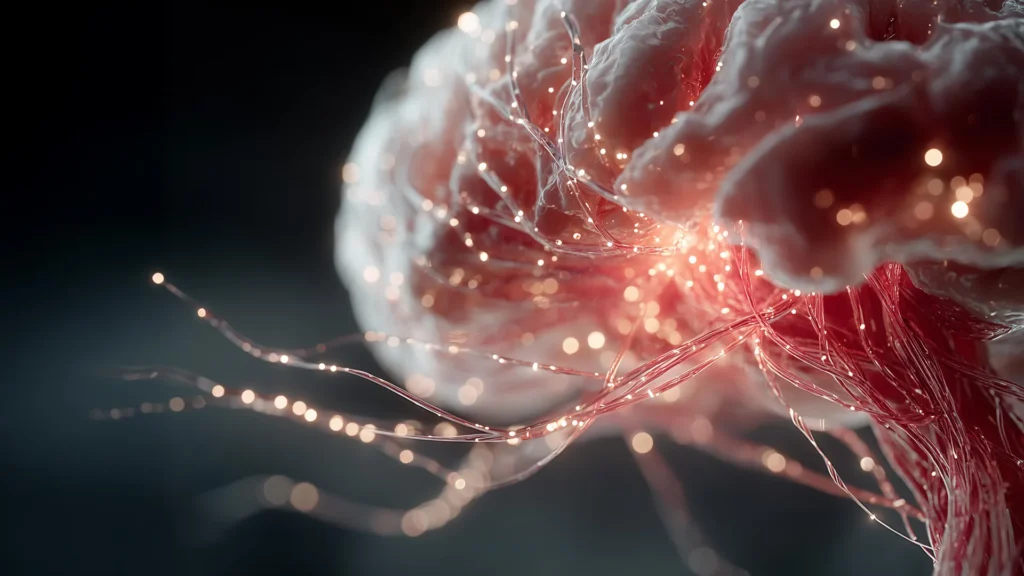
Superficial white matter (SWM) is a specialized, thin layer of nerve fibers located immediately beneath the cerebral cortex. While deeper white matter tracts act as long-range "highways" for information, SWM functions as a network of local roads. These fibers facilitate short-range communication between adjacent cortical areas. The Stevens INI study posits that when these "roads" are in good repair, the brain may be better equipped to reroute information or compensate for localized damage, thereby delaying the onset of cognitive symptoms associated with aging or neurodegenerative disease.
Methodology and Global Scope
The research team utilized data from the Harmonized Diagnostic Assessment of Dementia for the Longitudinal Aging Study in India (LASI-DAD), an initiative designed to capture a more representative snapshot of global aging. The cohort consisted of 459 participants aged 60 and older.
The inclusion of this specific population is a landmark achievement in neuroimaging. Historically, the vast majority of dementia research has been conducted on high-income, highly educated populations in Western nations. By contrast, the LASI-DAD population offers a unique demographic: more than 50% of the participants have low literacy, and approximately 60% reside in rural communities. This diversity allows researchers to observe how brain health manifests across varying educational and socioeconomic backgrounds, providing a more robust understanding of cognitive aging that is not skewed by "WEIRD" (Western, Educated, Industrialized, Rich, and Democratic) participant bias.
Technical Breakthroughs in Diffusion MRI
The study relied on advanced diffusion MRI (dMRI) technology, a sophisticated imaging modality that tracks the microscopic movement of water molecules through brain tissue. In healthy white matter, water movement is constrained by the structure of nerve fibers. As these fibers degrade—due to inflammation, myelin loss, or other stressors—water movement becomes less restricted, a phenomenon known as "free water" increase.
By measuring neurite density and free water distribution, researchers were able to quantify the health of these local connections with unprecedented precision. Conventional MRI scans often fail to capture these subtle, microscopic changes, which may explain why previous studies sometimes struggled to correlate structural brain changes with clinical outcomes. By isolating the SWM, the team was able to map how these microscopic degradations impact specific cognitive domains, most notably language proficiency and executive function.
Key Findings: The Resilience Hypothesis
The central discovery of the study is the "buffering effect." While the researchers confirmed that gray matter atrophy remains the most reliable predictor of overall cognitive decline, the correlation between atrophy and cognitive impairment was not uniform. The data revealed that participants with high-integrity SWM exhibited a weaker association between gray matter loss and cognitive decline. In essence, the "wiring" acted as a protective shield; even when the processing centers (gray matter) were compromised, the local network’s integrity appeared to sustain cognitive performance.
This discovery has profound clinical implications. It suggests that therapeutic interventions aimed at preserving white matter integrity—such as managing vascular health, reducing neuroinflammation, and optimizing metabolic function—could theoretically help maintain cognitive function even in patients already experiencing early signs of gray matter atrophy.
Socio-Educational Context and Global Implications
A striking secondary finding was that the association between SWM health and language ability was particularly strong among participants with no formal education or those living in rural areas. While the researchers caution that these social factors are not direct biological causes, they emphasize that brain aging is a cumulative process shaped by a lifetime of experiences.
"A fuller understanding of brain aging requires research that reflects the world’s social, cultural, and geographic diversity," stated Dr. Arthur W. Toga, director of the Stevens INI. The data suggests that environmental and educational factors may influence the structural resilience of the brain over decades. For instance, the cognitive reserve hypothesis posits that complex life experiences can build "reserve" in the brain, and this new study hints that SWM might be the biological substrate of that reserve.
Chronology of Cognitive Research
The study represents a maturation of the field of neuroimaging. In the 1990s and early 2000s, the focus was almost exclusively on structural volumetrics—simply measuring the size of the hippocampus or the thickness of the cortex. By the 2010s, the focus shifted toward "connectomics," the study of the brain’s wiring. The current study is part of a third wave of research, which seeks to integrate structural volume with the health of local wiring to predict real-world cognitive performance.
Looking ahead, the research team faces the challenge of establishing causality. Because the study was cross-sectional—meaning it analyzed a "snapshot" of data from a single point in time—it cannot definitively determine the sequence of events. Do SWM changes trigger gray matter loss, or does the loss of gray matter cause the supporting SWM to atrophy from disuse? Longitudinal studies, which track the same individuals over several years, will be the next critical step.
Expert Analysis and Future Directions
The scientific community has noted the importance of this work for future diagnostic criteria. If SWM health can be used as a biomarker for cognitive resilience, clinicians may soon be able to better predict which patients are at high risk for rapid decline and which might remain stable despite clinical evidence of neurodegeneration.
Furthermore, the study opens new avenues for pharmacological and lifestyle-based research. If superficial white matter can be protected, the window for intervention in neurodegenerative conditions like Alzheimer’s disease could be significantly expanded. As Dr. Leon Aksman, the study’s senior author, noted, "Following participants over time will be essential to test whether preserving these connections can help maintain cognition."
The collaboration between the USC researchers and their partners in India highlights a growing trend toward international, multi-disciplinary research. By pooling resources and utilizing the LASI-DAD database, the team has not only contributed a significant piece to the puzzle of brain aging but has also set a new standard for inclusivity in medical research.
As the global population continues to age, the demand for actionable insights into cognitive health will only grow. The Stevens INI research provides a compelling blueprint: by looking beyond the gray matter and into the intricate, local wiring that connects our thoughts, we may finally unlock the secrets to lifelong cognitive resilience. Future investigations will likely expand upon this by examining how vascular markers, amyloid-beta accumulation, and chronic inflammation interact with the superficial white matter, creating a more comprehensive map of the aging human brain.